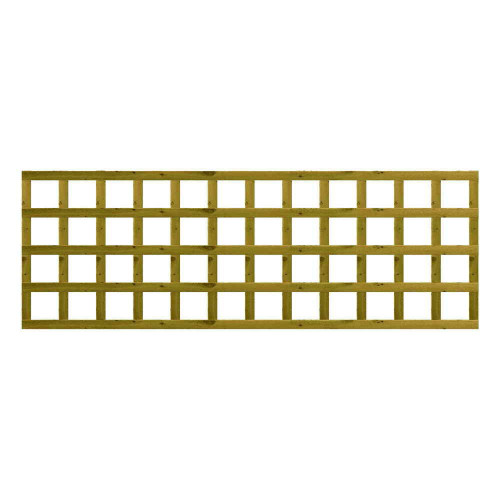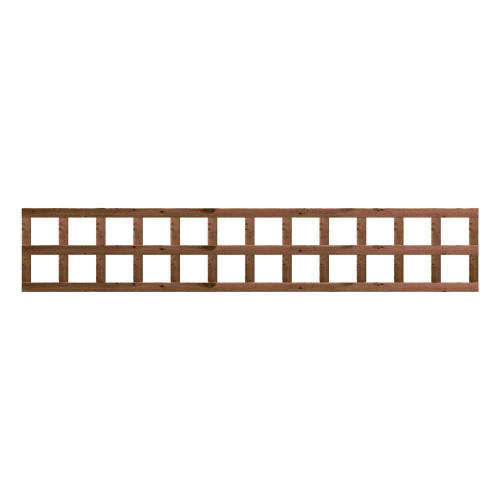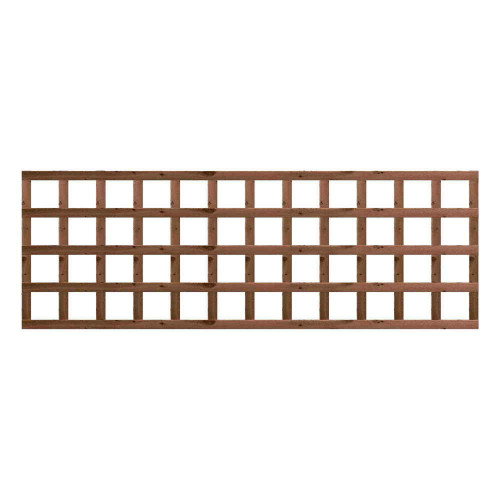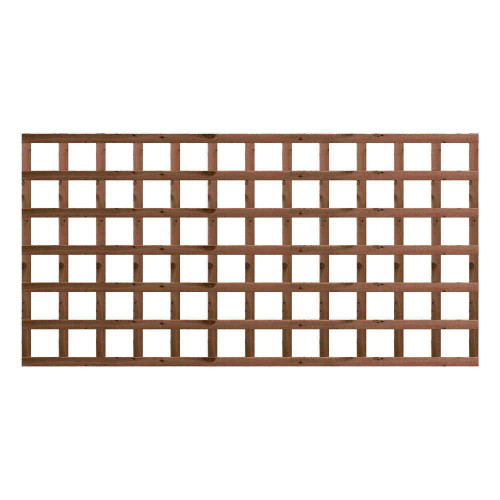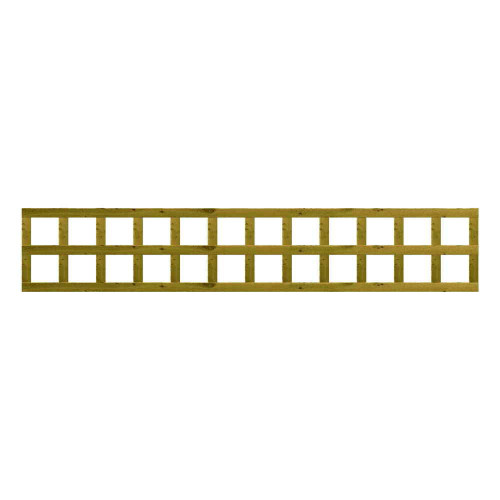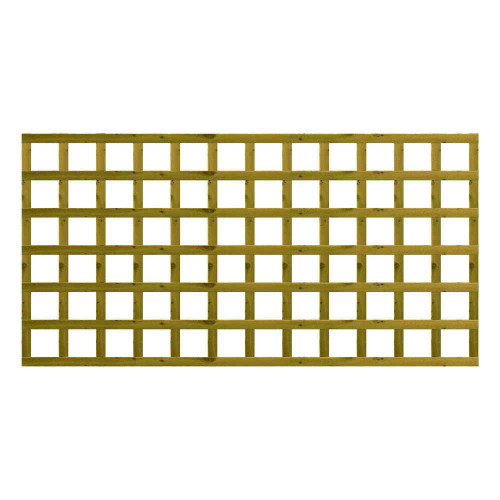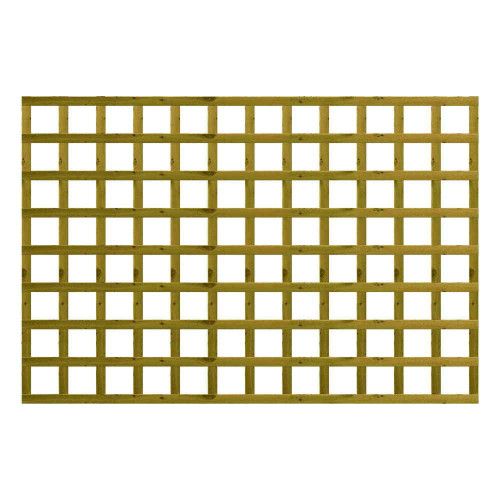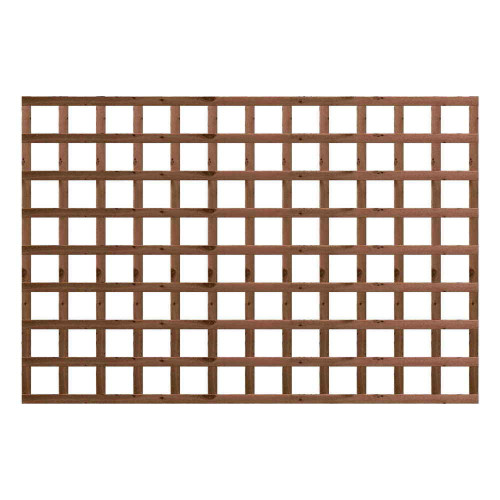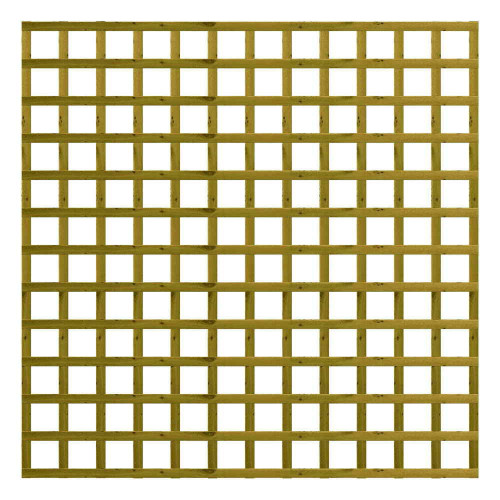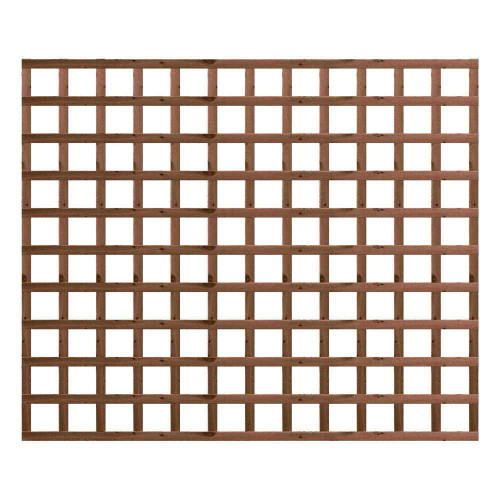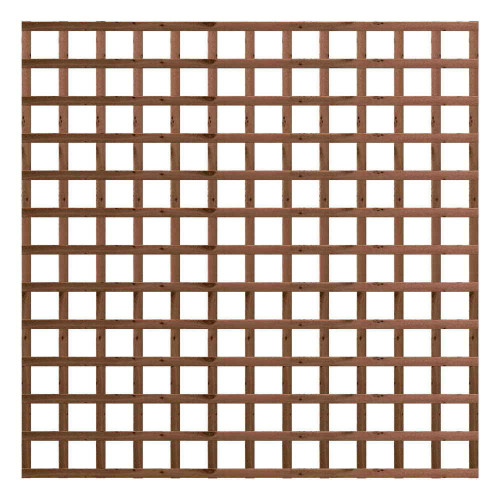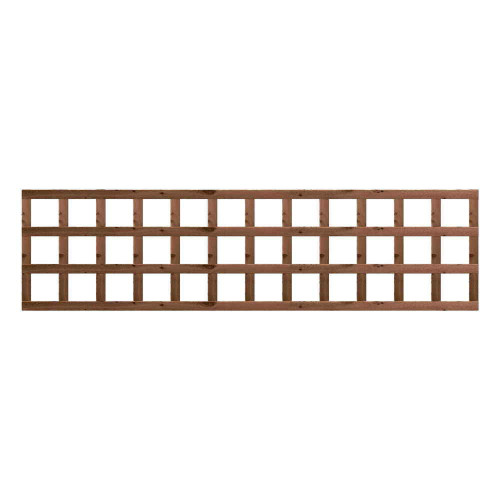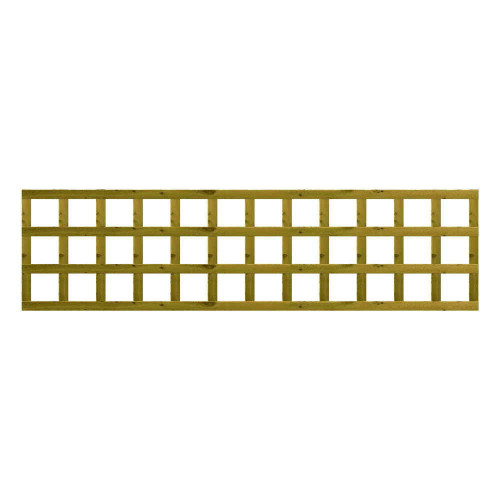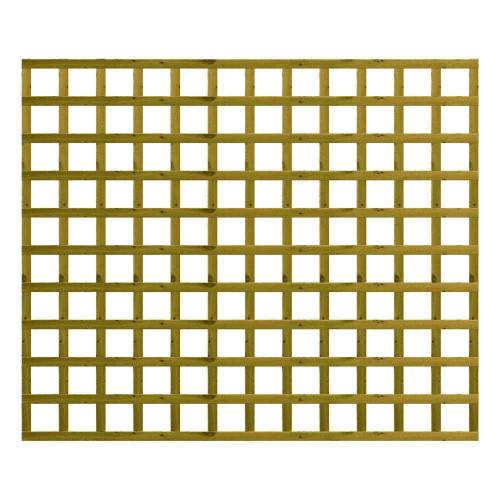



Quick answer: Yes. Traditional Trellis can form a freestanding garden screen when it is securely installed between suitable posts. East Coast Fencing's current Traditional Square Trellis is approximately 1.83m wide, uses approximately 100mm square openings and is available in heights from around 300mm to 1.83m. It works particularly well for climbing plants and open garden zoning, but it provides much less immediate privacy than a solid Fence Panel or closer Privacy Square Trellis.
Traditional Trellis does not have to be fixed to an existing fence or wall.
Taller panels can be installed between their own Wooden Fence Posts to create an independent garden screen.
This is useful when you want to divide a garden without making it feel enclosed, provide a framework for climbing plants or create your own screen near a boundary without relying on someone else's fence.
The main limitation is privacy. Traditional Trellis deliberately uses relatively large square openings, so a freestanding screen remains visually open until planting begins to cover it.
The posts and foundations are also important. Trellis is the infill panel, not the structural support for the screen.
What Is Traditional Trellis?
Traditional Trellis uses horizontal and vertical timber battens to create a repeating square lattice.
Current East Coast Fencing Traditional Square Trellis is manufactured in-house from pressure-treated 16 x 38mm rough-sawn trellis batten.
The openings are approximately 100mm square.
This creates an intentionally open panel that provides:
- Climbing-plant support
- Garden division
- Decorative screening
- Good light transmission
- Good airflow
- Partial visual separation
It should not be confused with Privacy Square Trellis, which uses a closer approximately 50mm square pattern.
What Makes A Trellis Screen Freestanding?
A freestanding trellis screen has its own support structure.
It does not depend on:
- An existing Fence Panel
- A neighbour's fence
- A wall
- A shed
Instead, suitable posts are installed specifically to support the trellis.
The panels are then fixed between or against those posts to create an independent structure.
This gives you much more control over:
- Position
- Height
- Length
- Planting
- Maintenance
Where Does A Freestanding Traditional Trellis Screen Work Well?
It works best where complete solid privacy is not required.
Good applications include:
- Separating a patio from a lawn
- Dividing vegetable and ornamental areas
- Providing support behind a planted border
- Creating an open screen around a seating area
- Softening the edge of a driveway or path
- Supporting climbers near an existing boundary
- Creating structure around raised beds
- Breaking up a long open garden
The approximately 100mm openings allow one area to remain visually connected with the next.
This can be particularly useful in smaller gardens where a solid internal fence would make the space feel unnecessarily divided.
What Heights Of Traditional Trellis Can Be Used?
The current Traditional Trellis range includes approximately 1.83m-wide panels in several heights.
Useful current sizes include approximately:
- 300mm
- 450mm
- 600mm
- 900mm
- 1.2m
- 1.5m
- 1.83m
The right height depends on whether the screen is primarily decorative, intended for plants or meant to create a substantial visual division.
| Trellis Height | Typical Freestanding Use | Screening Effect |
|---|---|---|
| 300mm to 450mm | Low decorative edging | Very open |
| 600mm | Low planting screen | Light division |
| 900mm | Garden zoning and planting | Clear visual division |
| 1.2m | Medium-height planted screen | Substantial but open |
| 1.5m | Tall climbing screen | Strong division with visibility |
| 1.83m | Full-height open screen | Maximum height, still visibly open |
Is 900mm Traditional Trellis High Enough For A Garden Screen?
For internal garden zoning, often yes.
A 900mm screen clearly marks the edge of an area without creating the appearance of a full boundary fence.
It works particularly well around:
- Vegetable plots
- Paths
- Low planting
- Patio edges
It is also tall enough to provide useful support for many plants while remaining easy to see over.
When Does A 1.2m Trellis Screen Make Sense?
A 1.2m panel creates a more substantial visual divide.
At this height, the screen can define a seating or planting area without producing the enclosure associated with a solid 1.2m Fence Panel.
The approximately 100mm openings remain clearly visible.
This height is a good option where planting is intended to supply much of the eventual screening.
When Should You Choose 1.5m Traditional Trellis?
A 1.5m screen provides a large climbing framework.
It works particularly well for vigorous climbers and where planting needs to extend above shrubs or low garden features.
At this height, post selection and foundations become much more important.
The screen remains open when bare, but 1.5m of trellis covered by mature foliage can eventually present a much greater load to the posts.
Can Traditional Trellis Be Used At Full 1.83m Height?
Yes.
A current 1.83m x 1.83m Traditional Trellis panel creates a full-height open lattice.
This can form:
- A large climbing framework
- A planted garden divider
- An open boundary
- A substantial decorative screen
Do not expect immediate privacy.
The approximately 100mm openings leave clear visibility through the structure until planting provides additional cover.
How Private Is A Freestanding Traditional Trellis Screen?
Not very private when bare.
The approximately 100mm square openings are deliberately large enough to retain a clear visual connection through the panel.
This is an advantage when you want:
- Light
- Airflow
- Plant support
- An open garden feel
It is a disadvantage when the objective is immediate concealment.
If stronger screening is required from the day of installation, Privacy Square Trellis or a more solid Fence Panel is likely to be more suitable.
Can Plants Make Traditional Trellis More Private?
Yes.
Planting is one of the main ways an open traditional lattice becomes a more substantial screen over time.
As stems and foliage spread across the approximately 100mm squares, they interrupt views through the panel.
The level of privacy depends on:
- Plant species
- Growth rate
- Plant density
- Season
- Pruning
A deciduous climber may provide dense summer screening and very little winter cover.
Plan around the actual plant rather than assuming all climbing growth creates year-round privacy.
Which Climbing Plants Suit Traditional Trellis?
The open square lattice works well with many commonly trained garden climbers.
Examples include:
- Clematis
- Honeysuckle
- Jasmine
- Climbing roses
Different plants attach in different ways.
Some naturally twine or use leaf stems around supports. Others, including climbing roses, normally need tying and training.
The larger approximately 100mm squares make it relatively easy to reach through the trellis when positioning plant ties.
Can Traditional Trellis Support Heavy Climbers?
The answer depends on the complete support structure.
The lattice itself should not be expected to act as a substantial independent structural framework for an extremely heavy mature plant.
Heavy growth can add:
- Plant weight
- Wet foliage after rain
- Wind resistance
If a climber is expected to become particularly large, use sufficiently substantial posts and consider additional independent plant support where appropriate.
Do Plants Change The Wind Load On Freestanding Trellis?
Yes.
This is easy to overlook.
Bare Traditional Trellis is highly open. Wind can pass through the approximately 100mm lattice openings relatively freely.
Once those openings are filled with foliage, airflow is reduced.
A mature planted screen can therefore place considerably more demand on:
- Fence Posts
- Foundations
- Panel fixings
- Trellis frames
Plan the structure around the mature screen rather than the bare trellis on installation day.
What Posts Should You Use For Freestanding Traditional Trellis?
Pressure-treated Wooden Fence Posts provide straightforward fixing points for timber trellis.
Current East Coast Fencing Wooden Fence Posts include 75 x 75mm and 100 x 100mm sections.
The appropriate post depends on:
- Trellis height
- Number of panels
- Site exposure
- Ground conditions
- Plant weight
- Foundation arrangement
A low open screen may suit 75 x 75mm posts in suitable sheltered conditions.
Full-height trellis or heavily planted screens may justify more substantial 100 x 100mm posts.
The larger timber section still needs an appropriate foundation.
How Long Should The Posts Be?
Do not choose a post that only matches the visible trellis height.
Part of the post needs to be installed below ground where it is being set conventionally.
For example, a full-height approximately 1.83m trellis screen needs a post substantially longer than 1.83m if the post is being concreted into the ground.
Current Wooden Fence Post lengths include options around:
- 1.8m
- 2.4m
- 3.0m
Choose the overall post length around the visible screen and the installation depth required for the particular site.
How Far Apart Should The Posts Be?
Current Traditional Trellis panels are approximately 1.83m wide across suitable products.
That does not mean every pair of posts should automatically be placed exactly 1.83m apart without considering how the panel is being fitted.
The required spacing depends on whether the trellis is:
- Installed between the posts
- Face-fixed to the posts
- Held using brackets or clips
Measure an actual panel and decide the fixing arrangement before setting the posts permanently.
Should The Trellis Sit Between The Posts?
Installing the panel between Wooden Fence Posts creates a clear framed bay.
This is often the neatest arrangement for Traditional Trellis because the square pattern terminates cleanly at each structural post.
It also gives each panel a supported edge.
Face fixing can also be possible, but the post positions need to be planned differently.
Choose the arrangement before digging rather than trying to make the panel fit after the posts are fixed.
Should Freestanding Trellis Touch The Ground?
Keep ordinary timber trellis clear of persistent wet soil where practical.
Current Traditional Trellis is pressure treated for outdoor use, but unnecessary ground contact still creates wetter conditions around the lower frame.
A small clearance makes it easier to:
- Remove leaves
- Cut grass
- Inspect the bottom of the panel
- Reduce prolonged contact with wet soil
If the screen is installed beside planting, avoid allowing mulch or compost to build gradually against the timber.
Can Traditional Trellis Be Used Beside Raised Beds?
Yes.
This is a particularly useful combination where climbing plants are grown from the bed.
The raised bed should retain its own soil.
Do not use the trellis as the back of the raised bed or pile soil against the lattice.
Keep enough access to:
- Inspect the trellis
- Maintain the posts
- Train the plants
- Replace the panel in future
Can Traditional Trellis Screen A Patio?
Yes, if light visual separation is enough.
A freestanding panel beside a seating area can make the patio feel more defined without blocking the rest of the garden.
Traditional Trellis works particularly well where climbing plants will eventually soften the screen.
If the patio is heavily overlooked and immediate privacy is important, the approximately 100mm openings are likely to be too open on their own.
Can Freestanding Trellis Be Installed Near A Neighbour's Fence?
Yes, and an independent screen can be useful when you do not want to attach anything to an existing boundary fence.
Use your own posts and keep the structure within the area you are entitled to use.
Leaving a practical maintenance gap can also help prevent:
- Leaves becoming trapped between structures
- Difficult access
- Plants becoming entangled with the existing fence
Do not use someone else's fence as a hidden structural support for your freestanding trellis.
Can Traditional Trellis Be Used To Hide Bins?
It can soften the view, but the large openings mean bins will still be visible.
If the main objective is concealment, a closer trellis or more solid screen will normally perform better.
Traditional Trellis makes more sense where planting will eventually provide much of the cover.
If used around bins, leave enough space to:
- Move the bins
- Open the lids
- Clean the area
- Maintain surrounding plants
Can Traditional Trellis Be Used Around A Vegetable Garden?
Yes.
The openness of the panel is particularly useful because it divides the growing area without creating a heavy solid barrier.
The approximately 100mm grid also provides support for suitable climbing crops and garden plants.
Where the screen is close to productive planting, make sure its position does not create unnecessary shade.
Can A Freestanding Trellis Screen Turn A Corner?
Yes.
Use a suitable structural post at the corner and support each panel edge independently.
Keep the post:
- Plumb
- Correctly orientated
- Securely founded
A square lattice makes poor alignment easy to spot, so take particular care with corners.
Can Traditional Trellis Be Installed On A Slope?
Yes.
Rigid rectangular trellis panels are normally kept level and stepped as the ground changes.
Each panel remains square within its own bay.
The next bay then begins higher or lower.
This is generally cleaner than cutting the lattice diagonally to match the ground.
Plan the post heights and step positions before excavation begins.
Can You Cut Traditional Trellis To Fit A Shorter Bay?
Timber trellis can be adapted, but a finished panel should not simply be cut and installed with unsupported lattice ends.
Shortening the width can remove part of the outer frame and expose the ends of several lattice battens.
The shortened edge should be properly supported or reframed.
Current Traditional Trellis uses pressure-treated 16 x 38mm rough-sawn battens, so freshly exposed cuts should receive suitable cut-end treatment where required.
How Do You Install A Freestanding Traditional Trellis Screen?
- Choose the screen position: Mark exactly where the run will begin and end.
- Choose the trellis height: Decide whether the purpose is low decoration, garden zoning or a tall climbing screen.
- Select suitable posts: Match post section and length to the panel height, exposure and future plant load.
- Measure the actual panels: Confirm width before establishing final post centres.
- Set out the run: Use a string line to keep posts aligned.
- Check for underground services: Do this before excavating post holes.
- Install the posts: Keep each post plumb and securely supported while the foundation sets.
- Set the panel clearance: Keep the timber away from unnecessary wet ground contact.
- Level the trellis: The square lattice makes alignment errors visible.
- Fix through substantial framed sections: Do not rely on isolated lattice battens as the main structural fixing points.
- Check the complete run: Make sure panel tops and posts remain consistently aligned.
Does Traditional Trellis Need To Be Level?
Yes, where a level rectangular screen is intended.
The horizontal and vertical lattice provides a clear visual reference.
If the frame is slightly tilted, the squares make that error noticeable.
Check the first panel carefully before using it as the visual reference for the rest of the run.
What Happens If One Post Moves?
The trellis panel connected to it can move as well.
Possible signs include:
- A panel becoming out of level
- The square pattern appearing tilted
- Fixings pulling against the frame
- A growing gap beside one post
Investigate the post rather than trying to pull the trellis back into position with additional screws.
Can A Freestanding Trellis Screen Be Painted?
Yes, using a suitable exterior timber coating once the pressure-treated timber is in the condition required by the coating manufacturer.
Trellis takes longer to coat than a solid board because there are numerous:
- Faces
- Edges
- Intersections
If a decorative finish is planned, applying it before dense climbing plants establish can make future access considerably easier.
Does A Freestanding Traditional Trellis Screen Need Maintenance?
Inspect it periodically rather than assuming pressure treatment means no further attention is ever required.
Check:
- Post stability
- Panel fixings
- Frame condition
- Loose lattice battens
- Heavy plant growth
- Wet leaves at the base
- Soil building up against the timber
Pruning is particularly important where vigorous climbers have become much heavier than when the screen was installed.
When Is Traditional Trellis The Wrong Choice?
Choose another product where the project requires:
- Complete immediate privacy
- A solid secure boundary
- A panel intended to retain soil
- A structure expected to carry very heavy plants without additional support
Traditional Trellis is deliberately open.
Its strength is creating structure without closing the garden in.
Common Mistakes With Freestanding Traditional Trellis
- Expecting approximately 100mm squares to provide immediate privacy
- Using the trellis itself instead of proper structural posts
- Selecting posts only from the panel width
- Using posts that are too short for the visible screen and below-ground installation
- Setting posts before measuring the actual panel
- Forcing trellis into an opening that is too narrow
- Allowing timber to sit unnecessarily in wet soil
- Using lattice battens as the main structural fixing points
- Ignoring mature climbing-plant weight
- Assuming open trellis creates no wind load
- Allowing raised-bed soil to press against the panel
- Failing to keep the first panel level
- Installing new trellis against loose or inadequate posts
FAQs
Can Traditional Trellis Stand On Its Own?
Not without structural support. A freestanding Traditional Trellis screen needs suitable posts or framing. The lattice panel itself is the infill rather than the main supporting structure.
What Size Are The Openings In Traditional Trellis?
Current East Coast Fencing Traditional Square Trellis uses approximately 100mm square openings.
What Is Traditional Trellis Made From?
The current East Coast Fencing range is manufactured in-house from pressure-treated 16 x 38mm rough-sawn trellis batten.
Can Traditional Trellis Be Used For Privacy?
It provides light screening but remains very open when bare. Plants can increase privacy over time, but choose Privacy Square Trellis or solid fencing if stronger immediate screening is required.
Can Full-Height Traditional Trellis Be Freestanding?
Yes, when installed between suitably specified posts with appropriate foundations. Current full-height panels are available at approximately 1.83m high.
Can Traditional Trellis Be Used For Climbing Plants?
Yes. Plant support is one of its main uses. The approximately 100mm squares give stems room to pass through and provide plenty of positions for training and tying.
Should Freestanding Trellis Touch The Ground?
Keep ordinary timber trellis clear of persistent wet soil where practical. This improves access for inspection and reduces unnecessary moisture around the lower frame.
Are 75mm Wooden Posts Suitable For Traditional Trellis?
They may suit lower or lighter screens in appropriate sheltered conditions. Taller screens, exposed installations and heavily planted trellis may justify more substantial 100 x 100mm posts.
Use Traditional Trellis Where You Want Structure Without A Solid Wall
Traditional Trellis works well as a freestanding garden screen when it has its own properly installed posts.
The approximately 100mm square lattice is deliberately open. It provides excellent climbing support, allows light and air through and divides areas without visually cutting the garden in half.
Choose the height according to the job.
A 600mm or 900mm panel can create light garden zoning. A 1.2m or 1.5m panel provides a much larger planting screen. A full 1.83m panel creates a tall open structure that can eventually become a substantial green screen as plants establish.
The taller and more heavily planted the trellis becomes, the more important the supporting posts and foundations are.
Use the lattice for what it does well: supporting plants and creating an open visual division. Let properly specified Fence Posts carry the structure.
If immediate privacy is actually the priority, choose a closer lattice or solid Fence Panel rather than expecting Traditional Trellis to perform a job its approximately 100mm openings were never intended to do.