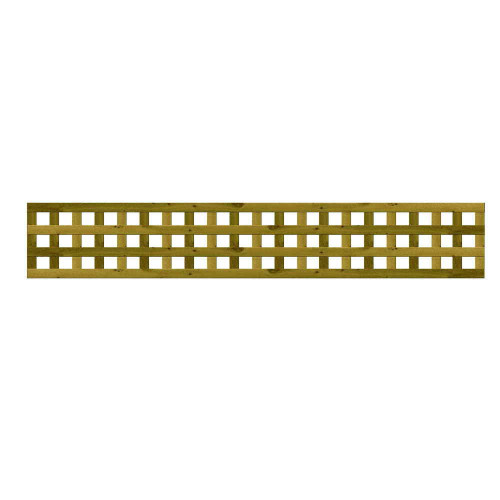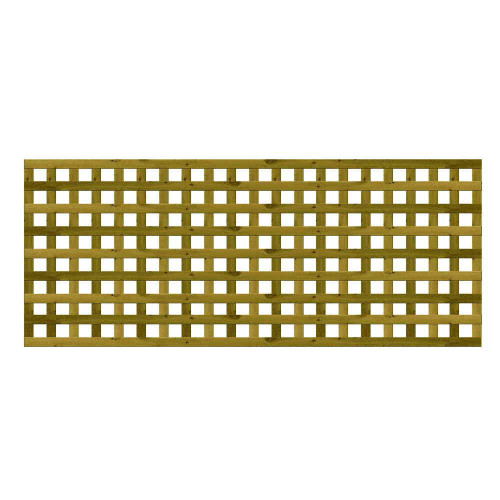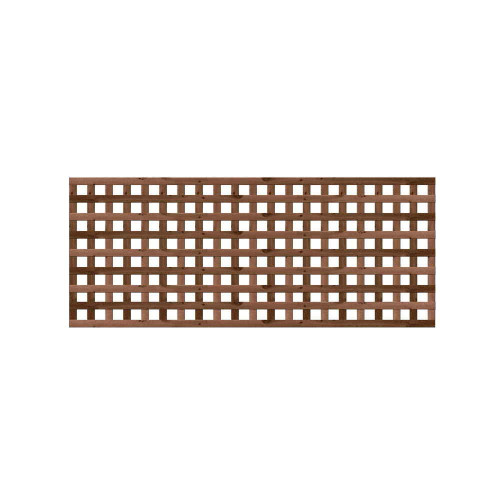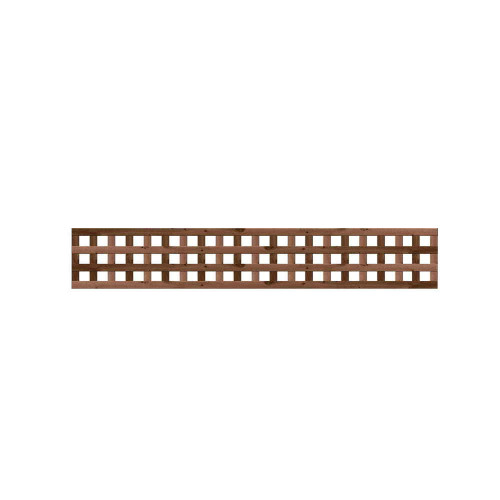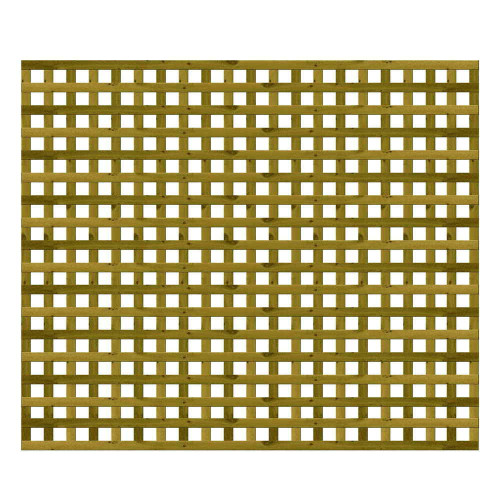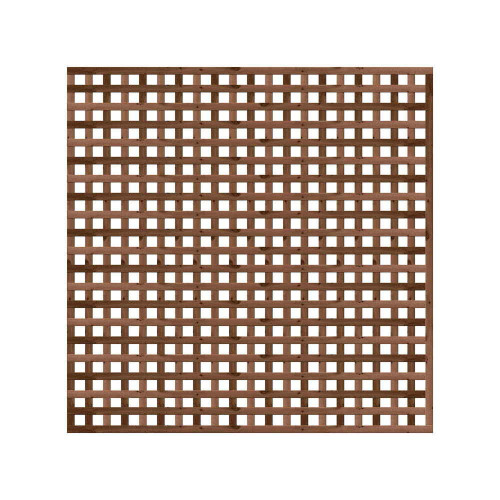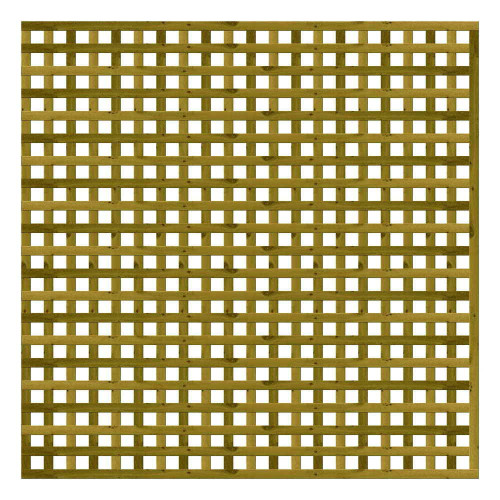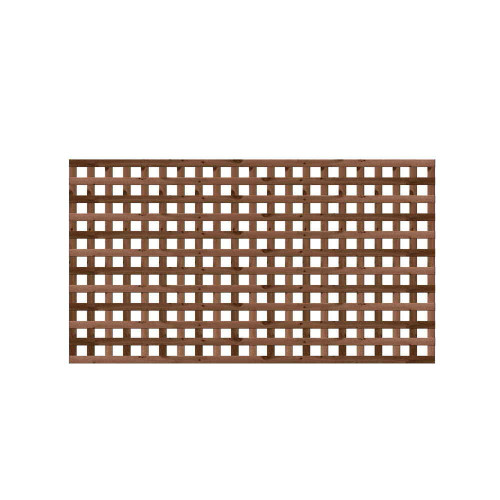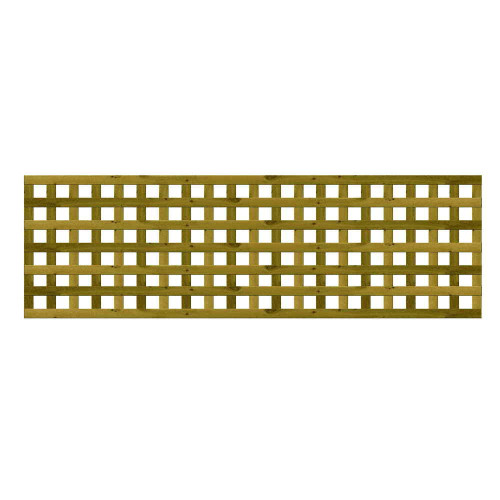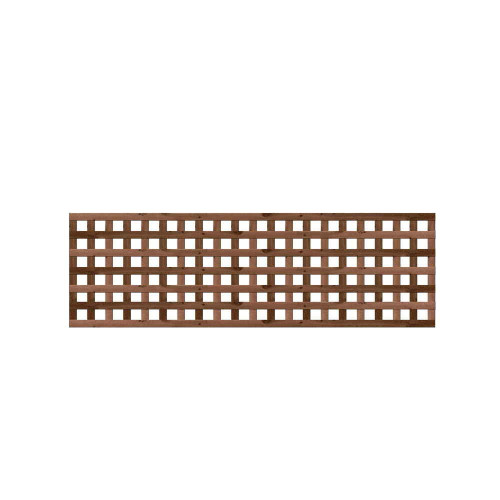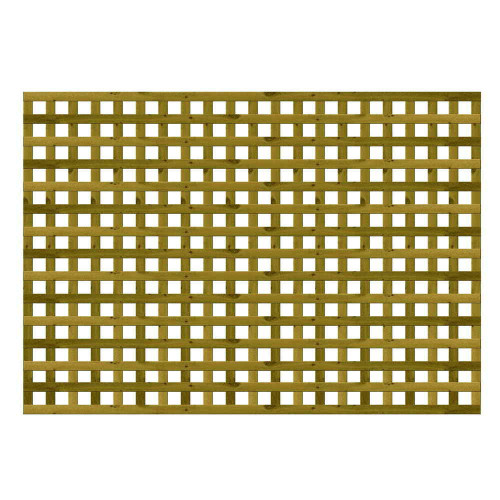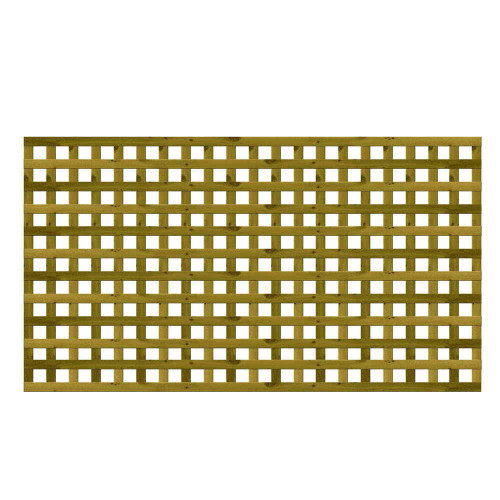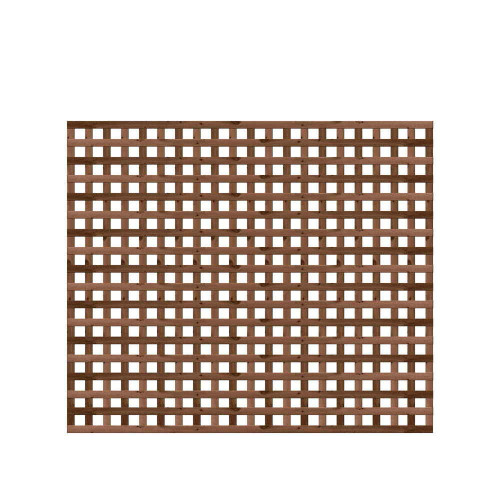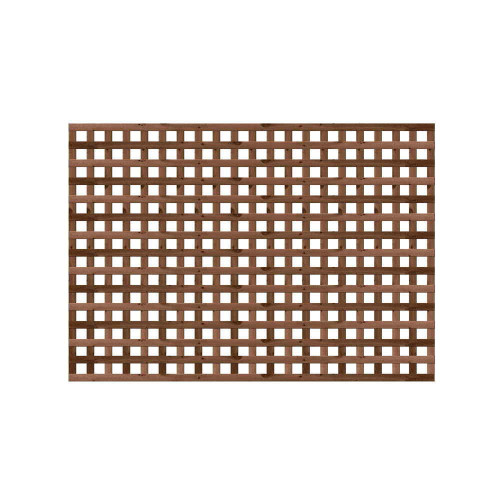



Quick answer: Yes. Privacy Square Trellis can be installed on a sloping garden, but rigid rectangular panels are normally kept level and stepped from post to post rather than tilted to follow the ground. East Coast Fencing's current Privacy Square Trellis is approximately 1.83m wide with approximately 50mm square openings. Plan each step before setting the posts, keep the panel frames square and decide whether you want a consistent top line, consistent ground clearance or a deliberate stepped appearance.
A sloping garden changes what would otherwise be a straightforward trellis installation.
Privacy Square Trellis uses a regular square grid, so even a small unwanted angle is easy to see. Tilt the complete panel down a slope and the squares immediately appear to lean.
For most installations, the cleaner approach is to keep every panel level and allow the screen to step at the posts.
The main decision is how those steps should relate to the ground, planting and finished screening height.
Planning that before the posts are installed is much easier than trying to correct a poorly aligned screen afterwards.
Can Privacy Square Trellis Follow A Sloping Garden?
Yes, but the trellis itself does not normally need to follow the exact angle of the ground.
A rigid rectangular panel generally looks better when it remains:
- Level across the top
- Square within its frame
- Supported at both ends
The next panel can then begin higher or lower at the following Fence Post.
This creates a stepped screen.
The steeper the garden, the larger or more frequent those steps may need to be.
Why Is Stepping Better Than Tilting Square Trellis?
The approximately 50mm square pattern provides a strong visual reference.
When the panel is level:
- Horizontal battens remain horizontal
- Vertical battens remain vertical
- The openings look square
- The outer frame remains correctly orientated
If the complete rectangular panel is rotated to match a slope, all of those lines become angled.
The panel may still physically function, but the result tends to look as though the trellis has been installed out of level rather than deliberately designed for sloping ground.
What Does A Stepped Trellis Screen Look Like?
Each panel remains horizontal while its height changes at the post.
For example, three bays descending a garden might look like this:
| Bay | Panel Position | Change At Next Post |
|---|---|---|
| 1 | Level | Step down |
| 2 | Level | Step down |
| 3 | Level | Continue at lower level |
The actual step does not have to be identical at every post.
It should respond to the ground level and the visual result you want.
Should The Top Of The Trellis Step With The Ground?
Usually, yes, when the screen follows a noticeable slope.
This keeps the trellis at a reasonably consistent height relative to the surrounding garden.
It also avoids having one end of the screen increasingly high above the ground.
However, there are two main ways to approach a sloping screen.
Follow The Ground In Steps
Each panel moves up or down as the garden changes level.
This is normally the most natural arrangement for a boundary following a slope.
Maintain One Continuous Top Level
All panel tops remain at the same absolute level even though the ground beneath them slopes.
This can create a strong architectural line, but the distance from the ground to the bottom or top of the screen changes along the run.
That may create large gaps or unusually tall sections at one end.
Use this approach deliberately rather than allowing it to happen by accident.
Should The Bottom Of The Trellis Follow The Ground?
The bottom edge can step approximately with the slope while each individual panel remains level.
A useful aim is to maintain sensible clearance between the pressure-treated timber and the ground.
Do not lower one end of a panel into soil simply to eliminate a triangular gap caused by the slope.
Persistent ground contact can:
- Keep timber damp
- Trap leaves
- Make maintenance difficult
- Hide deterioration
Some variation in the gap below a rigid rectangular panel is often preferable to burying part of the frame.
How Much Ground Clearance Should You Leave?
There is no single clearance measurement that suits every garden.
The important principle is to avoid unnecessary contact with:
- Wet soil
- Standing water
- Mulch
- Grass that remains permanently against the timber
On a slope, the ground may rise within a single approximately 1.83m-wide bay.
Set the panel high enough that the upper side of the ground does not bury the frame.
This naturally creates a larger gap at the downhill end.
What If A Large Triangular Gap Appears Under The Trellis?
This is one of the main practical issues on steeper slopes.
If a level rectangular panel spans sloping ground, the gap beneath it increases towards the lower side.
Possible approaches include:
- Using shorter bays so the ground changes less within each panel
- Stepping the panels more frequently
- Using planting to soften the lower gap
- Creating a separate suitable lower landscape feature
Do not simply fill the gap by piling soil against the timber trellis.
Can Privacy Square Trellis Retain Soil On A Slope?
No.
Ordinary timber trellis is not a retaining structure.
Its purpose is screening, garden division and plant support.
Soil on a slope can exert pressure against the panel, particularly when saturated with water.
If ground needs to be retained, use a suitable retaining arrangement independently of the trellis.
The trellis can then sit above or behind the landscaping feature without carrying the soil load.
Can Privacy Trellis Be Used Above A Retaining Wall?
Potentially, where a suitable independent fixing and support arrangement is provided.
This can be an effective way to combine:
- A structural lower level change
- Filtered screening above
- Climbing plants
The retaining wall and trellis should perform separate jobs.
Do not assume that a lightweight trellis post fixing is automatically suitable for a tall planted screen simply because a substantial wall exists beneath it.
What Privacy Square Trellis Sizes Work On Slopes?
Current East Coast Fencing Privacy Square Trellis is approximately 1.83m wide across suitable products.
Nominal heights include approximately:
- 300mm
- 450mm
- 600mm
- 900mm
- 1.2m
- 1.5m
- 1.83m
Lower panels are particularly useful as Fence Topper Trellis.
900mm and taller sizes can form substantial garden screens when installed between appropriate posts or framing.
The slope does not change the basic panel sizes, but it may change which height gives the most balanced finished result.
Which Height Is Best For A Sloping Garden?
Start with the purpose of the screen.
| Height | Typical Sloping-Garden Use |
|---|---|
| 300mm to 450mm | Stepped fence topper |
| 600mm | Deeper topper or low screen |
| 900mm to 1.2m | Garden zoning and patio screening |
| 1.5m to 1.83m | Tall freestanding filtered screen |
Do not choose extra height simply to compensate for poor setting out on the slope.
Choose the screen height first, then position each bay correctly relative to the ground.
Can Privacy Square Trellis Be Used Above A Stepped Fence?
Yes.
If the Fence Panels already step down a slope, the trellis topper can normally follow those same steps.
This often creates the cleanest result because:
- Panel joints already occur at the Fence Posts
- The trellis can change level at the same points
- The solid and open sections remain visually aligned
Each trellis topper should remain level within its individual bay.
Should The Trellis Step By The Same Amount As The Fence Panel?
Usually, where it is installed directly above a stepped fence.
Keeping the topper aligned with the main Fence Panel prevents the two elements from developing unrelated lines.
For example, if the next Fence Panel starts 150mm lower, the trellis above it would normally begin at a corresponding lower level.
This creates one coherent stepped boundary.
What If The Existing Fence Steps Unevenly?
Inspect the reason before copying it.
An old fence may have uneven tops because:
- Ground levels vary
- Posts were installed at different heights
- Posts have moved
- Panels have dropped
If the irregularity results from failure rather than intentional stepping, adding trellis above it can make the problem even more obvious.
Check the existing Fence Posts and panels before installing the topper.
Can Privacy Trellis Be Installed Between Wooden Posts On A Slope?
Yes.
Wooden Fence Posts provide straightforward timber fixing surfaces for framed trellis.
On a slope, post height needs particular attention.
One post may need more visible length above the ground than the next, depending on:
- The trellis height
- The amount of stepping
- The required ground clearance
- The chosen top line
Plan the visible post heights before cutting or setting posts permanently.
Should Every Wooden Post Be Cut To The Same Length?
Not automatically.
On sloping ground, equal overall post lengths can produce different visible heights if ground level changes substantially.
What matters is that each post provides enough:
- Below-ground support
- Above-ground height
- Fixing area for the panel
Do not shorten posts until the finished trellis levels have been established.
Can Privacy Trellis Be Used With Concrete Fence Posts On A Slope?
Potentially, where a suitable support arrangement already exists.
Concrete Fence Posts are rigid reinforced components, so adding trellis above them requires more planning than fixing timber to Wooden Fence Posts.
Check:
- How far each post extends above the Fence Panel
- Whether the existing fence already steps correctly
- Whether a suitable timber support frame is required
- The condition of the concrete posts
Avoid casually drilling reinforced concrete posts simply to compensate for an awkward trellis level.
How Do You Set Out Privacy Trellis On Sloping Ground?
- Measure the total run: Establish where the screen begins and finishes.
- Check the change in level: Identify how much the ground rises or falls across the run.
- Decide the panel arrangement: Use the approximately 1.83m width as a starting point, but measure actual panels.
- Choose the screen height: Decide whether you need a topper, low screen or full-height panel.
- Choose the stepping strategy: Decide where each level change will occur.
- Mark post positions: Make every step coincide with a proper support.
- Establish panel top levels: Use a level, string line or laser as appropriate.
- Check ground clearance: Make sure the uphill end of each bay will not be buried.
- Install the posts: Keep every post plumb despite the sloping ground.
- Fit each panel level: Check the square lattice before tightening the fixings.
Why Must The Posts Stay Plumb On A Slope?
The ground is angled. The posts should not be.
A common visual mistake is allowing Fence Posts to lean with the slope.
Vertical posts provide the correct structural and visual reference for rectangular trellis panels.
If the posts lean downhill:
- The square lattice looks distorted
- The panel opening can change width
- Fixing becomes more difficult
- The complete screen appears unstable
Use a spirit level on each post rather than judging it relative to the ground.
How Do You Decide Where Each Step Should Go?
Steps should occur at structural supports.
With approximately 1.83m-wide panels, the natural position is normally at each Fence Post.
If the slope changes dramatically within a single bay, a shorter custom bay may sometimes produce a cleaner result than accepting a very large gap beneath one side.
Plan that before installing the posts.
Do not cut several panels unnecessarily after a full-width layout has already been fixed.
Can You Use Different Trellis Heights Along The Same Slope?
Yes, but do it for a reason.
For example, you might use:
- 1.2m Privacy Square Trellis around an overlooked patio
- 900mm farther down the garden
- 600mm where only planting support is required
A change in panel height can work naturally where the garden use also changes.
Changing sizes randomly at every bay tends to make the screen look inconsistent.
Can Privacy Square Trellis Be Cut Diagonally To Match The Slope?
It is generally better not to.
A diagonal cut through square lattice:
- Cuts through numerous battens
- Creates partial openings
- Removes part of the outer frame
- Requires a new angled supporting edge
The result can be much harder to finish neatly than simply stepping rectangular panels.
Keep the manufactured rectangular form where practical.
Can Privacy Trellis Be Cut Shorter In Width On A Slope?
Yes, where a shorter bay genuinely helps the layout.
The approximately 50mm grid contains many lattice sections, so shortening needs careful reframing.
A properly adapted panel should still have:
- A supported cut edge
- Secure lattice ends
- A coherent square pattern
Do not simply cut through the panel and leave multiple loose 16 x 38mm batten ends.
How Do You Keep The Square Pattern Looking Straight?
Use the outer frame as the main reference.
Check that:
- The panel top is level
- The side edges are vertical
- The panel is not being forced into an undersized opening
- The posts are plumb
The approximately 50mm openings make misalignment easy to see.
If every square appears to lean in the same direction, investigate the complete frame or support rather than adjusting individual lattice battens.
Can Climbing Plants Help Hide The Steps?
Yes.
Planting can soften the visual transition between stepped trellis bays.
As climbers spread across the approximately 50mm grid, the eye tends to focus more on the planting than on the precise change in panel height.
This can work particularly well with suitable:
- Clematis
- Honeysuckle
- Jasmine
- Managed climbing roses
Do not use planting to hide poorly supported or badly aligned trellis.
Get the structure right first.
Should Plants Be Allowed To Grow Across Two Different Levels?
Yes, where the plant and maintenance arrangement allow it.
Climbers do not need to stop simply because one trellis panel sits lower than its neighbour.
Growth can be trained across the posts to create a more continuous planted screen.
Keep enough access to:
- Inspect panel fixings
- Inspect the posts
- Prune the plant
- Replace individual panels if necessary
Does Planting Increase Wind Load On A Sloping Trellis Screen?
Yes.
Privacy Square Trellis is already denser than Traditional Trellis because of its approximately 50mm openings.
As plants fill those openings, less air passes through.
On an exposed slope, the effect can be particularly important because some parts of the screen may be more exposed than others.
Choose posts and foundations around:
- Panel height
- Exposure
- Screen length
- Mature plant coverage
What If The Garden Slopes Sideways And Front To Back?
More complex ground needs more careful setting out.
Do not assume one string line tells you everything you need to know.
Check:
- The fence line
- Ground height at every post
- Ground height between posts
- Finished panel top levels
This helps prevent one corner of a panel unexpectedly meeting the ground even though both posts appeared correctly positioned.
Can Privacy Trellis Be Used On A Terraced Garden?
Yes.
Terraced gardens can actually simplify the layout because substantial level changes already occur at defined points.
A trellis screen can:
- Remain level within each terrace
- Change height at steps or retaining structures
- Use different panel heights in different zones
Keep the trellis support structurally independent from any element not designed to carry it.
How Do You Make A Stepped Trellis Screen Look Deliberate?
Consistency matters more than eliminating every change in level.
A neat stepped screen normally has:
- Vertical posts
- Level individual panels
- Steps occurring at posts
- Consistent panel widths where practical
- A clear relationship with the ground or fence beneath
A deliberate 150mm or 200mm step normally looks better than panels that drift gradually out of level.
Common Mistakes With Privacy Square Trellis On Slopes
- Tilting square trellis to follow the exact ground angle
- Allowing Fence Posts to lean with the slope
- Burying the uphill end of the panel in soil
- Trying to use trellis to retain sloping ground
- Setting posts before deciding where the steps will occur
- Measuring only the ground at the posts and ignoring the level between them
- Cutting the bottom of square lattice diagonally unnecessarily
- Leaving cut lattice ends without a new frame edge
- Copying an uneven old fence without checking whether the posts have moved
- Using the same post length without considering different ground levels
- Ignoring wind exposure on an open slope
- Forgetting how dense climbing plants change the load on the completed screen
FAQs
Can Privacy Square Trellis Be Installed On A Slope?
Yes. Keep individual rectangular panels level and step them at the posts as the ground rises or falls.
Should Trellis Follow The Angle Of The Ground?
Usually not with square lattice. Tilting the complete panel makes the horizontal and vertical battens appear out of level. Stepping normally gives a cleaner result.
Can You Cut The Bottom Of Privacy Trellis At An Angle?
It is physically possible to alter timber trellis, but an angled cut passes through numerous lattice sections and removes the normal frame edge. Stepping complete rectangular panels is usually simpler and neater.
Should Privacy Trellis Touch The Ground On A Slope?
Keep ordinary timber trellis clear of unnecessary wet soil and standing water. Set the panel high enough that the uphill end is not buried.
Can Privacy Square Trellis Retain Soil?
No. Trellis is intended for screening and plant support rather than retaining wet soil on a change of level.
Can Privacy Trellis Be Added Above A Stepped Fence?
Yes. It normally looks best when the topper follows the same steps as the Fence Panels beneath it, with each trellis section remaining level within its own bay.
What Width Is Privacy Square Trellis?
Current East Coast Fencing Privacy Square Trellis is approximately 1.83m wide across suitable products. Measure the actual panel before setting posts, particularly where shortened bays may be useful on a steep slope.
What Size Are The Openings?
Current Privacy Square Trellis uses approximately 50mm square openings and is manufactured from pressure-treated 16 x 38mm rough-sawn trellis batten.
Keep The Panels Level And Put The Height Changes At The Posts
Privacy Square Trellis can work very well in a sloping garden.
The key is not to make the rigid panel imitate the ground.
Keep each approximately 1.83m-wide rectangular panel level and allow the screen to move up or down at the Fence Posts. This preserves the approximately 50mm square pattern and gives the finished run a deliberate stepped appearance.
Plan ground clearance carefully. The uphill end of a level panel is the point most likely to meet wet soil, while the downhill end may develop a larger open gap.
Where the slope is steep, shorter bays or more frequent steps can sometimes create a cleaner result.
Do not solve level changes by piling soil against the trellis or expecting it to work as a retaining structure.
Finally, plan for the completed screen. Climbing plants can soften stepped transitions and increase privacy, but they also add weight and wind resistance.
Vertical posts, level panels and deliberate steps will normally produce a much cleaner Privacy Square Trellis screen than trying to force a square timber grid to follow an uneven garden surface.