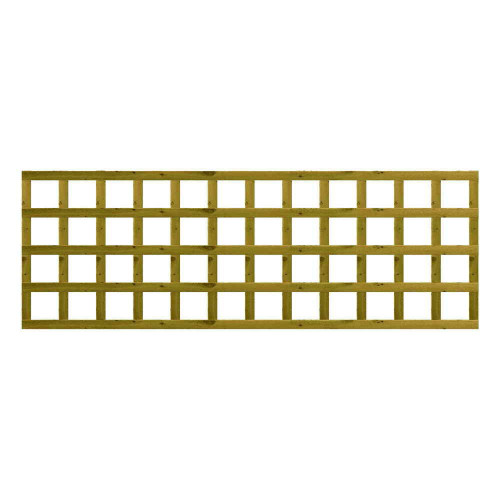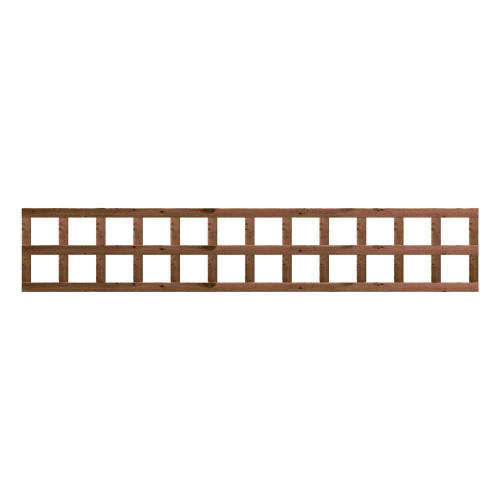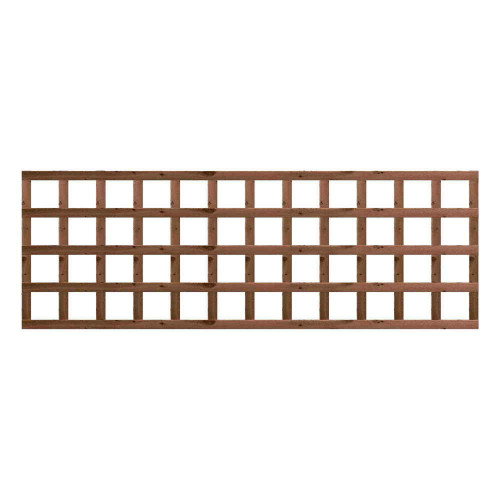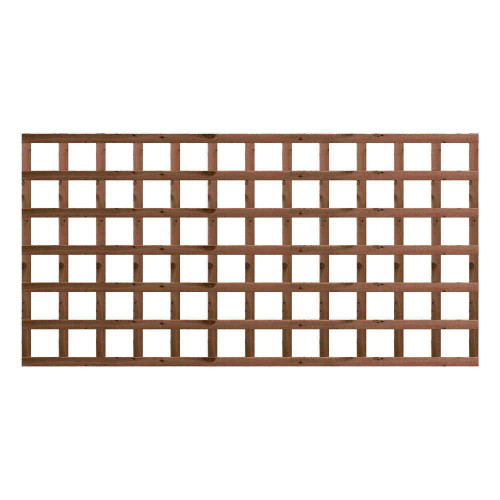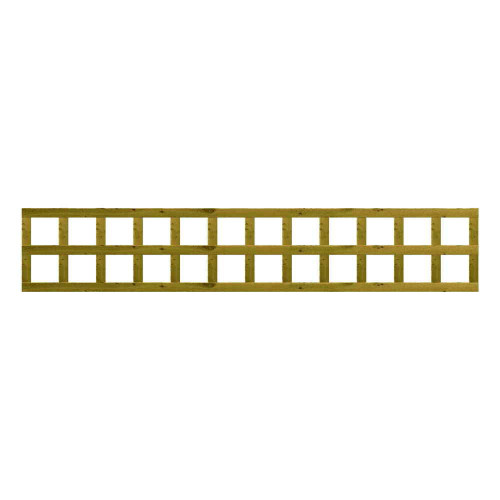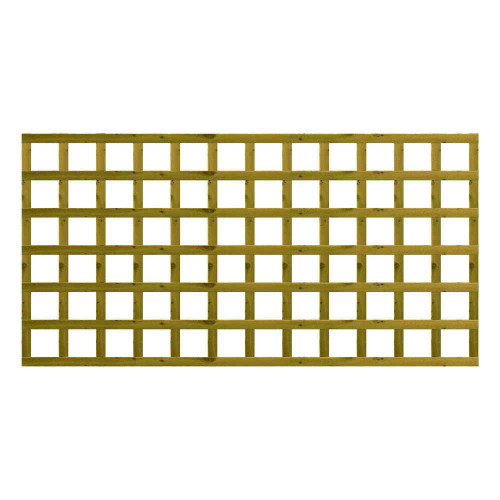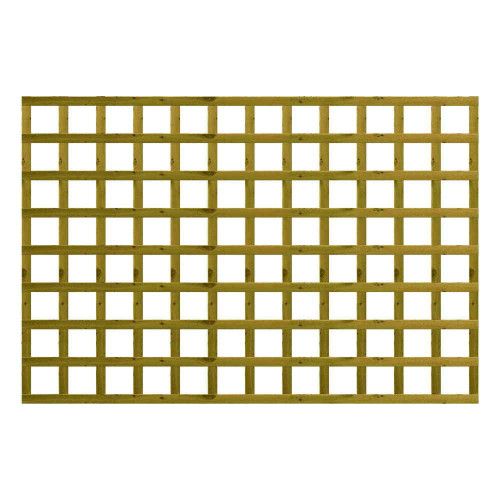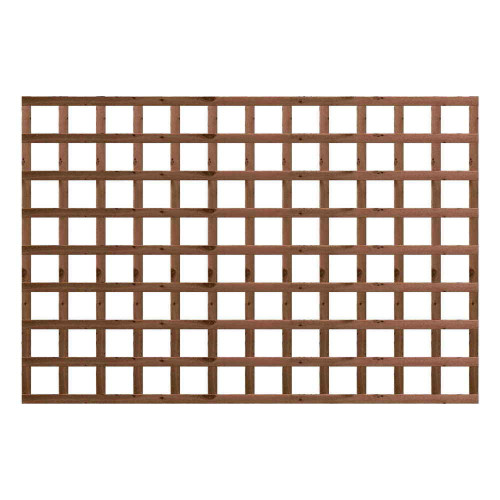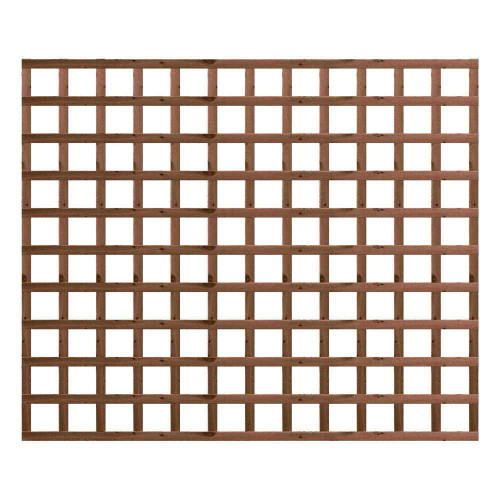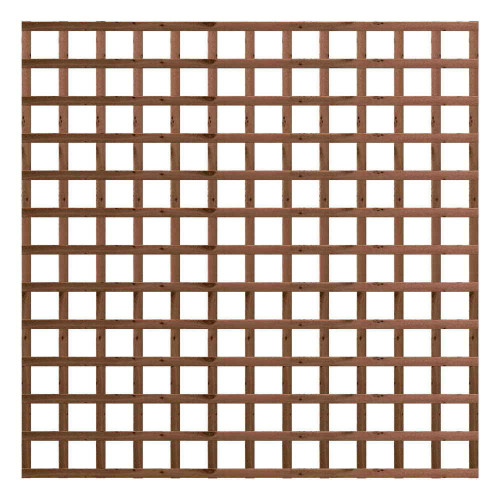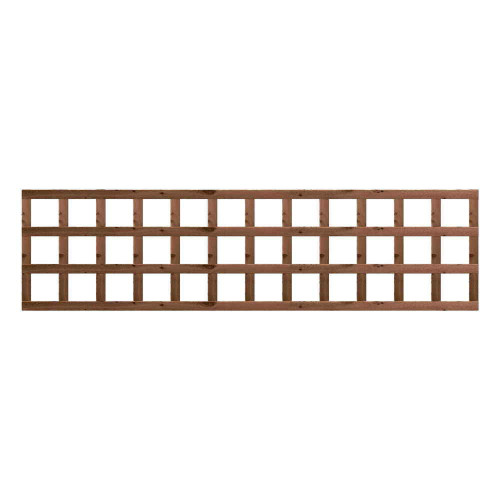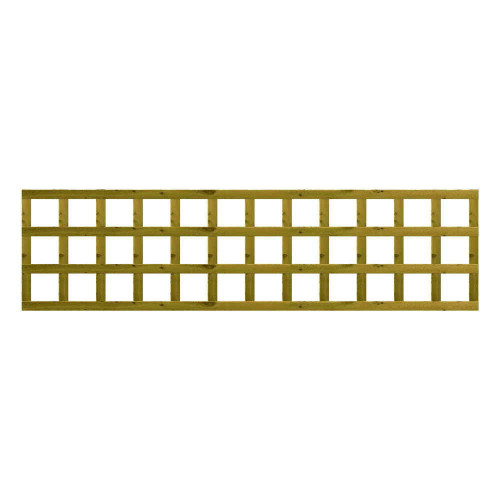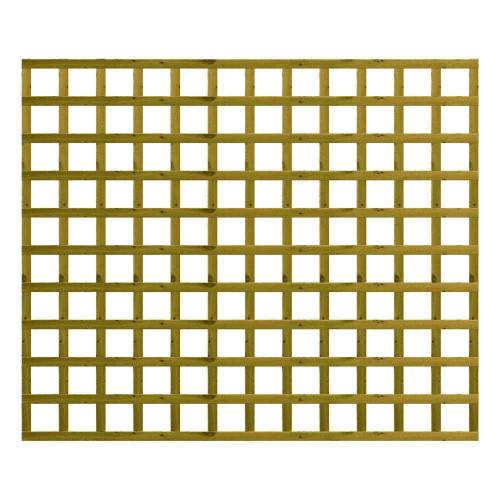



Quick answer: Yes, Traditional Trellis can often be repaired if damage is limited to one or two lattice battens or loose fixing points and the surrounding frame remains sound. East Coast Fencing's current Traditional Square Trellis uses pressure-treated 16 x 38mm rough-sawn battens with approximately 100mm openings, and matching-size loose trellis batten can be useful for suitable repairs. Replace the complete panel when the outer frame is badly distorted, several battens have failed or widespread deterioration makes individual repairs impractical.
A broken piece of trellis does not automatically mean the complete panel needs replacing.
Traditional Trellis is assembled from relatively small individual timber sections. If one batten splits, a fixing works loose or a climbing plant damages one part of the lattice, the remainder of the panel may still be perfectly serviceable.
The important part is identifying where the damage stops.
A single broken lattice strip is a very different repair from a panel whose outer frame has twisted, several intersections have failed and the supporting posts are moving.
Before ordering a new panel, inspect the complete structure and decide whether you are dealing with a local timber repair or general panel failure.
What Parts Of Traditional Trellis Can Be Repaired?
Common repairable problems include:
- One broken horizontal batten
- One broken vertical batten
- A loose lattice intersection
- A batten that has pulled away from the frame
- A small split around a fixing point
- Local damage caused by climbing plants
- Minor damage created while cutting or installing the panel
Repair becomes less attractive as damage spreads through the outer frame or several sections of lattice.
How Is Traditional Trellis Constructed?
Current East Coast Fencing Traditional Square Trellis is manufactured in-house using pressure-treated 16 x 38mm rough-sawn trellis batten.
The battens cross in two directions to create openings of approximately 100mm square.
The lattice is then supported by the surrounding panel structure.
This matters when repairing it because the panel does not behave like one solid piece of timber.
You need to preserve:
- The lattice spacing
- The connection between crossing battens
- The connection between lattice and frame
- The overall rectangular shape of the panel
Can You Replace A Single Broken Trellis Batten?
Yes, where the rest of the panel remains sound.
This is one of the most practical Traditional Trellis repairs.
A damaged batten can potentially be removed and replaced with a compatible timber section rather than discarding an approximately 1.83m-wide panel because one narrow piece has failed.
Current East Coast Fencing loose trellis batten is approximately:
- 1.83m long
- 38mm wide
- 16mm thick
- Pressure treated
- Rough sawn
That section corresponds with the 16 x 38mm timber used across current Traditional Square Trellis.
Always compare the damaged panel before beginning a repair rather than assuming every trellis made by every manufacturer uses the same dimensions.
When Is Replacing One Batten Worthwhile?
A local repair makes sense when:
- The outer frame is straight
- Most lattice battens remain secure
- Only one or two pieces are damaged
- The supporting posts remain stable
- The panel is otherwise in useful condition
Replacing individual battens can be particularly worthwhile on a large panel where most of the timber remains sound.
When Is A Complete New Panel More Sensible?
Replacement is usually more practical when:
- Several battens have broken
- Many lattice joints are loose
- The outer frame is badly twisted
- Large areas of timber have deteriorated
- The panel will no longer remain square
- Repair would involve reconstructing most of the lattice
| Damage | Repair Or Replace? | Reason |
|---|---|---|
| One broken batten | Usually repair | Localised component damage |
| One loose intersection | Usually repair | Limited fixing issue |
| Small frame split | Inspect carefully | Depends on remaining fixing strength |
| Several broken battens | Compare repair with replacement | Labour increases quickly |
| Badly twisted outer frame | Usually replace | Complete panel geometry is affected |
| Widespread timber deterioration | Replace | New fixings need sound timber |
What Should You Inspect Before Repairing Trellis?
Do not begin with the broken piece.
Begin with the complete installation.
Check:
- The outer frame: Make sure it remains reasonably straight and square.
- The remaining lattice: Look for other loose or split battens.
- The posts: Check whether the supporting structure has moved.
- Panel fixings: Look for loose or damaged connections at the edges.
- Plant growth: Make sure a heavy climber is not causing the damage.
- Moisture exposure: Check for soil, leaves or persistent damp around the bottom.
A new batten will not solve the problem if the panel is being pulled apart by a leaning Fence Post.
How Do You Know If The Outer Frame Is Still Sound?
Stand back and look at the complete panel.
The outer edges should remain reasonably straight and the corners should still form a coherent rectangular panel.
Warning signs include:
- One side noticeably bowing
- The top and bottom no longer appearing parallel
- Large frame splits
- Loose frame joints
- Several lattice pieces pulling out at the same edge
If several battens have become loose from the same side, inspect that frame section before repairing each batten individually.
Could A Moving Fence Post Be Breaking The Trellis?
Yes.
If Traditional Trellis is installed between Wooden Fence Posts, movement in one support can pull the panel out of square.
That can place extra stress on:
- Lattice intersections
- Frame joints
- Panel fixings
Check that the posts remain upright and stable.
If one post is leaning or loose, repair the structural problem before repairing the decorative lattice.
Can Climbing Plants Break Traditional Trellis?
Heavy mature plants can contribute to damage.
Traditional Trellis works very well as a climbing framework, but plants can become much heavier than they appear when young.
Established growth can add:
- Woody stems
- Dense foliage
- Weight after rainfall
- Additional wind resistance
If one broken batten sits directly behind a dense climbing rose, ivy or other mature climber, reduce and support the plant before attempting the timber repair.
Should You Remove Plants Before Repairing Trellis?
Not necessarily all of them.
The aim is to create enough access to work safely without leaving a heavy plant unsupported.
Depending on the plant, you may need to:
- Prune excess growth
- Untie selected stems
- Temporarily support heavier branches
- Move flexible stems away from the damaged area
Do not cut a structural trellis component away from a mature plant without considering what will support the plant afterwards.
How Do You Replace A Broken Traditional Trellis Batten?
The exact method depends on where the broken timber sits, but the general repair process is straightforward.
- Expose the damaged area: Move or support planting so the lattice can be reached properly.
- Check the surrounding timber: Make sure the nearby frame and crossing battens are sound.
- Measure the existing batten: Confirm its section rather than assuming a replacement will match.
- Remove the damaged piece carefully: Avoid pulling sound crossing battens out of position.
- Measure the replacement: Cut the new batten to match the section being removed.
- Protect fresh cuts where required: Use suitable cut-end treatment for pressure-treated timber.
- Position the replacement: Restore the existing lattice pattern and approximately 100mm spacing.
- Secure the intersections: Use suitable exterior-grade fixings appropriate to the timber.
- Reconnect it to the frame: Make sure the end is properly supported.
- Check the complete panel: Confirm the repair has not pulled surrounding squares out of alignment.
Why Should You Measure The Existing Batten First?
Trellis products from different manufacturers and different periods do not necessarily use identical timber sections.
Current East Coast Fencing Traditional Square Trellis uses 16 x 38mm batten, and the current loose trellis batten is approximately 38 x 16mm.
An older panel may be different.
A replacement that is too wide or thick can:
- Stand proud of the existing lattice
- Distort the pattern
- Make crossing joints awkward
A smaller section can look noticeably different and may not fit the existing fixing arrangement properly.
How Do You Keep The 100mm Square Pattern Consistent?
Use the remaining lattice as your reference.
Do not measure every opening independently if the surrounding grid already shows where the replacement should sit.
Before securing the new batten:
- Line it up with the existing row or column
- Check several nearby openings
- Stand back and look across the panel
The openings are approximately 100mm, not precision-machined apertures.
The aim is a visually consistent natural timber lattice rather than engineering-level dimensional accuracy.
Should The Replacement Batten Go In Front Or Behind?
Match the existing construction.
Traditional square lattice is formed by crossing timber layers.
If the original horizontal batten passes in front of the vertical pieces, install the replacement in the same relationship.
Changing the layer halfway across the panel can create:
- An uneven surface
- Awkward intersections
- A visibly inconsistent repair
What Fixings Should You Use?
Use suitable exterior-grade fixings intended for timber exposed to outdoor conditions.
The fixing needs to hold relatively narrow trellis timber without splitting it.
Useful precautions include:
- Avoiding unnecessarily large fixings
- Predrilling where there is a splitting risk
- Keeping fixings reasonably centred on the narrow batten
- Avoiding overtightening
The goal is to secure the timber, not crush the two crossing pieces together.
Do Freshly Cut Trellis Battens Need Treating?
Cutting pressure-treated timber exposes a fresh surface.
Where required by the treatment specification, use a suitable cut-end preservative intended for exterior treated timber.
This is particularly relevant where a replacement batten is shortened from a longer 1.83m section.
Pay attention to both ends before they become difficult to reach inside the repaired panel.
Can You Repair A Loose Trellis Intersection?
Often, yes.
If both crossing battens remain sound but their connection has loosened, the repair may be limited to securing that joint again.
Before adding a fixing, inspect the existing hole.
If the timber is split or badly enlarged around the original fixing, placing another fixing in almost exactly the same location may not hold properly.
Use sound timber for the repair rather than relying on a damaged fixing point.
Should You Glue Loose Trellis Joints?
An outdoor trellis repair should not depend solely on an unsuitable indoor adhesive.
The panel will experience:
- Rain
- Changing moisture levels
- Wind movement
- Timber expansion and contraction
If adhesive forms part of a repair, it needs to be appropriate for the exterior application, but suitable mechanical fixing and sound timber remain important.
Can A Split Batten Be Repaired Instead Of Replaced?
A very small local split may remain serviceable if the timber is still securely held and the split is not progressing.
Replacement is generally cleaner where:
- The split runs a significant distance along the batten
- A fixing has pulled through it
- The timber no longer holds its position
- The split affects an important intersection
Because trellis batten is relatively narrow, trying to place several fixings around a major split can create further damage.
Can You Repair The Outer Trellis Frame?
Minor local frame damage may be repairable, but frame condition deserves more caution than an isolated internal lattice batten.
The frame supports the panel and provides its main fixing edges.
If a frame section is:
- Badly split
- Rotten
- Twisted
- Detached at several corners
replacing the complete panel may be more practical.
There is little value in installing new lattice battens inside a frame that can no longer support them.
Can You Rebuild A Large Section Of Traditional Trellis?
Technically, individual trellis batten can be used to construct or repair lattice.
There is a practical point where rebuilding stops being an economical repair and becomes fabrication of most of a new panel.
If you need to replace:
- Several horizontal battens
- Several vertical battens
- Part of the frame
- Numerous intersections
compare the work with replacing the ready-made panel.
A complete panel also restores the lattice spacing and frame together rather than requiring each section to be reconstructed on site.
Can You Repair Traditional Trellis Without Removing It?
Small repairs can sometimes be completed while the panel remains installed.
This is most practical for:
- One loose intersection
- A local fixing problem
- An accessible short batten repair
Removing the panel may be easier where:
- A full-length batten needs replacing
- Several lattice intersections need work
- The frame needs checking for square
- Access behind the panel is poor
Why Can Removing The Panel Make The Repair Easier?
A removed panel can be supported on a suitable flat working surface.
This makes it easier to:
- Check whether the frame is distorted
- Keep lattice spacing consistent
- Reach both sides of crossing battens
- Cut and position replacement timber accurately
It can also reveal whether apparent panel distortion was actually caused by misaligned posts.
What If The Trellis Becomes Straight After Removal?
Check the installation before repairing the panel.
A trellis that sits reasonably square when removed may have been distorted by:
- Leaning posts
- An undersized opening
- Incorrect fixing positions
- The panel being installed under compression
Repairing the lattice and reinstalling it into the same distorted opening will recreate the problem.
Can You Repair Trellis That Has Been Cut Badly?
Potentially.
A common problem occurs when a framed trellis panel is shortened without recreating the outer support.
This leaves several lattice ends exposed and unsupported.
A suitable repair can involve installing new framing along the cut edge so those battens once again terminate against a proper support.
The repaired panel should behave like a smaller complete trellis panel rather than a full panel with one side sawn away.
Can Weathered Old Trellis Be Repaired With New Timber?
Yes.
The new pressure-treated batten will probably look different from the existing weathered lattice at first.
Differences may include:
- Colour
- Surface freshness
- Treatment tone
- Natural grain
The older timber has already been exposed to weather, while the replacement has not.
This visual difference alone does not make the repair unsuitable.
Can You Paint The Repair To Make It Match?
A suitable exterior timber coating can be used where appropriate for the existing panel, but do not apply it simply to disguise structural damage.
Complete the repair first.
Then make sure the timber is suitably prepared and sufficiently dry for the chosen coating.
Coating the complete visible section normally gives a more consistent appearance than painting only one replacement batten.
Can Pressure-Treated Trellis Still Rot?
Pressure treatment improves timber resistance to decay, but good installation conditions still matter.
Problems are more likely where timber remains persistently exposed to:
- Wet soil
- Standing water
- Built-up leaves
- Dense vegetation that prevents drying
If the lower frame has deteriorated because it has been buried beneath soil for years, replacing individual lattice battens above it will not solve the underlying issue.
Should You Repair Trellis That Is Rotting At The Bottom?
First establish how far the deterioration extends.
If only a small isolated timber component is affected and the surrounding frame remains solid, local repair may still be reasonable.
If the complete lower frame has softened or several lattice pieces are affected, replacement becomes more sensible.
When installing the replacement, keep ordinary timber trellis clear of unnecessary wet ground contact where practical.
How Do You Prevent The Same Damage Happening Again?
- Keep the panel properly supported: Every main edge should have a suitable fixing arrangement.
- Check the posts: Deal with movement before it distorts the trellis.
- Do not force panels into tight openings: Compression can stress frames and intersections.
- Manage climbing plants: Prune heavy growth and distribute stems across the panel.
- Keep soil away: Avoid burying the lower frame under mulch or compost.
- Inspect loose joints: Deal with one loose section before it starts pulling neighbouring battens apart.
- Protect fresh cuts: Use suitable cut-end treatment where required.
Common Traditional Trellis Repair Mistakes
- Replacing a broken batten without checking why it broke
- Repairing the lattice while ignoring leaning Fence Posts
- Assuming all trellis battens are exactly 16 x 38mm
- Using timber that is visibly thicker or thinner than the existing lattice
- Losing the approximately 100mm square pattern during the repair
- Installing a replacement batten on the wrong lattice layer
- Using oversized fixings that split the narrow timber
- Overtightening fixings
- Failing to protect fresh pressure-treated timber cuts where required
- Trying to repair a badly twisted outer frame by replacing internal battens
- Leaving a mature climbing plant unsupported during repair
- Continuing to repair individual pieces when most of the panel has already failed
FAQs
Can You Replace One Piece Of Traditional Trellis?
Yes. If the rest of the panel and outer frame remain sound, an individual horizontal or vertical trellis batten can often be replaced without changing the complete panel.
What Size Batten Is East Coast Fencing Traditional Trellis Made From?
Current Traditional Square Trellis is manufactured from pressure-treated 16 x 38mm rough-sawn trellis batten.
Can You Buy Timber For Repairing Trellis?
East Coast Fencing currently supplies loose pressure-treated trellis batten approximately 1.83m long with a 38 x 16mm section, which can be useful for compatible trellis repairs and lightweight lattice projects.
How Big Are The Squares In Traditional Trellis?
Current Traditional Square Trellis uses approximately 100mm openings. When repairing a panel, use the surrounding lattice as a visual guide to maintain consistent spacing.
Can A Loose Trellis Joint Be Repaired?
Usually, provided the surrounding timber remains sound. Inspect the existing fixing point first because split or enlarged timber may need a different repair rather than simply another fixing in the same hole.
Should You Repair Or Replace A Warped Trellis Panel?
Minor local damage can often be repaired. A badly twisted outer frame, widespread deterioration or numerous failed lattice sections usually makes complete panel replacement more practical.
Do Cut Trellis Battens Need Treating?
Fresh cuts in pressure-treated timber should receive suitable cut-end protection where required by the treatment specification.
Can You Repair Trellis With Climbing Plants Still On It?
Sometimes. Light growth can often be moved temporarily, but substantial mature stems may need pruning or independent temporary support so the plant does not fall when damaged trellis components are removed.
Repair Local Damage, Replace Widespread Failure
Traditional Trellis is made from individual timber components, which means a small amount of damage does not automatically require a complete new panel.
One broken 16 x 38mm batten, one loose lattice intersection or a local fixing problem can often be repaired while most of the original trellis remains in place.
Match the existing timber dimensions, preserve the approximately 100mm square pattern and make sure replacement pieces are properly connected to sound surrounding timber.
More importantly, find out why the damage occurred.
A leaning post, badly fitted panel or overloaded climbing plant can simply break the replacement piece again.
If the outer frame remains straight and most of the lattice is sound, repair is usually worth considering.
If the frame has twisted, several battens are broken or deterioration affects large areas of the panel, replacement is generally the cleaner solution.
The useful distinction is simple: repair individual components when the panel remains structurally coherent. Replace the panel when you would effectively need to rebuild most of it to make it sound again.