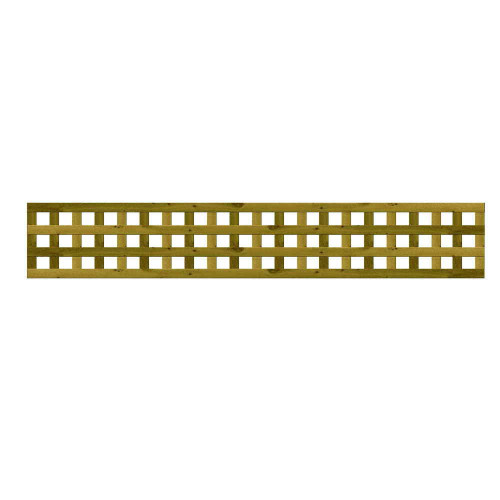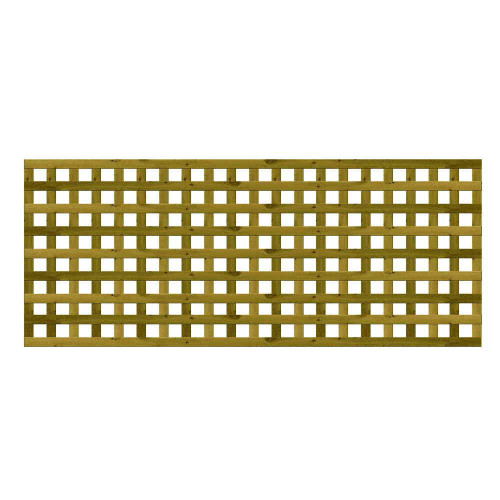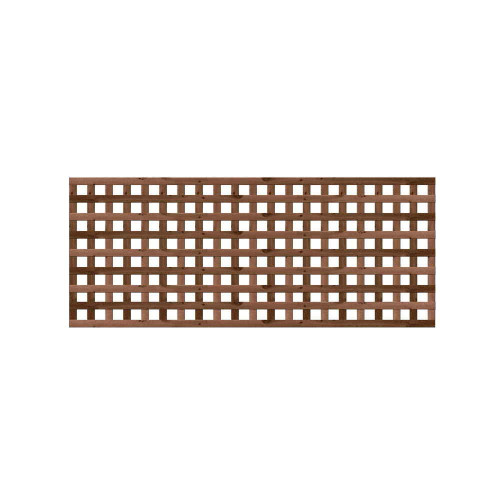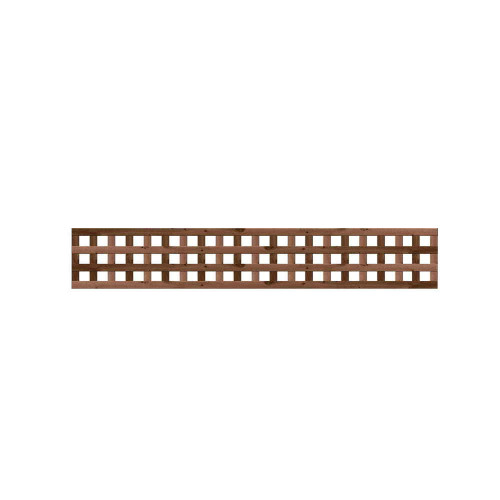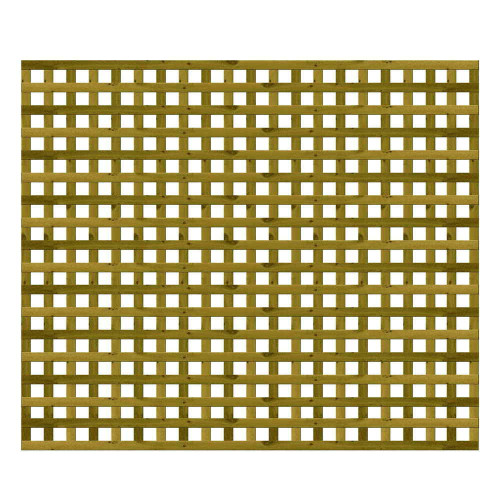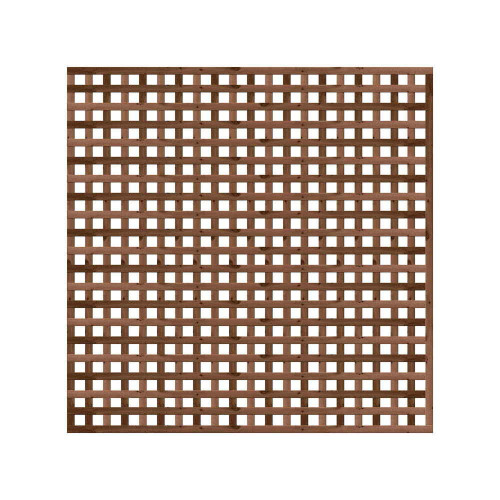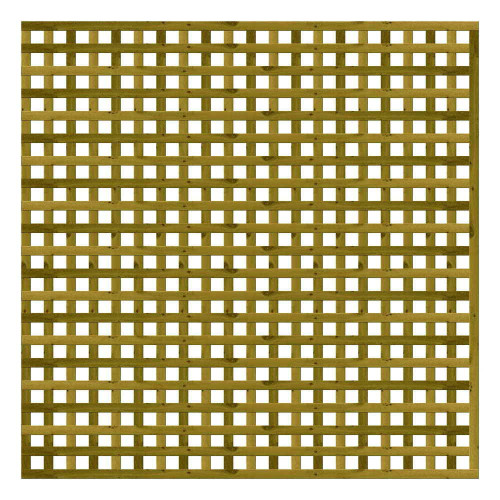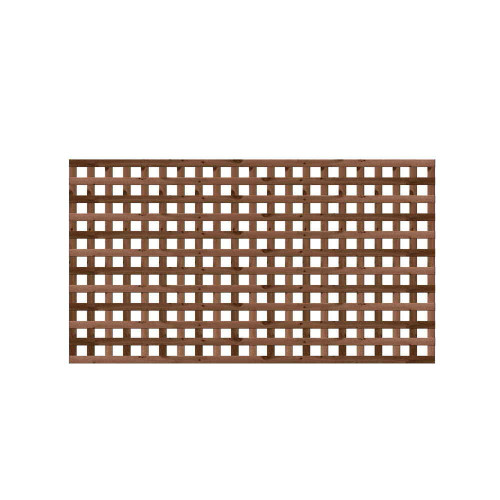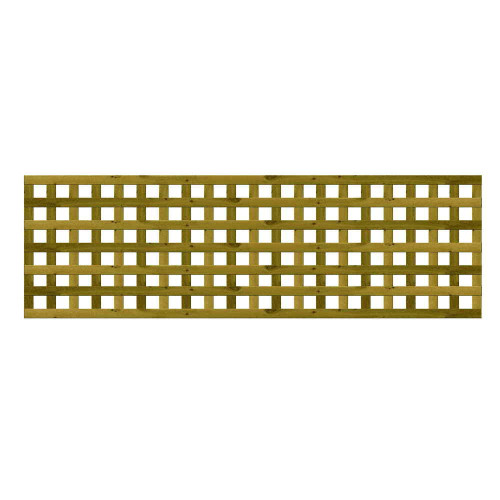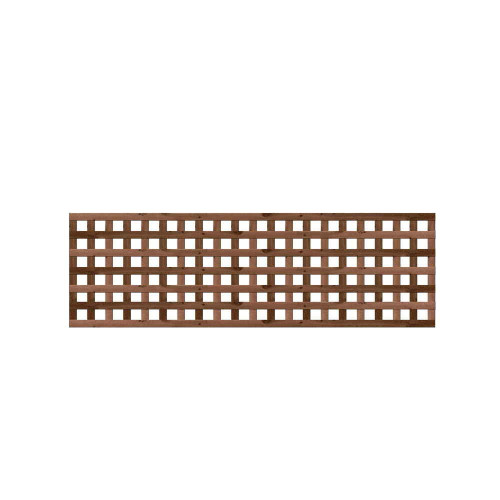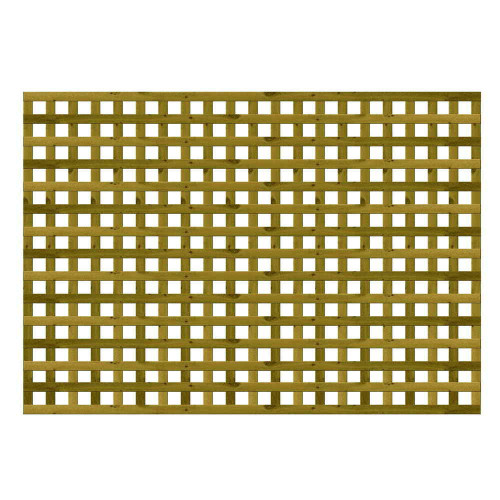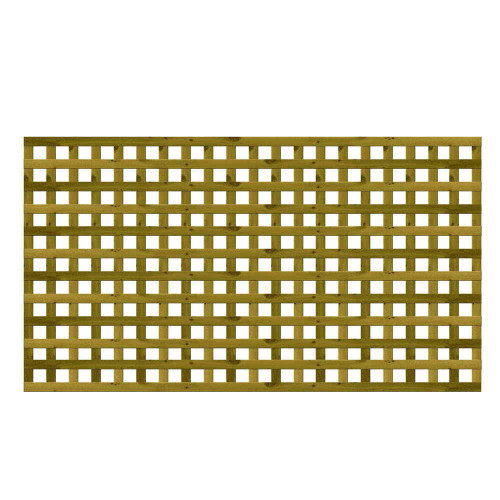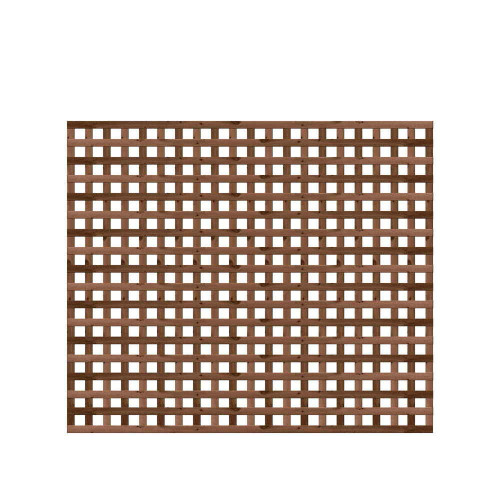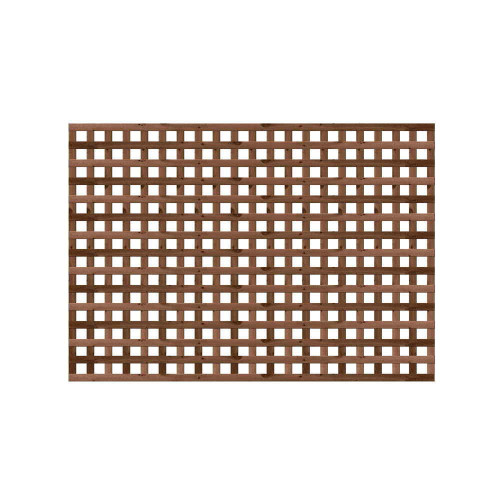



Quick answer: Privacy Square Trellis can be installed between pressure-treated wooden posts to create a freestanding garden screen, patio divider or planted boundary. Measure the actual panel before setting the posts, keep the posts plumb and support both vertical panel edges securely. East Coast Fencing's current Privacy Square Trellis is approximately 1.83m wide, uses pressure-treated 16 x 38mm rough-sawn battens and has approximately 50mm square openings. Taller panels need correspondingly substantial posts, foundations and exterior fixings.
Installing Privacy Square Trellis between wooden posts is one of the simplest ways to create screening without building a completely solid fence.
The approximately 50mm square lattice interrupts views while still allowing light and air through the panel.
It also gives climbing plants plenty of positions for training and tying.
The main challenge is not fitting the trellis. It is setting the posts accurately enough that the framed panel fits properly, stays level and remains supported as wind and plants place additional loads on the screen.
Measure first, decide exactly how the panels will be fixed, then set the posts around the actual installation.
What Is Privacy Square Trellis Made From?
Current East Coast Fencing Privacy Square Trellis is manufactured in-house from pressure-treated 16 x 38mm rough-sawn trellis batten.
The battens create openings of approximately 50mm square.
That closer pattern gives substantially more filtered screening than the approximately 100mm openings used in Traditional Square Trellis.
The timber is deliberately rough sawn, so normal characteristics include:
- Visible grain
- Knots
- Saw texture
- Treatment marks
- Natural colour variation
It should not be expected to have the smooth appearance of planed interior joinery.
Can Privacy Square Trellis Be Used As A Freestanding Screen?
Yes.
Although lower Privacy Square Trellis panels are commonly used as Fence Topper Trellis, taller panels can form screens in their own right when installed between suitable posts.
Useful applications include:
- Patio screening
- Garden zoning
- Outdoor seating areas
- Planting screens
- Garden room surrounds
- Utility-area screening
- Internal garden divisions
The trellis is the infill panel.
The Wooden Fence Posts and their foundations provide the main structural support.
What Sizes Of Privacy Square Trellis Can Be Installed Between Posts?
The current range uses an approximately 1.83m panel width across suitable sizes.
Nominal heights include options around:
- 300mm
- 450mm
- 600mm
- 900mm
- 1.2m
- 1.5m
- 1.83m
The lower sizes are particularly useful above fencing or for low decorative screening.
Panels around 900mm and above are more likely to be used as substantial freestanding garden screens.
| Panel Height | Typical Use | Main Installation Consideration |
|---|---|---|
| 300mm to 600mm | Low screen or fence topper | Accurate support and finished height |
| 900mm | Garden zoning | Post stability and alignment |
| 1.2m | Patio and seating screens | Suitable post section and foundation |
| 1.5m | Tall filtered screening | Wind and future plant loading |
| 1.83m | Full-height open screen | Treat as a substantial screen installation |
Should Privacy Trellis Be Installed Between Or In Front Of The Posts?
Both arrangements can be possible, but installing between wooden posts creates a particularly clean result.
Each post forms a vertical border around the approximately 50mm square pattern.
This gives every trellis panel a clear supported edge.
Between The Posts
The panel occupies the clear opening between two posts.
Advantages include:
- A neat framed appearance
- Clear support at both edges
- Easy visual separation between bays
- Individual panels that can potentially be removed later
Face-Fixed To The Posts
The panel sits across one face of the posts.
This can create a more continuous lattice surface, but the post set-out and fixing positions are different.
Decide which method you are using before installing the posts.
How Far Apart Should The Wooden Posts Be?
Do not set the posts using an assumed nominal measurement alone.
Current Privacy Square Trellis panels are approximately 1.83m wide, but the actual panel and fixing arrangement should determine the finished opening.
Before digging:
- Measure an actual trellis panel.
- Decide whether it will sit between or across the posts.
- Identify where the main fixings will enter the panel frame.
- Allow suitable installation clearance.
- Set out the complete run.
This is especially important across several bays.
A small spacing error repeated across five or six posts can leave an awkward final opening.
Should Privacy Trellis Fit Tightly Between The Posts?
No.
A timber panel should not need to be forced into the opening.
Timber naturally changes slightly as moisture conditions change, and a panel installed under compression can place unnecessary stress on:
- The outer frame
- Lattice intersections
- Panel fixings
- Posts
If the panel is too wide for an existing bay, investigate the dimensions properly rather than using force to push it between the posts.
What Wooden Posts Should You Use?
Current East Coast Fencing Wooden Fence Posts include both 75mm and 100mm sections across suitable products.
The correct post should be chosen from the complete installation rather than simply from the fact that trellis is relatively open.
Consider:
- Panel height
- Number of trellis panels
- Garden exposure
- Ground conditions
- Future climbing plants
- How much of the post will be above ground
Lower screens can place very different demands on their supports from a full-height approximately 1.83m trellis screen.
When Should You Consider 100mm Wooden Posts?
A 100mm post provides a more substantial timber section and broader fixing surface than a 75mm post.
It is worth considering for installations involving:
- Taller panels
- Long screen runs
- More exposed gardens
- Dense climbing plants
That does not mean every Privacy Square Trellis screen universally requires 100 x 100mm posts.
Ground conditions and foundations remain just as important.
A large post set badly can still move.
How Long Do The Posts Need To Be?
The post must provide enough length both above and below ground for the chosen installation.
Do not select a post simply because its length matches the trellis height.
For example, a full-height approximately 1.83m screen needs most or all of that visible height above ground.
A conventionally installed wooden post also requires a substantial section below ground.
Calculate:
Visible screen height + any clearance or lower component + required below-ground post length.
Then choose the available post length that suits the completed design.
How Should You Set Out A Privacy Trellis Screen?
Plan the complete run before digging the first hole.
- Mark the ends: Establish exactly where the screen begins and finishes.
- Check the total length: Work out how many full approximately 1.83m panels fit.
- Plan any shortened bay: Avoid accidentally leaving a tiny section at the end.
- Mark post positions: Base these on the actual fixing arrangement.
- Use a string line: Keep all posts on the same screen line.
- Check corners and gates: Plan these before foundations are installed.
Careful setting out is particularly important with square trellis because misalignment is easy to see in the repeating grid.
How Do You Install The Wooden Posts?
Before digging, check the area for underground services and other obstructions.
Each post should be positioned:
- On the correct line
- At the required spacing
- Plumb in both directions
- At the correct finished height
Secure the post using an installation method appropriate to the screen and ground conditions.
Where post mix or another foundation material is used, follow its installation instructions and support the post correctly while it sets.
Why Is It Important To Keep The Posts Parallel?
The framed trellis is rectangular.
If the posts lean towards one another at the top, the opening becomes narrower.
If they lean away from one another, the opening becomes wider.
If one post twists, the two fixing surfaces can stop being parallel.
These problems can make a correctly sized trellis panel appear badly made when the actual issue is the opening surrounding it.
Check the posts before the foundations become permanent.
Should You Fit The Trellis Before The Post Mix Has Set?
Do not use the trellis panel as a substitute for properly bracing posts while the foundation sets.
The posts should establish the structure.
If a panel is fixed prematurely and then used to pull one post into alignment, stress can be locked into both the trellis and the supports.
Allow the supporting structure to become suitably stable before applying normal panel loads.
How High Above The Ground Should Privacy Trellis Sit?
Keep ordinary timber trellis away from unnecessary persistent ground moisture where practical.
Pressure treatment improves outdoor durability, but there is little advantage in burying the lower frame in wet soil.
Useful clearance helps prevent:
- Grass remaining against the timber
- Mulch building up over the frame
- Leaves trapping moisture
- Standing water contacting the panel
It also makes the lower edge easier to inspect and maintain.
Do You Need A Gravel Board Below Privacy Trellis?
Not necessarily.
A Gravel Board can create a defined lower edge and increase separation from soil, but it changes the appearance and finished screen height.
Privacy Square Trellis used as an internal garden screen may simply be raised slightly above ground between its posts.
Where a Gravel Board is used, plan the post positions and finished heights around both components from the start.
How Do You Fit The First Privacy Trellis Panel?
- Check the posts: Make sure both supports are secure and plumb.
- Position the panel: Place it at the required height between the posts.
- Support its weight: Use temporary blocks or another suitable method so the panel does not drop while you work.
- Check the top edge: Use a spirit level.
- Check the square lattice: Make sure the grid is not visibly leaning.
- Check both panel edges: Confirm they sit correctly against the supporting arrangement.
- Fix through suitable framed sections: Use exterior fixings appropriate to pressure-treated timber.
- Recheck level: Make sure tightening the fixings has not pulled the panel out of position.
Where Should You Put The Fixings?
Use the substantial framed edges of the trellis for the main structural connections.
Do not rely on isolated 16 x 38mm lattice battens as though they were structural rails.
Primary fixings should transfer the panel load into:
- The surrounding trellis frame
- The Wooden Fence Posts
- Any suitable supporting timber included in the installation
The lattice grid is primarily the screening and plant-support surface.
What Type Of Fixings Should You Use?
Use exterior-grade fixings suitable for treated timber and the particular support arrangement.
The required fixing length and diameter depend on:
- Frame thickness
- Post section
- Whether brackets are used
- How the panel is positioned
Avoid selecting a screw simply because it is available in the toolbox.
The fixing needs enough useful penetration into sound supporting timber without unnecessarily protruding through the other side.
Should You Predrill Privacy Trellis?
Predrilling can be helpful where fixings are close to timber edges or where splitting is a concern.
This is particularly relevant when working with relatively narrow frame or lattice components.
Do not make unnecessarily large pilot holes that reduce the fixing's grip.
Can Overtightening The Fixings Damage The Panel?
Yes.
A screw should bring the frame securely against its support.
Continuing to tighten after that point can:
- Crush the timber
- Pull the frame out of square
- Increase the risk of splitting
The completed panel should be secure without visibly distorting its surrounding frame.
How Do You Keep Several Trellis Panels Level?
Do not independently measure every panel from uneven ground.
Establish a consistent top line for the screen.
Useful tools include:
- String line
- Spirit level
- Laser level where available
Check every bay as you work.
The approximately 50mm square pattern makes small differences in panel level easy to spot when looking along a long screen.
Can Two Privacy Trellis Panels Share The Same Post?
Yes, where the post and fixing arrangement are suitable.
Each panel edge needs enough sound timber for secure fixing.
A substantial post gives more room to position fixings from adjoining panels without placing several screws into almost the same point.
Stagger fixing locations where appropriate rather than creating a concentrated row of holes through a narrow part of the post.
How Do You Install Privacy Trellis Around A Corner?
Use a structural post at the change of direction.
The corner post needs to provide suitable fixing surfaces for both trellis runs.
Before setting it permanently:
- Check the angle of both screen lines
- Check the post is plumb
- Check where both panel frames will finish
- Plan the top-line height
The repeating square lattice makes a poorly aligned corner particularly visible.
How Do You Install Privacy Trellis Beside A Garden Gate?
Plan the gate and trellis as separate components.
A Gate Post carries repeated forces from the moving gate and may need a different specification from an ordinary screen post.
The Privacy Square Trellis should finish securely against a static support rather than depending on the moving gate.
Set out the complete arrangement before installing anything so the final trellis bay does not become unnecessarily narrow.
Can Privacy Trellis Be Installed On Sloping Ground?
Yes.
Rectangular panels are normally kept level and stepped from post to post as the ground changes.
This keeps the approximately 50mm squares visually square.
If you tilt a rectangular square-lattice panel to follow a slope, the complete grid immediately appears to lean.
Plan:
- Where each step occurs
- How much the screen changes in height
- The length of each post
- The finished top line
before setting the posts.
Can Privacy Square Trellis Be Cut To Fit A Short Bay?
Yes, timber trellis can be adapted where a genuine non-standard opening requires it.
However, cutting through a framed lattice removes part of the outer edge and leaves several batten ends needing support.
A shortened panel should be properly reframed rather than installed with loose cut lattice ends.
When cutting:
- Measure the finished opening.
- Plan where the approximately 50mm pattern will finish.
- Mark a straight cut.
- Support the panel securely.
- Cut the required timber components.
- Install suitable new edge support.
- Protect fresh pressure-treated timber cuts where required.
Why Is Privacy Trellis More Difficult To Cut Than Open Traditional Trellis?
The approximately 50mm lattice contains more intersections across the same panel width than an approximately 100mm Traditional Square Trellis.
A vertical cut therefore passes through more individual timber components.
This increases the importance of planning the new frame edge properly.
Where practical, use full-width approximately 1.83m panels and limit cutting to genuinely non-standard bays.
Can Privacy Trellis Support Climbing Plants?
Yes.
The close square grid gives plants numerous contact and tying points.
Suitable planting can gradually increase the amount of screening by filling the approximately 50mm openings with stems and foliage.
Remember that the planted panel eventually weighs more than the bare trellis.
Dense vegetation can also increase wind resistance.
Should You Install Plants Immediately?
You can begin planting once the screen and surrounding garden works are ready, but make sure the trellis installation itself is sound first.
Do not use plants to disguise:
- Loose posts
- A panel that is out of level
- Missing fixings
- A distorted frame
These problems become much harder to reach once mature growth covers the screen.
How Does Planting Change The Structural Load?
Bare Privacy Square Trellis remains open to airflow.
As plants fill the approximately 50mm openings, that changes.
Mature growth can add:
- Permanent stem weight
- Seasonal foliage
- Rainwater held by leaves
- Additional wind resistance
For vigorous climbers, design the posts and support arrangement around the mature planted screen rather than only the panel being installed today.
Should Privacy Trellis Touch A Raised Bed?
It can sit behind a raised bed as a plant support, but the bed should contain its own soil.
Do not rely on ordinary trellis to retain:
- Soil
- Compost
- Wet growing media
Keep the lower timber accessible rather than burying the frame behind the bed.
How Do You Maintain An Installed Privacy Trellis Screen?
Inspect the installation occasionally rather than waiting until movement becomes obvious.
Check:
- Wooden Fence Posts remain upright
- Panel fixings remain secure
- The outer frames remain supported
- Lattice battens have not become loose
- Heavy plants are not overloading one section
- Leaves and mulch are not burying the lower frame
Natural timber will weather and can move slightly as moisture conditions change.
Minor variation is not automatically a structural problem.
Can Privacy Trellis Be Painted After Installation?
A suitable exterior timber coating can be applied where appropriate once the timber meets the coating manufacturer's preparation requirements.
The approximately 50mm square pattern means there are many:
- Edges
- Intersections
- Internal surfaces
to reach.
If you already know you want a decorative finish, applying it before dense plants establish can make the work considerably easier.
What Are The Most Common Installation Mistakes?
- Setting posts before measuring the actual trellis panel
- Forcing an approximately 1.83m panel into an opening that is too narrow
- Installing the posts out of plumb
- Choosing post size without considering the panel height
- Using a post that does not allow sufficient below-ground installation
- Using the trellis panel to brace loose posts
- Fixing primarily through individual lattice battens
- Overtightening screws and distorting the frame
- Leaving panel edges unsupported
- Allowing timber to remain unnecessarily in wet soil
- Ignoring future climbing-plant weight
- Failing to plan a shortened final bay
- Installing square lattice out of level
- Cutting trellis without rebuilding the cut frame edge
FAQs
Can Privacy Square Trellis Be Installed Between Wooden Posts?
Yes. Installing it between suitable wooden posts creates a clean framed screen with structural support at both vertical panel edges.
What Width Is Privacy Square Trellis?
Current East Coast Fencing Privacy Square Trellis is approximately 1.83m wide across suitable products. Measure the actual panel before setting new posts.
What Size Are The Openings?
Current Privacy Square Trellis uses approximately 50mm square openings, providing closer filtered screening than the approximately 100mm openings used in Traditional Square Trellis.
What Timber Is Privacy Square Trellis Made From?
East Coast Fencing currently manufactures the range in-house from pressure-treated 16 x 38mm rough-sawn trellis batten.
Do You Need 100 x 100mm Posts For Privacy Trellis?
Not universally. Post section should be chosen according to trellis height, exposure, ground conditions, screen length and future planting. A 100mm post is a more substantial option for demanding installations, but correct foundations remain essential.
Should Privacy Trellis Touch The Ground?
Keep ordinary timber trellis away from unnecessary persistent wet soil where practical. Some clearance makes the lower frame easier to inspect and maintain.
Can Privacy Trellis Be Cut To Width?
Yes, but cutting through the approximately 50mm lattice leaves several timber ends that need proper support. Rebuild the cut edge so the shortened panel remains a complete framed structure.
Can Climbing Plants Be Grown On Privacy Square Trellis?
Yes. The close grid provides numerous support points for suitable climbers. Make sure the posts and fixings are appropriate for the eventual weight and wind resistance of mature growth.
Set The Posts Around The Panel, Not The Panel Around Badly Spaced Posts
Privacy Square Trellis is straightforward to install between Wooden Fence Posts when the supporting structure is set out correctly.
Start with an actual panel measurement.
Current products are approximately 1.83m wide and use pressure-treated 16 x 38mm rough-sawn battens arranged into approximately 50mm square openings. Decide whether the frame will sit between or across the posts before establishing the final post positions.
Then select posts that suit the height and demands of the screen.
A low decorative panel and a full-height approximately 1.83m planted privacy screen should not be treated as the same structural job.
Keep the posts plumb, the panel level and both edges properly supported. Use suitable exterior fixings through substantial framed sections rather than relying on individual lattice battens.
Finally, think about how the screen will change.
Climbing plants can make Privacy Square Trellis considerably more private, but they also add weight and reduce the amount of air passing through the panel.
A well-installed screen should therefore be planned for the mature planted result, not simply the bare trellis being fitted on the first day.