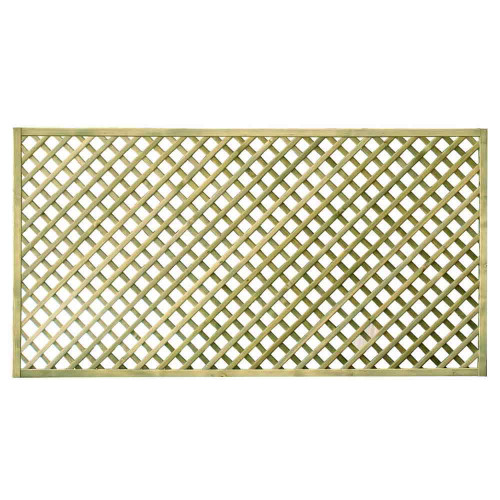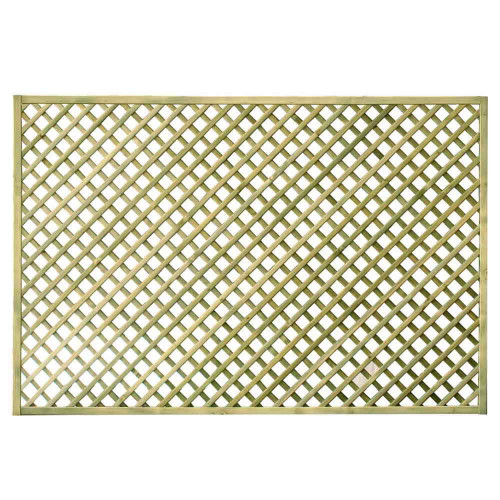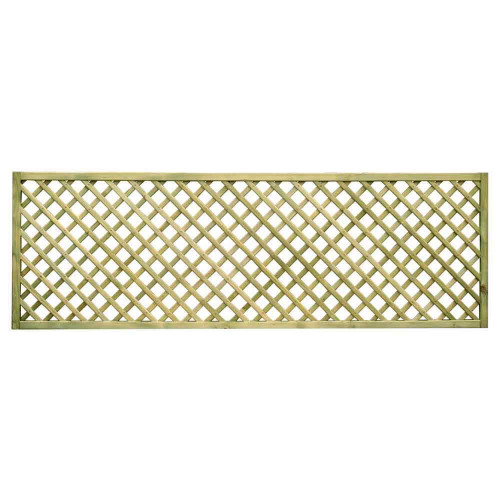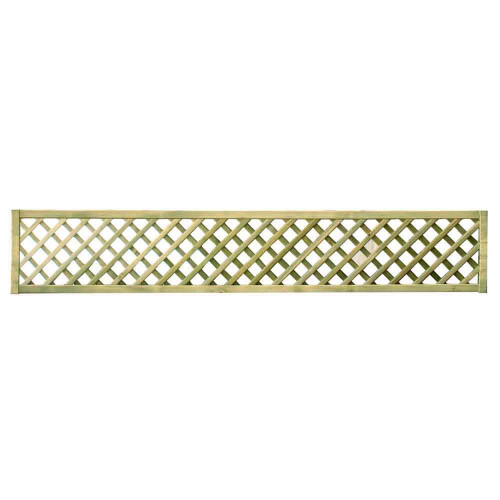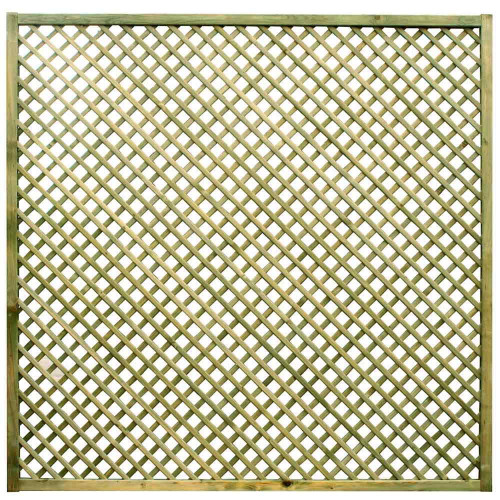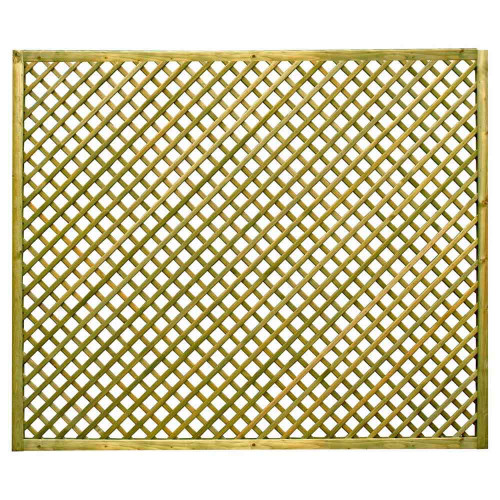



Quick answer: Diamond Trellis can be installed between wooden posts to create an open garden screen, climbing-plant support or decorative boundary. Measure the actual panel before setting the posts, keep both posts plumb and fit the trellis level so the diagonal lattice looks balanced. The current East Coast Fencing Diamond Trellis range is approximately 1.83m wide and available from around 300mm to 1.8m high. Taller panels and heavily planted screens need appropriately substantial posts, foundations and exterior-grade fixings.
Diamond Trellis is relatively straightforward to install between Wooden Fence Posts, but accurate setting out matters.
The diagonal lattice makes small alignment errors easy to notice. A post that leans slightly, a panel that drops at one end or an opening that is too narrow can make the complete diamond pattern look uneven.
The most important work therefore happens before the panel is fixed.
Measure the actual trellis, establish the complete run, choose suitable posts and decide exactly how the frame will sit between them.
Once those details are correct, fitting the trellis itself becomes much simpler.
Can Diamond Trellis Be Installed Between Wooden Posts?
Yes.
Wooden posts provide straightforward fixing surfaces for framed timber trellis.
The arrangement can be used for:
- Freestanding garden screens
- Climbing-plant supports
- Patio divisions
- Decorative boundaries
- Garden zoning
- Open screens beside paths and planting
The posts provide the structural support.
The Diamond Trellis forms the decorative and planting infill between them.
What Sizes Of Diamond Trellis Can Be Installed Between Posts?
The current East Coast Fencing Diamond Trellis range is nominally 6ft wide, approximately 1.83m.
Current heights include approximately:
- 300mm
- 600mm
- 900mm
- 1.2m
- 1.5m
- 1.8m
This allows the same basic diamond lattice style to be used for anything from low decorative screening to full-height garden divisions.
| Approximate Height | Typical Use | Installation Priority |
|---|---|---|
| 300mm | Low decorative section | Accurate level and support |
| 600mm | Low planting screen | Panel alignment |
| 900mm | Garden zoning | Post stability |
| 1.2m | Medium-height planted screen | Post and foundation selection |
| 1.5m | Tall decorative screen | Wind and plant loading |
| 1.8m | Full-height open screen | Complete structural support |
Should You Measure A Nominal 6ft Diamond Trellis Before Installing The Posts?
Yes.
This is one of the most important installation steps.
Nominal sizes are useful when choosing the product, but the actual panel should determine the opening you create.
Measure:
- The actual overall width
- The actual overall height
- The thickness of the outer frame
Then plan the post positions around the fixing arrangement.
Do not concrete several posts into the ground based only on an assumed 6ft measurement and discover afterwards that the framed panels do not fit cleanly.
Should Diamond Trellis Sit Between The Posts Or In Front Of Them?
Either arrangement can potentially work, but installing the trellis between the posts gives a particularly tidy framed appearance.
Between The Posts
Each panel occupies the clear bay between two structural posts.
This arrangement provides:
- A defined edge on both sides
- Clear individual bays
- Good access to the outer frame for fixing
- A relatively straightforward panel replacement route
Face-Fixed To The Posts
The trellis crosses the front face of the posts.
This can make the lattice appear more continuous along the run, but it changes the post centres and fixing arrangement.
Decide which method you are using before the posts are installed.
How Far Apart Should Wooden Posts Be For Diamond Trellis?
The spacing depends on the actual panel width and how it is being fixed.
For an approximately 1.83m-wide panel installed between posts, the clear opening needs to accommodate the actual frame plus practical installation clearance.
Do not assume that the post centres themselves should simply be 1.83m apart.
The post width forms part of the overall layout.
Before digging:
- Measure the panel.
- Measure the posts.
- Choose the fixing arrangement.
- Establish the required clear opening.
- Mark the post positions.
Why Should You Avoid A Very Tight Fit?
Diamond Trellis should not need to be forced between the posts.
Timber naturally changes slightly as moisture conditions change.
A panel installed under compression can place unnecessary stress through:
- The outer frame
- Diagonal lattice strips
- Lattice intersections
- Panel fixings
If substantial force is required to install the panel, stop and check the opening.
Do not use the fixings to drag an oversized panel into place.
What Wooden Fence Posts Should You Use?
The post should be selected around the complete installation rather than simply the fact that Diamond Trellis is open.
Current East Coast Fencing Wooden Fence Posts include 75 x 75mm and 100 x 100mm pressure-treated options.
Factors affecting the choice include:
- Panel height
- Number of panels
- Site exposure
- Ground conditions
- Post foundation
- Future climbing plants
A low 600mm decorative screen presents very different demands from a full-height 1.8m trellis covered by mature foliage.
When Should You Consider 100 x 100mm Wooden Posts?
A 100 x 100mm post provides a more substantial timber section and broader fixing surface than a 75 x 75mm post.
It may be worth considering where the screen is:
- Tall
- Long
- Exposed
- Likely to carry dense climbing plants
That is not the same as saying every Diamond Trellis installation requires a 100mm post.
The foundation and ground remain important.
A substantial timber post installed inadequately can still lean.
How Long Should The Wooden Posts Be?
The overall post length needs to include both the visible screen and the section installed below ground.
Do not select a 1.8m post simply because the trellis is approximately 1.8m high.
A conventionally installed freestanding screen requires additional post length for the foundation.
Current Wooden Fence Post lengths include approximately:
- 1.8m
- 2.4m
- 3.0m
The suitable option depends on the visible height and required installation depth for the particular garden.
How Do You Set Out A Run Of Diamond Trellis?
Set out the complete screen before excavating individual post holes.
A practical sequence is:
- Mark the start and finish: Establish the complete screen length.
- Measure the panels: Confirm the actual width of the trellis being used.
- Plan the bays: Work out how many full panels will fit.
- Plan any short section: Decide where a non-standard bay will sit.
- Mark every post: Include the actual post section in the calculations.
- Check corners and gates: Make sure they do not create an awkward leftover space.
- Run a string line: Establish one straight structural line.
This avoids reaching the end of the project with a narrow gap that was never planned.
Why Does Accurate Setting Out Matter More With Diamond Trellis?
The diagonal pattern repeats from one side of the panel to the other.
Across a run of several panels, the eye quickly notices:
- Different panel heights
- Leaning posts
- Uneven top lines
- Panels pulled out of square
The lattice itself provides a strong visual pattern, so the surrounding structure needs to look deliberate.
How Do You Install The Wooden Posts?
Check for underground services and obstructions before digging.
Each post should be installed:
- On the intended fence line
- At the correct spacing
- Plumb from side to side
- Plumb from front to back
- At the required finished height
Use a suitable foundation method for the ground and screen.
If using post mix or another proprietary product, follow its instructions.
Brace the post while the foundation develops sufficient stability rather than relying on the Diamond Trellis panel to hold it upright.
Should You Install The Trellis To Brace Fresh Posts?
No.
The posts should support the trellis, not the other way around.
Fixing a framed panel between posts that are still moving can lock errors into the installation.
You may end up with:
- A panel under compression
- A twisted frame
- Uneven post spacing
- An out-of-level top edge
Let the structural supports establish the correct geometry first.
How Do You Keep The Posts Plumb?
Use a spirit level rather than judging against surrounding ground, paving or planting.
Check both directions.
A post can appear upright when viewed from the front while leaning noticeably sideways.
This matters because two posts that are not parallel create a tapered opening.
A rectangular Diamond Trellis panel cannot fit cleanly into a badly tapered bay without either a growing gap or excessive compression.
Should The Top Of Diamond Trellis Be Level?
Yes, for a conventional installation.
The outer frame should sit level even though the lattice itself is diagonal.
A spirit level on the top frame gives a clearer reference than judging the diamond pattern by eye.
If several panels form one run, establish a consistent top line rather than measuring each panel independently from uneven ground.
How Do You Fit The First Diamond Trellis Panel?
- Check both posts: Confirm they are secure and plumb.
- Check the clear opening: Make sure the panel fits without force.
- Position the trellis: Hold it at the planned finished height.
- Support it temporarily: Use suitable blocks or another stable support while fixing.
- Level the top frame: Check with a spirit level.
- Check both sides: Make sure the frame is sitting evenly between the posts.
- Fix the outer frame: Use appropriate exterior-grade fixings.
- Recheck alignment: Make sure tightening the fixings has not pulled the panel out of position.
Where Should The Main Fixings Go?
The principal structural fixings should transfer loads through the substantial outer frame into the Wooden Fence Posts or other proper supporting timber.
Do not make isolated diagonal lattice strips carry the complete panel.
The lattice provides:
- The decorative pattern
- Plant support
- Open screening
The frame provides the more appropriate connection around the panel perimeter.
What Fixings Should You Use?
Use exterior-grade fixings suitable for treated timber and the particular frame and post arrangement.
The correct fixing length depends on:
- The trellis frame thickness
- The post section
- Whether brackets or clips are used
- The fixing position
Do not invent a screw size from another fencing product without checking the timber you are actually fixing.
The Diamond Trellis range has its own construction and should be measured directly.
Should You Predrill The Trellis Frame?
Predrilling can be useful where a fixing is positioned close to an edge or where there is a risk of splitting.
Keep the pilot hole appropriate for the fixing.
Do not drill unnecessarily large holes through the frame, and avoid putting several fixings extremely close together.
Can You Overtighten Trellis Fixings?
Yes.
The objective is to hold the frame securely against its support.
Driving a fixing excessively hard can:
- Crush timber fibres
- Pull the frame out of alignment
- Increase splitting risk
Stop once the frame is properly secured.
Should Diamond Trellis Touch The Ground?
Keep ordinary timber trellis away from unnecessary wet ground contact where practical.
The current range is pressure treated for outdoor use, but there is little advantage in burying the lower frame in soil.
Ground clearance helps prevent:
- Soil sitting against the timber
- Leaves collecting around the frame
- Grass holding persistent moisture
- Standing water contacting the panel
It also makes inspection easier.
Does Diamond Trellis Need A Gravel Board?
Not necessarily.
A freestanding decorative trellis screen can simply be kept clear of the soil.
A suitable Gravel Board may be useful where you want a defined lower section, but it changes:
- The appearance
- The finished height
- The post layout
Plan all components together rather than adding a Gravel Board after the post heights have already been established.
How Do You Install Several Diamond Trellis Panels In A Straight Run?
Use the first correctly installed panel as a reference, but continue checking every bay independently.
For each additional panel:
- Check the next post is plumb.
- Check the clear bay width.
- Position the panel at the established top level.
- Check its outer frame is level.
- Compare the panel top with the previous section.
- Secure the frame without pulling it sideways.
Stand back regularly and view the complete screen.
Diamond patterns can look correct at close range while a gradual change in panel height becomes obvious from further away.
Should The Diamond Pattern Line Up Between Adjacent Panels?
The most important visual lines are normally the panel tops, posts and overall lattice orientation.
Do not assume the individual diamonds will form one uninterrupted pattern through the Wooden Fence Post separating two panels.
The post naturally divides the run into separate framed bays.
Trying to manipulate each panel simply to create perfect diagonal continuity can result in worse alignment elsewhere.
Keep each panel square and consistent.
How Do You Install Diamond Trellis Around A Corner?
Use a suitable structural corner post.
The post needs to provide proper fixing surfaces for both directions of trellis.
Before installing it permanently, check:
- The angle between both screen runs
- The clear opening of the final bay on each side
- The top height of both panels
- The fixing position for each frame
A corner is a useful place to change panel height if the garden design requires it, but the transition should look deliberate.
How Do You Install Diamond Trellis Beside A Garden Gate?
Plan the Gate Post and trellis bay together.
A Gate Post is subject to repeated movement and different forces from an ordinary fixed screen post.
The Diamond Trellis should finish against a suitable static support without:
- Restricting the gate opening
- Protruding into the gate path
- Depending on the moving gate for support
If the final trellis bay is narrower than the standard approximately 1.83m panel, it may need to be shortened and properly reframed.
Can Diamond Trellis Be Cut To Fit A Shorter Bay?
Yes, but the diagonal construction needs careful treatment.
Cutting through the outer frame can leave several lattice strips ending at different angles.
The cut side therefore needs a proper new supporting edge.
A finished shortened panel should still have:
- A complete frame
- Secure lattice ends
- A balanced appearance
- A substantial fixing edge
Where possible, reserve cutting for the genuinely non-standard end bay rather than altering every panel across the run.
Can Diamond Trellis Be Installed On A Sloping Garden?
Yes.
Keep individual rectangular panels level and step them as the ground rises or falls.
This preserves the intended panel geometry.
At each step:
- Keep the Fence Post vertical
- Keep the panel top level
- Maintain reasonable ground clearance
- Change height at the structural post
Do not automatically tilt the complete trellis panel simply to copy the angle of the soil.
What If The Slope Creates A Large Gap Under One Side?
A level approximately 1.83m-wide panel crossing steeply sloping ground can leave a noticeable triangular space below its downhill end.
Possible solutions include:
- Stepping the screen more frequently
- Using a shorter custom bay
- Using suitable planting below the panel
- Creating an independent landscaping feature underneath
Do not solve the problem by banking wet soil against the trellis frame.
Diamond Trellis is not designed to retain ground.
Can Diamond Trellis Be Installed Around Raised Beds?
Yes, as a decorative or plant-support screen.
The raised bed should retain its own soil.
Keep the trellis separate enough that:
- Wet soil is not permanently pressed against the frame
- The panel can be inspected
- Plants can be trained
- The trellis can eventually be repaired or replaced
Can You Grow Climbing Plants On Diamond Trellis Immediately?
Yes, once the structural installation is complete and stable.
The diagonal lattice provides numerous routes and support points for suitable plants.
Do not rush to cover the panel before checking:
- Post stability
- Panel level
- Frame fixings
- Ground clearance
These details become much harder to inspect once mature growth covers the frame.
Do Climbers Need Tying To Diamond Trellis?
Some do.
Not every climbing plant attaches itself securely to timber lattice.
Climbing roses in particular need deliberate tying and training.
Use suitable plant ties and avoid overtightening them around stems.
Spreading growth across the available Diamond Trellis helps prevent one section carrying all of the mature plant weight.
How Do Plants Change The Installation Load?
Bare Diamond Trellis is open and allows substantial airflow.
As plants become established, the openings gradually fill with:
- Stems
- Branches
- Leaves
- Flowers
This adds weight and reduces the amount of wind passing freely through the screen.
After rainfall, wet foliage can temporarily add further weight.
Choose the posts and foundations with the mature planted screen in mind rather than assessing only the bare panel.
Can Diamond Trellis Be Used For Heavy Climbers?
Potentially, but very substantial mature plants may justify additional independent support.
Diamond Trellis is useful for organising and training climbing growth.
It should not automatically be treated as the sole structural support for every vigorous woody climber.
For heavy plants, consider how the load is transferred into:
- The outer panel frame
- Wooden Fence Posts
- Post foundations
- Any additional plant-support structure
Can You Install Full-Height Diamond Trellis In A Windy Garden?
Open lattice allows more airflow than solid fencing, but that does not mean wind can be ignored.
A full-height approximately 1.8m panel still presents a substantial exposed structure.
The completed load depends on:
- Site exposure
- Post specification
- Foundation quality
- Total screen length
- Plant coverage
A heavily planted Diamond Trellis screen may eventually allow much less air through than it did when first installed.
How Do You Know If A Post Is Moving After Installation?
Warning signs include:
- The panel top becoming uneven
- A growing gap beside one frame edge
- The trellis beginning to twist
- Fixings pulling against the frame
- Visible post movement during wind
Investigate the support rather than adding increasingly large fixings through the trellis.
If the post is moving, the structural problem needs attention.
Should You Paint Diamond Trellis Before Or After Installation?
If a decorative coating is planned, completing it before dense planting becomes established is usually easier.
Whether painting before or after fixing, use a suitable exterior timber coating compatible with the pressure-treated timber and follow its preparation requirements.
Diamond lattice contains numerous:
- Narrow edges
- Intersections
- Internal surfaces
These are considerably harder to reach once the screen is covered by plants.
How Should You Maintain An Installed Diamond Trellis Screen?
Inspect the screen periodically.
Check:
- Posts remain upright
- Panel frames remain secure
- Lattice sections are not broken
- Fixings are not pulling loose
- Plants have not become excessively heavy
- Soil and mulch are not burying the lower frame
- Dense foliage is not hiding structural problems
Outdoor timber will also weather naturally over time.
Changes in colour are not automatically a sign of structural deterioration.
What If Diamond Trellis Develops Green Algae?
Damp, shaded timber can develop surface algae, particularly once dense plants reduce airflow around the lattice.
Start with gentle cleaning.
Remove:
- Loose leaves
- Dead plant material
- Surface debris
Then use a suitable timber-safe cleaning method if required.
Take care with aggressive pressure washing because narrow lattice strips and timber fibres can be damaged.
Can A Damaged Diamond Trellis Panel Be Replaced Without Replacing The Posts?
Potentially, if the posts remain sound, correctly spaced and suitable for the replacement panel.
Before fitting a new panel, check:
- Both posts are stable
- The opening remains square
- The post spacing has not changed
- Old fixings can be removed safely
If the original panel was damaged because a post moved, replacing the trellis without repairing the post is unlikely to solve the problem.
Common Diamond Trellis Installation Mistakes
- Setting the posts from an assumed 6ft measurement without measuring the actual panel
- Forgetting to include post width in the overall layout
- Forcing the framed trellis into an opening that is too narrow
- Allowing one post to lean
- Using the panel to brace freshly installed posts
- Installing panel tops at different levels across a straight run
- Using diagonal lattice strips as the main structural fixing points
- Overtightening fixings and distorting the frame
- Leaving the lower frame unnecessarily in wet soil
- Failing to plan a short final bay
- Cutting a panel without reframing the shortened edge
- Tilting rectangular trellis down a slope rather than stepping it
- Choosing posts from the bare panel without considering mature climbing plants
- Assuming open trellis creates no wind loading
FAQs
Can Diamond Trellis Be Installed Between Wooden Posts?
Yes. Wooden posts provide practical fixing surfaces for the framed trellis and can be used to create freestanding decorative or planted screens.
What Width Is Diamond Trellis?
The current East Coast Fencing range uses a nominal 6ft width, approximately 1.83m. Measure the actual panel before permanently setting new posts.
What Heights Does Diamond Trellis Come In?
Current nominal sizes include approximately 300mm, 600mm, 900mm, 1.2m, 1.5m and 1.8m high.
Should Diamond Trellis Touch The Ground?
Keep ordinary timber trellis away from unnecessary persistent soil and standing water where practical. A small clearance also makes inspection and maintenance easier.
Do You Need 100 x 100mm Wooden Posts For Diamond Trellis?
Not for every installation. Post choice depends on panel height, ground conditions, exposure, screen length and future plant loading. A 100mm post provides a more substantial section for demanding installations.
Can Diamond Trellis Be Cut To Fit Between Existing Posts?
Yes, but cutting the diagonal lattice leaves several angled timber ends. The shortened side should be properly reframed so every lattice strip remains supported.
Can Diamond Trellis Be Installed On Sloping Ground?
Yes. Keep each rectangular panel level and step the screen at the posts rather than tilting the complete lattice to match the ground.
Can Climbing Roses Grow On Diamond Trellis Between Posts?
Yes. Climbing roses can be tied and trained across the diagonal lattice. Plan the posts and supports for the weight and wind resistance of the mature plant rather than only the bare panel.
Accurate Posts Make Diamond Trellis Much Easier To Install
A good Diamond Trellis installation starts with the posts rather than the panel fixings.
Measure the actual nominal 6ft trellis, decide whether it will sit between or across the posts and establish every bay before digging.
Keep the Wooden Fence Posts plumb and position them so the panel fits without being forced.
Once the posts are stable, support the trellis at the intended height, level the outer frame and secure it through suitable structural sections with exterior-grade fixings.
Across longer runs, pay particular attention to the top line. The repeated diagonal pattern makes inconsistent panel heights and leaning supports easy to notice.
For taller screens, consider what happens after installation as well.
A bare 1.5m or 1.8m Diamond Trellis panel is open and relatively light. Once mature climbing plants spread through it, the completed structure becomes heavier and catches more wind.
Choose the post and foundation arrangement for that finished planted screen.
If the setting out is accurate and the posts provide proper structural support, Diamond Trellis can create a clean, open garden division that remains decorative before planting and becomes progressively softer as climbers establish.