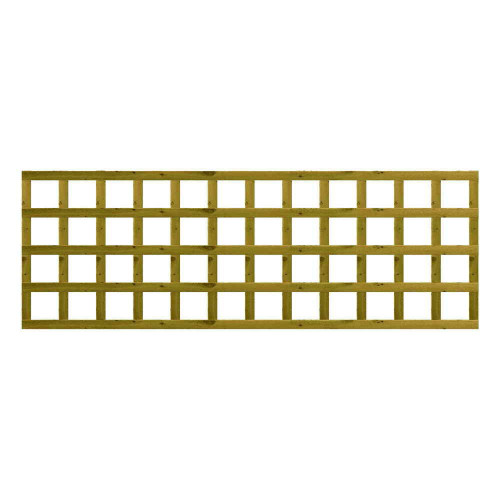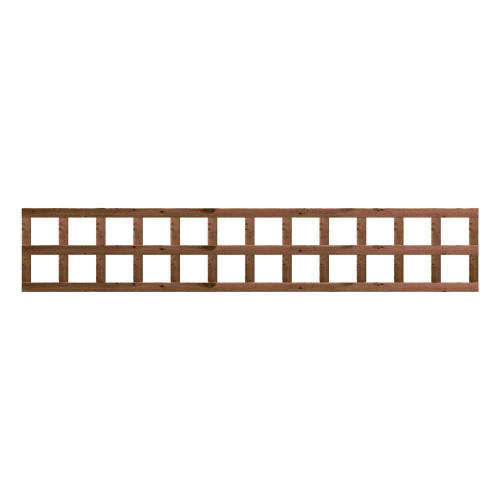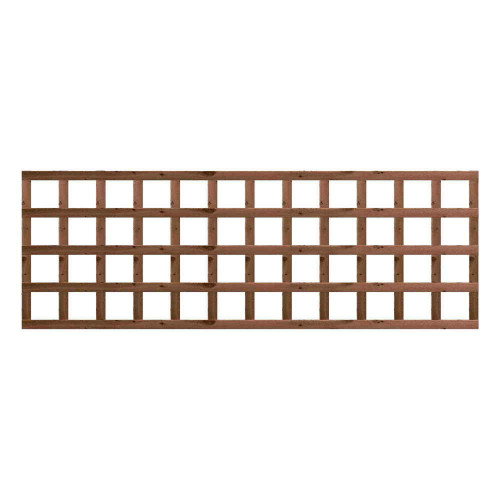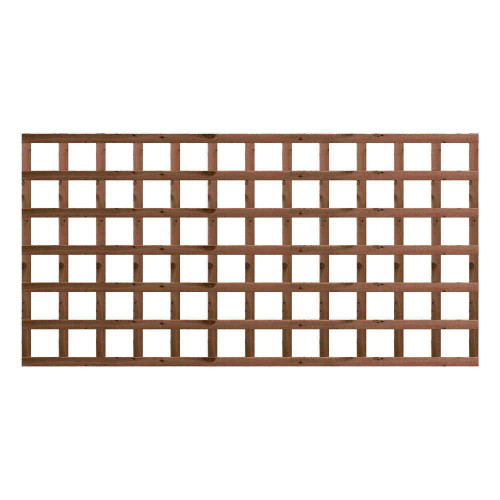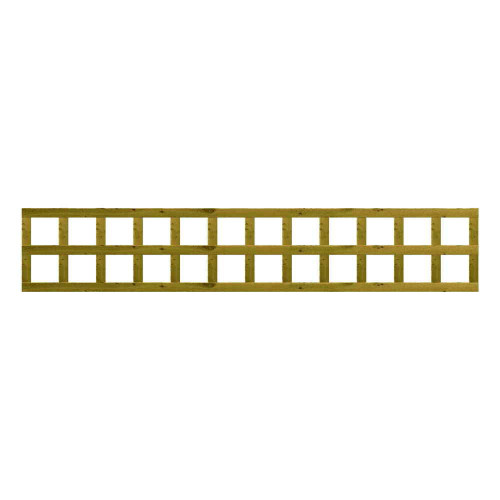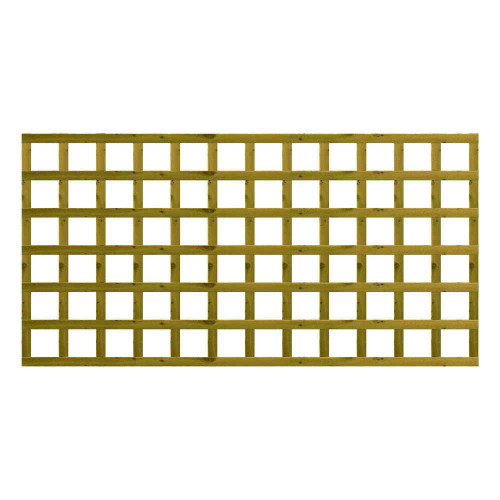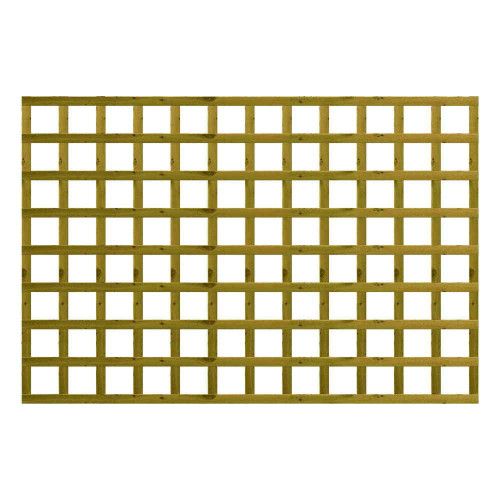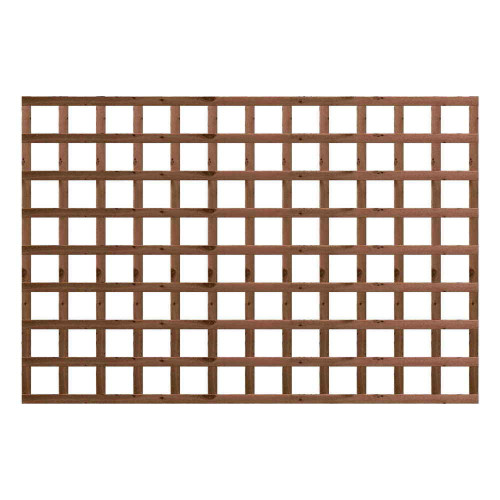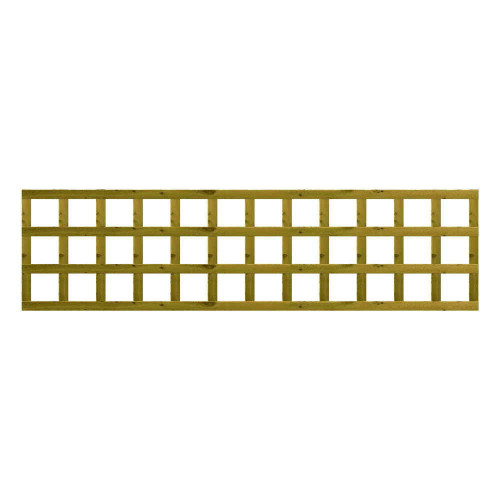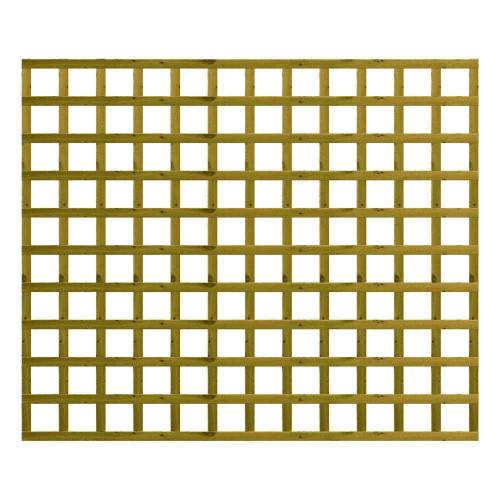



Quick answer: Traditional Trellis is well suited to many climbing plants, but the mature weight of the plant matters more than how small it is when planted. East Coast Fencing's current Traditional Square Trellis uses pressure-treated 16 x 38mm rough-sawn battens with approximately 100mm openings. Clematis, jasmine and managed climbing roses can work well with suitable support. Very heavy woody climbers such as mature wisteria should normally have a more substantial purpose-designed supporting structure rather than relying on lightweight decorative trellis alone.
Climbing plants and Traditional Trellis are a natural combination.
The approximately 100mm square openings give stems plenty of room to pass through, while the repeating timber grid provides useful positions for tying and training growth.
The potential problem appears several years later.
A climber that weighs very little when it is planted can eventually become a large mass of stems, foliage and branches. After rain, that vegetation becomes heavier again. In windy weather, dense foliage can also turn an open trellis into a much less permeable screen.
The right question is therefore not simply whether a plant can grow on Traditional Trellis. It is whether the complete trellis, posts and fixings are appropriate for the plant at maturity.
How Strong Is Traditional Trellis?
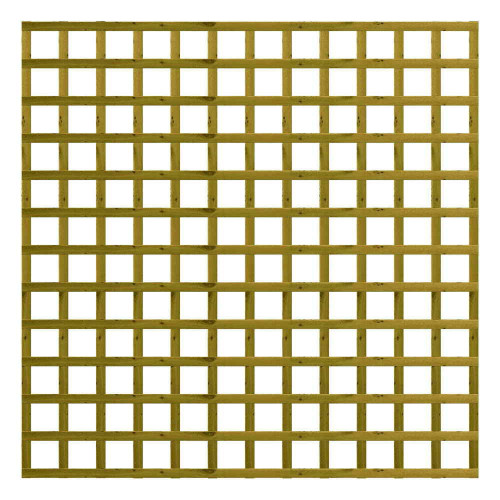
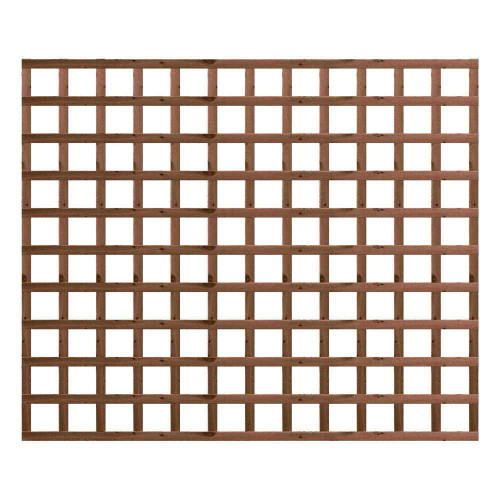
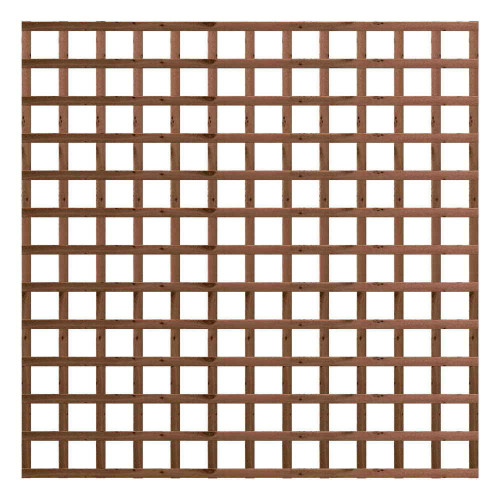
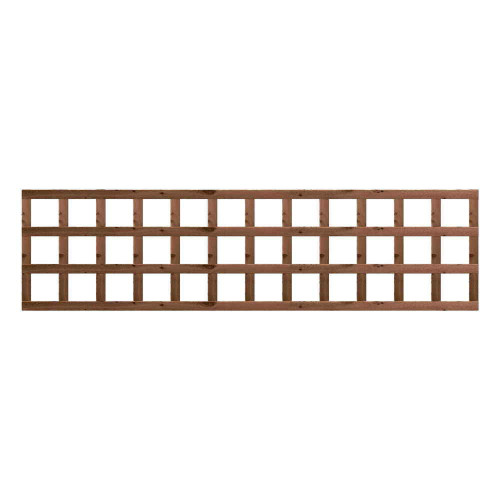
Current East Coast Fencing Traditional Square Trellis is manufactured in-house from pressure-treated 16 x 38mm rough-sawn trellis batten.
The battens form an approximately 100mm square lattice.
The product is designed for practical garden uses including:
- Climbing plants
- Decorative screening
- Fence toppers
- Garden zoning
- Open freestanding screens
The lattice should be treated as the plant-training surface rather than the only structural component carrying a large mature plant.
The surrounding frame, Fence Posts, wall fixings or other supports ultimately carry the complete load.
Why Does Mature Plant Weight Matter So Much?
Young climbing plants can give a misleading impression of the load the trellis will eventually carry.
Over time, a climber can develop:
- Long woody stems
- Large quantities of foliage
- Dead growth hidden behind new growth
- Branches extending beyond the trellis
Rain can add further temporary weight by wetting leaves and stems.
The plant can also become a larger sail in the wind as the approximately 100mm openings gradually fill with foliage.
This means the support should be assessed for the mature planted screen rather than the empty panel.
Which Climbers Are Suitable For Traditional Trellis?
Traditional Trellis works particularly well with plants that can be trained and maintained without becoming excessively heavy for the support.
| Climber | Traditional Trellis Suitability | Main Consideration |
|---|---|---|
| Clematis | Well suited | Train growth across the lattice |
| Jasmine | Well suited with management | Control mature growth |
| Honeysuckle | Usually suitable with pruning | Avoid excessive dense growth |
| Climbing Rose | Suitable with strong support and ties | Mature woody stems can become heavy |
| Ivy | Needs careful management | Can become dense, woody and heavy |
| Climbing Hydrangea | Consider stronger support | Mature growth can become substantial |
| Wisteria | Purpose-designed support preferable | Mature plant becomes very heavy and woody |
The precise requirement also depends on how large the plant is allowed to become and how regularly it is pruned.
Can Clematis Grow On Traditional Trellis?
Yes.
Clematis is one of the most natural uses for open square trellis.
The approximately 100mm openings leave plenty of room for growth while providing repeated timber members across the panel.
Young stems can be guided across the lattice so the plant spreads rather than concentrating all of its growth in one narrow vertical column.
As with any climber, keep the eventual plant under reasonable control and periodically check the panel behind it.
Can Jasmine Grow On Traditional Trellis?
Yes, suitable jasmine can be trained across Traditional Trellis.
The open grid allows stems to be guided horizontally as well as vertically.
This can help distribute plant growth across a larger area of the panel rather than loading one small section.
Keep mature growth pruned enough that:
- The trellis remains accessible
- Fixings can be inspected
- Dead material does not accumulate excessively
- The plant does not overwhelm the frame
Can Honeysuckle Grow On Traditional Trellis?
Yes.
Traditional Trellis provides a useful open framework for honeysuckle, but established growth should be managed.
A vigorous mature plant can build a surprisingly dense layer of foliage and woody stems.
If the plant is allowed to become heavily congested, the trellis becomes harder to inspect and the screen can catch significantly more wind.
Can Climbing Roses Grow On Traditional Trellis?
Yes, provided they are properly tied and trained and the complete support is suitable.
Climbing roses should not simply be allowed to hang their complete mature weight from individual 16 x 38mm lattice battens.
Use the trellis as a framework for spreading and organising the plant.
Where a rose becomes substantial, make sure the load is transferred through a sound panel frame into appropriate posts or another suitable supporting structure.
Why Do Climbing Roses Need Training?
A climbing rose does not necessarily arrange itself neatly across a square lattice.
Without training, stems can:
- Concentrate in one area
- Grow away from the trellis
- Become tangled through openings
- Make future maintenance difficult
Guiding growth across the screen distributes the plant more evenly and keeps the trellis accessible.
Use appropriate plant ties rather than overtightening wire directly around growing stems.
Can Ivy Grow On Traditional Trellis?
It can, but mature ivy deserves more caution than a light seasonal climber.
Ivy can become:
- Dense
- Woody
- Heavy
- Difficult to remove
Dense evergreen growth also keeps a large amount of foliage on the screen throughout the year.
This can increase wind loading during winter storms when deciduous climbers may have lost their leaves.
If ivy is used, regular control is important.
Can Wisteria Grow On Traditional Trellis?
A young wisteria may physically grow through Traditional Trellis, but mature wisteria becomes very heavy and woody.
It should not normally be treated as an ordinary lightweight trellis plant.
A substantial purpose-designed support is generally more appropriate for the mature plant.
Traditional Trellis could potentially form a decorative or training layer within a stronger supporting arrangement, but it should not automatically be expected to carry the eventual weight by itself.
Why Is Wisteria Different From A Light Climber?
The issue is the mature woody framework.
As the plant ages, it can develop substantial permanent stems rather than simply producing light seasonal growth.
This means the support must deal with:
- Long-term static weight
- New seasonal foliage
- Rainwater on the plant
- Wind loading
If wisteria is part of the planting plan, decide on the substantial support before the young plant becomes established.
Replacing a lightweight support is considerably harder once mature stems have grown through it.
Can Climbing Hydrangea Become Too Heavy For Trellis?
Mature climbing hydrangea can become a substantial plant.
Where a climber is expected to develop significant long-term weight, use stronger or independent support rather than assuming ordinary decorative trellis is sufficient.
This principle applies regardless of how small the plant is when purchased.
Does Trellis Height Affect How Much Plant It Can Carry?
Height changes the amount of growing area available.
Current Traditional Trellis sizes include approximately:
- 300mm
- 450mm
- 600mm
- 900mm
- 1.2m
- 1.5m
- 1.83m
A 300mm topper provides relatively little climbing area.
A full 1.83m x 1.83m panel can eventually carry vegetation across more than three square metres of screen.
The larger panel therefore gives a plant much more opportunity to develop weight and wind resistance.
That makes the supporting posts increasingly important as panel height increases.
Which Traditional Trellis Height Is Best For Climbing Plants?
Choose the height around the scale of the planting and where you want the growth to finish.
300mm To 600mm
Useful for light climbing growth above existing fencing or low planting features.
These sizes work more as topper or decorative planting sections than complete climbing screens.
900mm To 1.2m
Useful for garden zoning, medium planting screens and lower climbers.
They provide substantial training area without creating a full-height trellis wall.
1.5m To 1.83m
These provide much larger climbing surfaces.
They can suit vigorous plants where the complete post and fixing arrangement is designed for the mature screen.
A taller panel does not make lightweight lattice appropriate for an exceptionally heavy plant. It simply provides more growing area.
Can Heavy Plants Be Grown On Fence Topper Trellis?
Use more caution.
A topper is installed above the main Fence Panel, so any plant weight and wind loading is applied high on the fence.
This creates more leverage on the Fence Posts.
A shallow topper can work very well for lighter climbers, but do not allow a heavy mature plant to turn the top of an ordinary fence into its main structural support without checking the complete system.
Inspect:
- Post condition
- Post foundations
- Topper frame
- Fixings
- Main Fence Panel condition
Can Mature Climbers Make Fence Posts Lean?
They can contribute to loading on a weak or inadequate fence.
The plant itself does not normally make a correctly designed post instantly lean, but dense vegetation increases both weight and wind resistance.
If the posts are already:
- Loose
- Rotten at ground level
- Too lightly founded
- Moving in wet ground
adding substantial climbing growth can make the existing weakness more apparent.
Should Heavy Climbers Have Their Own Posts?
Often, this is a sensible approach where the mature plant will be substantial.
A freestanding plant-support structure means the load does not need to be carried by an ordinary Fence Panel.
Pressure-treated Wooden Fence Posts provide practical fixing surfaces for timber trellis.
Current East Coast Fencing Wooden Fence Posts include both 75 x 75mm and 100 x 100mm sections.
Post selection should be based on:
- Screen height
- Plant weight
- Wind exposure
- Ground conditions
- Foundation requirements
Do not assume one post size is universally correct for every planted screen.
Are 100 x 100mm Posts Better For Heavily Planted Trellis?
They provide a more substantial timber section and broader fixing face than 75 x 75mm posts.
That can make them a sensible consideration for taller or more demanding screens.
However, a larger post section does not compensate for:
- An inadequate foundation
- Very poor ground
- Excessive unsupported height
- An unsuitable trellis frame
Treat the post, foundation, trellis and plant as one system.
Can Heavy Climbers Be Supported Against A Wall?
Yes, with a support arrangement appropriate to the wall and mature plant.
Traditional Trellis can provide a convenient training surface, but a heavy climber may justify additional substantial support rather than relying only on the trellis frame.
Where trellis is fixed against a wall, leave enough working space behind it for:
- Stems
- Plant ties
- Airflow
- Pruning
- Future maintenance
A panel pressed flat against the masonry can be awkward once stems become thick.
Should Trellis Be Fixed Directly To A Fence For Heavy Climbers?
Do not automatically fix a heavily planted trellis only to the Fence Panel.
The panel is an infill component rather than necessarily the strongest part of the fence system.
Where significant plant weight is expected, transfer support back to:
- Sound Fence Posts
- A suitable timber frame
- An independent plant-support structure
This also makes future Fence Panel replacement easier because the plant support is not completely dependent on the panel underneath it.
How Does Plant Growth Increase Wind Load?
Bare Traditional Trellis is very open.
The approximately 100mm square openings allow substantial air to pass through.
As plants fill the openings, there is less space available for air to move through the structure.
The difference can be particularly important with dense evergreen growth.
A screen that originally behaved like open lattice can gradually behave more like a leafy sail.
That increased force is transferred into:
- Trellis fixings
- The panel frame
- Fence Posts
- Post foundations
Does Rain Make A Mature Climber Heavier?
Yes.
Wet foliage and stems temporarily carry more water than dry growth.
This does not usually matter for a correctly supported plant, but it is another reason not to design the support around the plant's weight on a dry summer day.
Consider the less favourable conditions the structure will experience over its life.
Can Plant Ties Damage Traditional Trellis?
Poorly positioned or overtightened ties can create local problems.
Do not use a tie so tightly that it:
- Cuts into the timber
- Crushes the plant stem
- Pulls a lattice batten out of line
Spread heavy growth across several support points rather than hanging the plant from one intersection.
Should Climbers Be Woven Through The Trellis?
Light flexible growth can often be guided through the approximately 100mm openings.
Be more cautious with stems that will eventually become thick and woody.
A stem threaded tightly through several small spaces can become difficult to remove later without:
- Cutting the plant
- Dismantling the trellis
- Damaging lattice battens
For long-lived woody climbers, tying stems to the face of a suitable support can sometimes make future maintenance easier than permanently weaving every stem through the panel.
How Do You Stop A Climber Overloading The Trellis?
- Choose the plant with its mature size in mind: Do not judge from the young plant in the pot.
- Use suitable posts or wall supports: The lattice should not carry the complete structural load alone.
- Spread growth across the panel: Avoid concentrating everything in one corner.
- Prune regularly: Remove unnecessary dead and congested growth.
- Inspect fixings: Look for movement before the plant hides the complete frame.
- Provide stronger independent support where needed: Particularly for very heavy woody climbers.
Why Is Regular Pruning Important For The Trellis?
Pruning is not only about plant appearance.
It can reduce unnecessary load and keep the structure accessible.
An unmanaged climber can hide:
- Loose lattice battens
- Split frames
- Corroded fixings
- Leaning posts
- Rotten timber
Once a fault is hidden behind a large woody plant, repair becomes considerably more complicated.
Can Dense Plants Make Trellis Stay Damp?
Yes.
Dense planting can reduce airflow around the timber and make it dry more slowly after rain.
This can encourage:
- Surface algae
- Damp staining
- Debris accumulation
Pressure-treated timber is intended for exterior use, but keeping growth reasonably managed still improves access and drying conditions.
Should Soil Or Mulch Touch The Bottom Of Planted Trellis?
Keep ordinary timber trellis away from unnecessary soil contact where practical.
It is common for a planted border to gradually rise as:
- Compost is added
- Mulch accumulates
- Leaves collect
Do not allow this material to bury the lower trellis frame.
Keep the planting medium where it belongs and preserve access to the timber for inspection.
Can Traditional Trellis Be Used Behind A Raised Bed?
Yes, as a planting support.
The raised bed itself should retain the soil.
Do not use Traditional Trellis as the retaining back wall.
Keeping the structures separate means you can:
- Inspect the trellis
- Replace it later
- Control moisture
- Manage plant stems
What Warning Signs Show A Plant Is Overloading The Trellis?
Look for:
- The complete panel bowing
- Lattice battens pulling away from the frame
- Loose intersections
- The frame pulling away from a wall
- Screws becoming loose
- Fence Posts leaning
- The screen moving noticeably in wind
Do not simply add more plant ties if the structure itself is moving.
Reduce the load safely and investigate the support.
Can An Overloaded Trellis Be Repaired?
Sometimes.
If the timber remains sound and the problem is limited to loose fixings or a small amount of excess plant growth, repair may be practical.
The first step is to reduce the load carefully.
Then inspect:
- The posts
- The outer frame
- Lattice battens
- Fixing points
If the complete frame is badly distorted or several components have failed, replacement may make more sense.
Should You Remove A Mature Climber Before Replacing Trellis?
That depends on the plant and support arrangement, but replacing trellis behind an established woody climber can be difficult.
This is why planning for mature weight from the beginning matters.
If the trellis has become structurally important to the plant, do not remove it casually and allow a large mass of growth to fall unsupported.
Provide temporary or replacement support as appropriate while the old structure is dealt with.
Common Mistakes With Heavy Climbers And Traditional Trellis
- Choosing the support from the size of the young plant
- Assuming pressure-treated lattice can carry unlimited plant weight
- Growing mature wisteria on lightweight decorative trellis without substantial support
- Allowing climbing roses to hang from one small part of the panel
- Letting ivy become dense and woody without inspection
- Relying only on the Fence Panel rather than structural posts
- Ignoring the extra weight of wet foliage
- Ignoring increased wind loading as the squares fill with plants
- Allowing dead growth to accumulate for years
- Using overtight plant ties
- Allowing mulch and soil to bury the lower frame
- Installing a heavy planted screen on leaning or rotten posts
FAQs
Can Traditional Trellis Support Wisteria?
Mature wisteria becomes very heavy and woody, so a substantial purpose-designed support is normally more appropriate than relying on lightweight decorative trellis alone.
Can Traditional Trellis Support Climbing Roses?
Yes, when the rose is properly tied and trained and the trellis is securely supported. Mature climbing roses can become heavy, so sound posts or another substantial supporting structure are important.
Is Traditional Trellis Strong Enough For Clematis?
Traditional Trellis is well suited to clematis in a properly installed screen. The approximately 100mm openings provide plenty of room for training growth.
Can Ivy Become Too Heavy For Traditional Trellis?
Yes. Mature ivy can become dense, woody and heavy, particularly when allowed to grow unchecked. Regular pruning and structural inspection are important.
Can Honeysuckle Grow On Traditional Trellis?
Yes. Honeysuckle works well on open lattice, although mature growth should be managed so the complete planted screen does not become excessively heavy.
Do Climbing Plants Increase Wind Load On Trellis?
Yes. As foliage fills the approximately 100mm openings, less air can pass through the panel. The planted screen can therefore place more force on its posts and fixings than bare trellis.
Should Heavy Climbers Have Separate Support?
Where a plant is expected to become particularly substantial, independent or purpose-designed support is sensible rather than expecting ordinary lattice battens to carry the complete mature plant.
What Size Timber Is Traditional Trellis Made From?
Current East Coast Fencing Traditional Square Trellis is manufactured in-house from pressure-treated 16 x 38mm rough-sawn trellis batten with approximately 100mm square openings.
Choose The Support For The Mature Plant, Not The Young One
Traditional Trellis is an excellent framework for climbing plants because its approximately 100mm square openings give stems plenty of room to grow and make training straightforward.
The limitation is not whether a young plant can physically climb through the lattice.
The limitation is how much load the complete structure will eventually need to carry.
Managed clematis, jasmine, honeysuckle and climbing roses can work very well with properly supported Traditional Trellis. As plants become larger, keep their growth distributed and prune enough to retain access to the panel and fixings.
Be more cautious with very heavy woody climbers.
Mature wisteria in particular should normally be planned around a substantial purpose-designed support rather than treating lightweight decorative trellis as the complete structural system.
Whatever you grow, look beyond the 16 x 38mm lattice battens. Check the frame, posts, fixings and foundations carrying them.
A climbing screen should be designed for the plant it will become, not the small plant you bring home on the first day.