


Quick answer: Standard concrete gravel boards can hold back small amounts of loose surface soil, but they should not automatically be used as retaining walls. Wet soil creates continuous sideways pressure that ordinary fence posts and gravel boards may not be designed to carry. If one garden is noticeably higher than the other, a raised bed is being built against the fence or significant soil needs retaining, use a properly considered retaining structure instead.
Concrete gravel boards are strong, durable and well suited to the bottom of a garden fence.
That can make them look like an obvious way to hold back soil.
There is an important difference, however, between a gravel board sitting against ordinary garden soil and a structure deliberately retaining a raised level of ground.
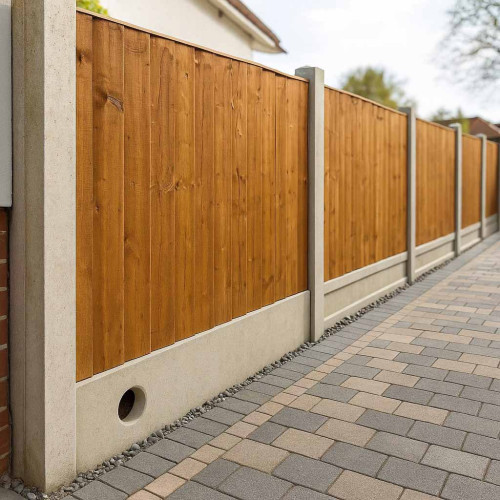
A normal gravel board is primarily there to protect and support the fencing above. It keeps the timber Fence Panel away from damp ground and creates a durable lower edge between Concrete Fence Posts.
Once significant soil is piled against one side, the board and posts are being asked to do another job entirely.
What Is A Concrete Gravel Board Designed To Do?
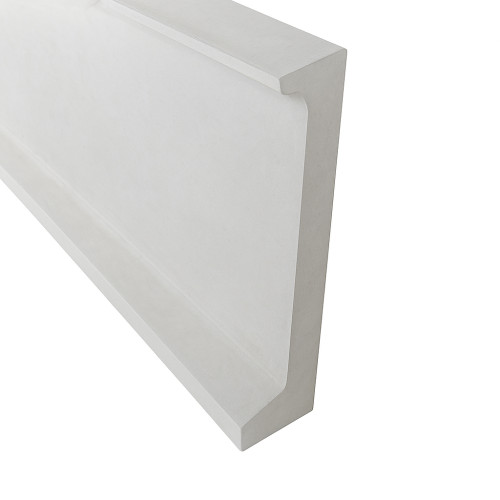
A concrete gravel board forms the bottom section of a compatible fence system.
Its normal jobs include:
- Keeping timber Fence Panels away from damp soil
- Providing a durable ground-level component
- Reducing rain splash onto the panel
- Protecting the panel from grass and garden debris
- Creating a consistent lower fence line
- Closing relatively small gaps beneath Fence Panels
Concrete is particularly useful at this position because it does not rot in the way timber can.
That does not mean the board is automatically a structural retaining wall.
What Is The Difference Between A Gravel Board And A Retaining Wall?
The important difference is the load being carried.
A gravel board forming the bottom of an ordinary fence mainly deals with its own weight, the fencing arrangement above and normal contact with the surrounding ground.
A retaining wall has to resist a body of soil trying to move sideways.
That soil can become considerably more demanding when it is wet.
A retaining structure may therefore need to account for:
- The height of retained soil
- The weight of the soil
- Water behind the structure
- Ground conditions
- Drainage
- Loads close to the top of the retained area
- The strength and foundations of the supporting posts or wall
An ordinary fencing system should not be assumed to provide all of this simply because its lower components are made from concrete.
Can A Concrete Gravel Board Hold Back Any Soil?
Small amounts of loose surface material around a normal garden boundary are different from a substantial change in ground level.
A gravel board may naturally have soil touching part of one face.
It may also help contain shallow surface materials such as:
- Loose soil
- Bark
- Decorative gravel
- Light garden mulch
The warning sign is when the board becomes the component stopping a meaningful depth of soil from moving from one side of the boundary to the other.
At that point, it is being used as a retaining structure.
Why Does Wet Soil Matter?
Dry loose soil and saturated soil do not behave in exactly the same way.
Water increases the demands placed on a retaining structure.
If drainage is poor, water can collect behind the board rather than escaping through the surrounding ground.
This can contribute to:
- Boards bowing or cracking
- Concrete posts leaning
- Foundations moving
- Soil washing through gaps
- Repeated pressure after heavy rain
This is why drainage is a major consideration in proper retaining-wall construction.
Simply using a thicker or taller-looking Gravel Board does not remove the water problem.
Can A 6-Inch Concrete Gravel Board Retain Soil?
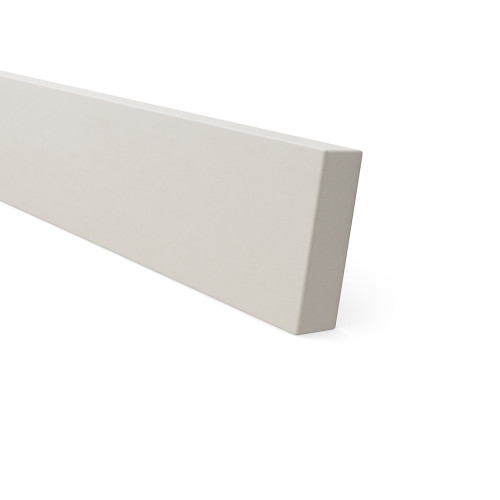
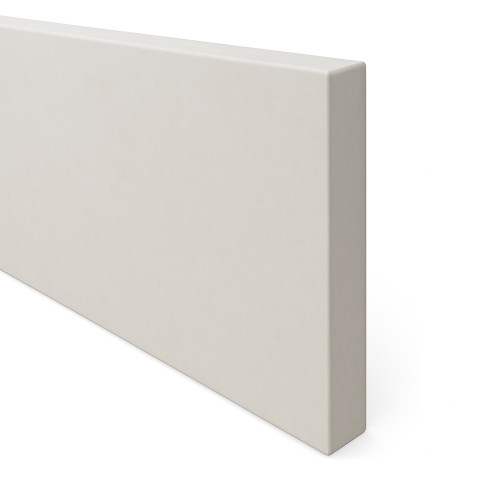
A current 6-inch Concrete Gravel Board is approximately 150mm high.
It can form a practical lower edge where the ground level is broadly similar on both sides of the fence.
Some minor soil contact is normal.
It should not automatically be used to retain a deliberately raised 150mm bed of wet soil along a complete boundary.
The fact that the board is 150mm high does not mean all 150mm should be treated as available retaining-wall height.
Can A 12-Inch Concrete Gravel Board Be Used As A Retaining Wall?
A current 12-inch Concrete Gravel Board is approximately 305mm high.
The greater height can make it particularly tempting to use as a small retaining wall.
Be careful.
A 305mm board can create a deeper concrete section beneath a fence, but a standard board should still not automatically be assumed suitable for retaining a full 305mm depth of soil.
The additional soil creates sideways loading on both:
- The Gravel Board
- The Concrete Fence Posts
Those posts then transfer the load into their foundations and surrounding ground.
Does A 12-Inch Board Hold More Soil Than A 6-Inch Board?
It provides more physical height, but that is not the same as providing a certified increase in retaining-wall capacity.
Choosing a taller Gravel Board simply because more soil needs holding back is the wrong way to approach a significant level difference.
Instead, ask whether the fence should be separated from the retaining structure altogether.
| Situation | Gravel Board Approach | What To Consider |
|---|---|---|
| Similar ground levels | Normal use | Position board to protect panel |
| Small amount of loose surface material | May be manageable | Watch for pressure and drainage |
| Raised flower bed against fence | Do not rely automatically on Gravel Board | Consider an independent bed structure |
| Noticeable difference in garden levels | Retaining solution likely required | Keep retaining structure separate where appropriate |
| Steep bank | Standard fencing is unsuitable as the retaining solution | Use properly designed retaining construction |
| Driveway or heavy load above retained ground | Do not rely on ordinary Gravel Boards | Get appropriate professional advice |
Can You Stack Concrete Gravel Boards To Retain More Soil?
Compatible concrete boards can sometimes be stacked within suitable slotted Concrete Fence Posts to create a deeper concrete section beneath the Fence Panel.
That does not automatically turn the arrangement into a retaining wall.
Before stacking boards, the normal fencing design already needs to consider:
- The combined Gravel Board height
- The weight of the boards
- The remaining Fence Panel height
- The Concrete Fence Post length
- The overall fence height
- The post foundations
If the reason for stacking boards is that a substantial depth of soil needs holding back, that is a sign to assess the retaining requirement separately.
Is Two 6-Inch Gravel Boards The Same As One 12-Inch Board?
In terms of nominal height, two approximately 150mm boards create a similar total depth to one approximately 305mm board.
They are not necessarily identical arrangements.
Profile, weight, post compatibility and the way the boards sit together can differ.
Neither arrangement should automatically be given a retaining capacity simply by adding together its height.
Can You Build A Raised Bed Against Concrete Gravel Boards?
It is better not to assume the existing fence can form the back wall of a substantial raised bed.
A raised bed deliberately introduces more soil against the boundary.
That can create several issues:
- Additional sideways pressure
- Higher moisture levels
- Difficulty inspecting the Gravel Board
- Extra load on the Concrete Fence Posts
- Drainage being directed towards the fence
A better approach is often to construct the raised bed independently.
The fence can then remain a fence rather than becoming part of the soil-retaining system.
Should A Raised Bed Touch The Fence?
Keeping the structures separate has practical advantages.
It allows you to:
- Inspect the fence
- Replace a damaged Gravel Board
- Remove a Fence Panel
- Maintain drainage
- Avoid transferring soil pressure into the fence
This becomes particularly useful with a slotted concrete system because one of its main advantages is that individual panels and boards can often be replaced.
Burying the lower fence behind a permanent raised bed can make that modular system much harder to maintain.
What If My Neighbour's Garden Is Higher Than Mine?
A difference in ground level needs more thought than an ordinary fence installation.
First establish what is currently retaining the higher ground.
Do not assume the Fence Panels, Gravel Boards or Concrete Fence Posts are responsible simply because they sit on the boundary.
Look for:
- An existing wall
- Railway Sleepers
- Concrete retaining components
- A bank or natural slope
- Previous landscaping
If the soil is relying directly on ordinary Gravel Boards, inspect the fence for signs of excessive loading.
What Signs Suggest A Gravel Board Is Holding Too Much Soil?
Warning signs include:
- The board bowing
- Cracking through the concrete
- The board pushing out of alignment
- A Concrete Fence Post leaning
- The post slots cracking
- Soil appearing through gaps
- Movement becoming worse after heavy rain
These symptoms should not simply be hidden by piling more soil against the fence.
The load needs investigating.
Can Soil Pressure Crack A Concrete Gravel Board?
Yes.
Concrete Gravel Boards are durable, but they can still crack when subjected to unsuitable loading.
Current traditional concrete boards are steel reinforced and vibration finished.
Reinforcement improves the construction, but it does not make the board immune to:
- Excessive sideways pressure
- Poor support
- Impact
- Forcing into incorrectly spaced posts
A large crack should be treated as a warning that the board may no longer be performing safely.
Can Soil Pressure Make Concrete Fence Posts Lean?
Yes.
When a Gravel Board holds back soil, that pressure is transferred into the slotted Concrete Fence Posts.
The posts then need to resist the load through their buried sections and foundations.
A post may begin to:
- Lean away from the retained soil
- Move within its foundation
- Crack
- Open the fence bay at the top
If several posts along a raised section begin leaning in the same direction, inspect what is happening to the ground levels on either side.
Can You Strengthen The Fence Posts To Make Gravel Boards Retaining Walls?
Using more substantial foundations does not automatically turn standard Gravel Boards into a designed retaining system.
The board itself, posts, foundation, drainage and ground all form part of the problem.
Increasing one component while leaving the others unchanged can simply move the point of failure somewhere else.
If meaningful soil retention is required, design the retaining structure for that purpose.
Are Recessed Concrete Gravel Boards Better For Retaining Soil?
No assumption should be made that the recessed face gives the board greater retaining capacity.
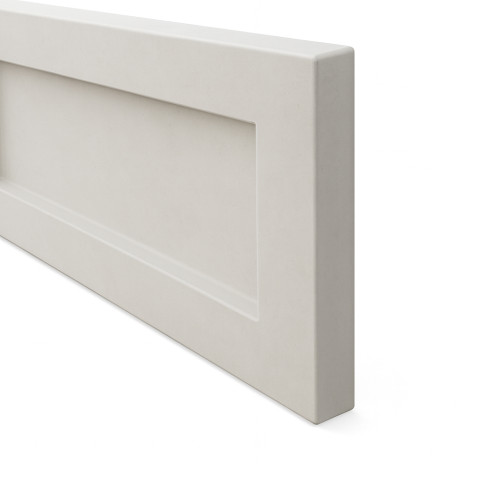
The current recessed board is approximately:
- 1.83m long
- 305mm high
- 45 to 55mm deep
Its recessed face is primarily a visual feature.
Choose smooth or recessed according to the required fencing system and appearance, not because one pattern looks structurally stronger.
Are Lightweight Rebated Gravel Boards Suitable For Retaining Soil?
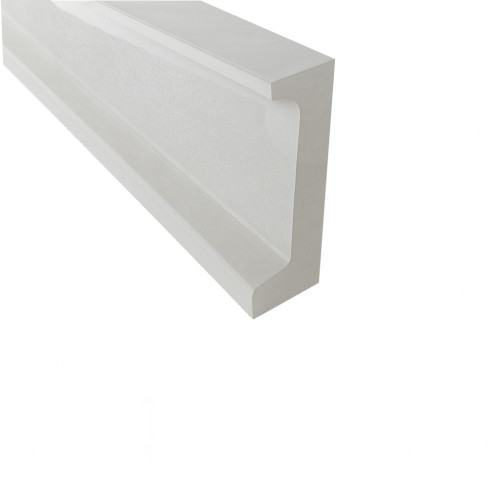
Lightweight rebated Gravel Boards are another specific fencing component and should not automatically be treated as retaining-wall products.
The rebate and lighter profile relate to the fencing system they are designed to work with.
If the project involves retained soil, assess that requirement independently rather than choosing between Gravel Board profiles based on appearance or weight.
Can You Bury A Concrete Gravel Board?
Limited burial can be useful for closing small gaps beneath a fence and dealing with minor variations in the ground.
Concrete can tolerate soil contact far better than timber.
However, burying a large portion of the board can create problems.
It can:
- Waste usable Gravel Board height
- Make replacement harder
- Place unnecessary soil pressure against the board
- Hide cracking or movement
Do not confuse setting the lower edge slightly into the surface with deliberately retaining a raised level of soil.
What If The Ground Slopes?
A sloping garden does not automatically require the Gravel Boards to act as retaining walls.
Rigid panel fencing is commonly stepped.
Each Fence Panel and Gravel Board remains level within its own bay while the next section starts higher or lower.
This allows standard rectangular components to follow a changing garden level.
The problem comes when soil is then filled against the lower side of each step to remove every visible change in level.
That can turn an ordinary stepped fence into an unintended retaining structure.
Can You Fill The Gaps Under Stepped Gravel Boards With Soil?
Minor ground adjustments may be practical, but avoid building substantial wedges of soil against the boards merely to hide triangular gaps.
Consider:
- How deep the infill will become
- Whether it will remain stable
- Where rainwater will go
- Whether the board will be subjected to substantial sideways pressure
On a steep or irregular site, another landscaping solution may produce a better result than forcing standard fencing to follow every change in ground level.
Why Does Drainage Matter Behind Retained Soil?
Water needs somewhere to go.
If soil is placed against an impermeable or relatively solid boundary, rainwater may collect rather than draining freely.
This can increase the pressure on the structure and make the surrounding ground softer.
Signs of a drainage problem include:
- Persistent standing water
- Very wet soil after ordinary rainfall
- Water emerging beneath the Gravel Board
- Soil washing away
- Fence movement that becomes worse during wet weather
A purpose-built retaining structure normally considers drainage as part of the complete design.
An ordinary fence does not automatically provide that drainage system.
What Should You Use Instead Of Concrete Gravel Boards?
The appropriate alternative depends on the amount of soil, available space, site conditions and required appearance.
Garden retaining options can include:
- Railway Sleeper retaining structures
- Masonry retaining walls
- Purpose-designed concrete retaining products
- Terraced landscaping
- Other professionally designed retaining systems
East Coast Fencing's current Railway Sleepers measure approximately 100 x 200mm x 2.4m.
Sleepers can be used in suitable retaining and raised-bed projects, but they still need correct support, fixings and drainage.
They should not simply be stacked loose against a bank.
Is A Separate Retaining Wall Better Than Retaining Soil With The Fence?
Usually, where there is a meaningful difference in levels.
Separating the two functions allows:
The retaining structure to deal with soil, water and ground pressure.
The fence to provide privacy, security and boundary screening.
This has several practical advantages.
If a Fence Panel is damaged, it can be replaced without disturbing the retained soil.
If the retaining structure needs attention, the fence is not automatically the component holding the garden in place.
Can You Put A Fence Above A Retaining Wall?
Potentially, but do not assume the retaining wall itself can carry the additional fence load.
A Fence Panel catches wind and transfers that force into its posts.
A better arrangement in many gardens is to support the fence independently behind or beside the retaining structure.
The exact solution depends on:
- Wall height
- Fence height
- Wind exposure
- Ground conditions
- Available space
Where the retaining structure is substantial, professional advice is sensible before adding a tall fence above it.
When Should You Get Professional Advice?
Get appropriate advice where the project moves beyond a low, straightforward garden edge.
This is particularly sensible where:
- There is a substantial difference in ground level
- The retained ground supports a steep bank
- A building is close to the retained area
- A driveway or parked vehicles are above the wall
- The ground is unstable or waterlogged
- Existing Concrete Fence Posts are already leaning
- Several Gravel Boards have cracked
- A tall fence will also be installed above the retaining structure
The consequences of failure become greater as the retained height and surrounding loads increase.
What Should You Do If Gravel Boards Are Already Retaining Soil?
Do not automatically dismantle the fence without considering what the boards are currently holding back.
First inspect the arrangement.
Check:
- How much soil is being retained: Look at the actual difference between the two garden levels.
- Whether the boards are straight: Bowing suggests sideways loading.
- Whether they are cracked: Pay particular attention to large or structural cracks.
- Whether the Concrete Fence Posts are upright: Check each post with a spirit level.
- Whether the foundations move: A leaning or rocking post may indicate a wider problem.
- What happens after rain: Look for standing water, soil movement and increasing pressure.
- Whether an independent retaining structure is needed: Get suitable advice if the level difference is substantial.
If the fence is visibly failing, do not remove components casually while a large body of soil is pressing against them.
Common Mistakes When Using Gravel Boards Around Raised Soil
- Assuming concrete means the board can retain any amount of soil
- Using a 12-inch board simply because the ground is 12 inches higher
- Stacking Gravel Boards to create an improvised retaining wall
- Building raised beds directly against an existing fence
- Ignoring water trapped behind the boards
- Allowing soil pressure to push Concrete Fence Posts out of plumb
- Replacing cracked boards without addressing the pressure that cracked them
- Filling gaps beneath stepped fencing with large amounts of soil
- Assuming recessed boards are structurally stronger than smooth boards
- Hiding a leaning post behind more soil
- Failing to inspect the fence after significant landscaping changes
FAQs
Can Concrete Gravel Boards Hold Back Soil?
They can deal with limited ordinary soil contact and small amounts of loose surface material, but standard Gravel Boards should not automatically be treated as retaining walls for significant differences in ground level.
Can A 12-Inch Concrete Gravel Board Be Used For A Raised Bed?
Do not assume so. A 305mm Gravel Board is still primarily a fencing component. A raised bed can create continuous soil and water pressure, so an independent bed or retaining structure is generally the better approach.
Can You Stack Concrete Gravel Boards?
Compatible boards can sometimes be stacked within suitable Concrete Fence Posts, provided post length and the complete fence design allow it. Stacking them does not automatically create a suitable retaining wall.
Will Soil Pressure Crack A Concrete Gravel Board?
It can. Excessive sideways pressure, poor support and ground movement can all contribute to cracking even though current traditional Concrete Gravel Boards contain steel reinforcement.
Can Soil Make Concrete Fence Posts Lean?
Yes. Pressure transferred from retained soil through the Gravel Boards can load the Concrete Fence Posts and their foundations. Leaning posts are an important warning sign.
Can Concrete Gravel Boards Be Buried?
They can tolerate limited soil contact and may sit slightly below the surface where needed to close small gaps. Avoid unnecessarily burying large sections or using burial as a substitute for a proper retaining structure.
What Should I Use To Retain A Raised Garden?
Use a retaining structure appropriate to the height, soil, drainage and site. Suitable solutions can include Railway Sleepers, masonry or purpose-designed retaining products depending on the project.
Can I Put A Fence On Top Of A Retaining Wall?
Potentially, but the additional wind load from the fence needs proper support. In many situations it is better for the Fence Posts to be supported independently rather than relying on the retaining wall itself.
Use Gravel Boards To Protect The Fence, Not To Replace A Retaining Wall
Concrete Gravel Boards are strong and durable, but their primary job is straightforward.
They form the lower part of a fence and keep timber Fence Panels away from damp ground.
A little ordinary soil contact is expected. A small amount of loose surface material is very different from a raised bed, steep bank or substantial difference between neighbouring garden levels.
Once the board is deliberately holding back a significant body of soil, you need to think about soil pressure, water, drainage, Concrete Fence Post loading and foundations.
Do not assume that choosing a 12-inch board, stacking several 6-inch boards or installing larger posts automatically solves those issues.
Where meaningful retention is required, keep the retaining structure and the fence separate where appropriate. Let the retaining structure manage the soil and water, and let the fence provide the privacy and boundary it was designed to provide.