


Quick answer: Lay Railway Sleepers flat when you want maximum bearing width, a lower 100mm profile or a broad surface for edging, low beds and seating. Turn them on edge when you want approximately 200mm of height from each course, making them useful for taller borders, raised beds and level changes. East Coast Fencing's current sleepers measure 100 x 200mm x 2.4m, so changing their orientation doubles the visible height per course. Stability, ground preparation, drainage and suitable fixings still matter whichever way you lay them.
One of the first decisions when planning a sleeper project is also one of the simplest: which way should the timber sit?
A rectangular Railway Sleeper can be laid flat on its broad face or turned through 90 degrees and installed on its narrower edge.
The same piece of timber then creates two very different landscaping features.
Lay it flat and you get a low, broad and substantial-looking course. Turn it on edge and you gain twice as much height from each sleeper.
Neither orientation is universally better. The right choice depends on what you are building, how much height you need, how the timber will be supported and whether the feature is decorative, structural or retaining soil.
What Size Are East Coast Fencing Railway Sleepers?
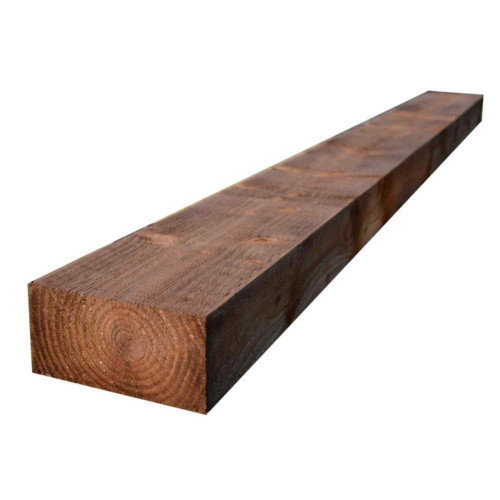
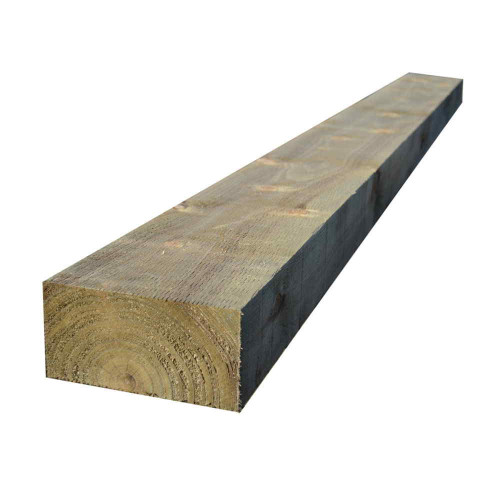
The current East Coast Fencing Railway Sleepers measure approximately:
- 100mm thick
- 200mm wide
- 2.4m long
They are pressure treated and currently available in green/natural and brown finishes.
The rectangular 100 x 200mm section means one sleeper can be installed in two obvious orientations.
Laid flat on the 200mm face, it creates approximately 100mm of height.
Turned on edge onto the 100mm face, the same sleeper creates approximately 200mm of height.
| Orientation | Approx. Visible Height Per Course | Approx. Base Width |
|---|---|---|
| Laid flat | 100mm | 200mm |
| Laid on edge | 200mm | 100mm |
What Does Laying A Railway Sleeper Flat Mean?
Laying a sleeper flat means placing its broad 200mm face against the prepared base.
The sleeper then stands approximately 100mm high.
This creates a low, wide timber feature with a substantial bearing surface underneath.
Flat sleepers are particularly useful where you want:
- A low border
- A broad upper surface
- Simple garden edging
- A low raised bed
- A timber step or landing detail
- A wide seat-like edge
What Does Laying A Railway Sleeper On Edge Mean?
Laying a sleeper on edge means standing it on the narrower 100mm face.
The sleeper then creates approximately 200mm of vertical height.
This is useful where the project needs more height without stacking several courses.
Common applications include:
- Raised beds
- Taller garden borders
- Level changes
- Garden steps
- Retaining edges
Because the base is narrower, support and restraint become increasingly important as the feature gets taller or starts carrying soil pressure.
Is It Better To Lay Railway Sleepers Flat Or On Edge?
It depends on the project.
| Project | Useful Starting Orientation |
|---|---|
| Low lawn edging | Flat |
| Low raised bed | Flat or on edge |
| Taller raised bed | On edge or stacked courses |
| Wide seating edge | Flat |
| Garden step riser | Depends on required rise |
| Retaining soil | Design according to load, not orientation alone |
When Should You Lay Railway Sleepers Flat?
Flat installation is particularly useful when width and stability are more important than gaining height quickly.
The 200mm-wide bearing face provides a generous footprint.
Consider laying sleepers flat where you are creating:
- Low lawn edging
- Shallow flower beds
- Path borders
- Gravel edging
- Low seating edges
- Low-level landscaping features
It can also make a sleeper feel visually heavier and more grounded within the garden.
When Should You Lay Railway Sleepers On Edge?
Turn them on edge where height is more useful than width.
A single course then creates around 200mm of visible height instead of around 100mm.
This makes on-edge sleepers useful for:
- Raised beds
- Higher borders
- Separating different garden levels
- Defining slopes
- Creating step risers
The trade-off is the narrower footprint.
As loading increases, the installation may need stronger restraint than a simple decorative sleeper lying flat on a prepared base.
Which Orientation Is More Stable?
All else being equal, laying the sleeper flat gives it a wider bearing surface.
That can make it naturally easier to position securely for low landscaping features.
However, stability is not determined by orientation alone.
It also depends on:
- Ground preparation
- Whether the sleeper is carrying soil pressure
- How many courses are stacked
- Whether the sleepers are mechanically fixed together
- Whether posts or stakes provide restraint
- Drainage
A properly supported sleeper on edge can be far more stable than a flat sleeper sitting loosely on soft ground.
Should Railway Sleepers Be Laid Directly On Soil?
For a permanent landscaping feature, simply placing sleepers onto soft uneven topsoil is rarely the best preparation.
The ground beneath can settle differently along the 2.4m length, causing the timber to rock or become uneven.
Before installation:
- Mark the required line.
- Remove loose vegetation and unsuitable soft material.
- Prepare a firm, reasonably level foundation appropriate to the project.
- Check alignment before final fixing.
The more structural the feature becomes, the more important proper foundation preparation is.
Do Railway Sleepers Need A Gravel Base?
A free-draining prepared base can be useful for many sleeper landscaping projects.
It can help:
- Create a consistent level
- Reduce local settlement
- Improve drainage around the bottom of the timber
The correct foundation depends on what the sleepers are doing.
A decorative lawn edge does not experience the same loading as a retaining wall.
Do You Need Concrete Under Railway Sleepers?
Not for every project.
Simple low edging may only require a properly prepared and compacted base with suitable restraint.
More demanding features may require:
- Posts
- Anchors
- Concrete-supported restraints
- A more substantial foundation
Choose the construction according to the load rather than assuming every sleeper project needs the same foundation.
Which Way Should Railway Sleepers Go For Garden Edging?
Both orientations can work.
Lay them flat if you want a low, broad border approximately 100mm high.
Turn them on edge if you want approximately 200mm of height from one sleeper.
Flat sleepers can create a particularly substantial edge alongside:
- Lawns
- Gravel paths
- Bark
- Flower beds
An on-edge sleeper gives a stronger visual separation between surfaces at different levels.
Are Railway Sleepers Good For Lawn Edging?
Yes.
Their large section creates a very clear divide between lawn and adjacent landscaping.
A sleeper edge can separate grass from:
- Flower beds
- Gravel
- Bark mulch
- Paths
Set the finished level carefully if mowing convenience matters.
Should Sleeper Edging Sit Flush With The Lawn?
It can.
A relatively flush edge can make the transition between lawn and timber less obstructive.
A raised sleeper creates a stronger visual boundary but may require additional strimming or edging around the grass.
Choose the finished height according to both appearance and maintenance.
Which Way Should Railway Sleepers Go For Raised Beds?
Either orientation can work.
Flat sleepers produce lower increments in height and a wider top surface.
On-edge sleepers gain height more efficiently.
For example, using the current 100 x 200mm section:
- One flat course gives approximately 100mm of height
- One on-edge course gives approximately 200mm of height
This difference becomes significant when planning several courses.
Should Raised Bed Sleepers Be Laid Flat?
Flat courses work well for lower beds and where you want a broad upper edge.
That broader surface can create a substantial visual frame around planting.
The lower height increment also lets you build the bed up more gradually.
Should Raised Bed Sleepers Be Laid On Edge?
On-edge installation is useful where the main objective is gaining planting depth efficiently.
A single sleeper gives approximately 200mm of height.
This can reduce the number of courses required for a moderate raised bed.
Make sure corners and long sides are suitably restrained so soil pressure does not gradually push the timber outwards.
Can You Stack Railway Sleepers?
Yes.
Stacking is common in raised beds, borders and other landscaping features.
Successive courses should be securely connected where movement would otherwise be possible.
Pay particular attention to:
- Corners
- Long straight sides
- Joints between sleepers
- Features containing soil
Should Stacked Sleepers Be Laid Flat Or On Edge?
Again, this depends on the required proportions.
Flat courses create smaller 100mm height increments and a broader wall.
On-edge courses create larger 200mm increments with a narrower wall section.
For taller structures, do not make the choice from appearance alone.
The amount of material being retained and the complete support design become increasingly important.
Can You Mix Flat And On-Edge Sleepers?
Yes.
A project can deliberately use both orientations.
For example, an on-edge sleeper might form the main side of a low bed while another flat sleeper creates a broad upper feature.
Mixed orientations can also help create:
- Steps
- Seats
- Layered garden features
The change should look deliberate and remain properly supported.
Which Way Should Railway Sleepers Go For Garden Steps?
It depends on whether the sleeper forms the tread, the riser or both.
A sleeper can be used as:
- A timber riser retaining the material behind the step
- Part of the tread surface
- An edge around a gravel or paved tread
The required rise and going of the complete staircase should be planned before cutting or positioning timber.
Are Railway Sleepers Good For Sloping Gardens?
Yes.
Sleepers can help organise sloping gardens by creating defined transitions between levels.
Possible uses include:
- Steps
- Raised planting areas
- Terraced borders
- Low retaining edges
Do not confuse a simple landscaping edge with a substantial retaining wall.
Can Railway Sleepers Be Used As Retaining Walls?
Yes, in appropriately designed sleeper retaining structures.
However, retained soil creates horizontal pressure against the timber.
The higher the retained level becomes, the more important factors such as:
- Posts
- Foundation
- Drainage
- Fixings
- Soil conditions
- Loads above the wall
become.
For substantial retaining work, use a design appropriate to the site rather than simply stacking more sleepers until the required height is reached.
Does Orientation Matter For A Retaining Wall?
Yes, but it is only one design consideration.
A sleeper installed on edge creates more vertical coverage from each course, while a flat sleeper creates a broader wall section.
The stronger option for a particular retaining wall cannot be decided purely from those dimensions.
The post arrangement, connections, foundation and retained load matter too.
Can Railway Sleepers Be Installed Vertically?
Yes.
Sleepers can also be installed vertically to create certain:
- Retaining edges
- Decorative borders
- Level transitions
Vertical installations require a suitable method of holding each sleeper securely.
Do not simply stand full-length sleepers in a shallow trench and expect soil alone to keep them aligned.
Horizontal vs Vertical Railway Sleepers: Which Is Better?
| Feature | Horizontal | Vertical |
|---|---|---|
| Long borders | Very practical | More individual pieces required |
| Curved appearance | Limited | Greater flexibility with multiple pieces |
| Height changes | Usually stepped in courses | Individual tops can vary |
| Installation | Fewer long pieces | More individual setting out |
Which Orientation Is Best For Sleeper Seating?
Flat sleepers are generally useful where the 200mm face is intended to become a broad visible upper surface.
However, a single 200mm-wide sleeper is relatively narrow for comfortable conventional seating by itself.
Purpose-built sleeper benches may therefore combine multiple timbers or use a different arrangement to achieve suitable dimensions.
Design seating around comfort and support rather than assuming one sleeper automatically forms a finished bench.
Can Railway Sleepers Be Used Around A Patio?
Yes.
They can create:
- Raised planting around the patio
- Defined edges
- Steps between levels
- Decorative timber features
Think carefully about drainage where sleepers meet paving.
Water should not become trapped against either the timber or adjoining structures.
Can Railway Sleepers Edge Gravel?
Yes.
A sleeper creates a substantial physical edge that helps separate gravel from:
- Lawn
- Planting
- Soil
- Other landscaping surfaces
A flat sleeper creates a lower, broader border, while an on-edge sleeper gives a taller barrier.
Can Railway Sleepers Edge Bark Or Mulch?
Yes.
They can help contain loose landscaping materials within beds and paths.
Choose enough exposed height to reduce material spilling over the timber during ordinary garden maintenance.
Can Railway Sleepers Be Used For Path Edging?
Yes.
They work particularly well beside:
- Gravel paths
- Bark paths
- Garden tracks
- Informal planting routes
Make sure the finished sleeper height does not create an unexpected trip edge in a walking area.
Can Railway Sleepers Form A Garden Path?
They can be incorporated into paths, although timber can become slippery when wet or covered with organic growth.
Consider:
- Drainage
- Surface grip
- Spacing
- Surrounding material
before using timber as part of a regular walking surface.
Can Railway Sleepers Be Used For A Shed Base?
They can form part of certain framed or gravel shed-base arrangements where properly prepared and levelled.
The important requirement is that the finished shed receives stable, even support.
Do not simply place a heavy shed on sleepers lying directly across soft uneven topsoil.
Should Shed Base Sleepers Be Flat?
Flat installation can provide a broad bearing surface where the sleeper forms part of a prepared perimeter or supporting arrangement.
The complete foundation still needs to suit:
- Shed size
- Weight
- Floor construction
- Ground conditions
How Do You Keep Railway Sleepers From Moving?
The correct restraint depends on the project.
Possible approaches include:
- Mechanical connections between sleepers
- Suitable stakes or posts
- Purpose-designed brackets
- Secure corner joints
- Appropriate foundations
A low decorative edge requires less restraint than a tall soil-retaining feature.
How Should Railway Sleepers Be Joined At Corners?
Corners should be mechanically secure rather than relying only on the weight of the timber.
Suitable exterior structural fixings can connect adjoining sleepers.
Before fixing:
- Check both pieces are level.
- Check the corner is square where required.
- Clamp or hold the sleepers securely.
- Pre-drill where the chosen fixing requires it.
- Install the fixing without unnecessarily splitting the timber.
What Screws Should You Use For Railway Sleepers?
Use structural exterior fixings designed for substantial timber.
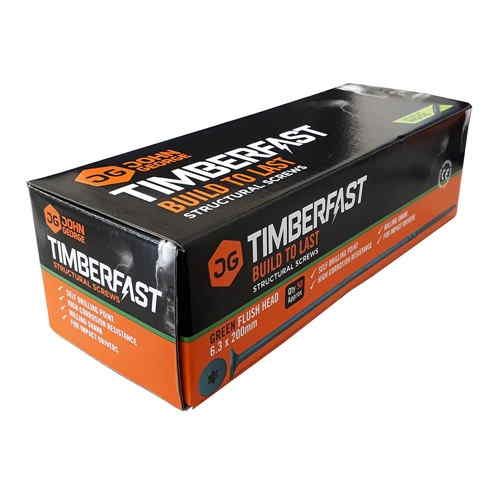
The current Railway Sleepers category also includes long flush-head screws intended for demanding outdoor timber fastening.
Choose fixing length according to:
- Sleeper orientation
- Joint design
- Amount of timber that needs to be engaged
Do not use short general-purpose screws for major sleeper connections.
Should Railway Sleepers Be Pre-Drilled?
Pre-drilling can make installation easier when using long structural screws.
It can help:
- Keep fixings accurately positioned
- Reduce splitting
- Make long fixings easier to drive
Follow the requirements of the particular fixing being used.
Can Railway Sleepers Be Cut?
Yes.
The current sleepers are 2.4m long, but many landscaping projects require shorter pieces.
Common reasons for cutting include:
- Raised-bed ends
- Short borders
- Corners
- Steps
- Irregular garden layouts
Measure carefully because sleepers are substantial pieces of timber and cutting errors can create significant waste.
What Should You Do With Freshly Cut Sleeper Ends?
Pressure treatment protects timber according to the treatment applied during manufacture, but cutting exposes timber from inside the section.
Freshly cut surfaces should receive a suitable end-grain treatment where required by the relevant preservative guidance.
It is also sensible to plan cuts efficiently and avoid unnecessary reworking.
Can You Cut A 2.4m Railway Sleeper In Half?
Yes.
A central cut can create two pieces of approximately 1.2m before allowing for the saw cut itself.
This can be useful for:
- Bed ends
- Short returns
- Smaller garden features
Always measure the actual required finished dimensions rather than assuming exactly half the sleeper is what the design needs.
Should You Lay Sleepers Before Cutting Them?
Dry-positioning full sleepers can help confirm the design before permanent cuts are made.
This is particularly useful for:
- Raised beds
- Corners
- Steps
- Garden edging
Mark each cut only after confirming the position of adjoining pieces.
How Do You Calculate How Many Railway Sleepers You Need?
The current sleeper length is 2.4m.
For a simple straight run, divide the total length by 2.4m and round up to allow for the complete run.
For more complicated projects, calculate each side separately.
A raised bed, for example, requires:
- Two long sides
- Two ends
- The required number of courses
Orientation then determines the height gained per course.
How Does Orientation Affect Sleeper Quantity?
It can make a major difference when height is required.
With the current 100 x 200mm section:
- A flat course contributes approximately 100mm of height
- An on-edge course contributes approximately 200mm of height
A project designed around height may therefore use fewer courses when the sleepers are installed on edge.
That does not automatically mean it uses less timber overall, because the required structure, bracing and layout can also change.
Is It Cheaper To Lay Sleepers On Edge?
Not necessarily.
It may achieve a particular height with fewer horizontal courses, but cost should be assessed across the complete structure.
Also consider:
- Support posts
- Structural fixings
- Foundations
- Drainage
- Cutting
- Installation effort
The orientation that uses fewer sleepers is not automatically the cheapest complete solution.
Which Orientation Looks Better?
This is largely personal preference.
Flat sleepers tend to create a broad, heavy and low appearance.
On-edge sleepers create a taller, slimmer face.
| Appearance | Flat | On Edge |
|---|---|---|
| Visual weight | Broad and substantial | Taller and more upright |
| Top surface | 200mm wide | 100mm wide |
| Height per course | 100mm | 200mm |
Do Brown Or Green Railway Sleepers Look Better?
The current sleepers are available in brown and green/natural pressure-treated finishes.
Brown can provide a warmer starting appearance alongside:
- Bark
- Brick
- Warm-toned paving
- Traditional fencing
Green/natural treated timber can blend well with planting and other green pressure-treated garden timber.
Both finishes will change in appearance as the timber weathers outdoors.
Does Treatment Colour Affect Which Way Sleepers Should Be Laid?
No.
Orientation should be based on the project and required dimensions.
Green or brown treatment affects the initial appearance, not whether a sleeper should be flat or on edge.
Are Pressure-Treated Railway Sleepers Maintenance-Free?
No outdoor timber should be assumed to require no inspection.
Check sleeper features periodically for:
- Movement
- Loose connections
- Persistent standing water
- Heavy organic growth
- Damage around cut ends
Treatment helps protect the timber, but good drainage and sound construction remain important.
Can Railway Sleepers Develop Green Algae?
Yes.
Damp, shaded timber can develop algae and other surface growth.
This is particularly common near:
- Dense planting
- Shaded walls
- North-facing areas
- Poorly drained ground
Surface algae does not automatically mean the sleeper is structurally rotten.
Can Railway Sleepers Be Pressure Washed?
Use caution.
Excessive pressure can roughen timber fibres and damage the surface.
Start with:
- A stiff brush
- Removal of loose dirt
- A suitable timber-safe cleaner where required
Aggressive cleaning is rarely necessary for ordinary landscaping timber.
Can Railway Sleepers Be Painted Or Stained?
Pressure-treated timber can generally receive a compatible exterior decorative finish once it is sufficiently dry and properly prepared.
Follow the coating manufacturer's instructions.
Remember that sleepers can have large surfaces, so coating an entire raised bed or retaining feature requires considerably more work than treating a small timber component.
Will Railway Sleepers Crack?
Natural timber can develop surface checks and splits as moisture levels change.
This does not automatically mean the sleeper has structurally failed.
Assess:
- Depth of the split
- Location
- Whether the sleeper remains stable
- Whether structural connections are affected
Can Railway Sleepers Twist Or Bow?
Some timber movement is possible.
Correct storage and secure installation help control it.
Long 2.4m sleepers should be stored properly supported rather than left leaning at an angle for extended periods.
How Should Railway Sleepers Be Stored Before Installation?
Keep them:
- Supported
- Stacked safely
- Away from unnecessary standing water
- Positioned so they cannot roll or fall
Sleepers are substantial pieces of timber, so handling and storage should be planned before delivery.
Are Railway Sleepers Heavy?
Yes.
A 2.4m sleeper with a 100 x 200mm timber section is a substantial item.
Exact weight varies with timber density and moisture content.
Plan:
- How the sleepers will reach the work area
- How many people are needed to move them safely
- Whether access is narrow or stepped
- Where they will be stored before installation
Can One Person Install Railway Sleepers?
Some individuals may be able to handle individual components, but full-length sleepers are bulky and awkward.
Two-person handling is often more practical, particularly where sleepers need to be:
- Carried over distance
- Placed precisely
- Stacked
- Installed on a slope
Should You Lay Railway Sleepers Flat On A Slope?
You can, but each section needs a properly prepared base.
Do not simply place a long sleeper directly across an irregular gradient and expect it to remain stable.
Depending on the design, you may:
- Step sleepers between levels
- Create individually level sections
- Use sleepers as risers between flatter areas
Can You Follow A Curve With Railway Sleepers?
Each sleeper is straight, so a curved feature normally needs to be formed from several shorter straight sections.
The tighter the curve, the shorter the pieces generally need to be.
This involves more:
- Cutting
- Joints
- Fixings
Plan the curve before cutting full sleepers into short sections.
Can Railway Sleepers Be Used Next To Fencing?
Yes.
They can create raised planting and landscaping near a fence, but avoid using the fence itself to retain the soil placed behind a sleeper bed.
Where possible, leave sufficient access to:
- Inspect the fence
- Replace panels
- Maintain posts
- Control planting
Should You Build A Sleeper Bed Against A Fence Panel?
It is better to create the raised bed as its own structure rather than piling soil directly against an ordinary timber fence panel.
Wet soil can keep the panel damp and makes future replacement difficult.
Allow practical separation where the garden layout permits it.
Can Railway Sleepers Be Used Beside Concrete Gravel Boards?
Yes, but treat each structure independently.
The sleeper feature should not push against the fence in a way that transfers soil pressure into a gravel board or fence panel not designed to retain it.
What Are The Most Common Railway Sleeper Orientation Mistakes?
- Choosing the orientation only from appearance
- Forgetting that flat gives approximately 100mm height while on edge gives approximately 200mm
- Standing sleepers on edge without enough restraint
- Building tall retaining features without considering soil pressure
- Placing sleepers directly on soft uneven topsoil
- Ignoring drainage
- Using short general-purpose screws for substantial joints
- Failing to secure corners properly
- Cutting several sleepers before checking the layout
- Leaving fresh pressure-treated cuts unprotected where end treatment is required
- Using a raised sleeper edge where it creates a trip hazard
- Building raised beds directly against ordinary fence panels
- Assuming pressure treatment removes the need for good construction
Railway Sleepers Planning Checklist
- Decide what the sleepers are being used for.
- Measure the total length of the project.
- Decide whether 100mm or 200mm height per course suits the design.
- Choose flat or on-edge orientation.
- Calculate the number of courses required.
- Prepare a suitable base.
- Plan drainage.
- Plan all corner and end joints.
- Choose suitable exterior structural fixings.
- Consider posts or restraints where soil pressure is involved.
- Plan cuts before using the saw.
- Protect freshly exposed timber appropriately.
- Allow safe access for handling full-length sleepers.
- Keep raised soil loads independent from ordinary fencing.
FAQs
What Size Are East Coast Fencing Railway Sleepers?
The current Railway Sleepers measure approximately 100 x 200mm x 2.4m.
Are Railway Sleepers Pressure Treated?
The current East Coast Fencing range consists of pressure-treated timber sleepers.
What Colours Are Railway Sleepers Available In?
The current range includes green/natural and brown pressure-treated finishes.
Which Way Should Railway Sleepers Be Laid?
Lay them flat when a low, broad 100mm-high course suits the project. Turn them on edge where approximately 200mm of height per course is more useful.
How High Is A Railway Sleeper When Laid Flat?
With a 100 x 200mm section, laying the sleeper on its 200mm face produces approximately 100mm of height.
How High Is A Railway Sleeper When Laid On Edge?
Standing it on its 100mm face produces approximately 200mm of height.
Which Orientation Is More Stable?
Flat sleepers have a wider natural bearing surface, but actual stability depends on foundations, fixings, restraint and the loads involved.
Should Railway Sleepers Be Laid Directly On Soil?
For permanent features, a properly prepared firm base is preferable to laying sleepers loosely on soft or uneven topsoil.
Do Railway Sleepers Need Gravel Underneath?
A prepared free-draining layer can be useful for levelling and drainage, although foundation requirements depend on the project.
Do Railway Sleepers Need Concrete?
Not automatically. Low decorative features and substantial retaining structures require very different levels of support.
Should Railway Sleepers Be Flat Or On Edge For Raised Beds?
Either can work. Flat sleepers create 100mm height increments and a broad upper surface, while on-edge sleepers create approximately 200mm per course.
Should Railway Sleepers Be Flat Or On Edge For Garden Edging?
Flat works well for a low broad edge. On edge is useful where a taller boundary between surfaces is required.
Can Railway Sleepers Be Stacked?
Yes, provided stacked courses are suitably connected and supported for the intended project.
Can You Mix Flat And On-Edge Sleepers?
Yes. Mixed orientations can be used deliberately for steps, beds, seating and other custom landscaping features.
Can Railway Sleepers Be Used For Retaining Walls?
Yes, in appropriately designed retaining structures. Soil pressure, posts, foundations, drainage and fixings become increasingly important as retained height increases.
Can Railway Sleepers Be Installed Vertically?
Yes, where they are securely supported and the construction suits the load.
Can Railway Sleepers Be Used For Steps?
Yes. They can form risers, edges or parts of suitable garden step designs.
Can Railway Sleepers Be Used On Sloping Gardens?
Yes. They are useful for steps, terracing, planting areas and level transitions.
Can Railway Sleepers Be Used For Lawn Edging?
Yes. Their substantial timber section creates a clear boundary between lawn and beds, gravel or other landscaping.
Can Railway Sleepers Be Used For Path Edging?
Yes. They can contain gravel, bark and other loose path materials.
Can Railway Sleepers Be Used Around Patios?
Yes. They can form planting edges, steps and decorative level changes around patios.
Can Railway Sleepers Be Used For Shed Bases?
They can form part of suitable framed or gravel base designs where the ground is properly prepared and the shed is evenly supported.
Can Railway Sleepers Be Cut?
Yes. The current 2.4m sleepers can be cut to suit beds, steps, corners and shorter garden features.
Should Cut Ends Be Treated?
Fresh pressure-treated timber cuts should receive suitable end-grain treatment where required by the relevant treatment guidance.
What Fixings Should Be Used For Railway Sleepers?
Use suitable exterior structural timber fixings with enough length and capacity for the joint being created.
Should Railway Sleepers Be Pre-Drilled?
Pre-drilling can be useful with long structural fixings and can help reduce splitting and improve accuracy.
Can Railway Sleepers Be Painted?
Pressure-treated timber can generally receive a compatible exterior finish once sufficiently dry and properly prepared.
Can Railway Sleepers Develop Algae?
Yes. Damp and shaded timber can develop surface algae and other organic growth.
Can Railway Sleepers Be Pressure Washed?
Use caution because excessive pressure can damage and roughen the timber surface.
Will Railway Sleepers Crack?
Timber can develop natural checks and splits as moisture conditions change. These do not automatically mean structural failure.
How Many Railway Sleepers Do I Need?
For a straight run, start with the total length and divide by the current 2.4m sleeper length. For beds and multi-course structures, calculate every side and multiply by the number of courses required.
Does Laying Railway Sleepers On Edge Save Timber?
It provides twice the height per course compared with laying the current 100 x 200mm sleeper flat, but the complete material requirement also depends on support, fixings and project design.
Can Railway Sleepers Sit Against A Fence?
They can be installed nearby, but avoid transferring retained soil pressure into ordinary fence panels or piling wet soil directly against timber fencing.
Should You Lay Your Railway Sleepers Flat Or On Edge?
Start with the finished height you actually need.
East Coast Fencing's current Railway Sleepers measure 100 x 200mm x 2.4m. That rectangular section gives you two useful orientations from the same timber.
Lay the sleeper flat and each course contributes approximately 100mm of height with a broad 200mm footprint. This arrangement works particularly well for low edging, broad borders and projects where you want the top surface of the timber to feel substantial.
Turn the sleeper on edge and each course contributes approximately 200mm of height. This makes more efficient use of each sleeper when building raised beds, taller borders and level changes.
Do not choose solely by counting courses.
An on-edge sleeper has a narrower base, so projects carrying meaningful soil pressure may require more restraint. A flat sleeper has a broad footprint, but it can still move if placed directly onto poorly prepared ground.
Foundation preparation, drainage, joints and fixings matter whichever orientation you select.
For straightforward decorative landscaping, orientation is mainly a practical and visual decision. For retaining structures, taller beds and significant changes in ground level, the complete support system matters far more than simply whether the sleeper is flat or on edge.