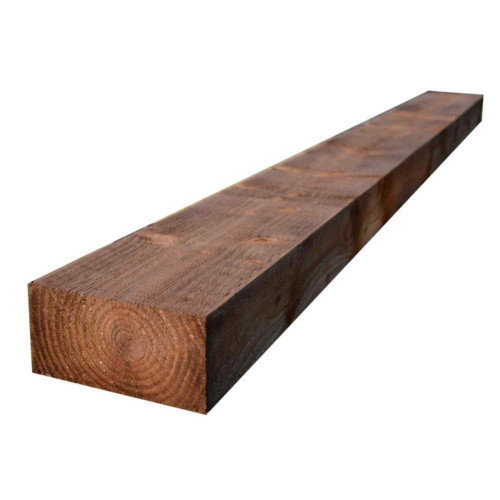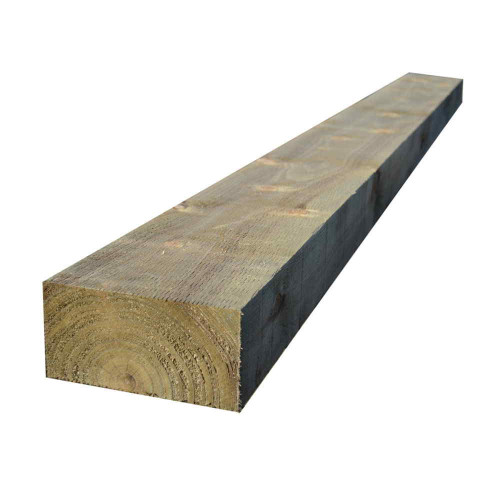




Quick answer: Choose landscaping sleepers by considering the project, finished dimensions, ground contact, structural loading and preferred treatment colour. The available pressure-treated timber sleepers measure 100 x 200mm x 2.4m and are offered in brown and green finishes. They can be used for raised beds, edging, steps, low retaining features, seating and garden divisions, provided they are supported, fixed and drained correctly.
Landscaping sleepers are substantial timber sections used to build raised beds, garden edging, steps, pathways, seating and changes in level. Their size gives them a solid appearance and allows relatively simple garden structures to be created from repeated lengths of timber.
They are often called railway sleepers because their shape resembles the timbers traditionally used beneath railway tracks. New landscaping sleepers are supplied specifically for garden and construction projects and should not automatically be confused with reclaimed sleepers removed from railway use.
This landscaping and railway sleepers buying guide explains sleeper dimensions, treatment colours, suitable projects, quantities, cutting, fixing, drainage, retaining walls, raised beds, steps, seating, maintenance and common ordering mistakes.
What Should You Consider Before Buying Landscaping Sleepers?
Start by deciding exactly what the sleepers need to do. Decorative edging places less demand on the timber and fixings than a retaining structure supporting wet soil.
Consider:
- The intended project
- The required finished height and length
- Whether the sleepers will lie flat or stand on edge
- Whether they will touch soil
- The amount of soil or material being retained
- The condition and slope of the ground
- How water will drain
- Whether the sleepers will be cut
- The fixing method
- The preferred treatment colour
- Access for delivery and handling
- Whether professional structural advice is required
Do not choose sleeper quantities before preparing a basic measured plan. Small differences in layout can change the number of full lengths, cuts and fixings required.
Available Landscaping Sleeper Sizes
The available pressure-treated timber railway sleepers measure:
- 100mm thick
- 200mm wide
- 2.4m long
They can normally be positioned in two main orientations:
- Laid flat: approximately 100mm high and 200mm wide
- Placed on edge: approximately 200mm high and 100mm wide
The orientation changes the finished height, footprint, stability and number of sleepers needed.
Sleeper Orientation At A Glance
| Orientation | Approximate Height | Approximate Width | Typical Uses |
|---|---|---|---|
| Laid Flat | 100mm | 200mm | Edging, broad steps, seating and stable low courses |
| Placed On Edge | 200mm | 100mm | Raised beds, narrow edging and increased height per course |
| Installed Vertically | Variable | 100mm or 200mm face | Posts, individual edging and decorative changes in height |
Vertical sleeper installations need substantial below-ground support and should not be treated as freestanding decorative blocks without suitable foundations.
What Is The Difference Between Landscaping Sleepers And Railway Sleepers?
The terms are often used interchangeably in garden landscaping. However, there is an important distinction between new landscaping sleepers and reclaimed railway sleepers.
New Landscaping Sleepers
New sleepers are supplied for landscaping projects. Their cleaner appearance and regular dimensions make them suitable for contemporary and traditional gardens.
Benefits include:
- More consistent dimensions
- Cleaner surfaces
- Easier cutting and fixing
- Pressure-treated options
- Predictable appearance
- No previous railway wear
Reclaimed Railway Sleepers
Reclaimed sleepers have previously been used in railway or industrial settings. They may have a heavily weathered appearance, old fixing holes, splits and surface contamination.
They can be difficult to cut and may not be appropriate for every domestic project, particularly where regular skin contact, food growing or children's play is expected.
The supplied East Coast Fencing range consists of new pressure-treated timber sleepers rather than reclaimed railway stock.
What Does Pressure-Treated Timber Mean?
Pressure treatment introduces preservative into the timber to improve resistance to fungal decay and insect attack.
It does not make a sleeper waterproof or permanently resistant to every form of deterioration.
Pressure-treated sleepers still benefit from:
- Good drainage
- Protection of fresh cuts
- Suitable fixings
- A stable foundation
- Removal of trapped leaves and soil
- Routine inspection
Timber that remains constantly saturated can deteriorate over time, particularly at cut ends, joints and areas where water is trapped.
Brown Or Green Landscaping Sleepers?
The available sleepers are supplied in pressure-treated brown and pressure-treated green finishes.
Pressure-Treated Brown Sleepers
Brown-treated sleepers provide a warmer initial colour. They can work well with traditional fencing, brown timber posts, gravel boards and rustic garden planting.
Pressure-Treated Green Sleepers
Green-treated sleepers have a lighter, more natural treatment appearance. They can complement green-treated fencing, lawns and contemporary planting schemes.
The colour difference is mainly visual. Both finishes will change as the timber weathers outdoors.
Natural timber varies in:
- Colour
- Grain
- Knots
- Surface texture
- Moisture content
Do not expect every sleeper to have an identical shade or grain pattern.
Brown And Green Sleepers Compared
| Feature | Brown Treatment | Green Treatment |
|---|---|---|
| Initial appearance | Warm brown tone | Lighter green or natural tone |
| Typical garden style | Traditional and rustic | Natural and contemporary |
| Weathering | Colour changes over time | Colour changes over time |
| Pressure treated | Yes | Yes |
What Can Landscaping Sleepers Be Used For?
Landscaping sleepers can be used in a wide range of garden projects.
Common uses include:
- Raised garden beds
- Flower bed edging
- Vegetable beds
- Low retaining walls
- Garden steps
- Path edging
- Lawn borders
- Seating
- Planters
- Sandpit surrounds
- Patio borders
- Dividing different surface materials
- Creating changes in garden level
- Supporting gravel or bark areas
The fixing, foundation and drainage requirements vary significantly between these projects.
Which Sleeper Project Is Right For Your Garden?
| Project | Typical Sleeper Position | Main Buying Consideration |
|---|---|---|
| Raised Bed | Flat or on edge in stacked courses | Internal dimensions and soil pressure |
| Garden Edging | Flat, on edge or partly recessed | Finished level and mower access |
| Retaining Feature | Horizontal courses or vertical sleepers | Drainage and structural loading |
| Garden Steps | Flat tread or edge riser | Safe dimensions and non-slip surface |
| Seating | Horizontal top surface | Smooth finish and secure supports |
| Path Border | Flat or on edge | Drainage and trip hazards |
Are Landscaping Sleepers Suitable For Raised Beds?
Yes. Their substantial section makes them well suited to raised flower beds, vegetable beds and planters.
A raised bed can be built with sleepers laid flat or positioned on edge.
Sleepers Laid Flat
Each course adds approximately 100mm of height and creates a broad, stable wall.
This orientation is useful where:
- A wide top edge is preferred
- The bed will double as informal seating
- Stability is a priority
- A lower raised bed is required
Sleepers Placed On Edge
Each course adds approximately 200mm of height while using a narrower footprint.
This orientation is useful where:
- More internal planting space is required
- A taller bed is being built
- The garden is narrow
- The sleepers will be braced and fixed securely
On-edge sleepers can be less stable before fixing and may need stronger corner connections and intermediate supports.
How High Should A Raised Sleeper Bed Be?
The correct height depends on the plants, accessibility and available soil depth.
Possible configurations include:
- One flat course: approximately 100mm
- One on-edge course: approximately 200mm
- Two flat courses: approximately 200mm
- Two on-edge courses: approximately 400mm
- Three flat courses: approximately 300mm
Actual finished height will be affected by the foundation and whether the bottom course is partly recessed.
Taller beds contain more soil and create greater outward pressure. They require stronger corner joints, intermediate fixings and a stable base.
How Wide Should A Raised Bed Be?
A raised bed should be narrow enough for the middle to be reached without standing on the soil.
Access from both sides allows a wider bed than access from only one side.
When planning the width, include the sleeper thickness. A bed measuring 1.2m externally will have less internal planting width once two 100mm or 200mm sleeper faces are included.
Can Landscaping Sleepers Be Used For Vegetable Beds?
New pressure-treated sleepers are commonly selected for garden beds, but buyers should follow the product information and preservative guidance supplied with the timber.
For food-growing areas, some gardeners choose to install a suitable internal barrier between the timber and soil.
A liner can also help reduce constant wet soil contact, although it must not trap water against the sleeper without a drainage route.
Do not line the bottom of a raised bed with impermeable material unless drainage has been designed properly.
Should A Sleeper Raised Bed Be Lined?
Lining is optional and depends on the project.
Possible benefits include:
- Reducing direct soil contact
- Keeping soil from washing through joints
- Helping separate timber from very wet compost
- Creating a cleaner internal face
A liner should:
- Be suitable for garden use
- Allow drainage
- Not trap water around the lower sleeper
- Be fixed without leaving sharp projections
Drainage remains more important than completely enclosing the timber.
Can Landscaping Sleepers Be Used As Garden Edging?
Yes. Sleepers create a strong visual edge between lawns, paths, gravel, bark and planting areas.
They can be:
- Laid flat at surface level
- Placed on edge for a raised border
- Partly recessed into the ground
- Cut into shorter sections
- Used to form straight or stepped layouts
Consider mower access when edging a lawn. A sleeper standing above the grass may require hand trimming around its base.
Can Sleepers Be Used To Edge A Gravel Path?
Yes. Sleepers can retain the gravel and create a clear boundary between the path and surrounding soil.
The installation should prevent:
- The sleeper moving sideways
- Gravel escaping beneath it
- Water becoming trapped against the timber
- The top edge creating a trip hazard
The path base and drainage should be prepared independently rather than relying on the sleeper to compensate for poor groundwork.
Can Sleepers Be Used Around A Lawn?
Sleepers can form a defined lawn edge, especially where the lawn meets a raised bed or gravel area.
For easier mowing, the top of a flat sleeper can be installed close to the grass level. This may allow mower wheels to pass over the edge.
Check that the timber is firmly supported so it does not rock or create an uneven edge.
Are Landscaping Sleepers Suitable For Retaining Walls?
Sleepers can form low retaining features, but the design must account for soil pressure, water, ground conditions and overall height.
A retaining wall is more demanding than a decorative raised bed because it supports ground on one side.
Important considerations include:
- The height of retained soil
- The slope behind the wall
- Drainage
- Soil type
- Nearby buildings
- Loads from paths, vehicles or structures
- Foundations
- Anchoring and posts
Substantial or safety-critical retaining walls require suitable professional design. Do not rely on stacked sleepers alone to retain a large bank of soil.
Horizontal Or Vertical Sleepers For Retaining?
Horizontal Sleeper Walls
Horizontal sleepers are normally stacked between or fixed to substantial posts. The posts and foundations resist the pressure from the soil behind.
This arrangement can provide:
- Long continuous lines
- Straight courses
- Straightforward replacement of individual sections
- A traditional sleeper-wall appearance
Vertical Sleeper Walls
Vertical sleepers can create a strong visual rhythm and follow changes in height more easily.
Each sleeper needs adequate below-ground support and alignment. A row of shallow vertical sleepers can lean under soil pressure.
The correct method depends on the retained height and structural demands.
Why Is Drainage Important Behind A Sleeper Wall?
Water increases pressure behind a retaining structure and keeps the timber wet.
A suitable retaining installation may need:
- Free-draining material behind the wall
- A drainage pipe
- A permeable separator
- A route for water to escape
- Protection against soil washing through joints
Do not create a drainage outlet that directs water towards a building, neighbouring property or unstable ground.
Can Landscaping Sleepers Be Used For Steps?
Yes. Sleepers can form step risers, treads or retaining edges within a garden staircase.
Safe steps require consistent dimensions and stable support.
Consider:
- Riser height
- Tread depth
- Drainage
- Surface grip
- Handrail requirements
- Changes in direction
- The total rise
- Adjacent retaining structures
A timber surface can become slippery when wet, shaded or covered in algae. Position and maintenance are important.
How Can Sleepers Be Used In Garden Steps?
Common arrangements include:
- A sleeper riser with compacted gravel behind it
- A flat sleeper used as a broad tread
- Two parallel sleepers forming the sides of a gravel step
- Stacked sleepers creating changes in level
Every sleeper must be fixed so that it cannot roll, rock or move underfoot.
Can Landscaping Sleepers Be Used For Seating?
Yes. Sleepers can form benches, retaining-wall seating and broad edges around raised beds.
For seating, check:
- The finished height
- The seat depth
- Surface smoothness
- Splinters and sharp edges
- Fixing heads
- Support spacing
- Drainage beneath the seat
A sleeper intended as a seat should be sanded and inspected more carefully than one used below soil level.
Can Sleepers Be Used To Build A Bench?
A simple bench can be created using sleepers as the seat and substantial timber supports beneath.
The sleeper should be fixed securely to prevent movement. Long unsupported spans may flex or become unstable.
Use exterior fixings and keep metal heads flush or below the seating surface.
Can Sleepers Be Used For Planters?
Yes. Small rectangular or square planters can be built from cut sleeper sections.
Plan:
- The internal planting space
- The sleeper thickness
- Drainage holes or an open base
- Corner fixings
- The weight after filling
- Whether the planter will ever need moving
A filled sleeper planter can become extremely heavy. Build it in its final position where possible.
Are Sleepers Suitable For Sandpits?
Sleepers can create a substantial sandpit surround, but the finished surfaces need careful preparation.
Check for:
- Splinters
- Sharp corners
- Protruding fixings
- Drainage
- Animal access
- A suitable cover
- Compatibility of the treated timber with the intended use
The product guidance should be checked for projects involving frequent direct contact by children.
How Do You Calculate How Many Sleepers You Need?
Calculate each straight section separately and add the totals.
For a single straight run:
- Total run length divided by 2.4m equals the approximate number of sleepers per course
Round up to the next whole sleeper because partial lengths still require a full sleeper to be purchased.
Then multiply by the number of courses.
Example Sleeper Quantity Calculation
For a rectangular raised bed measuring 2.4m long and 1.2m wide:
- Two long sides require two full 2.4m sleepers
- Two short sides require two 1.2m sections
- One additional 2.4m sleeper can be cut into two 1.2m ends
One course therefore requires three 2.4m sleepers, subject to the chosen joint arrangement and actual dimensions.
A two-course bed would require six sleepers.
Sleeper Quantity Planning Table
| Project Length | Approximate Full 2.4m Lengths Per Course |
|---|---|
| 2.4m | 1 sleeper |
| 4.8m | 2 sleepers |
| 7.2m | 3 sleepers |
| 9.6m | 4 sleepers |
| 12.0m | 5 sleepers |
Allow for corner joints, offcuts, changes in direction and any pieces rejected because of damage.
How Much Extra Timber Should You Order?
A modest allowance can be useful where the project contains several cuts or irregular corners.
Extra material may be needed for:
- Cutting waste
- Short end sections
- Staggered joints
- Steps and level changes
- Unexpected damage
- Additional internal braces
Plan the cutting list first. Efficient use of 1.2m, 800mm and 600mm sections can reduce waste from 2.4m sleepers.
How Heavy Are Landscaping Sleepers?
Sleepers are large and heavy. Their weight varies with timber density and moisture content.
Freshly treated or wet sleepers may be considerably heavier than dry timber.
Plan:
- How the delivery will reach the property
- The route to the garden
- Whether there are steps or narrow passages
- How many people are needed for lifting
- Where the sleepers will be stored
- Whether mechanical assistance is required
Do not attempt to carry long, wet sleepers alone.
How Should Landscaping Sleepers Be Stored?
Store sleepers on firm, level bearers above wet ground.
Support the timber at several points so long lengths do not bow unnecessarily.
Avoid:
- Leaving sleepers directly on mud
- Stacking them on unstable ground
- Allowing the stack to roll
- Wrapping wet timber tightly in plastic
- Leaving one end unsupported
- Storing them where children can climb
Install the sleepers promptly where possible.
Can Landscaping Sleepers Be Cut?
Yes. Timber sleepers can be cut with a suitable saw.
Their 100 x 200mm section is substantial, so the cutting tool must be capable of producing a controlled full-depth cut.
Possible tools include:
- A suitable circular saw used from more than one face
- A reciprocating saw with an appropriate long blade
- A chainsaw operated by a competent user
- A large hand saw for limited cuts
Support both sides of the cut and prevent the offcut pinching the blade.
How Do You Make A Straight Sleeper Cut?
- Measure the required length carefully.
- Mark around all four faces using a square.
- Place the sleeper on stable supports.
- Keep the cutting area clear of the ground.
- Cut carefully along the marks.
- Remove loose fibres and splinters.
- Apply a suitable treatment to the fresh cut.
A poorly marked cut can create a visible step at a corner or joint.
Should Cut Ends Be Treated?
Yes, where required by the preservative system. Cutting exposes untreated or less-protected timber inside the sleeper.
Apply a suitable cut-end treatment according to its instructions.
Pay particular attention to cuts that will:
- Touch soil
- Face upwards
- Sit inside a joint
- Be hidden after construction
- Receive regular rainwater
How Are Landscaping Sleepers Fixed Together?
The correct fixing method depends on the project and orientation.
Possible fixings include:
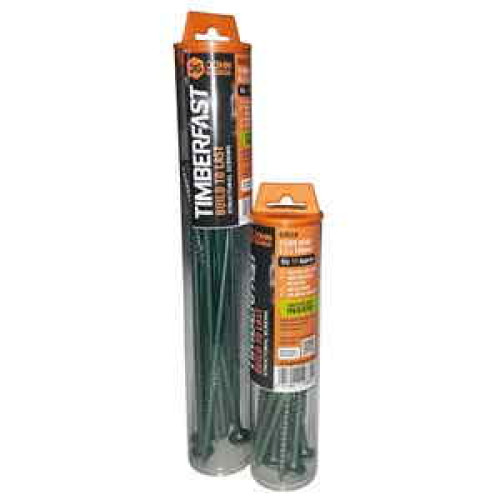
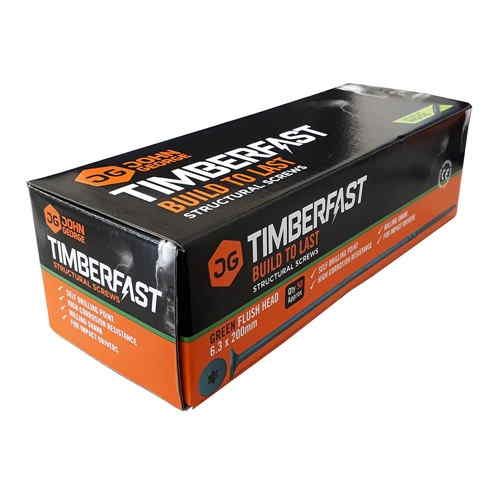
- Exterior structural timber screws
- Long sleeper screws
- Coach screws or bolts
- Galvanised brackets
- Steel plates
- Reinforcing bars or pins
- Substantial timber posts
Use fixings suitable for exterior treated timber and the structural demands of the project.
How Long Should Sleeper Screws Be?
The screw must pass through the first sleeper and achieve sufficient embedment in the second without protruding.
The correct length depends on:
- The sleeper orientation
- The direction of the fixing
- The joint design
- The fixing diameter
- The manufacturer's guidance
Do not select screws solely because they pass through the timber. Their diameter, head style, corrosion resistance and structural rating also matter.
Should Sleeper Fixings Be Pre-Drilled?
Pre-drilling may reduce splitting and make long structural screws easier to install.
It is particularly useful:
- Near sleeper ends
- Near corners
- When using large-diameter fixings
- Where the timber is dry
- Where several fixings are close together
The pilot-hole size should suit the chosen fixing.
How Should Sleeper Corners Be Joined?
Common corner arrangements include:
- Overlapping alternate courses
- Butt joints secured with structural screws
- Internal corner posts
- Exterior metal brackets
- Half-lap joints formed by experienced installers
Alternating the overlap between courses can improve the stability of a raised bed.
A simple butt joint needs enough fixing length and edge distance to avoid splitting.
Should Sleeper Joints Be Staggered?
Yes, where several courses create a long wall. Staggering joints prevents a continuous vertical weakness.
Avoid placing every end joint directly above the one below unless a suitable post or structural connection supports the joint.
What Base Do Landscaping Sleepers Need?
The correct base depends on the project.
Possible bases include:
- Compacted sub-base
- Compacted gravel
- A concrete footing
- Firm prepared soil for light edging
- Posts or anchors for vertical structures
The base should be:
- Level or set to the planned fall
- Firm
- Free from soft organic material
- Capable of draining
- Wide enough to support the sleeper
Placing sleepers directly on soft topsoil can lead to sinking and movement.
Do Sleepers Need A Concrete Foundation?
Not every sleeper project requires concrete.
Low edging and simple raised beds may be supported on a compacted granular base. Taller walls, steps and heavily loaded structures may need a more substantial foundation.
Concrete may be considered where:
- The ground is weak
- The structure must remain accurately level
- Vertical sleeper posts are being installed
- Significant soil is being retained
- Movement would create a safety risk
The foundation should not trap water against the timber without a drainage route.
Can Sleepers Be Laid Directly On Soil?
They can be used directly on firm ground for some low-risk edging projects, but this increases contact with moisture and makes settlement more likely.
A prepared base usually provides:
- Better alignment
- More consistent support
- Improved drainage
- Reduced movement
- Easier levelling
Remove soft vegetation, roots and loose topsoil before placing the sleepers.
How Do You Keep Sleepers Level?
Use a string line and spirit level while preparing the base.
Check each sleeper:
- Along its length
- Across its width
- Against adjoining sleepers
- At every corner
For paths and retaining features, a deliberate fall may be needed for drainage. Level should not always mean completely horizontal in every direction.
How Do You Stop Sleepers Moving?
The correct method depends on the project.
Movement can be reduced using:
- A compacted base
- Structural screws
- Steel pins
- Concrete-set posts
- Timber stakes
- Corner brackets
- Overlapping joints
- Backfill placed in controlled layers
Do not rely only on the weight of the sleeper where sideways soil pressure or foot traffic is expected.
How Do You Stop Sleepers Rotting?
Pressure treatment improves durability, but installation remains important.
To reduce decay:
- Build on a free-draining base
- Treat fresh cuts
- Avoid trapping water beneath the timber
- Keep soil below seating surfaces
- Use a suitable internal barrier where appropriate
- Clear leaves from joints
- Allow exposed faces to dry
- Repair drainage problems
The ends and joints often remain wet longer than broad exposed faces, so inspect them carefully.
Should Sleepers Be Wrapped In Plastic?
Completely wrapping a sleeper in impermeable plastic can trap moisture if water enters through a cut, fixing or open edge.
A partial barrier between wet soil and timber may be useful, but it should be installed so water can drain rather than collect.
The objective is to reduce prolonged saturation, not seal wet timber inside a non-breathable covering.
Should There Be Gravel Beneath Sleepers?
A compacted gravel or granular base can improve drainage and make levelling easier.
The material should be:
- Compacted
- Evenly graded
- Contained so it cannot wash away
- Wide enough to support the sleeper
Loose decorative gravel alone may not provide a stable structural base.
Can Sleepers Be Painted Or Stained?
Yes. Pressure-treated sleepers can be coated once the timber is sufficiently dry.
Possible finishes include:
- Exterior timber stain
- Exterior wood paint
- Suitable decking or garden timber oil
- Clear exterior treatment
Check that the chosen product is compatible with pressure-treated timber and the intended use.
Do not coat wet timber or paint over active decay.
Can Sleepers Be Sanded?
Yes. Sanding can improve surfaces used for seating, hand contact or visible decorative features.
Wear suitable protective equipment and work in a ventilated area.
Pay attention to:
- Sharp corners
- Saw marks
- Raised fibres
- Splinters
- Areas around cut ends
Sanding changes the appearance of the treated surface and may expose lighter timber beneath.
Will Landscaping Sleepers Split Or Crack?
Timber naturally expands and contracts as moisture levels change. Surface checks and splits can develop as sleepers dry.
Minor checking is common in substantial timber sections and does not automatically mean the sleeper is unusable.
Inspect more carefully where:
- A split passes through a fixing position
- The sleeper is severely twisted
- A corner has broken away
- The timber no longer sits securely
- Decay is visible inside the split
Will Sleepers Warp Or Twist?
Some movement can occur as natural timber dries and weathers.
Reduce avoidable movement by:
- Storing sleepers flat and supported
- Installing them promptly
- Using suitable fixings
- Staggering joints
- Supporting long runs adequately
- Avoiding uneven saturation
Do not force a severely twisted sleeper into a safety-critical structure.
Can Sleepers Be Used Near Fence Panels?
Yes, but avoid piling soil or sleepers directly against timber fence panels and wooden posts.
Raised beds positioned beside fencing should:
- Remain structurally independent
- Leave maintenance access where possible
- Avoid burying the bottom of fence panels
- Allow drainage
- Not transfer soil pressure to gravel boards
A standard fence and gravel board should not be treated as the rear wall of a substantial raised bed unless specifically designed for the load.
Can Sleepers Be Used Beside A Patio?
Yes. They can create a raised border, seating edge or visual separation beside paving.
Check that:
- The sleeper does not block patio drainage
- Water falls away from buildings
- The timber is fixed securely
- The top does not create a trip hazard
- Soil cannot wash onto the paving
Can Sleepers Be Used Around Trees?
Sleepers can define a planting area around a tree, but do not raise soil deeply against the trunk or damage major roots during excavation.
Tree roots need air and water. A heavily filled sleeper bed can change soil conditions around an established tree.
Seek suitable arboricultural advice where substantial root disturbance or a major level change is proposed.
Can Sleepers Be Used On A Slope?
Yes. Sleepers can terrace a gentle slope, create steps or form separate level planting beds.
Plan:
- The total level change
- The height of each terrace
- Drainage between levels
- Retaining loads
- Access between terraces
- Foundations
A series of low, independently supported terraces may be more manageable than one tall retaining wall.
Do Sleeper Projects Need Planning Permission?
Many ordinary garden edging and raised-bed projects do not require a planning application, but rules can depend on the property's location, the scale of the works and their effect on boundaries or neighbouring land.
Additional checks may be needed where:
- A substantial retaining wall is proposed
- Ground levels are being changed significantly
- The property is listed
- The site is in a restricted area
- The work affects drainage
- The structure is close to a boundary
- Public access or highways are affected
Building regulations, party wall considerations or structural design may also become relevant for substantial works.
What Should You Check Before Delivery?
Sleepers are long, heavy products. Check access before ordering.
Consider:
- Road access
- Vehicle restrictions
- The unloading area
- Narrow side passages
- Garden steps
- Tight corners
- Low gates or arches
- Storage space
- The number of people available to move them
A 2.4m sleeper may not turn easily through a narrow passage even where the passage itself appears wide enough.
What Should You Check When Sleepers Arrive?
Inspect the delivery before cutting or installation.
Check:
- The correct quantity
- The correct treatment colour
- The correct nominal dimensions
- Serious impact damage
- Severe twisting
- Deep structural splits
- Broken corners
- Areas of softness or decay
Knots, grain variation, treatment marks, surface checks and colour differences are normal characteristics of timber.
How Long Do Landscaping Sleepers Last?
There is no single lifespan for every sleeper project.
Durability depends on:
- Pressure treatment
- Drainage
- Ground contact
- Cut-end protection
- Soil conditions
- Construction quality
- Exposure
- Maintenance
- Whether water collects at joints
A pressure-treated sleeper installed on a free-draining base should generally perform better than one buried in persistently waterlogged ground.
How Do You Maintain Landscaping Sleepers?
Inspect sleeper structures at least once or twice a year and after severe weather.
Check:
- Movement
- Loose fixings
- Rot at the ends
- Water collecting behind walls
- Soil washing through joints
- Splinters on seating areas
- Algae on steps
- Damage from garden tools
Clear leaves and damp debris from horizontal surfaces and joints.
When Should A Sleeper Be Replaced?
Replacement may be required where:
- The timber is extensively soft or rotten
- Structural fixings no longer hold
- The sleeper has broken
- A retaining wall is leaning
- A step moves underfoot
- A seating surface has become unsafe
- Deep decay extends through the timber
Do not replace one visible sleeper without checking the drainage, supports and adjoining timbers that caused the failure.
Common Landscaping Sleeper Buying Mistakes
- Ordering before preparing a measured plan
- Forgetting the 100mm or 200mm sleeper orientation
- Calculating external raised-bed dimensions as internal planting space
- Ignoring cutting waste
- Failing to treat fresh cuts
- Using ordinary interior screws
- Placing sleepers directly on soft topsoil
- Building a retaining wall without drainage
- Assuming sleeper weight alone will prevent movement
- Stacking several courses without staggered joints
- Using unsupported sleepers as steps
- Creating raised soil against fence panels
- Ignoring delivery access
- Trying to carry sleepers alone
- Expecting natural timber to be completely free from knots or splits
- Using decorative edging methods for structural retaining work
Landscaping Sleepers Buying Checklist
Before ordering, confirm:
- The project type
- The total measured length
- The number of courses
- Whether sleepers will be laid flat or on edge
- The required number of full 2.4m lengths
- The cutting plan
- Brown or green treatment
- The foundation material
- The drainage arrangement
- The structural fixing type
- Corner brackets, posts or pins
- Cut-end treatment
- Any internal liner
- Delivery access
- Safe storage
- Safe handling arrangements
FAQs
What Size Are The Landscaping Sleepers?
The available sleepers measure 100 x 200mm x 2.4m.
Are The Sleepers Pressure Treated?
Yes. The available range includes pressure-treated brown and pressure-treated green sleepers.
Are Landscaping Sleepers The Same As Railway Sleepers?
The term railway sleeper is commonly used for sleeper-shaped landscaping timber. New landscaping sleepers should not be confused with reclaimed timbers removed from railway use.
Should Sleepers Be Laid Flat Or On Edge?
Lay them flat where a wide, stable 100mm-high course is preferred. Place them on edge where a narrower 200mm-high course is required.
How Many Sleepers Do I Need For A Raised Bed?
Add the lengths of all four sides, divide by 2.4m and round up. Multiply by the number of courses and allow for the chosen corner joints and cutting plan.
Can Sleepers Be Cut In Half?
Yes. A 2.4m sleeper can be cut into two approximate 1.2m sections, allowing for the saw cut.
Do Cut Sleeper Ends Need Treating?
Fresh cuts should be protected with a suitable cut-end treatment where required by the preservative system.
Can Sleepers Be Screwed Together?
Yes. Use suitable exterior structural or sleeper screws of the correct diameter and length.
Do Sleeper Screws Need Pilot Holes?
Pre-drilling is often useful near ends and when using large-diameter fixings. Follow the fixing manufacturer's guidance.
Can Sleepers Be Laid Directly On Soil?
They can be used on firm ground for some light edging projects, but a compacted free-draining base normally provides better support and durability.
Do Sleepers Need Concrete?
Not for every project. Low edging and raised beds may use a compacted granular base. Retaining walls, vertical sleepers and safety-critical structures may require substantial foundations.
Can Sleepers Be Used For Retaining Walls?
Yes, for appropriately designed structures. Taller walls need proper posts, foundations and drainage and may require professional structural advice.
Can Sleepers Be Used For Garden Steps?
Yes. They must be supported securely and designed with consistent riser heights, sufficient tread depth and suitable drainage.
Are Sleepers Slippery?
They can become slippery when wet or covered with algae. Steps and walking surfaces need regular cleaning and appropriate detailing.
Can Sleepers Be Used For Seating?
Yes. Smooth the surface, remove splinters and keep fixings flush or recessed.
Can Sleepers Be Used For Vegetable Beds?
New pressure-treated sleepers are commonly used in raised beds. Follow the product guidance and consider a suitable internal barrier for food-growing projects.
Should Sleeper Raised Beds Be Lined?
Lining is optional. It may reduce direct soil contact, but it must not trap water against the timber.
Can Sleepers Be Painted?
Yes. Use a compatible exterior timber coating after the sleepers have dried sufficiently.
Will Pressure-Treated Sleepers Rot?
They can eventually deteriorate, particularly in constantly wet conditions. Pressure treatment improves durability but does not make timber permanent.
How Do You Stop Sleepers Rotting?
Use a free-draining base, protect fresh cuts, avoid trapped water and inspect joints and ends regularly.
Will Sleepers Split?
Surface checks and splits can occur as substantial timber dries. Inspect deep splits that affect fixings or structural stability.
Can Sleepers Hold Back Soil?
They can form retaining structures when properly supported and drained. Do not rely on loose stacked sleepers for substantial soil retention.
Can Sleepers Be Used Next To A Fence?
Yes, but keep raised soil and structural loads away from ordinary fence panels, wooden posts and gravel boards.
Can Sleepers Be Used On A Slope?
Yes. They can form terraces, steps and level planting areas, provided each level has suitable support and drainage.
How Should Sleepers Be Stored?
Store them on firm, level bearers above wet ground, with enough support to prevent movement or bowing.
How Many People Are Needed To Move A Sleeper?
The weight varies with moisture and timber density. Long wet sleepers are heavy and awkward, so use enough people or suitable lifting equipment rather than moving them alone.
Choose Sleepers For The Complete Project
The available 100 x 200mm x 2.4m pressure-treated sleepers provide a versatile starting point for raised beds, edging, steps, seating and low retaining features. Brown and green finishes allow the timber to be matched with other fencing and landscaping materials.
Plan the orientation, courses, cuts, joints and drainage before ordering. Include structural fixings, foundations, cut-end treatment and handling requirements in the complete material list.
Low decorative projects may need only a compacted base and secure corner joints. Raised structures, steps and retaining walls require more careful foundations, drainage and support.
A well-planned sleeper project should remain stable, drain freely and allow the timber to dry. Selecting the sleepers is only one part of the job. The base, fixings and finished construction determine how safely and successfully the landscaping feature performs.