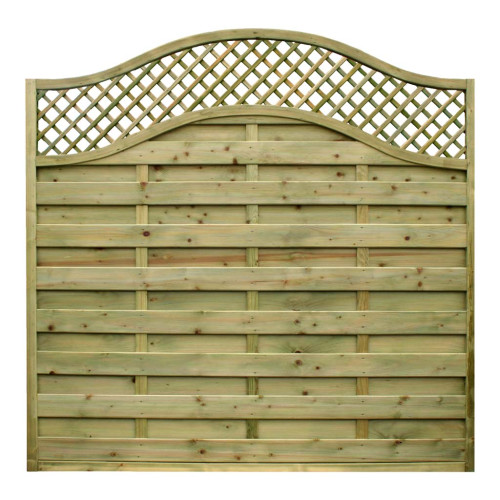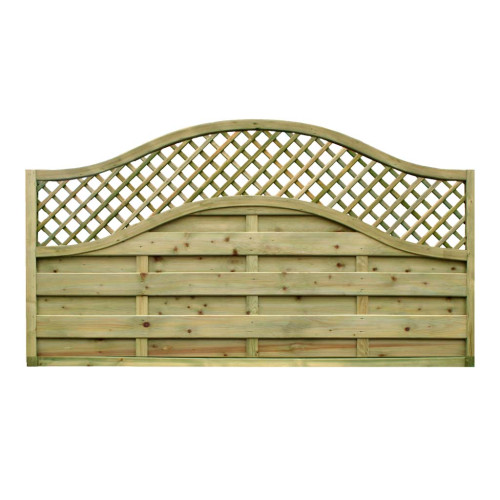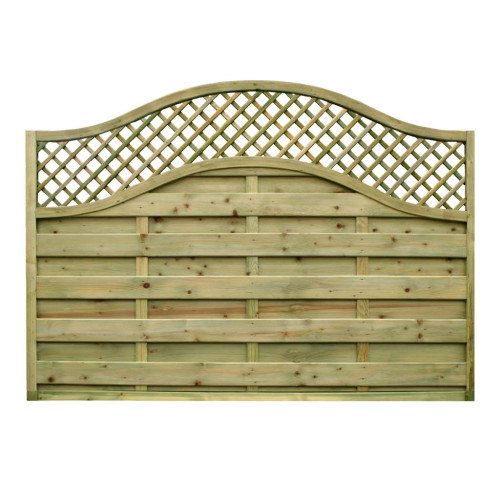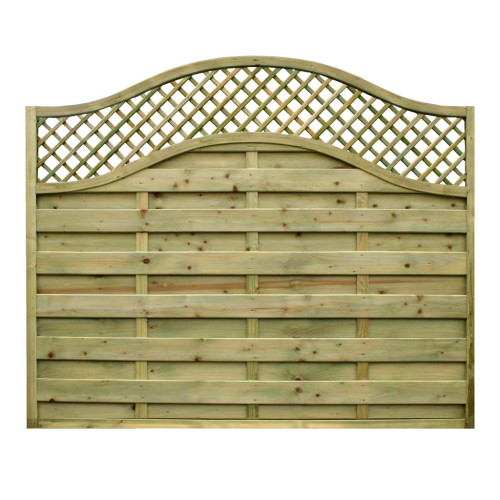


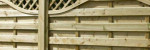

Quick answer: Omega Lattice Fence Panels are particularly well suited to patios and seating areas because they combine a screened lower section with a lighter, curved lattice top. The lower part provides useful garden-level privacy, while the lattice allows more light through and helps a tall boundary feel less enclosed. They work especially well beside planting and traditional garden schemes. Choose the height from the finished patio level, not simply from the soil beside the fence.
A fence beside a patio has a different job from one at the far end of a garden.
You see it at close range, often while sitting down, eating outside or looking through patio doors. Privacy matters, but so do light, planting and the overall atmosphere of the seating area.
Omega Lattice Fence Panels are designed around that balance. Instead of creating one completely solid rectangle of timber, they combine a screened main section with an open curved lattice above it.
That makes them worth considering where you want a patio to feel private without making it feel surrounded by walls.
Why Omega Lattice Fence Panels Work Well Around Patios
The main advantage is the combination of screening and openness within one panel.
The lower part helps screen the area where people are normally:
- Sitting
- Eating
- Relaxing
- Using garden furniture
The lattice section above remains visibly open.
This creates a boundary without necessarily producing the same enclosed feeling as a completely solid panel of the same overall height.
How Much Privacy Do Omega Lattice Panels Provide?
Omega panels provide their strongest privacy through the main screened section.
The lattice at the top is deliberately open, so it should not be treated as a completely opaque privacy screen.
This arrangement can be particularly effective around patios because privacy is often most important at seated eye level.
Someone sitting at a garden table generally needs a different type of screening from someone trying to block every possible view across the full height of the boundary.
Measure Privacy From the Patio Surface
This is one of the most important points when choosing panel height.
Do not measure only from the flower bed or lawn next to the fence.
If the patio is raised, the people using it are also raised relative to the boundary.
Measure from the finished surface where people will actually:
- Sit
- Stand
- Walk
A panel that appears tall from a lower lawn can provide noticeably less screening from a raised patio.
What Heights Are Omega Lattice Fence Panels Available In?
The current East Coast Fencing range is approximately 1.83m wide and is available in four nominal height options:
- 3ft, approximately 900mm
- 4ft, approximately 1200mm
- 5ft, approximately 1500mm
- 6ft, approximately 1800mm
All use the characteristic curved lattice top and pressure-treated green/natural timber.
The right height depends on whether the panel is being used mainly for decoration, separation or meaningful privacy.
Which Omega Lattice Height Is Best Around a Patio?
| Panel Height | Typical Patio Role | Screening |
|---|---|---|
| 3ft | Decorative separation | Low |
| 4ft | Open patio boundary | Moderate |
| 5ft | Seating privacy with lighter top | Substantial |
| 6ft | Strongest overall screening | Highest in the range |
These descriptions are practical guidelines rather than guarantees of privacy because ground levels and viewing positions differ between gardens.
When a 3ft Omega Lattice Panel Makes Sense
A 3ft panel is primarily a decorative garden divider.
It can work around:
- Paths
- Low patios
- Planting areas
- Internal garden zones
without seriously restricting views across the garden.
It is not the obvious choice where screening from neighbours is the main objective.
When a 4ft Omega Panel Works Better
A 4ft panel provides a clearer sense of separation while retaining an open character.
This can suit patios where you want the seating area to feel defined without creating a full-height enclosure.
It may also work where:
- Neighbouring ground is lower
- The patio is not heavily overlooked
- Planting will provide additional screening
Why 5ft Can Be a Useful Patio Height
A 5ft Omega panel can offer a useful middle ground.
The screened portion provides more substantial privacy, while the open lattice prevents the upper boundary from becoming completely solid.
This can be useful in smaller gardens where a full 6ft rectangular screen would feel visually dominant.
When to Choose 6ft Omega Lattice Fence Panels
The 6ft option provides the greatest screening within the current Omega range.
It is worth considering where:
- The patio is overlooked from a neighbouring garden
- The seating area sits close to the boundary
- Strong garden-level privacy is important
- You still want a decorative open section at the top
Remember that the curved lattice means the panel height varies across its upper profile.
Why the Curved Top Can Make a Patio Feel Less Enclosed
Straight full-height fencing creates a strong horizontal line around the garden.
Omega panels break that line by rising towards the centre and dropping towards each side.
The open lattice further reduces the visual weight of the upper section.
This can be particularly helpful around:
- Compact patios
- Narrow gardens
- Courtyard-style spaces
where a completely solid boundary can feel close to the furniture.
Does the Lattice Let More Light Reach the Patio?
Yes, compared with a completely solid section of timber occupying the same upper area.
The lattice openings allow daylight through the top of the boundary.
How significant that difference feels depends on:
- The direction the garden faces
- The position of the sun
- Neighbouring buildings
- Trees and planting
- The panel height
The lattice cannot make a shaded garden sunny, but it can avoid unnecessarily blocking additional light at the top of the fence.
Are Omega Lattice Panels Good for Small Patios?
They can be particularly useful.
In a small patio, the fence may sit only a short distance from:
- Chairs
- A dining table
- An outdoor sofa
- The back door
A completely solid tall panel viewed from close range can dominate the space.
The open lattice section gives the eye somewhere to travel beyond the immediate timber surface.
This can create a softer visual boundary while still providing screening through the lower part.
Are Omega Panels Good for Large Entertaining Areas?
Yes.
A long run of Omega panels can create a decorative backdrop around a larger terrace or outdoor dining area.
The repeated curves create a more ornamental rhythm than standard rectangular panels.
For a long fence run, accurate installation becomes particularly important because uneven panel heights can make the repeating curves look irregular.
Should Every Patio Boundary Use Omega Panels?
Not necessarily.
You can use Omega Lattice Fence Panels only where their decorative appearance provides the most benefit.
For example:
- Omega panels around the main seating area
- Closeboard fencing on a less visible boundary
- Hit & Miss fencing where greater airflow is required
The change should occur at a logical point such as a post, corner or end of the patio.
Are Omega Lattice Panels Better Than Closeboard Around a Patio?
That depends on whether privacy or openness matters more.
Closeboard Fence Panels create a more continuously solid screen.
Omega panels provide a solid-looking main body but open the upper section with lattice.
| Feature | Omega Lattice | Closeboard |
|---|---|---|
| Garden-level screening | Strong | Very strong |
| Open upper section | Yes | No |
| Decorative character | Curved lattice | Traditional solid |
| Plant support | Lattice suitable for manageable climbers | Separate support usually preferable |
Choose Closeboard where solid privacy matters most.
Choose Omega where privacy needs to be balanced with decorative detail, light and planting.
Omega Lattice or Double Slatted Around a Patio?
These styles create very different visual effects.
Double Slatted Fence Panels use straight horizontal lines and generally suit contemporary landscaping.
Omega panels use a curved top and lattice detail, giving them a softer and more ornamental appearance.
Double Slatted panels may suit:
- Modern paving
- Minimalist planting
- Contemporary furniture
- Garden rooms
Omega panels may suit:
- Mixed borders
- Flowering climbers
- Traditional paving
- Softer planting schemes
Omega Lattice or Hit & Miss Around a Seating Area?
Hit & Miss Fence Panels place greater emphasis on airflow.
Their alternating horizontal boards create partial screening throughout the panel rather than concentrating openness at the top.
Omega panels provide stronger lower and middle screening with a clearly open lattice section above.
Choose Hit & Miss where airflow is a major requirement.
Choose Omega where seated privacy and decorative planting are higher priorities.
Can Omega Lattice Panels Be Used Behind Garden Furniture?
Yes.
They can create a strong backdrop behind:
- Benches
- Outdoor sofas
- Dining sets
- Barbecue areas
Leave enough room between furniture and the fence to allow access for cleaning, planting and future maintenance.
Pushing heavy furniture permanently against the timber can make inspection difficult and can restrict airflow around the lower panel.
How Much Space Should You Leave for Planting?
There is no fixed gap that suits every planting scheme.
The important point is to consider the mature plant rather than its size when purchased.
Allow enough room to:
- Prune the plant
- Inspect the fence
- Clear fallen leaves
- Prevent thick stems forcing against the lattice
Which Plants Work With Omega Lattice Fence Panels?
The lattice top can support manageable climbing and trailing growth.
Potential choices depend on the garden's sunlight, soil and aspect.
The principle is more important than any one plant species: choose growth that can be kept within the capacity of the fence.
Very vigorous woody climbers can become considerably heavier with age.
Do Climbing Plants Increase Privacy?
Yes, once established they can make the open lattice section more screened.
This can be useful if you want seasonal or natural privacy rather than a completely solid timber top.
However, filling every lattice opening with dense growth also reduces:
- Light transmission
- Airflow
- Visibility of the panel for maintenance
Regular pruning is useful.
Can Plants Become Too Heavy for the Lattice?
Yes.
The lattice should not be expected to carry unlimited mature plant weight.
Heavy growth becomes even more demanding after rain and during windy conditions.
If you want to grow a particularly vigorous climber, consider giving it additional independent support rather than making the decorative lattice carry everything.
Can Omega Lattice Panels Be Used Without Climbers?
Absolutely.
The lattice is a decorative feature in its own right.
Leaving it open maximises:
- Light
- Air movement
- The visual effect of the curved top
Climbing plants are optional rather than necessary.
Should You Use Gravel Boards Around a Patio?
Gravel boards are worth considering, particularly where the fence meets:
- Flower beds
- Soil
- Grass
- Mulch
They help keep the lower timber panel away from persistent damp ground and garden debris.
Where the fence sits directly beside paving, think carefully about drainage and the final visual level rather than assuming the panel should simply sit on the patio.
Remember That a Gravel Board Raises the Panel
A gravel board beneath the panel increases the total visible fence height.
This can be useful for privacy, but it may also change how dominant the fence feels from the seating area.
Measure the finished combination of:
- Gravel board
- Panel
- Curved central top
before deciding on the panel height.
Should You Use Wooden or Concrete Posts?
Both can work with suitable Omega panels.
Wooden posts create an all-timber appearance that generally complements the decorative style.
Compatible slotted concrete posts provide a durable support system and can simplify future panel replacement.
| Post Type | Main Patio Consideration |
|---|---|
| Wooden | Consistent natural timber appearance |
| Concrete | Durable slotted support where compatible |
Whichever system you use, the posts need to suit the panel height and site exposure.
Why Accurate Installation Matters More With a Curved Fence
One Omega panel can look attractive even when viewed alone.
Across several bays, the repeating curves become a strong part of the design.
If one panel is installed noticeably higher or lower, the sequence becomes irregular.
Check:
- Post verticality
- Gravel board level
- Main panel frame level
- Alignment with neighbouring panels
as installation progresses.
Do Not Use the Lattice as a Lifting Handle
The upper lattice is the lighter decorative part of the panel.
When moving or installing an Omega panel, support it using the substantial main frame.
Avoid lifting the complete weight of the panel from:
- The curved lattice
- Individual lattice battens
- Thin decorative sections
This reduces unnecessary stress during handling.
Are Omega Lattice Fence Panels Good for Windy Patios?
The lattice allows some air through the upper section, but the main body remains substantially screened.
Omega panels should therefore not be treated as highly open windbreak fencing.
In exposed locations, the complete fence needs:
- Suitable posts
- Secure foundations
- Correct installation
Dense climbing growth can also reduce the amount of air passing through the lattice and increase the area presented to the wind.
Are Omega Panels Good Beside a Garden Room?
They can be, particularly where the garden room sits within a planted or traditional garden scheme.
The fence can:
- Screen a seating area beside the building
- Create separation from the lawn
- Provide a backdrop for planting
- Reduce the visual severity of a tall boundary
For a very contemporary garden room, Double Slatted Fence Panels may create a more consistent modern appearance.
Can Omega Panels Be Used as a Freestanding Patio Screen?
A short run can be used to define or screen part of a garden where it has its own suitable structural support.
Do not treat a full timber fence panel as a lightweight movable screen.
It still needs secure posts appropriate to its height and exposure.
Can You Use Only Two or Three Omega Panels Around a Patio?
Yes.
A short feature run can work particularly well where only one part of the garden needs:
- Privacy
- Decoration
- A planting backdrop
You do not need to replace every fence panel in the garden simply to create an Omega feature around the main seating area.
How Should Omega Panels Meet a Different Fence Style?
Make the transition at a clear structural point.
Good places include:
- A fence post
- A corner
- A gate
- The end of a patio
- A substantial planting bed
This makes the change look intentional.
Can Omega Panels Be Used on Sloping Ground Beside a Patio?
Yes.
Standard rigid panels are normally stepped as the ground level changes.
Each panel remains square and level while the next bay begins at a different height.
This is particularly important with Omega panels because twisting the panel would distort both the main frame and curved lattice.
Should the Panels Follow a Sloping Patio Edge?
Do not try to force a rigid panel into a raked shape.
If the patio or garden drops significantly, plan a sequence of level bays.
Consider the top curves as part of the overall design so the steps appear deliberate rather than accidental.
Do Omega Lattice Fence Panels Need Painting?
The current range is pressure treated for outdoor use and does not require an immediate preservative coating simply because it has been installed.
You can later apply a compatible exterior timber finish if you want to:
- Change the colour
- Coordinate the fence with garden furniture
- Refresh the appearance after weathering
Allow the treated timber to dry sufficiently and follow the coating manufacturer's preparation instructions.
Does the Green/Natural Colour Stay the Same?
No.
Pressure-treated timber naturally changes appearance as it is exposed to sunlight and rain.
Variation in:
- Grain
- Knots
- Shade
is also normal because timber is a natural material.
How Should Omega Panels Be Maintained Around a Patio?
Routine maintenance is straightforward.
Periodically:
- Check the posts for movement
- Inspect the panel frame
- Check the lattice for damage
- Remove trapped leaves
- Prune excessive climbing growth
- Keep soil away from the lower frame
Patios often make fences easy to access, so small problems can usually be spotted before they become severe.
Common Mistakes When Using Omega Lattice Fence Panels Around Patios
- Choosing height from the lawn instead of the raised patio surface
- Assuming the lattice provides complete privacy
- Automatically choosing 6ft when a lower panel would provide enough screening
- Forgetting that a gravel board increases total fence height
- Installing several panels at inconsistent levels
- Lifting panels by the curved lattice
- Allowing heavy climbers to overload the lattice
- Pushing furniture permanently against the panel
- Allowing flower-bed soil to remain against the lower timber
- Using weak existing posts for new decorative panels
- Assuming the open lattice makes the whole panel highly wind-permeable
Omega Lattice Patio Buying Checklist
- Measure privacy from the finished patio level.
- Decide whether seated or standing privacy matters most.
- Choose 3ft, 4ft, 5ft or 6ft according to the required screening.
- Consider how much daylight you want through the upper boundary.
- Decide whether climbing plants will use the lattice.
- Allow enough room for mature planting and maintenance.
- Choose suitable wooden or compatible concrete posts.
- Consider gravel boards where the lower frame would be close to soil.
- Include the gravel board when assessing total fence height.
- Keep repeating curved panels accurately aligned.
- Assess wind exposure before choosing tall panels.
- Use the main panel frame when lifting and installing.
FAQs
Are Omega Lattice Fence Panels Good for Patios?
Yes. Their screened lower section provides useful privacy while the open lattice top allows more light through and creates a softer decorative boundary.
Are Omega Lattice Fence Panels Good Around Seating Areas?
Yes. They can provide garden-level screening around benches, dining sets and outdoor sofas without making the entire fence completely solid.
Are Omega Lattice Fence Panels Private?
The main body provides useful screening, but the upper lattice remains open. They balance privacy with light and decorative detail rather than creating complete opacity.
What Height Omega Panel Is Best for a Patio?
It depends on the patio level and viewing positions. Five-foot and 6ft panels provide stronger screening, while 3ft and 4ft versions create more open decorative boundaries.
Can Climbing Plants Grow on Omega Lattice Panels?
Yes. Manageable climbers can be trained around the lattice, although vigorous mature plants should be controlled or given additional support.
Can Omega Panels Be Used Without Plants?
Yes. The curved lattice is decorative on its own and leaving it open maximises light and airflow through the upper section.
Are Omega Panels Better Than Closeboard for a Patio?
Omega panels are better where you want decorative detail and a lighter upper boundary. Closeboard is better where maximum solid privacy is the main requirement.
Are Omega Panels Better Than Double Slatted Panels?
It depends on style. Omega panels have a softer curved and planted character, while Double Slatted Fence Panels provide a straighter contemporary appearance.
Can Omega Lattice Fence Panels Be Used With Gravel Boards?
Yes. Gravel boards can help keep the lower timber frame away from damp soil and garden debris.
Can Omega Panels Be Used With Concrete Posts?
They can be used with compatible slotted concrete posts where the panel width and frame dimensions suit the system.
Can Omega Panels Be Used With Wooden Posts?
Yes. Wooden posts create a coordinated all-timber appearance and can support the panel using suitable exterior fixings or brackets.
Can Omega Lattice Panels Be Used on a Slope?
Yes. Standard rigid panels are normally stepped between posts rather than twisted to follow the gradient.
Are Omega Lattice Fence Panels Pressure Treated?
Yes. The current East Coast Fencing range is pressure treated for outdoor use and supplied in a green/natural finish.
Are Omega Lattice Fence Panels the Right Choice for Your Patio?
They are a strong option when the patio needs privacy without becoming completely enclosed.
The lower screened section deals with the part of the boundary where garden-level privacy usually matters most, while the curved lattice keeps the upper section lighter and more decorative.
That combination works particularly well beside seating, mixed borders and climbing plants.
The main decision is height.
Measure from the finished patio surface and consider where people actually sit and stand. Do not automatically choose the tallest panel if a lower option already provides the screening you need.
If maximum solid privacy is the priority, Closeboard Fence Panels may be more suitable. If you prefer a very contemporary straight-lined appearance, Double Slatted Fence Panels may fit the garden better.
Where the aim is to combine privacy, planting, light and a softer decorative boundary, Omega Lattice Fence Panels are particularly well suited to patios and seating areas.