



Quick answer: The best way to slow rot in Railway Sleepers is to use timber with a treatment specification appropriate to where it will be installed, prevent water from remaining trapped around the wood, provide good drainage and protect freshly cut ends. Do not assume all pressure-treated timber is suitable for permanent ground contact. East Coast Fencing's current sleepers are specified as UC3, which is an exterior above-ground treatment class. Where timber will be in permanent ground contact or perform a soil-retaining structural role, check that the treatment specification is suitable for that more demanding use.
Railway Sleepers are useful for creating strong, clearly defined features throughout a garden.
They can form borders, steps, seating, raised features and other landscaping details, but timber used outdoors is constantly exposed to changing moisture levels.
Rain alone is not the main problem. Timber performs much better when it gets wet and can then dry again than when part of the sleeper remains persistently damp.
That makes good design just as important as applying another coating of preservative.
The aim should be to choose the right timber for the exposure, manage water around the installation, minimise unnecessary ground contact, protect freshly worked timber and inspect the finished project before small problems become serious.
Why Do Railway Sleepers Rot?
Timber decay becomes a risk when wood remains sufficiently damp for decay fungi to develop.
Outdoor timber naturally gets wet from:
- Rain
- Damp soil
- Water running off paving
- Irrigation
- Wet leaves and vegetation
A sleeper that gets wet during a rain shower but subsequently dries is experiencing different conditions from one whose lower face remains surrounded by saturated soil throughout winter.
Persistent moisture is therefore one of the main conditions to avoid.
Where Does Sleeper Rot Usually Start?
The most vulnerable parts of an installation are often the areas that stay wet longest.
Pay particular attention to:
- Lower faces close to soil
- Ends buried into the ground
- Corners where debris collects
- Joints between stacked sleepers
- Freshly cut ends
- Areas hidden behind dense planting
- Sections beside poorly drained paving
These locations can remain damp long after more exposed timber has dried.
Does Pressure Treatment Stop Railway Sleepers Rotting?
Pressure treatment increases timber's resistance to biological deterioration, but it should not be regarded as making wood indestructible.
More importantly, not all pressure-treated timber receives the same level of treatment.
Treatment specifications are matched to the environment in which the timber is expected to be used.
Two pieces of treated timber can look similar while being intended for very different exposure conditions.
What Do UC3 And UC4 Mean For Railway Sleepers?
Use Classes describe the environment in which treated timber is intended to perform.
For the applications most relevant to garden landscaping:
- UC3: exterior timber used above ground.
- UC4: timber used in ground contact, very close to the ground in demanding conditions, or in certain exterior structural-support applications.
This distinction is particularly important with landscaping timber.
The current East Coast Fencing Railway Sleepers are specified as UC3 pressure treated.
That means you should not assume the treatment specification automatically covers permanent burial, continuous ground contact or every structural soil-retaining application.
Are East Coast Fencing Railway Sleepers UC3 Or UC4?
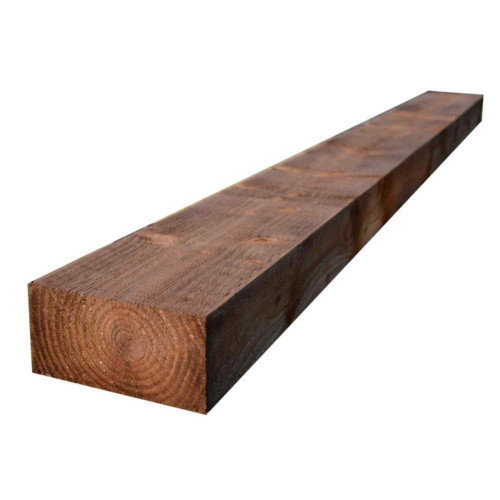
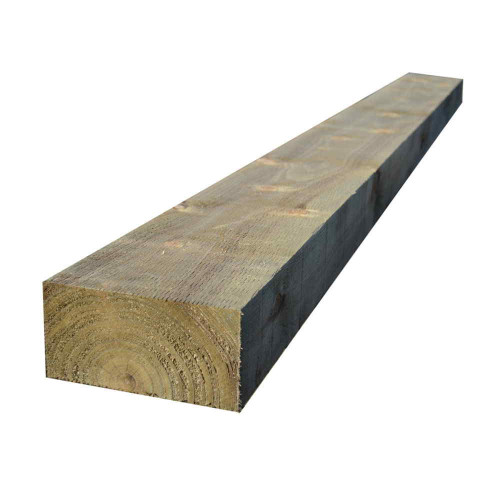
The current 100 x 200mm x 2.4m green/natural and brown softwood Railway Sleepers are listed as UC3 pressure treated.
UC3 is the treatment class associated with exterior above-ground timber.
If your proposed design involves permanent ground contact, frequent prolonged wetting or a significant soil-retaining structural function, check the treatment requirement for that application before installation.
Do not infer treatment class from the fact that timber is green, brown or described simply as pressure treated.
Why Does Treatment Class Matter?
The decay risk increases as timber moves from a relatively free-draining above-ground position into wetter environments.
A sleeper used as a dry raised decorative edge is not necessarily exposed in the same way as one that is:
- Buried into wet soil
- Constantly surrounded by damp compost
- Supporting a bank of soil
- Installed where drainage keeps it persistently wet
The treatment should match the real installation rather than the appearance you expect the project to have.
Does Putting A Sleeper On Gravel Make UC3 Timber Suitable For Ground Contact?
Do not assume so.
A gravel or compacted aggregate base can improve drainage and help create a stable installation, but it does not change the sleeper's preservative treatment specification.
Use a free-draining base because it is good construction practice where appropriate, not as a way to turn timber intended for one Use Class into another.
How Can You Reduce Moisture Around Railway Sleepers?
Think about where water will go before installing the timber.
Good sleeper detailing should avoid creating pockets where rainwater has nowhere to escape.
Useful measures can include:
- Preparing a firm, free-draining base where appropriate
- Avoiding hollows beneath the sleeper
- Preventing surrounding soil from being unnecessarily piled against exposed faces
- Keeping drainage routes clear
- Avoiding permanent standing water
The exact solution depends on the landscaping project and ground conditions.
Should Railway Sleepers Be Laid Directly On Soil?
That decision should be based on the treatment specification of the timber.
If the sleeper will remain in permanent contact with soil, the timber needs to be suitable for that exposure.
From a construction perspective, laying a long sleeper directly onto soft, irregular topsoil can also create other problems.
The timber may:
- Rock
- Settle unevenly
- Trap water beneath low spots
- Gradually move out of alignment
A properly prepared foundation provides a more reliable starting point.
Should You Put Gravel Under Railway Sleepers?
A compacted, free-draining aggregate layer can be useful for many low-level landscaping projects.
It can help create:
- A more even base
- Improved local drainage
- Reduced settlement
- Easier levelling
Do not assume every sleeper project requires exactly the same foundation depth or material.
A simple decorative edge and a substantial retaining structure are fundamentally different projects.
Should You Put A Membrane Under Railway Sleepers?
A membrane can be useful in certain landscaping arrangements, but it should not be treated as a universal anti-rot solution.
The key question is what the membrane actually does to water.
A well-designed separation layer may help prevent soil and aggregate mixing.
A badly detailed impermeable layer can create somewhere for water to collect against the timber.
Do not wrap the sleeper indiscriminately in plastic and assume that this keeps it dry.
Should You Line The Inside Of A Sleeper Raised Bed?
A suitable lining can reduce direct contact between damp growing medium and the internal face of a sleeper.
However, the detailing matters.
The lining should not create a pocket that permanently traps water against the timber.
Also remember that a lining does not change the preservative treatment class of the sleeper itself.
If the construction places timber in a ground-contact or permanently wet environment, select timber appropriate to that exposure rather than relying on a thin membrane as the primary durability strategy.
Do Sleeper Raised Beds Need Drainage?
Yes, water needs somewhere to go.
A raised bed should not behave like a watertight container unless it has been specifically designed as one.
Poor drainage can cause:
- Waterlogged growing medium
- Persistent wetting of the timber
- Pressure against the sleeper sides
- Poor growing conditions for many plants
Consider both plant drainage and timber exposure when planning the bed.
Should You Seal Railway Sleepers To Stop Rot?
A surface coating can reduce moisture uptake and improve appearance, but it should not be confused with the timber's underlying preservative treatment.
Industrial pressure treatment and a brush-applied coating perform different functions.
A decorative stain, oil or water-repellent treatment may help the exposed surface shed water, but it does not upgrade timber from UC3 to UC4.
Should You Paint Railway Sleepers?
You can apply a compatible exterior coating once the timber is sufficiently dry and properly prepared.
Painting can provide a very different appearance and may reduce direct weathering of the surface.
However, any coating system needs maintenance.
Paint that cracks, peels or allows water behind it can become less effective over time.
Follow the coating manufacturer's preparation and reapplication instructions rather than treating one coat as permanent protection.
Is Stain Better Than Paint For Railway Sleepers?
Neither is universally better.
A penetrating exterior stain may preserve more of the timber appearance, while an opaque coating changes the colour more dramatically.
Your choice should be based on:
- The desired appearance
- Compatibility with treated timber
- How dry the sleeper is
- Future maintenance requirements
The coating is supplementary protection, not a replacement for suitable timber specification and drainage.
Can You Oil Railway Sleepers?
A compatible exterior timber oil may be suitable where the manufacturer recommends it for pressure-treated softwood.
Make sure the sleeper is sufficiently dry before application.
Applying oil to timber that is still very wet from treatment or weather can produce poor absorption and an uneven finish.
Should You Treat Cut Ends Of Railway Sleepers?
Yes.
Cross-cutting pressure-treated timber exposes material from within the sleeper that has not necessarily received the same preservative penetration as the original outer surfaces.
Apply a suitable end-grain preservative to freshly exposed cuts in accordance with preservative-treatment guidance.
This is especially important because end grain absorbs moisture readily.
Does End-Grain Preservative Make A UC3 Sleeper UC4?
No.
End-grain treatment is intended to protect areas exposed by cutting and help maintain the integrity of the original treatment system.
It does not upgrade the complete sleeper to a higher Use Class.
If the project requires UC4 timber, start with timber correctly treated for UC4 rather than attempting to create it with a brush-on product.
Which End Of A Sleeper Is Most Vulnerable?
Freshly cut ends deserve particular attention because exposed end grain can absorb water rapidly.
Other vulnerable areas include:
- Ends sitting in soil
- Joints that remain wet
- Low corners
- Areas where leaves accumulate
Keep those areas accessible enough to inspect where possible.
Should You Cut Railway Sleepers Before Treatment?
Current pressure-treated sleepers arrive treated from the manufacturer.
If you subsequently cut them for:
- Raised-bed ends
- Corners
- Steps
- Short borders
treat the newly exposed surfaces appropriately before final assembly.
Plan the layout first so you make only the cuts genuinely required.
Can Drilling Railway Sleepers Affect Their Treatment?
Drilling and boring also expose timber from inside the treated section.
Minimise unnecessary large holes and follow appropriate treated-timber guidance where substantial drilling exposes untreated internal surfaces.
The same principle applies to deep notches and other significant reworking.
Does Good Airflow Help Railway Sleepers Last Longer?
Yes.
Air movement helps exposed timber dry following rainfall.
Problems are more likely where sleeper surfaces are permanently hidden behind:
- Dense vegetation
- Wet leaves
- Mulch piled against the timber
- Stored pots
- Other garden materials
Keeping the exposed faces reasonably clear makes inspection easier too.
Should Soil Be Piled Against Railway Sleepers?
If the sleeper is forming a soil-retaining feature, contact may be unavoidable by definition.
That is precisely why the treatment specification and structural design matter.
Where soil contact is not required, avoid piling damp soil against exposed timber simply to conceal a gap or alter the surrounding level.
Should Mulch Touch Railway Sleepers?
A small amount of incidental contact is difficult to avoid in many gardens, but deep mulch piled continuously against timber can retain moisture.
Keep the exposed sleeper edge reasonably clear where practical.
This also allows you to spot deterioration much earlier.
Can Plants Make Railway Sleepers Rot Faster?
Plants do not automatically cause rot, but dense growth can create conditions that keep timber damp.
Vegetation can:
- Reduce airflow
- Trap wet leaves
- Hide deterioration
- Make maintenance difficult
Trim heavy growth sufficiently to keep the sleeper accessible.
Can Railway Sleepers Rot Where They Touch Each Other?
Joints can retain moisture if water enters the gap and the timber cannot dry easily.
This makes stacked constructions particularly worth inspecting.
Good installation should avoid:
- Large uncontrolled gaps
- Hollows that collect water
- Loose sleepers moving against each other
How Should Stacked Railway Sleepers Be Built?
Start with a stable and properly aligned first course.
Successive courses should be securely connected where the project requires it.
For longer structures, joints can be staggered where appropriate so that one continuous vertical joint does not run through every layer.
The taller the feature becomes, the more important its complete structural design becomes.
Do Loose Railway Sleepers Rot Faster?
Movement itself is not rot, but a poorly supported structure can create additional water traps.
Movement may:
- Open joints
- Disturb drainage
- Create hollows beneath the timber
- Damage protective coatings
Secure the structure appropriately for its intended job.
What Fixings Should You Use For Railway Sleepers?
Use suitable exterior structural fixings appropriate to the timber thickness and joint.
Sleepers are substantial, so small indoor screws are not an appropriate substitute for properly selected fixings.
Fixing decisions depend on whether you are:
- Joining sleepers end to end
- Connecting corners
- Stacking courses
- Attaching sleepers to structural supports
Can Rusting Fixings Damage A Sleeper Project?
Corroding fixings can weaken the connections holding the structure together.
Loose joints can then permit additional movement and make water management more difficult.
Use fixings intended for exterior timberwork and inspect them whenever the structure begins to move.
Do Railway Sleepers Need Drainage Behind Them?
Where sleepers retain soil, drainage becomes particularly important.
Water trapped behind a retaining feature creates two problems:
- It keeps the timber persistently wet
- It increases pressure behind the structure
The appropriate drainage arrangement depends on the height, soil and surrounding site.
Do not copy one generic drainage detail for every retaining project.
Can Railway Sleepers Be Used For Retaining Walls?
Sleepers can form part of appropriately designed retaining structures, but a tall retaining wall is very different from a decorative garden border.
As retained height increases, consider:
- Soil pressure
- Drainage
- Foundations
- Anchoring
- Structural support
- Treatment class
TDUK guidance places timber used for soil-retaining structural functions within the more demanding UC4 environment.
Can UC3 Railway Sleepers Be Used For Retaining Soil?
The current East Coast Fencing sleepers are specified as UC3.
Current industry guidance recommends UC4 treatment for softwood landscaping timber used in ground contact or where it performs a soil-retaining structural function.
If a project relies on the sleeper structurally to hold back soil, verify that the timber specification is appropriate for that installation.
Can You Stop Railway Sleepers Rotting Completely?
No outdoor timber can realistically be guaranteed never to deteriorate.
The practical objective is to reduce the conditions that encourage premature decay.
That means combining:
- Correct timber specification
- Good drainage
- Sensible detailing
- Protection of cut ends
- Appropriate fixings
- Routine inspection
What Are The First Signs Of Sleeper Rot?
Early warning signs can include:
- Timber remaining unusually soft when surrounding areas are firm
- Local crumbling
- Material breaking away easily
- Connections becoming loose because the timber no longer holds fixings properly
- Significant deterioration around persistently damp areas
Colour alone is not enough to diagnose rot.
Does Dark Timber Mean A Sleeper Is Rotten?
No.
Outdoor timber naturally changes colour.
Dark staining may result from:
- Moisture
- Dirt
- Algae
- Weathering
Assess the condition of the timber rather than judging it only by appearance.
Do Cracks Mean A Railway Sleeper Is Rotten?
No.
Large-section timber commonly develops surface checks as moisture content changes.
A crack does not automatically indicate fungal decay.
Check whether:
- The surrounding timber remains firm
- The sleeper remains stable
- Fixings remain secure
- The split is affecting a structural joint
What Does Rotten Timber Feel Like?
Advanced decay can cause timber to become abnormally soft, friable or crumbly.
A screwdriver or similar hand tool may penetrate severely deteriorated timber much more easily than sound surrounding wood.
Be careful when testing any sleeper that forms part of a load-bearing or retaining structure.
Should You Cut Rotten Sections Out Of A Sleeper?
For a purely decorative non-structural feature, a minor local defect may sometimes be managed depending on its extent.
For structural or retaining sleepers, removing a significant rotten section can reduce capacity further.
Replacement is usually the more sensible approach where decay has materially weakened the timber.
Can Rotten Railway Sleepers Be Repaired With Wood Filler?
Filler can improve the appearance of minor surface defects, but it does not restore the original structural strength of seriously decayed timber.
Do not rely on cosmetic filler where the sleeper:
- Retains soil
- Forms a step
- Supports another garden structure
- Has lost significant sound timber
When Should A Railway Sleeper Be Replaced?
Replacement becomes appropriate when the timber can no longer perform its intended job safely or reliably.
Examples include:
- Extensive softness or crumbling
- Loss of material around important fixings
- Significant movement in a retaining structure
- Severe deterioration at structural joints
- A step becoming unstable
Do not wait for a badly deteriorated retaining sleeper to collapse before addressing it.
How Do You Replace One Rotten Sleeper In A Raised Structure?
The difficulty depends on the construction.
Before removing anything, determine:
- What the sleeper is supporting
- Whether soil will move when it is removed
- Whether upper sleepers depend on it
- How the existing pieces are connected
A low decorative bed may be straightforward to dismantle locally.
A substantial retaining structure may need temporary support and a more considered repair.
Can Railway Sleepers Be Rotated To Hide Decay?
No, not as a meaningful repair.
Turning a deteriorated face out of sight does not restore lost timber strength.
Identify why the decay occurred and replace the sleeper where its condition is no longer acceptable.
How Often Should You Inspect Railway Sleepers?
A simple annual check is useful, with additional inspection after severe weather or whenever you notice movement.
Look particularly closely at:
- Lower edges
- Cut ends
- Corners
- Joints
- Fixings
- Areas covered by planting
What Maintenance Do Railway Sleepers Need?
Routine maintenance is generally straightforward.
Useful tasks include:
- Removing accumulated leaves
- Keeping drainage paths clear
- Trimming dense vegetation
- Checking fixings
- Looking for movement
- Maintaining decorative coatings where used
The objective is to help the timber dry and make deterioration easy to spot.
Should You Clean Green Algae From Railway Sleepers?
You can remove surface algae where appearance or slipperiness is becoming a problem.
Start with gentle cleaning.
A stiff brush and an appropriate timber-safe cleaner may be sufficient.
Avoid unnecessarily aggressive treatment that damages the wood surface.
Can You Pressure Wash Railway Sleepers?
Use caution.
Excessive pressure can:
- Roughen the surface
- Raise fibres
- Damage softer weathered timber
- Strip existing coatings
Mechanical pressure is not required simply because timber has become weathered or green.
Will Green Or Brown Treatment Stop Rot?
The treatment colour should not be used as an indication of treatment performance.
Green/natural and brown are appearance options.
Use Class is the more important specification when determining whether treated timber is suitable for a particular exposure.
Do Brown Railway Sleepers Last Longer Than Green Railway Sleepers?
Do not assume so from the colour.
The current green/natural and brown East Coast Fencing sleepers are both listed as UC3 pressure treated.
Choose the colour according to the desired starting appearance rather than assuming brown treatment automatically means stronger decay protection.
Can You Put Railway Sleepers Next To A Fence?
Yes, but keep the structures functionally separate.
A sleeper bed beside a fence should not transfer significant soil pressure into:
- Fence panels
- Gravel boards
- Fence posts
Leaving useful access between structures can also make later fence repairs considerably easier.
Should You Build A Raised Sleeper Bed Against A Wooden Fence?
Avoid simply filling soil directly against an ordinary wooden fence panel.
The fence panel is not designed to act as a retaining wall.
Soil held against it can also:
- Keep the panel persistently damp
- Hide deterioration
- Make panel replacement difficult
Construct the raised bed as its own independent feature.
Can Sleepers Cause Fence Posts To Rot?
The sleeper itself does not cause post decay, but poor landscaping around a fence can change moisture conditions.
A raised bed may place additional soil around a post or alter drainage.
Avoid changing ground levels around timber fence posts without considering how that affects their exposure.
Common Mistakes That Can Shorten Railway Sleeper Life
- Assuming all pressure-treated timber has the same Use Class
- Using UC3 timber as though it were automatically UC4
- Burying cut ends in wet soil
- Installing sleepers onto soft, badly drained ground
- Allowing water to remain trapped behind retaining features
- Piling soil or mulch against timber unnecessarily
- Wrapping sleepers in a way that traps water
- Leaving freshly cut ends untreated
- Assuming a surface stain upgrades the underlying treatment class
- Allowing dense planting to hide the timber completely
- Ignoring loose structural fixings
- Using cosmetic filler to disguise serious structural decay
- Allowing retaining structures to deteriorate until they begin moving
Railway Sleeper Maintenance Checklist
- Confirm the treatment specification suits the intended environment.
- Prepare a stable and suitably drained base.
- Avoid unnecessary permanent wetting.
- Do not assume gravel changes the timber's Use Class.
- Plan drainage behind soil-retaining structures.
- Treat freshly cut ends appropriately.
- Minimise unnecessary cutting, drilling and notching.
- Use suitable exterior structural fixings.
- Keep leaves and debris from accumulating around joints.
- Control dense vegetation around the sleepers.
- Maintain exterior coatings if you choose to use them.
- Inspect retaining structures and steps particularly carefully.
- Replace timber once deterioration materially affects strength or stability.
FAQs
Why Do Railway Sleepers Rot?
Decay becomes more likely when timber remains persistently damp for prolonged periods. Poor drainage, ground contact, trapped debris and constantly wet soil can all increase exposure.
How Do You Stop Railway Sleepers Rotting?
Use timber treated for the actual exposure, provide appropriate drainage, avoid unnecessary persistent wetting, protect freshly cut ends and inspect the finished structure regularly.
Are Pressure-Treated Railway Sleepers Rot-Proof?
No. Pressure treatment increases durability but does not make timber immune to deterioration.
Are East Coast Fencing Railway Sleepers UC3 Or UC4?
The current East Coast Fencing 100 x 200mm x 2.4m softwood Railway Sleepers are specified as UC3 pressure treated.
What Is UC3 Timber?
UC3 is associated with exterior above-ground timber applications.
What Is UC4 Timber?
UC4 covers timber used in ground contact and certain demanding exterior structural applications.
Is UC3 Suitable For Permanent Ground Contact?
UC3 is an exterior above-ground treatment class. Timber intended for permanent ground contact should be specified for that more demanding exposure.
Can You Put Railway Sleepers Directly On Soil?
Only where the timber specification is appropriate for the resulting exposure. From a construction perspective, a firm prepared base is also preferable to soft, uneven topsoil for many projects.
Does Gravel Stop Railway Sleepers Rotting?
A free-draining gravel or aggregate base can help manage water, but it does not make unsuitable timber suitable for ground contact.
Should You Put Plastic Around Railway Sleepers?
Do not wrap sleepers indiscriminately. A badly detailed impermeable membrane can trap moisture rather than solving it.
Should Raised Beds Be Lined?
A suitable lining can reduce direct soil contact on an internal face, but it needs to be detailed so water is not trapped. It does not change the sleeper's underlying treatment specification.
Should Railway Sleepers Be Sealed?
An appropriate exterior coating may reduce moisture uptake and alter the appearance, but it is supplementary protection rather than a substitute for preservative treatment and drainage.
Should You Treat Cut Sleeper Ends?
Yes. Apply a suitable end-grain preservative to freshly exposed treated timber in accordance with preservative-treatment guidance.
Does End-Grain Treatment Turn UC3 Timber Into UC4?
No. It protects freshly exposed areas but does not upgrade the treatment specification of the complete sleeper.
Can Railway Sleepers Be Painted?
Yes, where a suitable exterior coating is compatible with the timber and the sleeper is sufficiently dry and correctly prepared.
Can Railway Sleepers Be Oiled?
A suitable exterior timber oil may be used where the product manufacturer recommends it for treated softwood.
Can Railway Sleepers Be Used For Raised Beds?
Sleepers are commonly used in raised-bed construction, but the timber specification, drainage and actual exposure should be considered carefully, particularly where the wood remains in direct contact with damp soil.
Can Railway Sleepers Be Used For Retaining Walls?
They can form part of properly designed retaining structures. Current industry guidance recommends UC4 for softwood used in ground-contact or soil-retaining structural applications.
Can You Repair A Rotten Railway Sleeper?
Minor non-structural defects may sometimes be manageable, but seriously decayed timber should be replaced where strength or stability has been compromised.
Does Wood Filler Repair Sleeper Rot?
Filler can improve appearance but does not restore the original structural capacity of badly decayed timber.
Do Cracks Mean A Railway Sleeper Is Rotten?
Not necessarily. Large timber naturally develops checks and splits as moisture levels change. Assess timber firmness and structural condition as well as appearance.
Does Green Algae Mean Railway Sleepers Are Rotten?
No. Algae is usually a surface growth associated with damp conditions. It can indicate that the area stays moist, but it is not itself proof of structural decay.
How Often Should Railway Sleepers Be Checked?
An annual inspection is sensible, with additional checks if a retaining feature, step or other structural sleeper starts to move.
When Should Rotten Railway Sleepers Be Replaced?
Replace them when deterioration materially affects strength, fixing security or stability, particularly in steps and soil-retaining structures.
What Is The Best Way To Make Railway Sleepers Last Longer?
The most important step is choosing timber that is correctly specified for the environment in which it will actually be used.
Pressure-treated does not mean one universal level of protection.
The current East Coast Fencing Railway Sleepers are 100 x 200mm x 2.4m softwood sleepers specified as UC3 pressure treated. UC3 is intended for exterior above-ground use.
Where a project moves into permanent ground contact or substantial soil-retaining structural use, current timber-industry guidance recommends UC4 treatment. A gravel base, plastic liner or brush-applied preservative does not change a UC3 sleeper into UC4 timber.
Once the correct material has been chosen, concentrate on water management.
Prepare a sound base, avoid unnecessary standing water, give retained water somewhere to drain and prevent leaves, mulch and vegetation from keeping exposed timber continuously wet.
Protect freshly cut ends with suitable end-grain preservative and minimise unnecessary reworking of pressure-treated timber.
Surface stains, oils and other suitable exterior coatings can provide additional weather protection and change the appearance, but they should be treated as supplementary maintenance rather than the primary defence against decay.
Finally, inspect the sleepers.
Natural weathering, colour changes and surface checks are normal. Soft, crumbling timber, failed fixing points and movement in retaining structures deserve more attention.
Good sleeper durability is therefore less about finding one product that permanently "seals" the timber and more about getting four things right: appropriate treatment, drainage, detailing and maintenance.