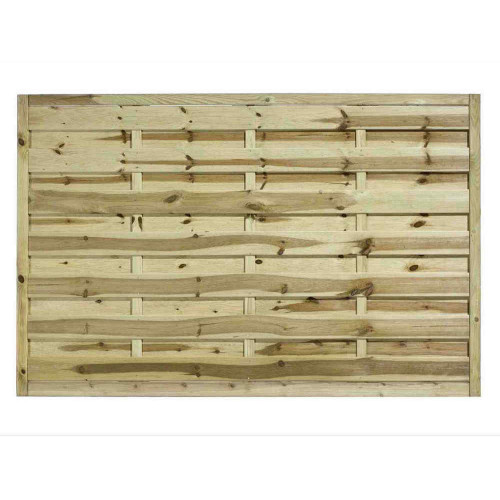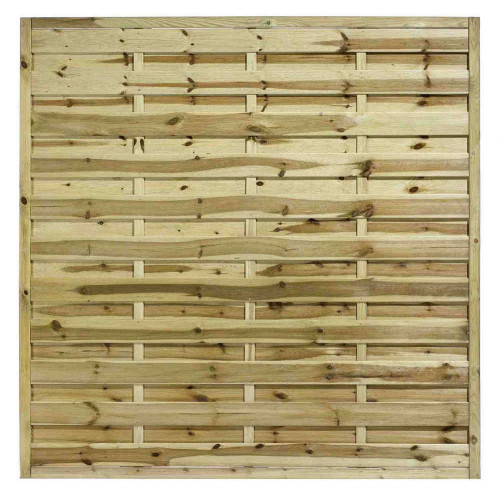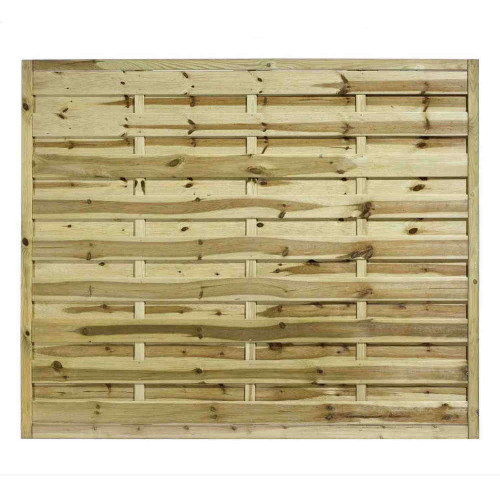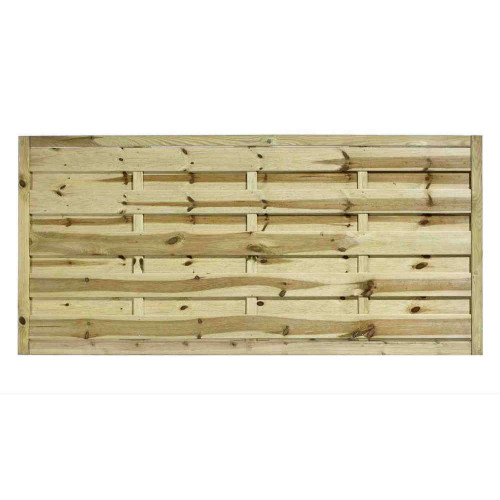


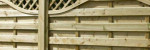

Quick answer: Hit & Miss Fence Panels are particularly useful for dividing a garden because they create clear separation without the heavy appearance of a completely solid screen. Their alternating horizontal boards provide partial privacy while allowing light and airflow through. Lower 3ft and 4ft panels work well for defining garden zones, while 5ft and 6ft panels can screen patios, garden rooms and utility areas. Use them in deliberate groups rather than dividing every part of the garden unnecessarily.
Dividing a garden can make it more useful, but too many solid screens can make the same space feel smaller.
A dining area may need separation from the lawn. A garden room might benefit from its own terrace. Bins and utility areas may need screening, while a quiet seating area might feel more comfortable with a defined edge.
Hit & Miss Fence Panels are particularly useful for these jobs because they sit between a completely open garden divider and a solid privacy fence.
The alternating horizontal boards provide enough screening to make one area feel separate from another, while the gaps allow air, some light and limited views through the structure.
What Does Garden Zoning Mean?
Garden zoning simply means dividing an outdoor space into areas with different purposes.
A garden might contain separate zones for:
- Outdoor dining
- Relaxing
- Children's play
- Growing vegetables
- A garden room
- Storage
- Bins
- Barbecuing
- Planting
The divisions do not have to be complete walls.
In many gardens, a partial screen is enough to make one space feel deliberately separate from the next.
Why Hit & Miss Fence Panels Work Well for Garden Zoning
The main advantage is balance.
Hit and miss construction provides:
- Partial visual screening
- Airflow
- A decorative appearance from both sides
- Horizontal lines that suit contemporary gardens
- Several panel heights for different levels of separation
This means you can define an area without necessarily making it feel sealed away from the rest of the garden.
How Are Hit & Miss Fence Panels Constructed?
The horizontal timber boards are arranged alternately on opposite sides of the panel frame.
One board sits on one face, the next on the opposite face, and the pattern continues across the panel.
This creates overlapping sightlines rather than one completely flat timber surface.
The result provides more screening than a very open fence while allowing more air through than solid Closeboard or Waney Lap fencing.
Why Does the Two-Sided Design Matter Inside a Garden?
An ordinary boundary fence is often viewed mainly from one garden.
An internal garden screen is different.
If it separates a patio from a lawn, for example, you will regularly see both faces:
- From the patio looking towards the garden
- From the lawn looking back towards the patio
Hit and miss construction gives both sides a finished timber appearance.
This makes it particularly suitable for screens positioned away from the outer boundary.
What Sizes Are Hit & Miss Fence Panels Available In?
The current East Coast Fencing range is approximately 1.83m wide and includes four nominal heights:
- 3ft
- 4ft
- 5ft
- 6ft
The current panels are pressure treated and supplied in a green/natural finish.
The different heights are useful because garden zoning does not always require full-height fencing.
| Panel Height | Best Suited To | Level of Separation |
|---|---|---|
| 3ft | Low zoning and decorative divisions | Light |
| 4ft | Patios, paths and garden-room terraces | Moderate |
| 5ft | Seating and utility screening | Strong |
| 6ft | Private garden zones and full boundaries | Strongest in the range |
Use 3ft Hit & Miss Panels When You Mainly Want Definition
A 3ft panel creates a clear change between garden spaces while retaining views across the wider garden.
This can work particularly well between:
- A lawn and patio
- A path and planted area
- A vegetable garden and ornamental garden
- A garden-room terrace and surrounding lawn
At this height, the fence becomes part of the landscaping rather than a privacy barrier.
Why 4ft Hit & Miss Panels Are Useful for Garden Divisions
A 4ft panel provides a stronger sense of enclosure while still allowing people to see over or through parts of the boundary.
This makes it a useful compromise around:
- Outdoor dining areas
- Raised patios
- Garden rooms
- Internal paths
It creates more visual separation than a low fence without producing the scale of a full 6ft screen.
When Should You Use 5ft Hit & Miss Panels?
Five-foot panels work well when zoning and privacy begin to overlap.
For example, you may want to define a seating area but also reduce direct views towards it.
A 5ft panel can provide substantial screening while retaining the airflow and layered appearance of hit and miss construction.
It can be useful around:
- Outdoor sofas
- Dining tables
- Hot tub areas
- Garden-room patios
- Utility sections
When Does a 6ft Internal Screen Make Sense?
A full 6ft panel creates a much stronger visual division.
It can be useful when you genuinely want to hide one area from another.
Examples include screening:
- Bins
- Storage
- A utility area
- A particularly private seating space
Use full-height screens selectively inside the garden.
Several 6ft partitions can make a modest garden feel fragmented even when the individual panels allow airflow.
How to Divide a Patio From the Lawn
This is one of the simplest uses of Hit & Miss Fence Panels.
You may want the patio to feel like a separate outdoor room without losing visual connection with the lawn.
A short run of 3ft or 4ft panels can:
- Define the patio edge
- Provide a backdrop for furniture
- Separate paving from grass
- Frame an entrance into the lawn
You do not necessarily need to screen every side.
One carefully positioned section can be enough.
Can Hit & Miss Panels Make a Dining Area Feel More Private?
Yes.
A taller panel can interrupt views towards an outdoor dining table without surrounding it with a completely solid boundary.
Consider where the unwanted view comes from.
You might need screening along:
- One side only
- The rear of the seating area
- One corner
Selective screening normally feels more open than constructing an enclosure around the complete dining area.
Measure Screening From the Seating Position
Do not choose a panel height simply by standing beside it.
Sit in the chair or position where privacy matters.
Then check:
- Where the main sightline comes from
- Whether the neighbouring area is raised
- Whether 4ft or 5ft would already interrupt the view
- Whether a full 6ft screen is actually necessary
This can prevent unnecessary height.
Use Hit & Miss Fence Panels Around a Garden Room
Garden rooms often benefit from having their own defined outdoor area.
A screen can separate the building from the main lawn and create a small terrace or entrance zone.
The horizontal pattern of Hit & Miss Fence Panels works particularly well with contemporary garden buildings.
It can complement:
- Horizontal cladding
- Modern windows
- Rectangular paving
- Planters
- Structured planting
Do Not Screen the Garden Room More Than Necessary
A garden office or studio may only need screening on one exposed side.
Using tall panels around the complete building can:
- Reduce views from inside
- Make the area feel confined
- Restrict maintenance access
Consider how the building will be used before deciding where the screens belong.
Leave Maintenance Access Around Garden Buildings
Do not install the panel so close to a garden room that the space between them becomes inaccessible.
You may eventually need to:
- Clean the building
- Maintain its exterior
- Remove leaves
- Inspect the fence
- Replace a panel
A narrow inaccessible gap can become a collection point for damp debris.
Can Hit & Miss Panels Hide Bins?
Yes.
A taller panel can create an attractive screen around a bin storage area.
The airflow through the alternating boards can be useful around spaces where a completely enclosed timber box is unnecessary.
Plan enough space to:
- Move bins in and out easily
- Open lids
- Clean the area
- Access the fence
A screen that successfully hides the bins but makes them difficult to use has not solved the whole problem.
Can Hit & Miss Panels Screen a Shed or Utility Area?
They can reduce the visual impact of practical garden spaces.
This might include:
- Water butts
- Wheelbarrows
- Garden tools
- Compost areas
- General storage
You may only need one or two panels positioned along the main viewing angle from the house or patio.
Use the Viewing Angle to Decide Where the Screen Goes
A common mistake is screening the entire perimeter of an unattractive area.
Instead, stand in the places from which it is normally seen.
These may include:
- Patio doors
- Kitchen windows
- The main seating area
- The garden entrance
A short screen positioned correctly can sometimes hide more than a much longer fence installed in the wrong place.
Can Hit & Miss Panels Divide a Vegetable Garden?
Yes.
Lower panels can define a productive area without creating a large solid shadow around it.
This can work around:
- Raised beds
- Herb gardens
- Fruit bushes
- Potting areas
The openings allow more light and airflow through than a solid privacy panel.
Do not assume the panel will exclude every animal or garden pest.
Can Hit & Miss Panels Divide Children's Garden Areas?
They can create a visual distinction between a play area and the rest of the garden.
The two-sided design is useful because the fence is visible from both spaces.
However, ordinary decorative garden fencing should not automatically be treated as specialist safety fencing.
Check the finished installation for:
- Secure posts
- Secure boards
- No damaged timber
- No protruding fixings
- Appropriate gates where required
Can Hit & Miss Panels Create a Quiet Seating Corner?
They can create visual separation, but they are not soundproof barriers.
The openings that allow air through also allow sound to pass.
Use the panels to create:
- A sense of enclosure
- Visual screening
- A defined garden room
rather than expecting them to block neighbouring conversation or traffic noise.
Can Plants Make the Seating Area Feel More Enclosed?
Yes.
Planting in front of or beside the panel can create an additional layer without replacing the open character of the fence.
Useful approaches include:
- Planters
- Ornamental grasses
- Shrubs
- Small trees
The combination of timber screening and planting can feel softer than one tall solid boundary.
Should You Grow Climbers Directly on Hit & Miss Panels?
Controlled planting is possible, but avoid allowing vigorous mature climbers to overload the decorative panel.
Heavy growth can add:
- Weight
- Wind resistance
- Moisture around the timber
It can also fill the openings that make the panel useful for airflow.
Vigorous climbers may be better provided with an independent support.
Can Hit & Miss Panels Be Used Around a Hot Tub?
They can provide useful visual screening around a garden leisure area.
Whether they provide enough privacy depends on:
- Panel height
- Viewing angle
- Nearby ground levels
- The distance between the viewer and fence
The panels are not completely opaque, so inspect the intended sightlines carefully if privacy is particularly important.
Does the Airflow Help Around Seating Areas?
It can.
A completely solid fence blocks more direct air movement across the boundary.
Hit and miss construction allows air to pass between the alternating boards.
This can help a screened seating area retain a connection with the wider garden rather than feeling like a timber enclosure.
It does not mean the panel provides protection from wind.
Will Hit & Miss Panels Stop Wind Around a Patio?
Not completely.
The design allows air through deliberately.
That makes the panels useful where you want to reduce the solid surface presented to the wind, but it also means they should not be selected as a sealed wind barrier.
The surrounding garden, buildings, hedges and panel position all influence how air moves across the patio.
Why Are Hit & Miss Panels Useful in Small Gardens?
Internal partitions can easily make a compact garden feel smaller.
The more visual barriers you introduce, the shorter the available views become.
Hit and miss panels help because:
- The boards are not completely solid
- Some light passes through
- Limited views remain from particular angles
- Lower versions allow views over the top
This gives you more opportunity to create zones while keeping a sense of connection between them.
Use Fewer Screens in a Small Garden
The fact that a panel can divide the garden does not mean every zone needs fencing.
In a compact space, consider using:
- One screen beside the patio
- Planting for another transition
- Paving changes elsewhere
- A low raised bed to define another zone
This creates variety without turning the garden into several small compartments.
Can Horizontal Lines Make a Narrow Garden Feel Wider?
The repeated horizontal boards can visually emphasise width.
This is one reason Hit & Miss Fence Panels work naturally in contemporary narrow gardens.
The effect depends on the complete layout, including:
- Panel direction
- Paving
- Planting
- Garden dimensions
- Panel height
Do not rely on the fence alone to change the apparent proportions of the garden.
Can You Use Hit & Miss Panels in a Large Garden?
Yes.
In a larger garden they can help create distinct outdoor rooms.
For example:
- A dining garden near the house
- A main lawn
- A garden office area
- A more secluded rear seating space
The horizontal panel design can provide a repeated visual element that connects these otherwise separate spaces.
Should Every Zone Use the Same Panel Height?
No.
The required height should follow the job.
You might use:
- 3ft panels to divide lawn and planting
- 4ft panels around a terrace
- 5ft panels around seating
- 6ft panels to screen a utility area
Keep the number of height changes under control so the garden does not become visually busy.
How Do You Make Different Heights Look Deliberate?
Change height at clear features.
Good transition points include:
- A gate
- A corner
- A large planter
- The end of a patio
- A garden room
- A change in ground level
A random height change halfway through an otherwise identical straight run is more likely to look accidental.
Can Hit & Miss Panels Be Used With Other Fence Styles?
Yes.
Internal garden zoning does not require the same panel as the outer boundary.
A garden might use:
- Closeboard Fence Panels around the rear boundary
- Hit & Miss Fence Panels around the patio
- Picket Fence Panels around a vegetable area
Each fence is then chosen according to the job it performs.
Hit & Miss or Double Slatted Panels for Garden Zoning?
Both are suitable contemporary decorative panels.
The main difference is the balance between screening and airflow.
| Feature | Hit & Miss | Double Slatted |
|---|---|---|
| Airflow | Higher | More restricted |
| Screening | Moderate | Stronger |
| Appearance | Layered horizontal boards | Closer refined slats |
| Internal zoning | Very suitable where openness matters | Useful where stronger screening matters |
Hit & Miss or Picket Panels for Garden Divisions?
Picket Fence Panels create a much more open boundary.
They are useful where the primary aim is simply to mark the edge of an area.
Hit and miss fencing creates a stronger visual screen and a more contemporary character.
Choose picket fencing where:
- Views should remain very open
- A traditional appearance suits the garden
- Low boundary definition is enough
Choose hit and miss where:
- Partial privacy is useful
- A contemporary screen is preferred
- Both faces will be highly visible
Hit & Miss or Omega Lattice for a Garden Feature?
Omega Lattice Fence Panels create a different type of decorative screen.
They have a screened lower section and curved open lattice top.
This makes them particularly suited to:
- Traditional gardens
- Climbing plants
- Planted patios
Hit and miss fencing has a straighter, more contemporary appearance and allows airflow throughout the panel rather than concentrating openness at the top.
Should You Use Wooden Posts for Internal Screens?
Wooden posts are a natural choice.
They maintain an all-timber appearance and provide straightforward fixing points for suitable exterior brackets, clips or screws.
This can be particularly attractive with an internal screen because the posts are visible from several directions.
Can Concrete Posts Be Used?
Yes, where the panel frame is compatible with the particular slotted concrete post system.
Concrete posts can make sense where:
- The existing fence already uses them
- Ground-level post decay is a concern
- Future panel replacement matters
For a decorative internal garden feature, consider whether the visible concrete suits the intended design.
Check the Panel Frame Before Using Existing Concrete Posts
Do not assume every nominal 6ft-wide panel fits every 6ft concrete-post bay.
Measure:
- The clear opening between posts
- The post slots
- The panel frame thickness
- The available height above any gravel board
Older posts may also have moved or leaned.
Why Accurate Alignment Is Important
The repeated horizontal board pattern makes changes in level easy to see.
If several Hit & Miss Fence Panels form one screen, keep:
- The posts vertical
- The panels level
- The horizontal lines aligned
Small errors become much more noticeable across a long decorative run.
Should Internal Hit & Miss Screens Have Gravel Boards?
Not every internal screen needs one.
They are most useful where the lower panel sits beside:
- Soil
- Lawn
- Mulch
- Dense planting
A gravel board helps keep the lower timber frame away from persistent damp ground and garden debris.
Where a screen sits entirely within a paved area, the more important issue may be ensuring that water drains away rather than collecting around the panel base and posts.
Wooden or Concrete Gravel Boards?
Wooden gravel boards preserve the all-timber appearance.
Concrete gravel boards pair naturally with compatible slotted concrete posts and create a durable non-timber lower edge.
With decorative garden zoning, appearance may influence this decision more strongly than it would on a less visible rear boundary.
Remember That Gravel Boards Add Height
A gravel board sits underneath the panel, so the completed screen becomes taller than the panel alone.
This can alter:
- Privacy
- Visual scale
- Post requirements
Choose the panel height as part of the whole system.
Can Hit & Miss Panels Be Used on a Slope?
Yes.
Standard rigid panels are normally stepped between the posts as ground levels change.
Each individual panel remains:
- Square
- Level
- Structurally unchanged
while the next panel begins higher or lower.
Why Stepping Matters With Horizontal Boards
Trying to twist a framed Hit & Miss Fence Panel to match a slope would disturb the strong horizontal pattern.
Stepping keeps the boards level within each bay.
Plan the size of the steps before installing the posts so the finished screen does not change height randomly.
Can a Garden Gate Be Added to a Hit & Miss Screen?
Yes, but the gate needs its own appropriate support.
A gate creates repeated moving loads that a fixed panel does not.
Plan:
- Gate width
- Gate Posts
- Hinges
- Latch
- Opening direction
- Ground clearance
before setting the surrounding screen posts.
Does the Gate Need to Match Exactly?
Not necessarily.
A complementary timber gate can work if its:
- Height
- Finish
- General design character
sits comfortably with the horizontal panel run.
Trying to force an unrelated gate into the middle of a carefully designed decorative screen can make the transition more noticeable.
Do Hit & Miss Panels Need Painting?
The current panels are pressure treated for outdoor use, so they do not require immediate preservative treatment simply because they have been installed.
You can later apply a compatible exterior timber coating if you want to change or refresh their appearance.
Allow the timber to become sufficiently dry and follow the coating manufacturer's preparation guidance.
Will the Green/Natural Finish Stay the Same?
No.
The initial green tint of pressure-treated timber gradually softens as the panels weather outdoors.
Natural timber also varies in:
- Grain
- Knots
- Shade
so exact uniformity should not be expected between every board.
Can Painting Help Separate Garden Zones?
Colour can reinforce a design theme, but it is usually better to use it consistently.
For example, a short run of Hit & Miss Fence Panels around a modern seating area could be finished to coordinate with:
- Garden furniture
- Planters
- Garden-room detailing
Avoid introducing too many unrelated fence colours into one garden unless that is a deliberate part of the design.
How Should Internal Hit & Miss Panels Be Maintained?
Routine maintenance is relatively simple.
Periodically:
- Check posts for movement
- Inspect the panel frame
- Check the horizontal boards
- Check exterior fixings
- Remove leaves trapped between boards
- Control dense planting
- Keep soil away from the lower frame
Internal screens are often easier to access than outer boundaries, which makes inspection straightforward.
Why Should Leaves Be Removed From the Board Gaps?
Wet leaves and plant debris can hold moisture against timber for longer than rain alone.
Removing trapped material helps:
- Maintain airflow
- Keep the panel looking tidy
- Make damage easier to spot
Can One Hit & Miss Panel Be Replaced?
Yes, provided the supporting posts remain secure and a compatible replacement is available.
Check:
- Width
- Height
- Frame thickness
- Board spacing
before ordering.
The horizontal pattern makes construction differences between manufacturers relatively easy to notice.
Will a New Panel Match Older Panels?
Not perfectly at first.
A new pressure-treated panel will generally appear fresher than timber that has been weathering for several years.
The new panel will change outdoors too.
Matching the board pattern, frame and dimensions is usually more important than expecting identical temporary colour.
Can Hit & Miss Panels Be Moved Later?
Potentially, but they should be treated as proper fencing rather than portable screens.
The posts and foundations are structural components.
If you expect a garden layout to change frequently, plan carefully before installing a substantial permanent screen.
Planting, freestanding planters or furniture may provide a more flexible divider where frequent reconfiguration is expected.
Common Mistakes When Dividing a Garden With Hit & Miss Fence Panels
- Using full-height panels where a lower divider would be enough
- Screening every side of a patio unnecessarily
- Creating too many separate compartments in a small garden
- Ignoring the fact that limited views remain through the boards
- Expecting the panels to soundproof a seating area
- Installing a screen without considering how people move through the garden
- Blocking access to a garden room or storage area
- Failing to align horizontal boards across neighbouring panels
- Installing posts before checking the actual panel dimensions
- Using gravel boards without considering the additional finished height
- Allowing soil or wet vegetation to remain against the panel frame
- Overloading panels with mature climbing plants
- Using a fixed garden screen where a flexible divider would suit the space better
Garden Zoning Checklist
- Decide what each part of the garden is for.
- Identify which zones genuinely need a physical divider.
- Decide whether the divider needs definition or privacy.
- Use 3ft or 4ft panels where maintaining openness matters.
- Consider 5ft or 6ft panels where stronger screening is required.
- Position screens according to the main viewing angles.
- Keep pedestrian routes open and practical.
- Leave maintenance access around garden buildings.
- Check the actual panel dimensions before setting posts.
- Choose suitable wooden or compatible concrete posts.
- Consider gravel boards where the lower frame sits near soil.
- Keep horizontal lines aligned across adjoining panels.
- Use planting to soften the screen where appropriate.
- Avoid making every garden zone into a separate fenced enclosure.
FAQs
Are Hit & Miss Fence Panels Good for Dividing a Garden?
Yes. Their partial screening, airflow and finished appearance on both sides make them particularly useful for internal garden divisions.
What Height Hit & Miss Panel Is Best for Garden Zoning?
Three-foot and 4ft panels are particularly useful where the aim is to define areas while maintaining views. Five-foot and 6ft panels are better where stronger privacy or concealment is required.
Can Hit & Miss Panels Divide a Patio From a Lawn?
Yes. A short run of lower panels can create a clear patio edge without completely separating the seating area from the rest of the garden.
Can Hit & Miss Panels Be Used Around a Garden Room?
Yes. Their horizontal design suits many contemporary garden buildings and can define a terrace or screen practical areas beside the building.
Can Hit & Miss Panels Hide Bins?
Yes. Taller panels can provide useful screening while retaining airflow around the storage area.
Are Hit & Miss Panels Completely Private?
No. The alternating boards reduce direct views from many angles, but limited visibility remains through the gaps from certain positions.
Do Hit & Miss Fence Panels Look Good on Both Sides?
Yes. Boards are positioned on both sides of the panel frame, giving each face a finished horizontal timber appearance.
Do Hit & Miss Panels Allow Air Through?
Yes. Their alternating-board construction allows more airflow than completely solid Closeboard or Waney Lap fencing.
Can Hit & Miss Panels Make a Small Garden Feel Bigger?
The partially open construction can help a compact garden feel less enclosed than several full-height solid partitions, particularly when lower panels are used.
Can You Use Different Height Hit & Miss Panels in One Garden?
Yes. Different zones can use different heights, although changes should occur at logical transition points so the design remains consistent.
Can Hit & Miss Panels Be Used With Wooden Posts?
Yes. Wooden posts provide straightforward fixing points and create a coordinated all-timber screen.
Can Hit & Miss Panels Be Used With Concrete Posts?
Yes, where the panel frame and dimensions are compatible with the slotted concrete-post system.
Do Hit & Miss Panels Need Gravel Boards?
Not always. They are worth considering where the lower timber frame would otherwise sit close to wet soil, grass or garden debris.
Can Hit & Miss Panels Be Used on a Slope?
Yes. Standard rigid panels are normally kept level and stepped higher or lower between posts as the ground changes.
Are Hit & Miss Fence Panels Pressure Treated?
Yes. The current East Coast Fencing range is pressure treated for outdoor use.
Can Hit & Miss Panels Be Painted?
Yes. A compatible exterior timber coating can be applied later once the pressure-treated timber is sufficiently dry and properly prepared.
Can Climbing Plants Grow on Hit & Miss Panels?
Controlled planting is possible, but heavy vigorous climbers may require separate support so excessive weight and wind resistance are not transferred to the decorative panel.
Can Hit & Miss Panels Reduce Noise Between Garden Zones?
They may provide visual separation, but their open construction means they should not be treated as soundproof screens.
Can You Use Just One Hit & Miss Panel as a Screen?
Yes. One properly supported panel can create a useful backdrop or visual divider where only a small area requires screening.
Are Hit & Miss Fence Panels a Good Way to Zone Your Garden?
They are particularly effective when you want separation without complete enclosure.
The alternating horizontal boards create enough screening to establish distinct areas, while airflow, light and some visual connection remain between them.
That makes Hit & Miss Fence Panels useful around patios, garden rooms, dining areas, vegetable gardens and practical storage zones.
The key is choosing the right height.
Use 3ft and 4ft panels where the fence mainly needs to define a space. Move towards 5ft and 6ft panels only where greater privacy or concealment is genuinely required.
Position screens according to actual viewing angles rather than automatically fencing every side of a garden zone. In many cases one or two panels placed carefully can provide all the separation you need.
For smaller gardens in particular, restraint matters. The objective is to organise the space, not divide it into a series of enclosed compartments.
If you want a contemporary timber screen that looks finished from both sides and provides a useful balance of separation, privacy and airflow, Hit & Miss Fence Panels are particularly well suited to garden zoning.