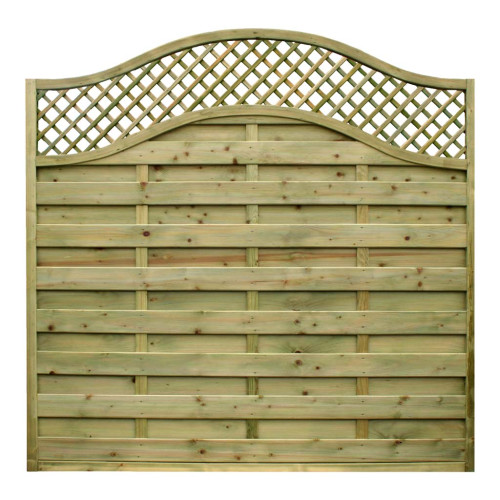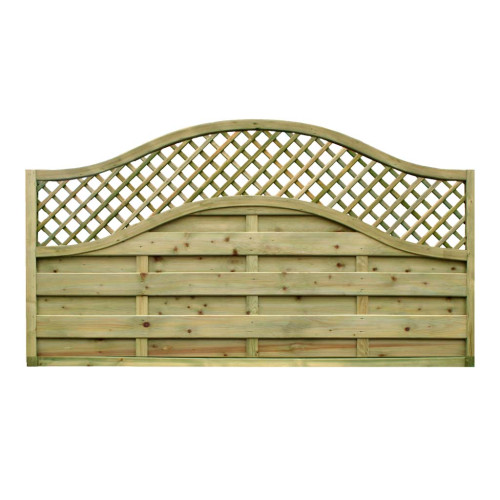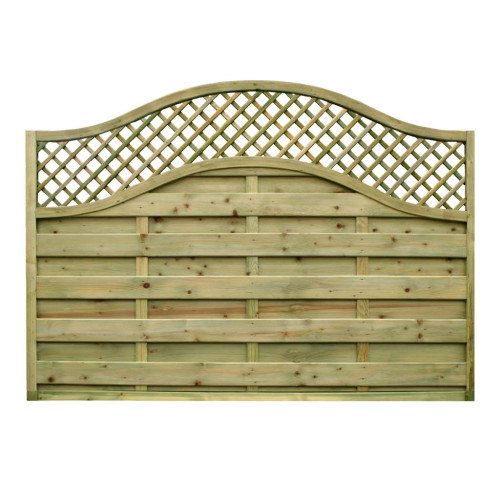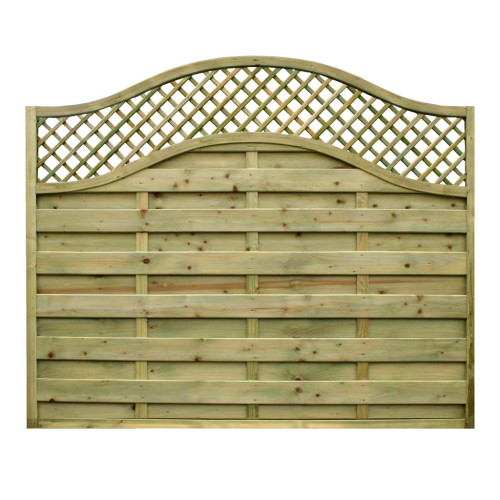



Quick answer: Minor damage to Omega Lattice Fence Panels can sometimes be repaired, but the location of the damage matters. A loose lower slat may be repairable if the surrounding 45 x 45mm frame remains sound. Damage to the integrated curved lattice top is harder to repair neatly because its shape and diamond pattern form part of the complete panel. If the main frame is split, the panel is badly distorted or several lattice sections are broken, complete replacement is usually the cleaner option.
Omega Lattice Fence Panels contain more individual elements than a conventional solid fence panel.
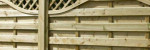
The current East Coast Fencing design combines a 45 x 45mm outer timber frame, a lower hit and miss screen made from approximately 100 x 5mm grooved horizontal slats, and an integrated curved diamond-lattice section approximately 300mm deep.
That construction gives the panel its distinctive appearance, but it also means not every type of damage should be approached in the same way.
A loose board in the lower screen is very different from a broken section at the centre of the curved lattice. The first question should therefore be which part of the panel has actually failed.
Understand the Panel Before Trying to Repair It
The current Omega Lattice Fence Panels are framed decorative panels.
The main components are:
- A 45 x 45mm semi-planed outer timber frame
- Approximately 100 x 5mm grooved horizontal slats in the lower section
- A hit and miss arrangement with boards alternating between the two faces
- An integrated curved diamond-lattice section approximately 300mm deep
- Pressure-treated green/natural timber
The current panels have an overall depth of approximately 45mm and a width of approximately 1.828m.
The important word when considering lattice repairs is integrated.
The curved top is part of the manufactured panel rather than a separate rectangular trellis topper simply fixed above an ordinary fence panel.
Which Part of an Omega Panel Is Most Important Structurally?
Start with the outer frame.
The frame holds the decorative components together and allows the complete panel to function as one unit.
It also provides the main structural area for:
- Handling the panel
- Supporting the slats
- Maintaining the curved top profile
- Fitting the panel between suitable posts
If the frame is still sound, a small amount of local damage inside it may be repairable.
If the frame itself has failed, replacing individual decorative components rarely addresses the real problem.
What Omega Lattice Damage Can Sometimes Be Repaired?
Local repairs are most realistic where the panel remains fundamentally intact.
Examples can include:
- One loose lower slat
- A local fixing problem
- A minor split that does not compromise the surrounding frame
- Very limited lattice damage where a neat matching repair can genuinely be achieved
Before repairing anything, check that the panel remains square and securely supported.
A small damaged component inside a sound frame is a very different repair from a panel that has twisted after post movement or storm damage.
When Is Complete Replacement Usually Better?
Replacement becomes more attractive as damage spreads into the main structure or decorative pattern.
Consider replacing the complete panel where:
- The outer frame has broken
- The frame is badly twisted or distorted
- Several lower slats are loose or broken
- A significant area of the lattice has failed
- The curved profile can no longer be retained neatly
- The lower frame has substantial deterioration
- The panel cannot be supported securely between the posts
A technically possible repair is not always a worthwhile repair.
With decorative fencing, appearance matters as well as whether the timber can simply be fastened back together.
Repair or Replace? A Practical Guide
| Damage | Repair Potential | Main Check |
|---|---|---|
| One loose lower slat | Good | Frame and fixing point remain sound |
| One split lower slat | Possible | Extent of split and ability to match profile |
| Single small lattice break | Possible but difficult to disguise | Curved profile and diamond pattern |
| Several lattice breaks | Poor | Overall top-section integrity |
| Broken outer frame | Limited | Structural integrity of complete panel |
| Badly twisted panel | Poor | Check posts and bay width first |
| Weathered colour only | No structural repair needed | Inspect timber condition rather than colour |
Why the Curved Lattice Top Is Harder to Repair
The top section is what distinguishes Omega Lattice Fence Panels from ordinary rectangular decorative panels.
It contains a repeated diamond pattern inside a curve that rises towards the centre of the panel.
A repair therefore has to satisfy several things at once:
- The replacement needs to follow the existing lattice pattern.
- The spacing needs to remain visually consistent.
- The curved outer profile needs to remain intact.
- The repair needs to remain properly connected to the surrounding structure.
Simply attaching a random timber strip across a break may close the damaged area, but it can remain extremely obvious.
Can One Broken Piece of Lattice Be Repaired?
Potentially, if the break is genuinely isolated.
First inspect the surrounding lattice.
Check whether:
- Only one small piece is damaged
- The neighbouring intersections remain secure
- The outer curved frame remains intact
- The panel has not been distorted by the same impact
A careful local repair may be worthwhile where the damage is minor and a suitably matching piece can be fitted.
However, the repair needs to respect the original diamond pattern. Decorative lattice is unforgiving of improvised sections because the repeated geometry makes irregularities easy to see.
When Should You Not Try to Patch the Lattice?
A patch is less likely to provide a satisfactory result where:
- Several intersecting pieces are broken
- The lattice has pulled away from the surrounding frame
- The curved upper frame is also split
- The top has been crushed or heavily twisted
- The damage affects a large visible area
At that point, you are effectively trying to reconstruct part of the manufactured top rather than making one small repair.
For a panel selected specifically because of its decorative appearance, complete replacement can be the more sensible result.
Can the Whole Lattice Top Simply Be Cut Off?
That is generally not a good way to repair an Omega panel.
The lattice and curved upper frame form part of the panel design.
Removing the top would alter:
- The panel height
- The outer frame
- The decorative profile
- The relationship between neighbouring panels
It could also leave the remaining panel without a properly designed finished upper edge.
If the entire lattice section is badly damaged, replacement is generally cleaner than converting the panel into something it was not designed to be.
Can a Damaged Lower Slat Be Replaced?
This is usually more straightforward than lattice repair, although matching still matters.
The current lower section uses approximately 100 x 5mm grooved horizontal slats.
They are positioned in a hit and miss arrangement, alternating between opposite faces of the panel.
A suitable repair therefore needs to consider:
- Board width
- Board thickness
- Grooved profile
- Horizontal position
- Which face of the panel carries that particular slat
Why the Hit and Miss Pattern Must Be Preserved
The lower section is not simply a stack of boards.
The alternating arrangement helps interrupt sightlines while still allowing airflow.
If a replacement slat is installed on the wrong face, you can alter:
- The appearance
- The spacing pattern
- The privacy effect
Take photographs of both faces before removing a damaged slat so the original arrangement can be reproduced accurately.
Can You Simply Screw a Split Slat Back Together?
Sometimes a suitable exterior fixing can secure a component that has only become loose.
A genuinely split board needs more careful assessment.
Check whether the split:
- Runs through the fixing point
- Has separated the board
- Leaves a loose sharp section
- Allows the board to move independently
Adding more fixings to timber that has already failed around the original fixing point may provide little benefit.
Inspect the Frame Before Repairing Any Slats
A broken internal component can sometimes be a symptom rather than the main failure.
For example, if a post moves and narrows the fence bay, the framed panel may become compressed.
That can place unusual loads on:
- The outer frame
- The lower slats
- The lattice intersections
If the panel is under stress because the supporting fence has moved, repairing one broken slat without correcting the support system is unlikely to be a lasting solution.
How Do You Check Whether an Omega Panel Is Still Square?
Stand back and inspect the main lower frame rather than following the curved top.
Look for:
- One side leaning relative to the other
- Horizontal slats running noticeably downhill
- Unequal gaps at the posts
- One corner being forced upward
You can also use a spirit level to check the lower structural frame and posts.
The curved lattice makes visual assessment of the top alone less useful than it would be on a rectangular panel.
Why the Posts Should Be Checked Before the Panel Is Blamed
Fence posts determine the geometry of the bay.
If they move, the panel can appear damaged even when the original problem is below ground.
Look for:
- Posts leaning towards one another
- Posts leaning away from one another
- Movement at ground level
- Concrete posts that are no longer vertical
- Timber posts showing deterioration around ground level
A new decorative panel installed between unstable posts will inherit the same problem.
Measure the Bay at Several Heights
The current Omega Lattice Fence Panels are approximately 1.828m wide.
When assessing an existing fence, measure the clear opening:
- Near the bottom
- Through the middle
- Near the shoulders of the panel
If those measurements vary significantly, the posts may no longer be parallel.
Do not force a framed replacement panel into a narrowing opening.
Why the True 1.828m Width Matters for Replacement Work
The current Omega range is manufactured in Poland and imported by East Coast Fencing, but it is specified at approximately 1.828m wide.
That corresponds to the traditional UK nominal 6ft panel width.
Many other imported decorative panels use a 1.8m width.
The difference is approximately 28mm.
On a new fence designed around the chosen product, that is straightforward to accommodate.
On an existing replacement bay, 28mm can be enough to create a noticeable difference in fit.
Panel Depth Matters When Replacing Between Concrete Posts
The current Omega frame has an overall depth of approximately 45mm.
If the existing fence uses slotted concrete posts, check:
- The clear slot width
- The panel width
- The panel depth
- The available height above any gravel board
A nominally 6ft-wide decorative panel is not automatically compatible with every concrete-post system.
Can Omega Lattice Panels Be Used With Wooden Posts?
Yes.
Suitable wooden posts provide straightforward fixing points for the framed panel.
If an existing panel has become loose, check both sides of the connection.
The problem may be:
- The panel frame
- The bracket or fixing
- The timber surrounding the fixing
- The post itself
Replacing the panel does not correct an unsound post.
Can Omega Lattice Panels Be Used With Concrete Posts?
Potentially, provided the slots and clear bay suit the actual panel dimensions.
When lowering an Omega panel into slotted posts, support it through the main frame.
Do not use the lattice top as a lifting handle.
The open decorative section is not intended to carry the weight of the complete fence panel.
Why Lattice Damage Often Happens During Handling
The lattice top is visually prominent but comparatively open.
It can be damaged if a panel is:
- Lifted by the lattice
- Dropped onto its upper edge
- Dragged beneath an obstruction
- Forced between incorrectly spaced posts
Handling the panel correctly is considerably easier than repairing an integrated curved top afterwards.
How Should an Omega Panel Be Lifted?
Support the main outer frame and lower body.
For larger panels, use enough people to keep the panel controlled.
Avoid:
- Holding the entire panel by one lattice section
- Pulling it sideways using the curved top
- Resting the full panel weight on one top corner
- Twisting the frame to force it into place
This is especially important with 5ft and 6ft versions because their larger overall size makes handling more awkward.
What Heights Are Available if Replacement Is Necessary?
The current Omega Lattice Fence Panels are available in four nominal centre heights:
- 3ft, approximately 900mm
- 4ft, approximately 1200mm
- 5ft, approximately 1500mm
- 6ft, approximately 1800mm
Because the top is curved, the shoulder heights are lower than those centre measurements.
This is important when replacing only one panel in an existing run.
Why Centre Height Alone Is Not Enough for Replacement
An Omega panel has two important visual reference levels:
- The highest point at the centre
- The lower shoulders where the panel meets the posts
For example, the current 6ft version reaches approximately 1800mm at the centre while its shoulders are approximately 1600mm high.
When replacing one panel, matching the repeated shoulder and centre lines helps the entire run retain its intended wave-like appearance.
What If a Replacement Panel Looks Higher Than the Others?
Before assuming the new product is the wrong size, check:
- Gravel board levels
- Post levels
- Whether neighbouring panels have settled
- Whether the replacement is seated fully in the intended position
The repeated Omega curves make relatively small installation differences easy to see.
Will a New Omega Panel Match the Colour of Older Panels?
Usually not immediately.
The current panels are supplied pressure treated in a green/natural finish.
Older timber will already have been exposed to:
- Sunlight
- Rain
- Seasonal moisture changes
so it will normally look more weathered than a new replacement.
That does not mean the new panel is incompatible.
Construction, dimensions and pattern are more important than expecting an immediate colour match.
Does Faded Colour Mean an Omega Panel Needs Replacing?
No.
Weathering of pressure-treated timber is normal.
Colour alone does not tell you whether:
- The frame remains sound
- The slats remain secure
- The lattice remains intact
- The posts remain stable
Inspect the physical structure rather than using colour as the main condition test.
Can Omega Lattice Fence Panels Be Painted After a Repair?
A compatible exterior timber coating can be applied once the timber is sufficiently dry and properly prepared.
This can help a repaired area visually blend with the wider panel.
However, paint or stain should never be used to conceal:
- Loose lattice
- Failed joints
- Broken frame members
- Deteriorated timber
Resolve the structural problem first.
Can Climbing Plants Damage the Lattice?
They can contribute additional load, particularly after several seasons of growth.
The lattice is useful for suitable climbing plants, but mature vegetation can add:
- Weight
- Wind resistance
- Moisture around the timber
A vigorous climber covering several panels can place substantially more demand on the structure than the bare fence experienced when first installed.
Check Plant Load Before Repairing a Broken Lattice
If a lattice section has failed behind dense mature planting, do not immediately repair it while leaving the original load unchanged.
First:
- Reduce or support the plant carefully.
- Expose the damaged section.
- Inspect the surrounding lattice and frame.
- Assess whether the plant needs an independent support.
Otherwise the same load can immediately act on the repaired area.
Why Dense Climbers Change Wind Loading
An open lattice allows substantial air through when it is bare.
Once covered in dense foliage, many of those openings disappear.
The planted screen can therefore present considerably more area to the wind.
This makes:
- Post strength
- Frame condition
- Plant management
increasingly important as vegetation matures.
What Should You Check After a Storm?
Do not only inspect the visibly broken section.
Check the complete panel and its supports.
Look for:
- Broken lattice pieces
- Loose lower slats
- Frame splits
- Panel distortion
- Post movement
- Changes in the gap between neighbouring panels
A storm can affect several connected components even when only one break is immediately obvious.
How Does the Lower Frame Become Damaged?
The lower frame is exposed to conditions that the decorative top usually avoids.
Potential problems include prolonged contact with:
- Wet soil
- Grass
- Mulch
- Fallen leaves
- Rain splash
The current panels are pressure treated, but sensible moisture management still matters.
Can a Gravel Board Reduce Future Damage?
A suitable gravel board can help separate the main timber panel from the ground.
This is particularly useful where the boundary runs directly beside planting or lawn.
It can reduce exposure of the lower frame to:
- Soil
- Wet vegetation
- Garden debris
Remember that the gravel board contributes to the completed fence height.
What If the Lower Frame Is Already Soft?
Soft or substantially deteriorated structural timber requires more attention than superficial weathering.
If the lower frame can no longer:
- Retain its shape
- Support the lower slats
- Sit securely within the fence system
complete panel replacement is normally more sensible than trying to rebuild the bottom around otherwise decorative components.
Can One Omega Panel Be Replaced Without Replacing the Whole Fence?
Yes.
If the surrounding posts and neighbouring panels remain suitable, one damaged panel can be replaced independently.
Before ordering, record:
- Panel width
- Centre height
- Shoulder height
- Frame depth
- Post type
- Gravel board height
This gives you a much better chance of preserving the existing fence line.
Do Not Assume All Curved Lattice Panels Match
Another decorative panel may have a broadly similar shape while using different:
- Curve proportions
- Lattice patterns
- Shoulder heights
- Frame dimensions
- Overall width
A mismatched panel in the middle of a repeated Omega run can be very obvious.
Match the actual construction rather than relying on a generic description such as "curved trellis panel".
What Maintenance Helps Avoid Omega Panel Repairs?
A small amount of routine attention can prevent minor problems becoming larger ones.
- Keep the lower frame clear of accumulated soil and leaves.
- Control climbing plants before they become excessively heavy.
- Check posts after strong winds.
- Inspect loose slats when first noticed.
- Do not lift panels by the lattice.
- Keep gravel boards and panel bases correctly aligned.
- Investigate unusual movement rather than repeatedly tightening random fixings.
Common Omega Lattice Repair Mistakes
- Repairing the lattice without checking the outer frame
- Replacing the panel without checking leaning posts
- Using an unrelated piece of timber that disrupts the diamond pattern
- Cutting off the complete curved top after local damage
- Fitting replacement lower slats to the wrong side of the hit and miss pattern
- Forcing a 1.828m framed panel into a bay that has become too narrow
- Ignoring the approximately 45mm frame depth when using concrete posts
- Lifting the replacement panel by its lattice top
- Painting over structural deterioration
- Repairing plant damage without reducing the plant load
- Treating weathered colour as evidence that the panel has structurally failed
Omega Lattice Fence Panel Repair Checklist
- Inspect the 45 x 45mm outer frame first.
- Check whether the panel remains square.
- Inspect the curved lattice from both sides.
- Identify whether lattice damage is isolated or widespread.
- Check the approximately 100 x 5mm lower slats.
- Preserve the alternating hit and miss arrangement during repairs.
- Inspect the posts for movement.
- Measure the bay at several heights.
- Check compatibility before ordering a replacement panel.
- Match centre height and shoulder height.
- Keep the lower frame away from persistent wet soil.
- Reduce excessive climbing-plant loads.
- Support replacement panels through the main frame during handling.
- Replace the complete panel where structural damage is widespread.
FAQs
Can Omega Lattice Fence Panels Be Repaired?
Minor local damage can sometimes be repaired if the main frame remains structurally sound. Widespread lattice damage, serious frame failure or major distortion normally makes complete replacement more practical.
Can You Repair a Broken Omega Lattice Top?
Small isolated damage may be repairable, but maintaining the original diamond pattern and curved profile can be difficult. Multiple breaks or damage to the surrounding curved frame usually favour replacement.
Can You Replace One Lower Slat?
Potentially. The current lower body uses approximately 100 x 5mm grooved horizontal slats, so a repair should match the profile and retain the alternating hit and miss arrangement.
What Size Frame Do Omega Lattice Fence Panels Have?
The current East Coast Fencing range uses a 45 x 45mm semi-planed timber frame with an overall panel depth of approximately 45mm.
How Deep Is the Lattice Section?
The integrated curved diamond-lattice section is approximately 300mm deep in the current range.
How Wide Are Omega Lattice Fence Panels?
The current panels are approximately 1.828m wide, matching the traditional nominal UK 6ft panel format.
Can Omega Lattice Panels Fit Concrete Posts?
Potentially, provided the approximately 45mm frame depth and actual panel width are compatible with the post slots and clear opening.
Should You Lift an Omega Panel by the Trellis Top?
No. The panel should be supported through its main frame and lower body rather than lifted by the decorative lattice.
Does Pressure Treatment Mean the Panel Cannot Deteriorate?
No. Pressure treatment improves outdoor durability, but sensible installation, ground clearance, plant management and routine inspection remain important.
Can Climbing Plants Break Omega Lattice?
Heavy mature vegetation can add substantial weight and wind resistance. Vigorous planting should be managed and may need separate support rather than relying entirely on the decorative lattice.
Can One Damaged Omega Panel Be Replaced?
Yes. If the surrounding posts remain suitable, one panel can be replaced without changing the complete run. Match the width, height, frame depth, shoulder level and curved profile carefully.
Will a New Omega Panel Match Weathered Older Panels?
Its initial colour may be different because the older panels have already weathered. Construction, dimensions and pattern are more important when assessing compatibility.
Is Repairing an Omega Lattice Fence Panel Worth It?
For genuinely local damage, it can be.
A loose lower slat or one minor fixing issue does not automatically justify throwing away an otherwise sound decorative panel.
The decision changes when the damage reaches the components that define the whole panel.
The 45 x 45mm outer frame is particularly important because it holds the lower hit and miss screen and the integrated curved lattice together. If that frame remains square and secure, local repair remains realistic. If it is broken or badly distorted, repairing individual decorative pieces does not restore the complete assembly properly.
The lattice top deserves similar judgement.
One small break may be repairable, but several broken intersections, damage to the curved frame or a crushed section can be extremely difficult to reconstruct without leaving an obvious patch.
Before replacing anything, also inspect the fence posts. Moving posts can compress or twist a framed decorative panel and may be the reason the damage occurred in the first place.
If replacement is required, measure carefully. The current Omega Lattice Fence Panels are approximately 1.828m wide and 45mm deep, with centre heights of approximately 900mm, 1200mm, 1500mm and 1800mm depending on the version. The shoulders sit lower than the centre because of the curved profile, so both measurements matter when matching an existing run.
The practical rule is simple: repair isolated damage where the main frame and pattern can remain intact, but replace the panel where the structure or distinctive Omega profile has been compromised extensively.