





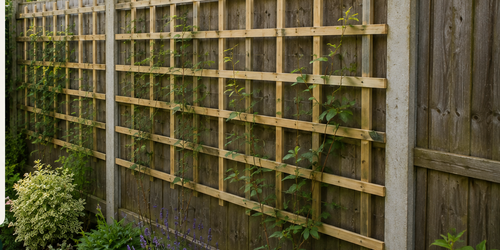
Adding trellis to a garden fence can be a simple way to improve privacy, support climbing plants and soften a plain boundary. It can make a seating area feel more sheltered, help screen an overlooking window and give the garden more height without replacing the whole fence.
However, if the fence belongs to your neighbour, you cannot treat it as your own just because it faces your garden. Fixing trellis, screws, brackets, plant wires or heavy climbers to a neighbour’s fence can cause damage, create disputes and may leave you responsible for putting things right.
The safest answer is this: you should not attach trellis to your neighbour’s fence without their permission. If you want trellis on your side, you can ask for consent, or you can install a free-standing trellis system on your own side of the boundary using your own posts and supports.
Can I put trellis on my side of my neighbour’s fence?
If the fence is owned by your neighbour, you should not attach trellis panels to it without their permission. The fence may face your garden, but ownership still matters. Screwing into it, nailing into it, tying heavy planting to it or leaning a structure against it can all be treated as interfering with someone else’s property.
If your neighbour agrees, you may be able to add trellis in a way that suits both sides. If they do not agree, you should not go ahead. In that case, a free-standing trellis on your own land is usually the better option.
If the fence is yours, you have more control, but you still need to think about height, planning rules, wind load, boundary position and neighbour relations.
First, find out who owns the fence
Before buying trellis panels or fixings, try to establish who owns the fence. In many gardens, people assume the fence on one side is theirs and the fence on the other side belongs to the neighbour, but this is not always reliable.
Ownership may be shown in property deeds, title plans, transfer documents or previous agreements. Sometimes it is unclear. The direction of posts, rails or panel faces is not a guaranteed legal test of ownership.
Check any documents you have, and speak to your neighbour if needed. If there is any uncertainty, avoid attaching anything to the fence until the ownership position is clearer.
Why permission matters
Permission matters because adding trellis changes the way the fence is used. Even a lightweight trellis can increase wind pressure, add extra weight and create maintenance issues. Once climbing plants grow through it, the load can become much greater.
Your neighbour may be concerned about:
- Damage from screws, nails or brackets
- Extra weight on the fence
- Increased wind load
- Reduced lifespan of the fence
- Difficulty repairing or replacing panels later
- Plant growth coming through to their side
- Changes to the appearance from their garden
- Height and privacy issues
- Future disputes if the fence needs work
Even if you think the trellis would improve the boundary, the fence owner has the right to object if it is their property.
Speak to your neighbour before doing anything
A calm conversation is usually the best first step. Explain what you want to do, why you want to do it and how you plan to avoid damage or inconvenience.
It can help to show them:
- The type of trellis panels you want to use
- Where they would be positioned
- How high the finished boundary would be
- Whether climbing plants will be added
- How the trellis would be fixed
- How you would maintain it
- How you would avoid plants growing onto their side
Do not present it as something already decided. Ask first. A neighbour is more likely to respond well if they feel respected rather than pressured.
Get permission in writing if they agree
If your neighbour agrees to trellis being attached to their fence, it is sensible to confirm it in writing. This does not need to be complicated. A simple message or email confirming what has been agreed can prevent confusion later.
Include details such as:
- Which section of fence is involved
- What will be attached
- How it will be fixed
- Who will pay for it
- Who will maintain it
- What happens if the fence needs repair or replacement
- Whether climbing plants will be kept under control
This is especially useful if one of the properties is sold in the future.
What if your neighbour says no?
If your neighbour refuses permission, you should respect that. Do not attach trellis to their fence anyway. Doing so could damage the relationship and may lead to a dispute.
You still have options. The simplest solution is to install your own independent trellis structure on your side of the boundary. This gives you privacy and planting support without relying on your neighbour’s fence.
Free-standing trellis can often achieve the same effect, and it may be stronger and easier to maintain.
Free-standing trellis as an alternative
Free-standing trellis is usually the safest option when the existing fence belongs to a neighbour. It is supported by your own posts, installed on your side of the boundary and does not need to be fixed to the neighbour’s fence.
This may involve installing timber posts or other suitable supports just inside your boundary, then fixing trellis panels to those posts.
Advantages of free-standing trellis include:
- No need to attach anything to your neighbour’s fence
- Less risk of damaging their property
- More control over the design
- Easier replacement if needed
- Suitable for privacy screening
- Good support for climbing plants
- Can be positioned only where screening is needed
The structure still needs to be secure. Trellis can catch wind, especially once plants grow through it, so posts must be suitable for the height and exposure.
Can I put my own posts next to my neighbour’s fence?
In many cases, you can install your own posts on your side of the boundary, provided they are fully within your land and do not damage the neighbour’s fence, foundations or property.
Take care when digging. Fence lines can contain old concrete, roots, drains, cables or other services. Do not undermine the neighbour’s fence posts or push your structure against their fence.
Leave enough space for airflow and maintenance where possible. If you build a second structure too close to the existing fence, leaves and moisture can collect between them.
Can I lean trellis against my neighbour’s fence?
Leaning trellis against a neighbour’s fence is not a good idea without permission. Even if you do not screw into the fence, the trellis may still put pressure on it, trap moisture or cause damage.
Once plants grow, the weight increases. Wind can also push the trellis against the fence. If the fence moves, cracks, rots or fails, there may be disagreement about who caused the damage.
If you want trellis, use independent posts or a self-supporting planter trellis instead.
Can I grow climbing plants up my neighbour’s fence?
You should not grow climbing plants up your neighbour’s fence without permission. Climbers can become heavy, trap moisture, force their way through panels and make maintenance difficult.
Some climbers attach themselves strongly to surfaces, while others need wires or trellis. Either way, they can affect the fence over time.
If you want climbing plants, install your own trellis or plant support on your side. Keep plants pruned so they do not spread onto your neighbour’s side unless they are happy with it.
Can I paint my side of my neighbour’s fence?
If the fence belongs to your neighbour, you should ask before painting or staining your side. Paint and stain can seep through timber, alter the appearance and affect future maintenance.
Even if only your side is visible to you, it is still their fence if they own it.
If you want a different look and they do not agree to painting, consider using free-standing trellis panels, screening panels or planting in front of the fence instead.
Can I attach screening to my neighbour’s fence?
The same principle applies to screening. Bamboo screening, willow screening, reed screening, privacy mesh and decorative panels should not be attached to a neighbour’s fence without permission.
Screening can add weight and wind resistance. In strong winds, it may pull at the fence or fixings. Lightweight screening may look harmless, but it can still create problems.
Use your own posts, battens or supports if you need privacy screening.
Fence height and trellis height
Adding trellis can increase the total height of a boundary. This matters because garden fence height can be subject to planning rules, especially near roads, pavements, front gardens, listed properties or conservation areas.
The overall height usually includes the fence panel, gravel board and trellis topper. A 6ft fence with trellis on top is not simply a 6ft fence anymore.
Before adding height, check whether planning restrictions apply. This is particularly important if the trellis is along a boundary, beside a highway or in a front garden.
Does trellis count as part of the fence height?
In practical terms, trellis added to the top of a fence is normally treated as part of the overall boundary height. It may be more open than a solid panel, but it still increases the structure.
If you are close to a height limit, do not assume trellis is exempt because it has gaps. Check before installation if there is any doubt.
Can I add trellis to my own fence?
If the fence is yours, you can usually add trellis, but you still need to think about strength and rules. The existing posts must be strong enough to support the extra height and wind load.
Adding trellis to weak posts can cause the fence to lean or fail. This is especially true in exposed gardens or where climbing plants will be grown.
Before adding trellis to your own fence, check:
- Post condition
- Panel condition
- Fence height
- Wind exposure
- Planning restrictions
- Whether the trellis will affect neighbours
- How plants will be maintained
If the fence is old or unstable, repair or replace it before adding more load.
Using fence topper trellis
Fence topper trellis is designed to sit above fence panels, usually to add height, decoration or support for climbing plants. It can make a solid fence feel less harsh while improving privacy.
It works well when fitted to a strong fence with suitable posts. It is less suitable where the existing fence is weak, rotten or already leaning.
If fitting fence topper trellis to your own fence, use suitable fixings and make sure the posts extend high enough or can support additional framing.
Privacy trellis for overlooked gardens
Trellis is often used for privacy where a garden is overlooked. It can screen a patio, hot tub, dining area or seating space without creating a completely solid wall.
Privacy trellis can work well with climbers such as jasmine, clematis, honeysuckle or climbing roses. Evergreen climbers may provide more year-round screening, but they can become heavy and need regular maintenance.
If privacy is needed only in one area, consider a free-standing trellis screen near the seating area rather than raising the full boundary.
Free-standing screens for seating areas
If the issue is privacy around a patio or seating area, you may not need trellis along the whole fence. A free-standing garden screen can be placed where it blocks the main view.
This can be more neighbourly and more attractive than adding height to an entire boundary.
Options include:
- Free-standing trellis panels
- Slatted screening panels
- Planter trellis units
- Pergola side screens
- Climbing plants on posts and wires
- Tall shrubs in suitable containers
Targeted screening can feel less imposing and may avoid disputes about boundary height.
Using planter trellis
Planter trellis units can be a useful option when you do not want to dig posts or attach anything to a neighbour’s fence. They combine a planter with a trellis panel, creating a self-contained screen.
They work best in sheltered spots. In windy gardens, they may need extra weight, wider bases or additional fixing to your own structure.
Choose suitable plants and keep them pruned. A heavily planted trellis can become top-heavy.
Choosing the right trellis style
Trellis panels come in different styles, and the right one depends on the garden design and level of screening needed.
Square trellis
Square trellis has a classic look and works well with traditional gardens, climbing plants and general screening.
Diamond trellis
Diamond trellis is decorative and suits cottage gardens, boundary features and planting support. It can look softer than plain panels.
Privacy trellis
Privacy trellis has smaller gaps and gives more screening than standard open trellis. It is useful where you want plants and privacy together.
Slatted trellis
Slatted trellis has a modern appearance and works well in contemporary gardens. It can provide partial screening while allowing airflow.
Fan trellis
Fan trellis is often used against walls or in smaller planting areas. It is more decorative than structural and is not usually used as a full boundary screen.
Wind load and trellis
Trellis looks light, but it still catches wind. Once climbing plants cover it, wind resistance increases. This can put extra pressure on fence posts and fixings.
Wind load is especially important if:
- The garden is exposed
- The trellis is added above an existing fence
- The posts are old
- Evergreen climbers will be grown
- The screen is tall
- The trellis is attached to a weak boundary
If the fence moves in the wind already, do not add trellis until the structure has been strengthened.
Maintenance responsibilities
Before adding trellis, think about maintenance. If it is attached to a neighbour’s fence, future maintenance can become awkward. The fence owner may need to repair, paint or replace the fence later. Your trellis and plants could get in the way.
If you use free-standing trellis, maintenance is simpler because it is your structure. You can repair, paint or replace it without relying on the neighbour’s fence.
Keep plants pruned so they do not overwhelm the structure or grow into neighbouring property.
What if the neighbour wants to replace the fence later?
If you attach trellis to your neighbour’s fence with permission, agree what happens if they need to repair or replace the fence later. They should not be prevented from maintaining their own boundary.
You may need to remove the trellis temporarily or permanently. Plants may need cutting back. This is another reason written agreement is helpful.
Free-standing trellis avoids most of these problems because it remains separate from the neighbour’s fence.
Will trellis damage a fence?
Trellis can damage a fence if it is attached poorly, overloaded with plants or fitted to a weak structure. Damage may include split timber, loose panels, leaning posts, trapped moisture and broken fixings.
Damage is more likely when:
- The fence is old or rotten
- Heavy climbers are used
- The trellis is too tall
- Fixings are unsuitable
- The garden is windy
- Water is trapped behind panels
- Plants are not maintained
Even if the trellis is light at first, plants grow and add weight over time.
Good climbers for trellis
Climbing plants can make trellis look attractive and provide extra screening. Choose plants that suit the light, soil and maintenance level you can manage.
Possible climbers include:
- Clematis
- Honeysuckle
- Jasmine
- Climbing roses
- Passion flower in suitable sheltered spots
- Star jasmine in milder, sheltered gardens
- Annual climbers such as sweet peas
Avoid choosing vigorous plants unless the support is strong and you are willing to prune regularly. Some climbers can become too heavy for lightweight trellis.
Keep plants under control
Climbing plants are one of the main reasons trellis becomes a neighbour issue. Plants can grow through gaps, drop leaves, block light, damage panels or spread beyond the boundary.
To avoid problems:
- Prune regularly
- Keep growth on your side where possible
- Remove dead stems
- Avoid planting too close to posts
- Check for trapped moisture
- Choose plants suited to the structure
- Do not let climbers overwhelm the fence
A well-maintained climber can look attractive. An uncontrolled climber can damage fencing and irritate neighbours.
Boundary disputes and trellis
Boundary issues can escalate quickly if people make changes without agreement. A small trellis panel may not seem important, but it can become part of a wider dispute about ownership, privacy, light or responsibility.
To reduce risk:
- Check ownership first
- Ask permission before attaching anything
- Use written agreement where possible
- Keep structures within your land
- Check height rules
- Maintain plants properly
- Choose free-standing options if there is any doubt
Good neighbour relations are usually worth more than a quick privacy fix.
What if the fence is shared?
Some boundaries are treated as shared or jointly maintained, but this should not be assumed. If responsibility is shared, any changes should still be discussed and agreed.
Shared responsibility can make maintenance decisions more complex. Adding trellis may affect both parties, so agreement is important.
If the documents are unclear, take a cautious approach and avoid attaching anything until both sides are comfortable.
What if the fence is falling down?
If the neighbour’s fence is already damaged or leaning, do not attach trellis to it. Extra weight and wind load may make the problem worse.
Speak to the neighbour about the fence condition. If they do not want to repair it, you may be able to install your own independent fence or trellis on your side, depending on the boundary and available space.
Do not rely on a failing fence to support new screening.
Can I build my own fence in front of my neighbour’s fence?
In some cases, you may be able to install your own fence or screening inside your boundary. This can be a good option if you want privacy but cannot alter the neighbour’s fence.
However, you must keep it on your land, avoid damaging their fence and consider height and planning rules. Leave enough space for maintenance if possible.
This approach may reduce disputes because your structure is independent.
Common mistakes when adding trellis near a neighbour’s fence
Many problems can be avoided with planning.
Common mistakes include:
- Assuming the fence is yours without checking
- Screwing trellis to a neighbour’s fence without permission
- Leaning trellis against the fence and thinking it does not count
- Adding too much height without checking rules
- Using weak posts for free-standing trellis
- Choosing climbers that become too heavy
- Ignoring wind exposure
- Letting plants grow into the neighbour’s garden
- Blocking access for fence maintenance
- Failing to agree what happens if the fence is replaced
A trellis should improve the garden, not create a boundary dispute.
Trellis and neighbour fence checklist
Before adding trellis, use this checklist:
- Check who owns the fence
- Ask permission if it belongs to your neighbour
- Get agreement in writing if attaching anything
- Check the condition of the existing fence
- Consider a free-standing trellis instead
- Keep posts and supports on your side of the boundary
- Check the finished height
- Consider planning restrictions if relevant
- Choose a trellis style that suits the garden
- Allow for wind load
- Use suitable fixings
- Maintain climbing plants
- Make sure the neighbour can still maintain their fence
- Avoid blocking light or creating unnecessary tension
Frequently asked questions
Can I attach trellis to my neighbour’s fence?
Not without permission. If the fence belongs to your neighbour, you should ask before attaching trellis, screening, wires, fixings or climbing plants.
Can I put trellis on my side of the fence?
If the fence is yours, usually yes, subject to strength, height and any planning restrictions. If the fence belongs to your neighbour, your side of it is still not yours to alter without permission.
Can I install free-standing trellis next to my neighbour’s fence?
Often yes, provided it is fully on your land, safely installed and does not damage their fence. You should still consider height, wind load and maintenance access.
Does trellis count towards fence height?
Trellis added to a fence normally contributes to the overall height of the boundary. If you are close to a height limit or near a road, check before installing.
Can my neighbour stop me putting trellis on their fence?
Yes. If they own the fence, they can refuse permission for you to attach trellis or other items to it.
Can I grow plants up my neighbour’s fence?
You should ask first. Climbing plants can add weight, trap moisture and grow through to the other side. Use your own trellis or supports if permission is not given.
What is the best alternative if my neighbour says no?
A free-standing trellis screen on your side of the boundary is usually the best alternative. It gives privacy and planting support without relying on the neighbour’s fence.
Can I paint my side of my neighbour’s fence?
You should ask permission before painting or staining a fence that belongs to your neighbour, even if only your side is visible to you.
What trellis is best for privacy?
Privacy trellis, slatted trellis and trellis with climbing plants can all improve screening. For immediate privacy, a denser trellis or screen may be better than very open decorative trellis.
Can trellis damage a fence?
Yes, if it adds too much weight, increases wind pressure, traps moisture or is attached with unsuitable fixings. Heavy climbers can also strain a fence over time.
Final thoughts
You should not attach trellis to your neighbour’s fence without permission. Even if the trellis is on your side, the fence may still be their property. Fixings, extra height, wind pressure and climbing plants can all affect the fence and lead to disputes.
The best first step is to check ownership and speak to your neighbour. If they agree, confirm the details clearly and maintain the trellis responsibly. If they do not agree, use a free-standing trellis system on your own side of the boundary instead.
Trellis panels can be a useful way to improve garden privacy, support climbing plants and soften fence lines. The key is to install them in a way that respects boundaries, protects the fence and keeps neighbour relations intact.