





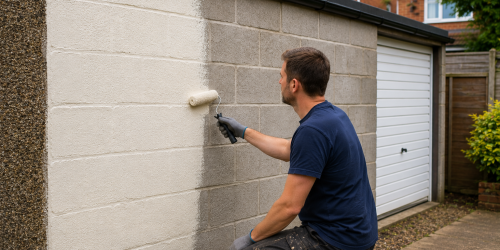
If your neighbour’s garage wall faces into your garden, it can be tempting to tidy it up with a coat of paint. It may feel like the wall is part of your outdoor space because you see it every day, but that does not usually mean you have the right to alter it.
In most cases, you cannot paint your neighbour’s garage wall without their permission, even if the wall is on the side facing your garden. The wall still belongs to them, so painting it without consent could lead to a dispute or a request to put it back as it was.
This guide explains what to consider before painting a neighbour’s garage wall, how to ask for permission, and what alternatives are available if they say no.
Who Owns the Garage Wall?
The first thing to establish is who owns the wall. If it forms part of your neighbour’s garage, it will usually belong to your neighbour, even if it sits directly on or near the boundary and faces your garden.
Property boundaries can be complicated, especially in older homes or where previous owners have changed fences, walls or outbuildings. Your title plan may give a general idea of the boundary, but it may not show the exact line in detail.
If you are unsure, check your property documents before doing anything. If the wall is not yours, you should not paint it, drill into it, attach anything to it or alter it without your neighbour’s agreement.
Can I Paint My Neighbour’s Garage Wall on My Side?
Usually, no. If the garage wall belongs to your neighbour, you need their permission before painting it. The fact that the wall faces your property does not normally give you the right to change its appearance.
Painting the wall without consent could be treated as damage or an unauthorised alteration. Even if you think the paint improves the wall, your neighbour may not agree. They may object to the colour, finish, maintenance needs or the fact that the work was done without asking.
If there is a dispute, you could be asked to restore the wall to its original condition. That may cost more than getting permission in the first place.
Ask Permission Before You Start
The simplest approach is to speak to your neighbour before making any plans. Explain why you want to paint the wall and what finish you have in mind. Keep the conversation practical and clear.
It can help to show them the colour, type of paint and the area you want to cover. They may be more open to the idea if they can see that the work will be neat, suitable for the surface and in keeping with both properties.
If they agree, get it in writing. This does not need to be complicated. An email or message confirming what has been agreed is often enough to avoid confusion later.
What Should the Agreement Cover?
If your neighbour is happy for you to paint the wall, make sure you both understand what is being agreed. A quick chat is useful, but written confirmation is better.
The agreement should cover the area being painted, the colour, the finish, who is doing the work and who will maintain it in future. It is also sensible to agree what happens if the paint fails, flakes or causes any issue with the wall surface.
Never assume that permission to paint also means permission to fix trellis panels, lights, shelves, planters or other items to the wall. Attaching anything to the wall should be agreed separately.
What If Your Neighbour Says No?
If your neighbour refuses, you should respect their decision. It may be frustrating, especially if the wall looks tired from your side, but it is still their property.
Rather than letting the issue become a dispute, look at ways to improve your garden without touching the wall. In many cases, a separate screen, fence or planting scheme can give you a better result while keeping the boundary clear.
This is often the safer long-term option because it gives you control over the look of your own garden without relying on someone else’s wall.
Use Garden Screening Instead
Garden screening can be a good alternative if you want to hide a garage wall without painting it. A freestanding screen can sit within your own boundary and create a neater backdrop for your garden.
Trellis panels are a practical choice where you want a lighter structure. They can be used with climbing plants to soften the view of the wall and add greenery without making the space feel too enclosed.
If privacy is the main concern, privacy screening may be more suitable. This can help block an unattractive view and make the garden feel more settled, especially around seating areas, patios or narrow side returns.
Install a Fence on Your Side of the Boundary
Another option is to install fence panels on your side of the boundary, provided there is enough space and the work complies with any relevant rules. This creates a new surface that belongs to you, rather than altering your neighbour’s garage wall.
A run of garden fencing can make the space look cleaner and more consistent. It can also tie in with the rest of your boundary, especially if you already have matching fence panels elsewhere in the garden.
You will need suitable fence posts to support the panels. Depending on the site, these may be timber or concrete. Make sure the posts and panels are installed within your boundary and do not damage the neighbouring wall or foundations.
Consider Trellis and Climbing Plants
If you want a softer finish, trellis panels and climbing plants can work well. The trellis provides climbing plant support, while the plants help break up the look of a plain wall over time.
Popular choices include evergreen climbers for year-round cover or flowering climbers for seasonal colour. Bear in mind that plants need maintenance, and some can become heavy or invasive if left unchecked.
Do not attach trellis directly to your neighbour’s garage wall unless they have clearly agreed to it. A better option is often to install posts on your side and fix the trellis to those instead.
Be Careful with Moisture and Ventilation
Whatever option you choose, avoid trapping moisture against the garage wall. Leaving a small gap between your screening or fencing and the wall can help air circulate and reduce the risk of damp problems.
This is especially important with timber structures and dense planting. Climbing plants, fence panels and screening should be maintained so they do not press heavily against the wall or block ventilation.
A tidy, well-planned installation will usually look better and cause fewer issues than trying to cover the wall too closely.
Keep Neighbourly Relations in Mind
Boundary issues can quickly become tense if people feel ignored or pressured. Even if you are only trying to improve your garden, your neighbour may see changes to their wall differently.
A polite conversation at the start is usually the best way forward. Explain what you would like to do, listen to their concerns and avoid starting work until you have a clear answer.
If permission is not given, move on to an option that sits entirely within your own garden. That keeps the situation simple and avoids unnecessary conflict.
Final Thoughts
You should not paint your neighbour’s garage wall without permission, even if it faces your side of the boundary. The wall still belongs to them, and any changes should be agreed before work starts.
If your neighbour is happy for you to paint it, get the agreement in writing and be clear about the colour, finish and future maintenance. If they say no, there are still plenty of practical alternatives.
Garden screening, trellis panels, fence panels and climbing plants can all help improve the view from your garden without altering someone else’s property. The key is to keep the work on your side, use suitable materials and maintain a respectful conversation with your neighbour.