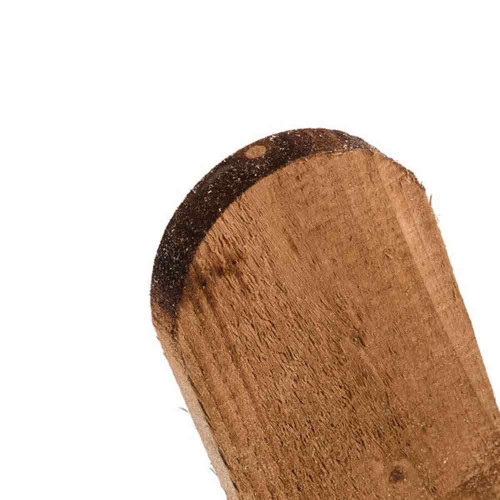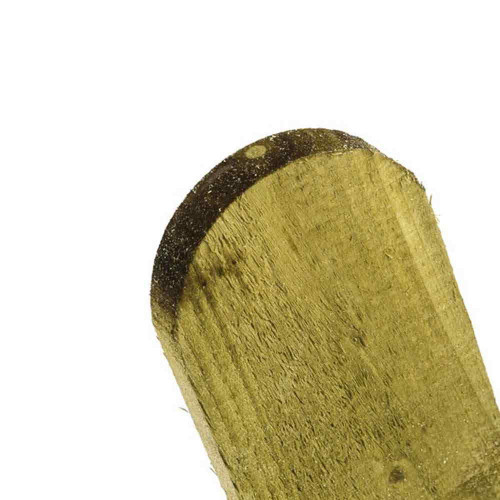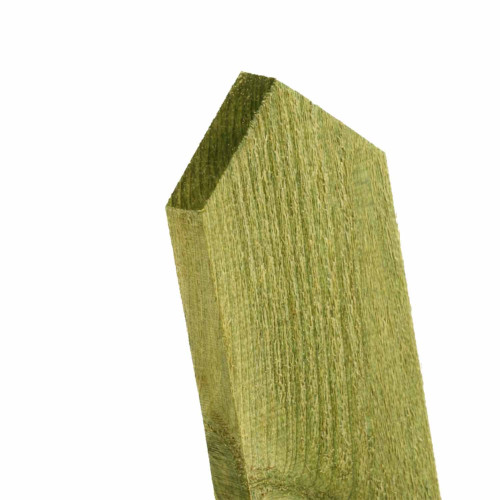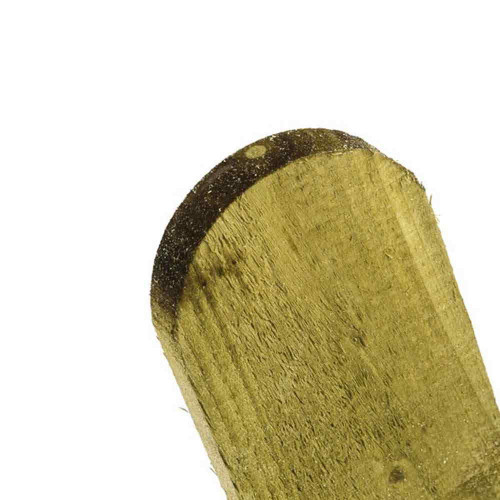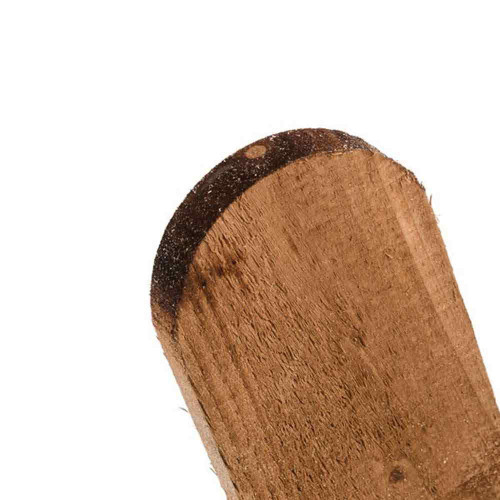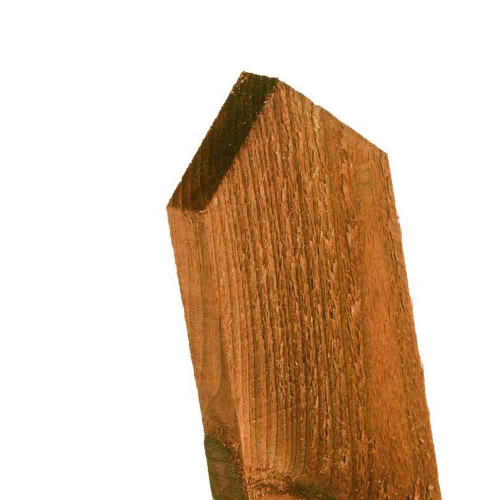




Quick answer: Picket Pales are individual vertical timber boards used to build custom picket fencing. East Coast Fencing's current range uses a nominal 75 x 19mm section, with 0.9m and 1.2m lengths, round-top and point-top profiles, and pressure-treated green/natural or brown finishes. Choose pale length according to the finished fence height, then decide the gap between pales based on how open you want the boundary to feel. Consistent spacing and correctly positioned horizontal rails are the key to a neat result.
Buying individual Picket Pales gives you considerably more control over a fence than buying a complete pre-assembled panel.
You can decide exactly how long each fence bay will be, how much space to leave between the pales, where the rails sit and whether you prefer a round or pointed top.
That makes individual pales particularly useful for custom front garden fencing, paths, vegetable gardens, irregular fence runs and repairs where a standard panel does not fit neatly.
The additional flexibility does mean more measuring and installation work.
Small differences in spacing, height or alignment become surprisingly noticeable when repeated across dozens of pales, so it is worth planning the complete run before fixing the first board.
What Are Picket Pales?
Picket Pales are the individual vertical timber boards that form a picket fence.
They are normally fixed with spaces between them to horizontal rails supported by fence posts.
A typical site-built picket fence therefore consists of three main timber components:
- Fence posts
- Horizontal rails
- Individual Picket Pales
The posts provide the main support, the rails connect the posts and the pales create the visible face of the fence.
What Picket Pales Does East Coast Fencing Supply?
The current range includes pressure-treated Picket Pales with a nominal section of approximately 75 x 19mm.
Available pale lengths include:
- 0.9m
- 1.2m
Top profiles include:
- Round top
- Point top
The range includes green/natural and brown pressure-treated finishes.
These dimensions make the pales suitable for constructing low, open timber boundaries rather than tall solid privacy fencing.
What Is The Difference Between Picket Pales And Picket Fence Panels?
A Picket Pale is one individual vertical board.
A Picket Fence Panel is a complete prefabricated section containing multiple pales already fixed to horizontal rails.
| Feature | Individual Picket Pales | Picket Fence Panels |
|---|---|---|
| Finished width | Custom | Predetermined |
| Pale spacing | Chosen during installation | Already fixed |
| Installation work | More individual fixing | Faster |
| Irregular bays | Excellent flexibility | May require adjustment |
| Individual repairs | Straightforward | Depends on panel construction |
When Should You Choose Individual Picket Pales?
Individual pales are particularly useful when:
- The fence run is an unusual length
- You want to choose your own pale spacing
- The ground slopes
- You are repairing an existing picket fence
- You need a short custom-width bay
- You want the fence to fit precisely around a gate
- You prefer building the fence directly between posts
If every bay is a convenient standard width and installation speed is the priority, complete panels may be easier.
Are Picket Pales Good For Front Gardens?
Yes.
Low picket fencing is particularly well suited to front gardens because it defines the boundary without creating the visual weight of a solid fence.
The gaps between the pales preserve views of:
- The house
- Front garden planting
- Paths
- Driveways
It also creates the familiar traditional appearance associated with picket fencing.
Before altering a front boundary, check the rules and restrictions that apply to the particular property and location.
Are Picket Pales Suitable For Rear Gardens?
They can be, although they are rarely selected where strong privacy is required.
Useful rear-garden applications include:
- Separating a vegetable garden
- Dividing a lawn from planting
- Defining a path
- Creating an internal garden boundary
- Surrounding decorative planting
The open design allows light and views through the fence.
Can Picket Pales Create Privacy?
Only limited privacy.
Picket fencing deliberately contains gaps.
Reducing the spacing will increase screening, but it will still look and behave differently from a solid Closeboard or Waney Lap fence.
Choose Picket Pales where the priority is:
- Boundary definition
- Appearance
- Light
- Airflow
rather than complete visual privacy.
Should You Choose 0.9m Or 1.2m Picket Pales?
The longer pale gives you greater potential fence height, but the correct choice depends on the design.
A 0.9m pale is useful for lower decorative fencing.
A 1.2m pale provides additional height where a more substantial boundary is wanted.
| Pale Length | Useful For |
|---|---|
| 0.9m | Low decorative boundaries and garden divisions |
| 1.2m | More substantial open boundaries and taller divisions |
The pale length does not necessarily equal the exact finished fence height because the bottom clearance, rail arrangement and overall design also matter.
Should Picket Pales Touch The Ground?
Ordinary above-ground Picket Pales should generally be kept clear of soil.
Allowing the bottom ends to sit directly in wet ground can keep the timber damp for long periods.
Clearance also makes it easier to:
- Cut grass
- Remove leaves
- Inspect the lower ends
- Prevent soil building up against the timber
Plan the finished fence height with that clearance included.
How High Should Picket Pales Sit Above The Ground?
There is no universal gap suitable for every installation.
The clearance should be enough to avoid routine contact with soil and vegetation without creating an unnecessarily large opening underneath.
Consider:
- Ground level
- Grass growth
- Pets
- Changes in level
- Ease of maintenance
The important point is to keep the lower line consistent across each fence section.
What Is The Difference Between Round-Top And Point-Top Picket Pales?
The main difference is appearance.
Round-top pales have a softer curved profile.
Point-top pales create a sharper and more defined upper edge.
| Feature | Round Top | Point Top |
|---|---|---|
| Appearance | Softer | More defined |
| Style | Traditional and informal | Traditional with stronger outline |
| Main choice factor | Personal preference | Personal preference |
Neither profile is inherently the better fence.
The choice is primarily visual.
When Should You Choose Round-Top Picket Pales?
Round tops work particularly well where you want a softer boundary.
They can suit:
- Cottage-style gardens
- Lawns
- Curved paths
- Planting areas
- Low front boundaries
The curved profile avoids the sharper outline created by pointed pales.
When Should You Choose Point-Top Picket Pales?
Point tops create a more pronounced repeating pattern across the fence.
They can work well around:
- Front entrances
- Straight paths
- Traditional properties
- Formal planting
The point is primarily decorative rather than a substitute for specialist security fencing.
Are Point-Top Picket Pales More Secure?
Do not choose them on the assumption that the pointed profile will turn a low picket fence into a high-security boundary.
Fence security depends much more on:
- Height
- Construction
- Post strength
- Gate security
- Overall accessibility
For ordinary domestic picket fencing, the point-top profile is best treated as an appearance choice.
Should A Picket Gate Use The Same Pale Top?
Usually, yes.
Using the same top profile on the fence and matching gate creates a more consistent boundary.
A round-top fence with a point-top gate can work deliberately, but it will look like a contrast rather than one continuous design.
How Far Apart Should Picket Pales Be?
Spacing depends on how open you want the fence to appear.
Smaller gaps create:
- More timber across the fence
- Greater visual screening
- A denser appearance
Larger gaps create:
- More openness
- Better visibility
- More light through the fence
- Fewer pales over a given distance
There is no single spacing that suits every picket fence.
What Is The Best Picket Pale Spacing?
The best spacing is the one that balances the intended appearance with the practical purpose of the boundary.
Before choosing the gap, ask:
- How open should the fence look?
- Does it need to discourage a pet from passing through?
- Does the fence surround planting?
- Will young children use the area?
- Does it need to match an existing picket fence?
Do not select spacing purely because it makes the quantity calculation convenient.
How Does Pale Spacing Change The Appearance?
Spacing can transform the same timber into a very different fence.
Closely spaced pales create a stronger continuous rhythm and make the boundary visually more substantial.
Wide spacing gives a lighter appearance and places greater emphasis on the garden behind the fence.
For prominent front gardens, it can be useful to create a short trial section before committing to the entire boundary.
How Do You Keep Picket Pale Spacing Consistent?
Use a spacer block.
Cut a small piece of timber to the exact gap required and place it between each pale during installation.
The process is simple:
- Position the first pale carefully.
- Check it is vertical.
- Fix it securely.
- Place the spacer beside it.
- Position the next pale against the spacer.
- Check alignment.
- Fix the pale.
- Repeat across the run.
This is generally more reliable than measuring every individual gap with a tape measure.
Why Should You Calculate The Layout Before Fixing Pales?
If you begin at one post with a chosen gap and simply continue, you may reach the opposite post with an awkward final space.
That last gap might be:
- Much smaller than all the others
- Much larger than all the others
- Too narrow for another pale
A small adjustment spread across all the gaps normally looks better than one obviously different gap at the end.
How Do You Calculate How Many Picket Pales You Need?
Start with three measurements:
- Total fence length
- Pale width
- Desired gap
The current East Coast Fencing Picket Pales are approximately 75mm wide.
A useful starting calculation is:
Fence length ÷ (pale width + chosen gap)
This gives an approximate number of repeated pale-and-gap units.
You should then adjust the calculation to account for:
- Whether a gap is required at both ends
- Posts
- Gate openings
- Corners
- Final spacing adjustments
Should You Calculate Each Fence Bay Separately?
Yes.
Even if the complete boundary is long, spacing should normally be planned within each bay between posts.
This prevents a small dimensional difference between post spaces from accumulating along the entire fence.
It also allows each bay to finish neatly.
Should The End Gaps Match The Pale Gaps?
They can.
A symmetrical layout with similar spaces at each side of a bay often looks balanced.
Alternatively, the outside pales can be positioned closer to the posts if that suits the construction.
Whatever arrangement you use, apply it consistently.
Should You Start Picket Pales From The Centre?
Starting from the centre can be useful on a highly visible feature bay where symmetry matters.
For ordinary fence runs, starting from one end is often easier after the complete spacing has been calculated.
The important part is the calculation, not the direction in which installation proceeds.
How Do You Keep Picket Pales Vertical?
Check the first pale carefully with a spirit level.
Then continue checking periodically rather than assuming the spacer automatically keeps everything vertical.
A spacer controls the horizontal gap, but it does not prevent the whole pattern gradually leaning.
A small error repeated across many pales can become very visible by the opposite end of the bay.
Should The Tops Of All Picket Pales Be Level?
On level ground, a consistent top line usually produces the neatest appearance.
You can establish it using:
- A string line
- Repeated measurements from the rails
- Another suitable level reference
Do not measure every pale independently from uneven soil if you want the top edge to remain level.
How Do You Install Picket Pales On A Slope?
Individual pales provide useful flexibility on slopes.
You can choose between a stepped top line and a fence that follows the gradient more closely.
For a gentle continuous slope, individual pales can be adjusted vertically so their lower and upper lines respond more naturally to the changing ground.
This is one area where individual components can be more flexible than rigid prefabricated panels.
Should Picket Fencing Be Stepped On A Slope?
It can be.
Stepping may suit a fence where each rail section is kept level between posts.
Another option is site-building the fence to follow the gradient.
Consider:
- How steep the slope is
- The preferred top line
- Ground clearance
- Gate position
Plan the complete slope before fixing the first pale.
Can Picket Pales Be Cut Shorter?
Yes.
Individual timber pales can be cut where a lower height or custom arrangement is required.
That can be useful around:
- Sloping ground
- Short decorative sections
- Changes beside walls
- Custom gate areas
Measure carefully before cutting a complete batch.
What Should You Do With Cut Ends?
Cutting pressure-treated timber exposes timber that was previously inside the section.
Where appropriate, freshly cut surfaces should receive a suitable end-grain treatment in accordance with the relevant treatment guidance.
Minimise unnecessary cutting where standard lengths already suit the project.
Should You Cut The Point Or Round Top Off A Picket Pale?
If you need to shorten a pale, cutting from the bottom normally preserves the decorative factory-shaped top.
However, that cut lower end should remain clear of unnecessary ground contact and should receive appropriate treatment where required.
Cutting from the top removes the feature that distinguishes round-top and point-top pales.
What Rails Should Picket Pales Be Fixed To?
Picket Pales need suitable horizontal timber rails between posts.
The rails should be substantial enough to:
- Carry the pales
- Keep them aligned
- Transfer wind load to the posts
- Provide adequate fixing depth
Square Rails are commonly considered for site-built picket fencing.
How Many Rails Should Picket Pales Have?
The appropriate number depends on:
- Pale length
- Fence height
- Rail section
- Post spacing
- Exposure
A low fence naturally places different demands on its framework from a taller boundary.
The rails should support the pales firmly without being positioned unnecessarily close to the decorative tops or lower ends.
Where Should The Rails Sit On Picket Pales?
Position the rails so the fixing points are distributed sensibly along the pale.
Avoid placing both rails too close together in the middle because this leaves long unsupported ends.
Similarly, avoid fixing extremely close to the pale ends where splitting is more likely.
Keep rail positions consistent across each fence run.
Can Picket Pales Be Fixed Directly To Fence Posts?
The normal arrangement uses rails between posts, with the pales attached to those rails.
Fixing a row of individual pales directly between widely spaced posts without horizontal support would leave them with no suitable framework.
What Fence Posts Should You Use For Picket Pales?
Timber posts are a natural choice for site-built picket fencing because the rails can be fixed directly to them.
East Coast Fencing's wooden fence post range includes common sections such as:
- 75 x 75mm
- 100 x 100mm
with different lengths available.
Select the post according to the complete fence height, exposure and site conditions rather than simply matching the pale thickness.
Can Picket Pales Be Used With Concrete Posts?
Individual site-built picket fencing is generally more straightforward with timber posts because the horizontal rails require convenient fixing points.
A concrete-post arrangement may be possible with an appropriate system, but it requires more planning.
Do not casually drill reinforced concrete posts simply to attach timber rails.
Should Picket Pales Have A Gravel Board?
A gravel board is not automatically required for every picket fence.
Picket fencing is often deliberately open from the ground upwards.
A solid gravel board changes that appearance by creating a continuous lower section.
It may still be useful where:
- Ground levels need managing
- A solid lower edge is desirable
- Soil would otherwise contact the pales
Consider the visual effect as well as the practical benefit.
Can Wooden Gravel Boards Be Used With Picket Fencing?
Yes, where the design calls for a solid timber lower edge.
This can create an all-timber appearance.
However, traditional open picket fencing often looks lighter without a prominent continuous board underneath.
Can Concrete Gravel Boards Be Used With Picket Fencing?
Potentially, but they create a much heavier visual base than the open pales above.
They are more commonly associated with conventional panel systems.
Choose one only where it suits the complete fencing design rather than adding it automatically.
How Should Picket Pales Be Fixed?
Use suitable exterior fixings that secure each pale firmly to the horizontal rails.
The fixing needs to:
- Resist outdoor corrosion
- Penetrate adequately into the rail
- Avoid unnecessary splitting
- Hold the pale flat against the framework
Apply the fixing pattern consistently across the fence.
Should Picket Pales Be Screwed Or Nailed?
Both suitable exterior screws and fencing nails can be used in appropriate timber construction.
Screws offer the advantage of easier removal if an individual pale later needs replacing.
Nails can provide efficient installation across a large number of repeated boards.
The correct choice depends on:
- The rail section
- The pale thickness
- The fixing specification
- Your preferred installation method
Should You Pre-Drill Picket Pales?
Pre-drilling can help reduce the risk of splitting, particularly where:
- Screws are relatively substantial
- A fixing sits close to an edge
- The timber is dry
Take particular care with the current 19mm nominal pale thickness because unnecessarily large fixings can damage a relatively slim board.
Should You Use One Or Two Fixings Per Rail?
The fitting arrangement should hold the pale securely without creating unnecessary splitting.
The correct number and size depend on the chosen fixing and rail construction.
Whatever method you use, apply it consistently and make sure the pale cannot rotate around a single inadequate fixing point.
Should Fixings Be Driven Flush?
Fixings should secure the pale without excessively crushing the timber.
Do not bury screw heads deeply into the face simply because the driver is capable of doing so.
Over-driving can damage fibres around the fixing.
How Do You Build A Picket Fence From Individual Pales?
A typical sequence is:
- Measure and mark the fence line.
- Plan the post positions.
- Install suitable fence posts.
- Fit the horizontal rails.
- Calculate the pale spacing for each bay.
- Establish the top and bottom lines.
- Position and fix the first pale.
- Use a spacer to position the remaining pales.
- Check vertical alignment regularly.
- Complete the fence and inspect every fixing.
Do not rush the first few pales. They establish the pattern for everything that follows.
Should You Install All The Rails Before The Pales?
Normally, yes.
Creating the structural framework first gives you a consistent base to work from.
It also allows you to check:
- Post alignment
- Rail level
- Bay dimensions
- Ground clearance
before committing to the repeated pale layout.
Should You Fix The First And Last Pale Before The Others?
That can be useful after the layout has been calculated.
Positioning the outer pales first gives you clear visual boundaries for the bay.
You can then distribute the remaining pales evenly between them.
Do not use this method without first checking that the planned number of pales and gaps actually fits.
Can You Make A Curved Picket Fence?
A series of short straight rail sections can create a boundary that changes direction gradually between posts.
Individual pales offer more flexibility than large rigid panels for this type of design.
However, conventional straight timber rails should not simply be forced into a tight curve.
Use appropriate post positions and manageable straight sections.
Can Picket Pales Be Used Around A Curved Path?
Yes.
This is a useful application for site-built fencing.
Posts can be positioned to follow the route, with shorter rail sections creating the changing direction.
The repeated vertical pales can then produce a visually smooth boundary even though each individual rail remains straight.
Are Picket Pales Good Around A Vegetable Garden?
Yes.
They can clearly divide a productive area without blocking as much light as a solid panel.
The fence can help separate:
- Paths
- Lawns
- Raised beds
- Growing areas
Do not assume ordinary picket fencing will exclude every animal. The height and pale gaps determine what can pass over or through it.
Can Picket Pales Keep Dogs In A Garden?
Potentially, depending on the dog.
Consider:
- Fence height
- Pale spacing
- Ground clearance
- The dog's size
- Its jumping ability
- Whether it digs
A low decorative picket fence should not automatically be treated as secure dog containment.
How Should Picket Pale Spacing Change For Dogs?
The gap needs to be too narrow for the particular dog to comfortably pass its head or body through.
There is no universal dog-safe spacing because breeds and individual animals vary enormously.
Also inspect the gap beneath the fence.
Are Picket Pales Suitable Around Children?
They can be used to create a visible garden division while retaining good visibility through the boundary.
However, ordinary domestic picket fencing should not automatically be treated as a specialist safety barrier.
Where child safety is the purpose, consider:
- Opening sizes
- Fence height
- Gate security
- Top profile
- The particular hazard being separated
Are Round-Top Pales Better Around Play Areas?
The curved profile may be preferred where a softer top shape is desirable.
However, the choice of top shape alone does not determine whether the complete fence is suitable for a safety-critical application.
Evaluate the whole boundary.
Can Picket Pales Keep Rabbits Out?
Ordinary picket fencing contains open gaps and does not automatically provide rabbit-proof containment.
Rabbits may pass through suitable openings or dig beneath the boundary.
If animal exclusion is genuinely required, additional appropriate measures may be necessary.
Are Picket Pales Good For Windy Gardens?
The open gaps allow substantially more air through than solid fencing.
This can reduce the broad solid surface presented to the wind.
The fence still needs:
- Suitable posts
- Secure rails
- Appropriate fixings
Open construction does not remove the need for a sound framework.
Are Picket Pales Better Than Solid Fence Boards In Wind?
They provide much more open area for airflow.
That can be advantageous on an exposed low boundary.
The trade-off is much less privacy.
Choose according to the purpose of the fence rather than wind performance alone.
Do Picket Pales Block Light?
They block some light, but the gaps allow considerably more through than a continuous solid boundary.
This makes picket fencing useful around:
- Planting beds
- Vegetable plots
- Front gardens
- Small garden divisions
Can Plants Grow Against Picket Pales?
Yes.
Low planting can look particularly effective behind the repeated vertical boards.
Climbing plants may also use the fence to some extent, although conventional picket fencing is not as purpose-designed for climbers as trellis.
Keep vigorous plants controlled so the fence remains accessible for maintenance.
Can Heavy Climbers Damage Picket Fencing?
Potentially.
Large mature climbers can add:
- Weight
- Wind resistance
- Moisture around the timber
If substantial climbing plants are planned, an independent support structure may be preferable.
Can Picket Pales Be Used To Repair An Existing Fence?
Yes.
This is one of the clearest advantages of individual pales.
If a single board has:
- Split
- Broken
- Been damaged by impact
you may be able to replace that board without replacing the entire fence section.
How Do You Match A Replacement Picket Pale?
Measure the existing board carefully.
Check:
- Length
- Width
- Thickness
- Top profile
- Treatment colour
An older fence may not use exactly the same dimensions as a current product.
Will A New Replacement Pale Match An Old Fence?
Not necessarily at first.
New treated timber often looks different from timber that has been exposed outdoors for several years.
The difference may include:
- Colour
- Surface texture
- Weathering
The new pale will also change appearance as it weathers.
Can Picket Pales Be Painted?
Pressure-treated timber can generally receive a suitable exterior decorative finish once sufficiently dry and properly prepared.
Follow the coating manufacturer's instructions.
Painting a picket fence can take time because each pale has:
- A front
- A back
- Two narrow edges
- A shaped top
Is It Easier To Paint Picket Pales Before Installation?
It can make edges and hidden surfaces easier to reach.
However, you may still need to deal with:
- Cut ends
- Fixing marks
- Handling damage
after installation.
Make sure pressure-treated timber is ready to accept the chosen coating before applying it.
Can Picket Pales Be Stained?
A suitable exterior decorative timber finish can be used where compatible with the treated timber.
This can allow the fence to coordinate with:
- Garden gates
- Sheds
- Other fencing
- Timber garden features
What Is The Difference Between Green And Brown Picket Pales?
The main immediate difference is appearance.
Green/natural treatment gives the familiar initial appearance of pressure-treated garden timber.
Brown treatment provides a darker starting colour.
Do not judge the treatment level purely from the visible colour.
Will Green Picket Pales Stay Green?
No outdoor timber should be expected to retain its freshly treated colour indefinitely.
Sunlight and weather gradually alter the appearance.
The same applies to brown treated timber.
Do Picket Pales Need Maintenance?
Pressure treatment reduces the maintenance burden associated with protecting the timber itself, but the completed fence should still be inspected.
Check periodically for:
- Loose pales
- Loose rails
- Moving posts
- Damaged fixings
- Heavy vegetation
- Persistent contact with soil
Can Picket Pales Develop Green Algae?
Yes.
Like other external timber, they can develop surface algae in damp and shaded conditions.
This is particularly likely around:
- Dense planting
- Shaded boundaries
- Areas with limited airflow
Green surface growth does not automatically mean the timber has structurally failed.
How Should Picket Pales Be Cleaned?
Start gently.
- Remove vegetation touching the fence.
- Brush off loose dirt.
- Use a suitable mild timber cleaner if necessary.
- Address persistent organic growth with an appropriate timber-safe treatment where required.
- Allow the timber to dry.
Can You Pressure Wash Picket Pales?
Use caution.
Excessive pressure can:
- Raise timber fibres
- Damage edges
- Strip decorative coatings
The relatively narrow 19mm nominal section means there is little reason to use aggressive cleaning.
Can Picket Pales Twist Or Split?
Timber is a natural material and some movement is possible as moisture conditions change.
You may see:
- Small surface checks
- Slight movement
- Colour variation
- Natural knots
Correct storage and adequate fixing help keep the completed fence aligned.
How Should Picket Pales Be Stored Before Installation?
Store them:
- Supported
- Off wet ground
- Stacked neatly
- In a way that does not force them into a bend
A pile of slim timber left leaning against a wall for an extended period is more likely to become awkward to align neatly.
Should You Sort Picket Pales Before Installation?
It can be worthwhile.
Lay out or inspect the timber before fixing it and distribute normal variations across the complete run.
If one pale is less straight than the others, it may be easier to use it in a less prominent position rather than placing it beside a gate or central entrance.
Can You Mix Round-Top And Point-Top Picket Pales?
You can, but a random mixture usually looks accidental.
If both profiles are being used, create an intentional pattern or use the change to distinguish separate garden areas.
For a conventional continuous picket boundary, one consistent profile usually looks cleaner.
Can You Mix Green And Brown Picket Pales?
Again, it is physically possible but will create a deliberately mixed appearance.
For most fences, using one treatment colour across the run creates a more consistent starting finish.
Can Picket Pales Be Used For A Garden Gate?
They can form the visible vertical elements of a suitably constructed Picket Gate.
The gate itself needs its own structural frame and bracing because it hangs from hinges rather than being fixed continuously between posts.
Do not simply attach loose pales together and expect them to form a stable gate.
Should Gate Pales Match Fence Spacing?
Usually, yes.
Repeating the same:
- Pale width
- Gap
- Top profile
- Height
helps the gate blend into the surrounding fence.
Should Picket Pales Match The Gate Height?
A level top line can create a particularly neat entrance where the fence and gate sit on similar ground.
On slopes, the gate may need a slightly different arrangement because it must remain functional as it opens.
How Do You Plan A Gate Opening In A Site-Built Picket Fence?
Plan the gate before installing the surrounding rails and pales.
Determine:
- Gate width
- Gate post positions
- Opening direction
- Ground clearance
- Hinge position
- Latch position
Then calculate the remaining picket spacing in the fence bays either side.
Can Picket Pales Be Used Around Driveways?
They can provide an open visual boundary alongside a driveway.
The open design can be useful where retaining sightlines matters.
Position posts and pales where they will not create an obstruction or be vulnerable to routine vehicle contact.
Can Picket Pales Be Used Around Paths?
Yes.
This is one of their strongest applications.
Low picket fencing can:
- Guide movement
- Protect planting
- Define a route
- Create a decorative edge
without visually separating the path from the garden.
Can Picket Pales Be Used Around Flower Beds?
Yes.
A short run can create a decorative boundary around planting while leaving flowers visible.
This can work particularly well with:
- Cottage planting
- Front borders
- Raised planting areas
- Vegetable plots
Are Picket Pales Suitable For Small Gardens?
Yes.
The open structure prevents the fence from feeling as visually heavy as a solid panel.
This is useful when you need to divide a compact space without making each section feel enclosed.
Are Picket Pales Suitable For Cottage Gardens?
They are particularly associated with traditional and cottage-style landscaping.
Round-top and point-top options allow you to change the character while retaining the familiar repeated pale pattern.
Planting can grow close to the boundary without disappearing completely behind a solid panel.
Can Picket Fencing Work In A Contemporary Garden?
Yes.
The underlying form is simple: repeated vertical timber boards with consistent gaps.
A clean layout, restrained treatment colour and simple planting can make picket fencing work in a more contemporary setting.
The result depends as much on spacing and surrounding landscaping as the traditional name suggests.
Individual Picket Pales vs Complete Panels: Which Costs Less?
There is no useful universal answer based only on the purchase price of the timber.
With individual pales, account for the complete system:
- Pales
- Rails
- Posts
- Fixings
- Installation time
A finished panel contains much of the assembly work already.
Individual pales can provide better value where their custom sizing prevents waste or solves an awkward boundary.
When Are Individual Pales Better Value?
They can make particular sense when:
- Standard panels would need extensive alteration
- You are repairing only a few damaged components
- Fence bays have different widths
- You want custom spacing
- The ground requires site-built flexibility
When Are Complete Picket Panels Easier?
Complete panels are often simpler where:
- Standard bays fit the garden
- You want consistent factory-set spacing
- Installation speed matters
- You do not need a custom pattern
How Long Do Picket Pales Last?
There is no single lifespan that applies to every picket fence.
Performance depends on:
- Treatment
- Installation
- Moisture exposure
- Ground clearance
- Rails and posts
- Fixings
- Maintenance
Keeping the lower ends away from persistent soil contact and maintaining a sound supporting framework are important practical factors.
Can One Damaged Picket Pale Be Replaced?
Yes.
If the fence is built from individually fixed components, local repairs are relatively straightforward.
Remove the damaged pale carefully, inspect the rail behind it and fit a compatible replacement using suitable exterior fixings.
What If Several Picket Pales Are Loose?
Do not assume all of the pales have failed independently.
Check the rail.
If several adjacent boards become loose at the same time, the underlying rail or its fixings may be deteriorating.
What If The Whole Picket Fence Is Leaning?
That is more likely to indicate a post or foundation problem than a pale problem.
Inspect the vertical supports before replacing individual boards.
New Picket Pales cannot correct a moving fence post.
Common Picket Pale Mistakes
- Starting installation before calculating the spacing
- Ending with one much larger gap beside a post
- Measuring every gap individually instead of using a spacer
- Allowing the pale pattern to gradually lean
- Measuring pale height from uneven ground rather than a consistent reference
- Allowing the lower ends to sit permanently in wet soil
- Using rails that are too light for the fence
- Using unsuitable exterior fixings
- Driving fixings too close to edges
- Over-driving screws into the timber
- Cutting the decorative top when shortening could have been done from the bottom
- Failing to treat freshly cut pressure-treated timber appropriately
- Assuming low picket fencing provides complete privacy
- Assuming a decorative picket fence is automatically secure pet containment
- Building the fence before planning the gate opening
Picket Pales Buying Checklist
- Measure the complete fence run.
- Divide the run into individual post bays.
- Choose 0.9m or 1.2m pale length.
- Choose round-top or point-top profiles.
- Choose the preferred treated finish.
- Decide the desired pale gap.
- Calculate the pale quantity for each bay.
- Allow sensible additional material for cuts and repairs.
- Select suitable horizontal rails.
- Select suitable fence posts.
- Choose exterior fixings appropriate to the pale and rail thickness.
- Plan a consistent top and bottom line.
- Plan gates before installing the surrounding pales.
- Consider pets and the required gap size.
- Keep the finished pales clear of persistent ground contact.
FAQs
What Are Picket Pales?
Picket Pales are individual vertical timber boards used to construct picket fencing.
What Size Are East Coast Fencing Picket Pales?
The current range uses a nominal section of approximately 75 x 19mm.
What Lengths Are Picket Pales Available In?
The current range includes 0.9m and 1.2m lengths.
Are Picket Pales Pressure Treated?
The current East Coast Fencing range includes pressure-treated Picket Pales.
What Colours Are Picket Pales Available In?
The current range includes green/natural and brown pressure-treated finishes.
Are Round-Top And Point-Top Picket Pales Available?
Yes. The current range includes both profiles.
Which Is Better, Round-Top Or Point-Top Picket Pales?
Neither is universally better. Round tops provide a softer profile while point tops create a more defined decorative outline.
Are Point-Top Pales More Secure?
Do not treat the decorative point as a substitute for a properly designed security boundary.
What Is The Difference Between A Picket Pale And A Picket Panel?
A pale is one vertical board. A Picket Fence Panel contains multiple pales already assembled onto rails.
Are Individual Picket Pales Better Than Panels?
They offer greater control over fence width, spacing and irregular ground. Complete panels usually require less assembly work.
How Far Apart Should Picket Pales Be?
There is no universal gap. Smaller gaps create stronger screening, while larger gaps produce a lighter and more open boundary.
How Do You Keep Picket Pale Gaps Even?
Use a spacer block cut to the desired gap and position it between each pale during installation.
How Do You Calculate Picket Pale Quantity?
Use the total fence length, the approximately 75mm pale width and your chosen gap to estimate the repeated pale-and-gap units, then adjust each bay for end spacing and posts.
Should Picket Pales Touch The Ground?
Ordinary above-ground Picket Pales should generally be kept clear of soil and persistent ground moisture.
Can Picket Pales Be Cut?
Yes. Individual pales can be shortened for custom heights and sloping ground.
Which End Should You Cut?
Where practical, shorten from the bottom so the factory-shaped round or point top remains intact.
Should Fresh Cut Ends Be Treated?
Freshly exposed pressure-treated timber should receive suitable end-grain treatment where required by the relevant treatment guidance.
Can Picket Pales Be Screwed To Rails?
Yes. Use suitable exterior screws with adequate penetration into the supporting rail.
Can Picket Pales Be Nailed?
Suitable exterior fencing nails can also be used in an appropriate construction.
Should Picket Pales Be Pre-Drilled?
Pre-drilling can help reduce splitting when using screws, particularly close to edges or with relatively substantial fixings.
What Rails Should Be Used For Picket Pales?
Use suitable horizontal fencing rails capable of supporting the pales across the span between posts.
Can Square Rails Be Used With Picket Pales?
Suitable Square Rails can form the horizontal framework for site-built picket fencing.
What Posts Should Be Used For Picket Pales?
Timber posts are particularly convenient because horizontal rails can be fixed directly to them.
Can Picket Pales Be Installed On A Slope?
Yes. Individual pales provide useful flexibility for stepped or site-built sloping fencing.
Can Picket Pales Be Used In Front Gardens?
Yes. They are particularly well suited to low open front boundaries, subject to the rules and restrictions applying to the location.
Can Picket Pales Be Used In Rear Gardens?
Yes, particularly for paths, vegetable areas, planting and internal garden divisions where full privacy is not required.
Do Picket Pales Provide Privacy?
Only partial screening. The gaps mean they do not provide the same privacy as solid fencing.
Are Picket Pales Good For Windy Gardens?
The open design allows substantial airflow, although the fence still requires suitable posts, rails and fixings.
Can Picket Pales Keep Dogs In?
Potentially, depending on the dog's size, the fence height, pale spacing and ground clearance.
Can Picket Pales Keep Rabbits Out?
Not automatically. Rabbits may fit through gaps or dig beneath ordinary picket fencing.
Are Picket Pales Suitable Around Children?
They can define garden spaces while retaining visibility, but ordinary domestic picket fencing should not automatically be treated as a specialist safety barrier.
Can Picket Pales Be Used Around Vegetable Gardens?
Yes. Their open construction defines the growing area without blocking as much light as solid fencing.
Can Plants Grow Against Picket Pales?
Yes, although large climbing plants may require additional support.
Can Picket Pales Be Painted?
Pressure-treated timber can generally receive a suitable exterior coating once sufficiently dry and correctly prepared.
Can Picket Pales Be Stained?
Yes, where the chosen exterior timber finish is compatible with the treated timber.
Will Green Or Brown Picket Pales Change Colour?
Yes. Outdoor timber naturally changes appearance with exposure to sunlight and weather.
Can Individual Picket Pales Be Replaced?
Yes. This is one of the advantages of site-built picket fencing.
Can New Picket Pales Repair An Old Picket Fence?
Yes, provided the rails and posts remain sound and the replacement dimensions are compatible.
Why Are Several Picket Pales Loose?
If several adjacent boards become loose, inspect the supporting rail as well as the individual fixings.
Can Picket Pales Be Used On A Garden Gate?
They can form the visible vertical boards of a suitably framed and braced Picket Gate.
Should A Picket Gate Match The Fence?
Using the same pale profile, spacing and treatment finish normally produces the most consistent appearance.
How Long Do Picket Pales Last?
There is no single lifespan. Treatment, installation, moisture exposure, rails, posts, fixings and maintenance all influence long-term performance.
Which Picket Pales Should You Choose?
Start with the finished height.
The current 0.9m and 1.2m pale lengths give you two useful starting points for low and moderately taller open boundaries. Remember to allow for the desired clearance beneath the pales rather than assuming the timber length will equal the exact visible fence height.
Next choose the top profile.
Round-top Picket Pales create a softer traditional outline. Point-top Picket Pales create a sharper repeated profile. For ordinary domestic fencing, the decision is mainly visual, so choose the shape that best suits the property, gate and surrounding garden.
Then decide the spacing.
This is where individual pales offer their greatest flexibility. A smaller gap creates a denser-looking fence with greater screening. A wider gap makes the boundary lighter and allows more visibility, light and airflow.
Calculate the complete layout before fixing anything. The aim is to avoid reaching the end of a bay with one awkward leftover gap. A simple spacer block will then make the repeated installation much faster and more consistent.
Finally, remember that the pales are only one part of the fence.
They need suitable horizontal rails, properly installed posts and exterior fixings. Keep the lower ends away from persistent soil contact and inspect the supporting framework whenever individual pales become loose.
Choose individual Picket Pales when you want control. They are particularly useful for custom-width boundaries, slopes, repairs and garden layouts where a standard prefabricated panel would force the fence to fit the product rather than allowing the fence to fit the garden.