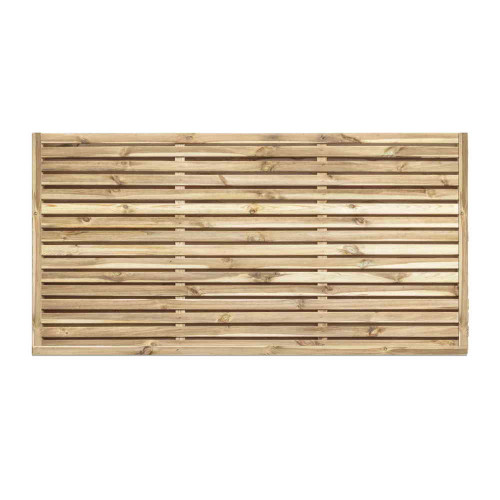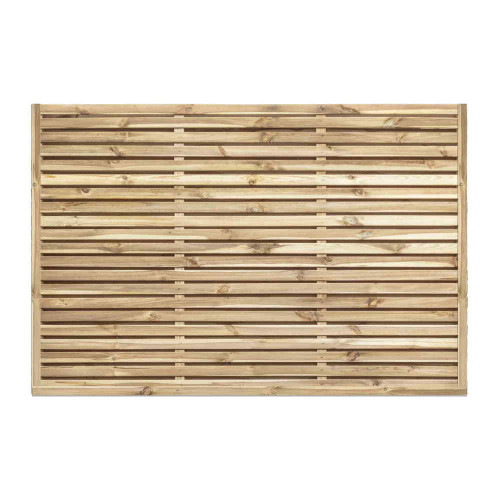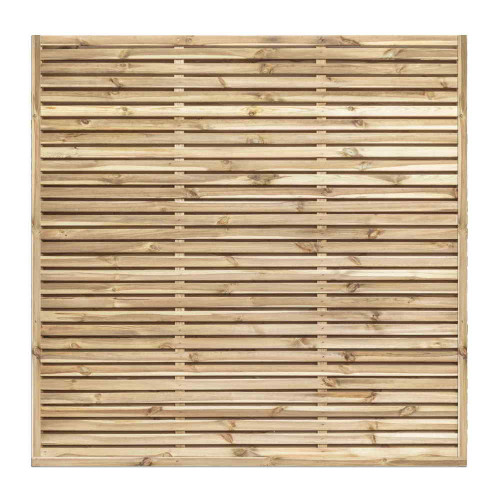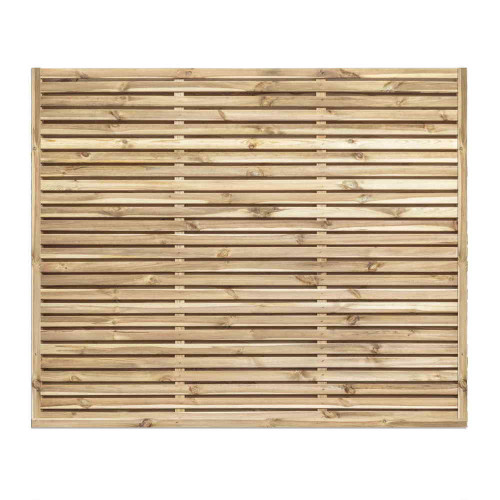


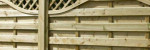

Quick answer: There is no single lifespan that applies to every Double Slatted Fence Panel. How long they remain in good condition depends on timber treatment, installation, moisture exposure, posts, fixings, wind, planting and maintenance. East Coast Fencing's current panels are pressure treated for outdoor use, so they do not need an immediate preservative treatment before installation. Keeping the lower frame away from wet soil, clearing trapped debris and repairing loose components early can all help the fence perform well for longer.
Double Slatted Fence Panels are usually chosen for their appearance, but durability matters just as much when they are being used across a complete garden boundary.
The horizontal timber construction creates a contemporary screen with narrow openings for light and airflow. The panels are framed and pressure treated for outdoor use, but they are still made from natural timber and remain exposed to rain, sunlight, wind and changing moisture levels throughout the year.
That means there is no meaningful universal answer such as "all double slatted panels last exactly 10, 15 or 20 years".
A well-installed panel in a free-draining garden can experience very different conditions from an identical panel sitting against wet soil, hidden beneath dense climbing plants and supported by failing posts.
What Determines How Long Double Slatted Fence Panels Last?
The main factors are:
- Timber treatment
- Installation quality
- Ground clearance
- Drainage
- Post condition
- Fixings
- Wind exposure
- Plant growth
- Routine maintenance
The panel itself is only one part of the fence.
If the supporting posts start leaning or the lower frame remains permanently wet, the panel can deteriorate or become damaged even if the individual slats are still sound.
Are Double Slatted Fence Panels Pressure Treated?
The current East Coast Fencing Double Slatted Fence Panels are pressure treated for outdoor use.
Pressure treatment introduces preservative into the timber to improve resistance to biological deterioration.
This means the panels do not need an immediate preservative treatment simply because they have been installed.
Pressure treatment does not mean the timber becomes maintenance-free or waterproof.
The panels will still perform better when they are:
- Installed correctly
- Allowed to dry after rain
- Kept clear of persistent wet soil
- Protected from unnecessary physical damage
Does Pressure Treatment Stop Timber Rotting Completely?
No.
Pressure treatment improves durability, but it should not be interpreted as making timber immune to every form of deterioration.
Long-term exposure conditions still matter.
A pressure-treated panel that gets wet during rain and then dries is experiencing very different conditions from one whose lower frame is continuously surrounded by wet soil and decomposing leaves.
Where Are Double Slatted Fence Panels Most Likely to Deteriorate?
The most vulnerable areas are generally those exposed to persistent moisture or repeated movement.
Check particularly around:
- The bottom frame
- Lower corners
- Panel-to-post fixings
- Areas beside dense planting
- Places where leaves collect between boards
- Any damaged or freshly cut timber
The exposed faces of the upper slats can dry relatively quickly, while concealed lower areas may remain damp for considerably longer.
Why the Bottom of the Panel Matters So Much
The lowest part of a fence is often exposed to the harshest moisture conditions.
It can encounter:
- Wet soil
- Grass
- Mulch
- Rain splash
- Leaves
- Irrigation
If the lower frame remains permanently damp, its exposure is very different from the slats higher up the panel.
Good installation should therefore keep the panel away from unnecessary ground contact.
Should Double Slatted Fence Panels Have Gravel Boards?
Gravel boards are worth considering where the fence runs beside soil, lawns or planting.
A gravel board sits beneath the timber panel and helps separate the lower frame from the dampest part of the garden boundary.
It can reduce direct exposure to:
- Soil
- Wet grass
- Garden debris
- Rain splash
This does not make the timber indestructible, but it creates a more favourable installation environment.
Can Double Slatted Fence Panels Sit Directly on Soil?
It is better to keep the timber panel clear of persistent contact with wet ground.
A panel should not simply be lowered until its frame is buried into a flower bed.
If surrounding ground levels are high, plan an appropriate lower boundary detail before fitting the panels.
Do not pile soil against the timber afterwards simply to hide an uneven gap.
What If a Flower Bed Is Higher Than the Bottom of the Fence?
Keep the soil independent from the timber panel where practical.
A raised bed or higher garden level may need its own edging or retaining structure.
An ordinary Double Slatted Fence Panel should not be expected to hold back a bank of damp soil.
Direct soil pressure can:
- Keep the frame wet
- Distort the panel
- Make future replacement difficult
Does Good Drainage Help Fence Panels Last Longer?
Yes.
The basic principle is that timber benefits from being able to dry after it becomes wet.
Look for areas where water:
- Pools around posts
- Runs off paving towards the fence
- Collects beneath gravel boards
- Remains trapped by soil or planting
Fixing a moisture problem around the fence can be more useful than repeatedly applying another decorative coating.
Do the Gaps Between Double Slats Help the Timber Dry?
The openings allow some air to pass through the panel, which can help reduce the enclosed feeling associated with completely solid fencing.
They also allow greater movement of air around the slatted structure.
However, this benefit can be reduced if:
- Dense climbers cover the panel
- Leaves become trapped between the boards
- Storage is piled directly against the fence
Keep the openings reasonably clear.
Should Leaves Be Removed From Between the Slats?
Yes.
Small quantities of leaves and plant material can become lodged within horizontal fencing.
Wet organic debris can hold moisture against the timber for considerably longer than rain alone.
Periodically remove:
- Dead leaves
- Twigs
- Old climbing growth
- Other trapped garden debris
This is a simple maintenance task that also makes the fence easier to inspect.
Can Climbing Plants Shorten the Life of Double Slatted Fence Panels?
They can if the growth becomes excessive.
A light amount of controlled planting is very different from a mature climber covering an entire fence run.
Heavy plants can add:
- Weight
- Wind resistance
- Moisture around the timber
They can also hide loose slats and fixings.
Should Climbers Have Their Own Support?
For vigorous plants, this can be a sensible approach.
Using a suitable independent plant support reduces the amount of mature vegetation being carried directly by the decorative panel.
It also makes it easier to:
- Inspect the fence
- Repair a panel
- Replace a panel later
- Maintain airflow around the timber
Can Wind Reduce the Lifespan of Double Slatted Panels?
Yes, particularly when the supporting structure is inadequate.
The gaps between the horizontal slats allow some air through, but Double Slatted Fence Panels still present a substantial surface to the wind.
Taller panels transfer greater loads into:
- Posts
- Foundations
- Panel fixings
A panel repeatedly moving in the wind can eventually suffer damage even if the timber itself has not decayed.
Why the Fence Posts Matter to Panel Lifespan
A fence panel depends on its posts to remain correctly aligned.
If a post begins to lean, the framed panel may be forced out of square.
This can lead to:
- Frame stress
- Loose fixings
- Rattling
- Misaligned horizontal slats
Do not assess the condition of the panels while ignoring the structure holding them up.
How Do You Check Wooden Fence Posts?
Look for:
- Movement at ground level
- Leaning
- Significant decay
- Splits around fixing locations
- Loose panel brackets
If the post moves, replacing the panel alone will not solve the problem.
How Do You Check Concrete Fence Posts?
Concrete posts can also develop problems even though they do not rot like timber.
Inspect for:
- Leaning
- Movement in the foundation
- Significant cracks
- Damage around the post slots
A secure concrete post system can make later panel replacement relatively straightforward where the panel dimensions remain compatible.
Do Loose Panels Wear Out Faster?
They can.
A panel that repeatedly rattles or moves within its supports experiences unnecessary mechanical stress.
Movement may affect:
- The outer frame
- Fixing points
- Individual slats
- Connections between components
Investigate repeated movement rather than assuming rattling is normal simply because the fence remains upright.
Why Do Exterior Fixings Matter?
The fixings form part of the fence system.
Suitable exterior screws, clips and brackets are designed for outdoor exposure.
Poorly selected fixings may:
- Corrode
- Become loose
- Stain surrounding timber
- Allow the panel to move
A durable timber panel cannot perform properly if the connections holding it to the posts deteriorate prematurely.
Should Double Slatted Fence Panels Be Painted?
They do not need immediate painting simply because they have been installed.
The current panels are already pressure treated for outdoor use.
A compatible exterior decorative coating can be added later if you want to:
- Change the colour
- Refresh weathered timber
- Create a different garden design
Wait until the timber is sufficiently dry and follow the coating manufacturer's preparation instructions.
Does Painting Make Double Slatted Fence Panels Last Forever?
No.
A surface coating can provide additional weather protection, but it does not remove the need for:
- Drainage
- Secure posts
- Suitable fixings
- Ground clearance
- Maintenance
A painted panel sitting permanently in wet soil still has an installation problem.
Is Stain Better Than Paint?
Neither option is universally better.
The right finish depends on:
- The appearance you want
- The condition of the timber
- The particular coating system
- Future maintenance expectations
A penetrating stain may retain more visible timber character, while an opaque finish can create a stronger colour change.
Use a product intended for exterior timber and compatible with pressure-treated wood.
Can Double Slatted Panels Be Left to Weather Naturally?
Yes.
The initial green/natural pressure-treated appearance will gradually change as the timber is exposed outdoors.
Weathering can produce changes in:
- Colour
- Surface texture
- Contrast between individual slats
This does not automatically indicate deterioration.
Do Colour Changes Mean the Fence Is Rotting?
No.
Timber naturally changes appearance outdoors.
Dark or green surface marks can also result from moisture, dirt or algae.
When assessing the panel, look at its physical condition as well as colour.
Do Small Cracks Mean Double Slatted Panels Have Failed?
Not necessarily.
Timber is a natural material and can develop small surface checks as moisture levels change.
Check whether:
- The slat remains secure
- The frame remains sound
- The crack affects a fixing
- The timber remains firm
A cosmetic surface change is different from a structural break.
Can Timber Slats Move as They Weather?
Some natural movement is possible as timber absorbs and releases moisture.
Minor variation is normal.
More significant problems should be investigated where:
- A slat becomes loose
- The frame twists substantially
- The panel no longer sits square
- Fixings begin pulling out
What Does Genuine Panel Deterioration Look Like?
Signs worth investigating include:
- Soft or crumbling timber
- Broken structural framing
- Several loose slats
- Fixings no longer holding securely
- Panel movement despite sound posts
- Severe physical impact damage
The significance depends on whether the problem affects one decorative slat or the frame carrying the whole panel.
Can a Single Loose Slat Be Repaired?
Potentially.
Minor local damage does not automatically require complete panel replacement.
First determine why the slat became loose.
Possible causes include:
- A failed fixing
- Impact
- Heavy plant growth
- Movement in the panel frame
A repair should restore the component without damaging neighbouring slats.
When Is Complete Panel Replacement Better?
Replacement may make more sense where:
- The main outer frame is badly damaged
- Several slats have failed
- The panel is substantially distorted
- Extensive deterioration affects multiple fixing points
Where posts remain sound, replacing one framed panel can be considerably simpler than rebuilding the whole fence.
Can One Double Slatted Fence Panel Be Replaced?
Yes.
Before ordering a replacement, measure:
- Panel width
- Panel height
- Frame thickness
- Slat spacing
Apparently similar slatted panels can use different construction details.
This matters because the repeated horizontal lines make mismatched panels relatively easy to notice.
Will a New Replacement Panel Match an Older One?
Not perfectly at first.
Older panels will have weathered, while the replacement will have the appearance of newly treated timber.
Differences can include:
- Colour
- Grain
- Surface texture
The new panel will gradually weather too.
Construction compatibility is more important than achieving an exact temporary colour match.
How Does Panel Height Affect Long-Term Performance?
Taller panels experience greater wind loading than lower versions of the same design.
The current Double Slatted Fence Panels range includes nominal:
- 3ft
- 4ft
- 5ft
- 6ft
all at approximately 6ft wide.
A 3ft decorative panel and a 6ft full boundary panel therefore place different demands on their posts and foundations.
Do 6ft Double Slatted Fence Panels Need More Maintenance?
Not necessarily more routine cleaning, but their supporting structure deserves greater attention because of the larger panel area.
After strong winds, check:
- Posts
- Panel fixings
- The outer frame
particularly along exposed boundaries.
Do Lower Panels Last Longer?
You cannot assume a lower panel will automatically have a longer timber lifespan.
However, lower panels generally present less area to the wind.
A poorly drained 3ft panel may deteriorate sooner than a correctly installed 6ft panel.
Installation and moisture exposure remain fundamental.
Are Double Slatted Fence Panels Good for Windy Gardens?
They allow some airflow through the spaces between the boards.
This gives them an advantage over a completely solid panel in terms of permeability.
However, Double Slatted Fence Panels still provide substantial screening and should not be treated as extremely open windbreak fencing.
For exposed sites, use:
- Suitable posts
- Appropriate foundations
- Secure panel fixings
How Does Hit & Miss Compare for Exposure?
Hit & Miss Fence Panels use a more open alternating-board construction.
They generally allow more airflow than Double Slatted Fence Panels.
If a garden experiences significant wind and greater openness is acceptable, Hit & Miss panels may deserve consideration.
If stronger screening matters more, Double Slatted fencing may provide the better balance.
How Does Closeboard Compare for Maintenance?
Closeboard fencing uses a substantially solid face and a different construction.
Both types benefit from:
- Secure posts
- Protection from ground moisture
- Appropriate exterior fixings
- Routine inspection
Double Slatted panels require the additional practical task of keeping debris from becoming lodged within the slatted structure.
Does Shade Affect Double Slatted Fence Panels?
Shade itself does not damage timber, but it can mean surfaces dry more slowly after rain.
North-facing boundaries and areas behind dense planting may therefore remain damp longer.
Look for:
- Algae
- Wet debris
- Dense vegetation
- Areas with poor airflow
and keep the panel reasonably clear.
Can Green Algae Damage the Panels?
Algae is usually a surface growth associated with damp conditions rather than proof that the timber has structurally failed.
Its presence can still tell you something useful: the area is staying damp enough for organic growth to develop.
Improve airflow and remove trapped debris where practical.
How Should Double Slatted Panels Be Cleaned?
Start with gentle methods.
- Remove loose leaves and vegetation.
- Brush away dry dirt.
- Use a suitable timber-safe cleaner where required.
- Allow the panel to dry naturally.
The narrow slats and their edges do not generally require aggressive cleaning.
Should You Pressure Wash Double Slatted Fence Panels?
Use caution.
Excessive pressure can:
- Raise timber fibres
- Damage slat edges
- Strip decorative coatings
- Drive water unnecessarily into joints
Gentler cleaning should normally be the first approach.
How Often Should Double Slatted Fence Panels Be Checked?
A simple inspection once or twice through the year is usually easy to incorporate into normal garden maintenance.
Additional checks make sense after:
- Strong winds
- Accidental impacts
- Heavy pruning near the fence
- Changes in neighbouring ground levels
You do not need to dismantle anything. The objective is simply to catch visible problems early.
What Should You Check Each Year?
- Are the posts still vertical and secure?
- Are the panels sitting level?
- Are any slats loose?
- Is the frame damaged?
- Are fixings secure?
- Is soil touching the lower frame?
- Are leaves trapped between boards?
- Are climbing plants becoming too heavy?
Should You Maintain the Fence Before Winter?
Autumn is a useful time to remove accumulated plant growth and leaves before wetter weather.
Check:
- Drainage
- Lower frame clearance
- Post movement
- Loose slats
before winter storms expose existing weaknesses.
Should You Inspect the Fence Again in Spring?
Yes, particularly after a wet or windy winter.
Look for movement or damage that was not present previously.
This is also a convenient time to decide whether the timber needs cleaning or a decorative coating refresh.
Can Good Installation Make More Difference Than Frequent Treatment?
Often, yes.
A panel with appropriate pressure treatment, good ground clearance, secure posts and sensible drainage begins with better conditions.
Repeatedly applying surface products cannot fully compensate for a panel whose lower frame is permanently buried in wet soil or whose posts move every time the wind blows.
Prioritise:
- Correct installation
- Moisture management
- Structural maintenance
- Decorative maintenance
in that order.
Common Mistakes That Can Shorten the Life of Double Slatted Fence Panels
- Allowing the lower panel frame to sit in wet soil
- Ignoring poor drainage around the boundary
- Using weak or unstable posts
- Ignoring loose panel fixings
- Allowing leaves to accumulate between the slats
- Letting heavy climbing plants overload the panel
- Assuming pressure-treated timber cannot deteriorate
- Painting damp timber without following the coating instructions
- Using aggressive pressure washing unnecessarily
- Ignoring repeated rattling or movement
- Replacing a damaged panel without checking the posts
- Piling soil against the fence to hide gaps
Double Slatted Fence Panels Maintenance Checklist
- Install panels between secure suitable posts.
- Keep the lower frame away from persistent soil contact.
- Consider gravel boards where appropriate.
- Maintain drainage around the fence line.
- Use suitable exterior fixings.
- Remove trapped leaves and plant debris.
- Control vigorous climbing plants.
- Check posts and panels after strong winds.
- Investigate rattling rather than ignoring it.
- Clean the timber gently when required.
- Use compatible exterior coatings if you want to change or refresh the appearance.
- Repair isolated damage before it spreads.
- Replace panels where the main frame is extensively damaged or deteriorated.
FAQs
How Long Do Double Slatted Fence Panels Last?
There is no single lifespan that applies to every panel. Treatment, installation, moisture, wind, posts, fixings and maintenance all affect how long the fence remains in good condition.
Are Double Slatted Fence Panels Pressure Treated?
Yes. The current East Coast Fencing Double Slatted Fence Panels are pressure treated for outdoor use.
Do Double Slatted Fence Panels Need Preservative Straight Away?
No immediate preservative treatment is required simply because the current pressure-treated panels have been installed.
Do Double Slatted Fence Panels Need Gravel Boards?
Not in every installation, but gravel boards are worth considering where they help keep the lower frame away from wet soil and garden debris.
Can Double Slatted Fence Panels Touch the Ground?
It is better to keep the timber frame clear of persistent contact with damp soil.
Do Double Slatted Fence Panels Rot?
Like other outdoor timber, they can deteriorate if exposed to sufficiently demanding conditions for long periods. Pressure treatment improves durability but does not make timber indestructible.
Where Do Double Slatted Panels Usually Deteriorate First?
Pay particular attention to lower frames, corners, fixing areas and locations where wet leaves, soil or dense planting keep the timber damp.
Should Leaves Be Removed From Between the Slats?
Yes. Removing trapped organic material helps the timber dry and makes inspection easier.
Can Climbing Plants Damage Double Slatted Fence Panels?
Heavy mature climbers can add weight and wind resistance. Vigorous plants may be better supported independently.
Can Double Slatted Fence Panels Be Painted?
Yes, with a suitable compatible exterior timber coating once the timber is sufficiently dry and correctly prepared.
Can Double Slatted Fence Panels Be Left Unpainted?
Yes. The current panels are pressure treated and can be left to weather naturally if you do not want an additional decorative finish.
Will Double Slatted Fence Panels Change Colour?
Yes. Pressure-treated timber naturally changes appearance as it is exposed to sunlight and weather.
Do Cracks Mean the Panel Is Rotten?
Not necessarily. Natural timber can develop small surface checks. Look at the firmness of the timber, fixing security and structural condition as well as appearance.
Can One Loose Slat Be Repaired?
Potentially. Minor isolated damage may be repairable if the main frame remains sound.
Can One Double Slatted Fence Panel Be Replaced?
Yes, provided the existing posts remain secure and a dimensionally compatible panel is available.
Will a New Panel Match Older Double Slatted Panels?
New treated timber may initially differ in colour from weathered panels. Also check frame design and slat spacing so the horizontal pattern remains consistent.
Are Double Slatted Fence Panels Good in Wind?
The gaps allow some airflow, but the panels still present a significant surface to the wind. Suitable posts, foundations and fixings remain important.
Can Double Slatted Fence Panels Be Pressure Washed?
Use caution. Excessive pressure can roughen timber fibres and damage slat edges or decorative coatings.
How Often Should Double Slatted Fence Panels Be Checked?
A simple periodic inspection is sensible, with additional checks after strong winds or accidental damage.
How Can You Make Double Slatted Fence Panels Last Longer?
Start with installation rather than maintenance products.
Make sure the panels are supported by secure posts, use suitable exterior fixings and keep the lower timber frame away from persistent wet soil.
Where appropriate, a gravel board can provide a useful barrier between the decorative panel and the dampest part of the garden boundary.
Then keep the slatted structure clear.
Remove leaves and dead vegetation that become lodged between the boards, and control climbing plants before they become heavy enough to obscure or overload the panel.
Check the supporting posts as carefully as the panels themselves. A Double Slatted Fence Panel can remain perfectly serviceable while a moving post gradually pulls the whole fence out of alignment.
Finally, treat appearance and structural condition as separate things.
Weathering, colour changes and minor surface movement are normal characteristics of outdoor timber. Loose frames, soft deteriorated timber and repeated structural movement require more attention.
There is no single number that determines the lifespan of every Double Slatted Fence Panel. A well-supported, pressure-treated panel that can dry properly after wet weather has a much better starting point than the same panel installed in permanently damp or unstable conditions.