

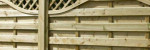

Quick answer: Double Slatted Fence Panels are made from natural timber, so some movement as moisture levels change is normal. A slightly uneven batten or small surface check does not necessarily mean the panel has failed. More significant distortion can come from timber movement, poor storage, forcing the framed panel into an undersized bay, leaning posts, ground movement or excessive plant loads. Check the 45 x 45mm outer frame first, then the individual slats and supporting posts before deciding whether anything needs repairing.
Horizontal slatted fencing is particularly good at showing whether something is out of line.
With a solid fence, a small amount of timber movement may disappear into the overall surface. With Double Slatted Fence Panels, dozens of horizontal lines sit parallel to one another, so a bent batten, twisted frame or leaning post can become visually obvious.
That does not mean every small variation is a defect.
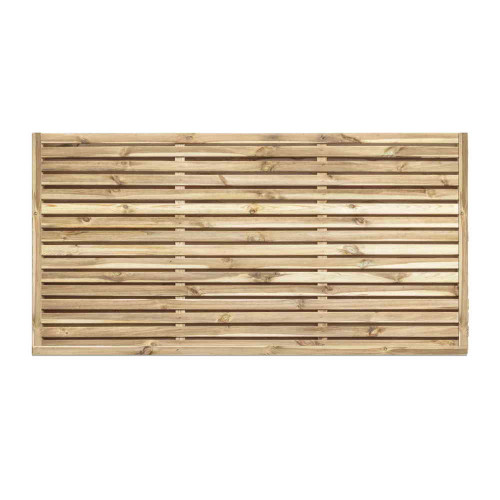
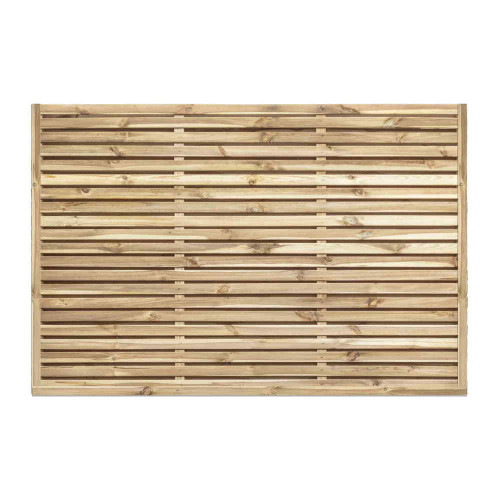
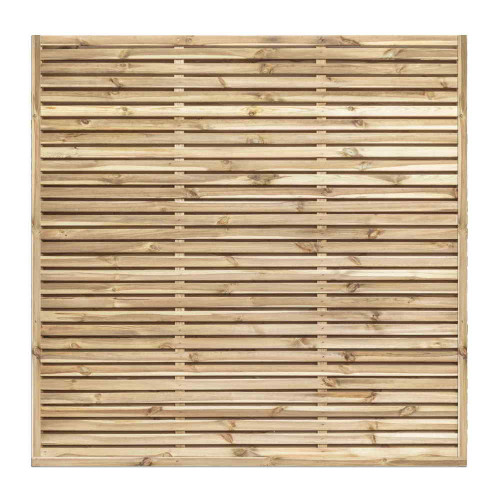
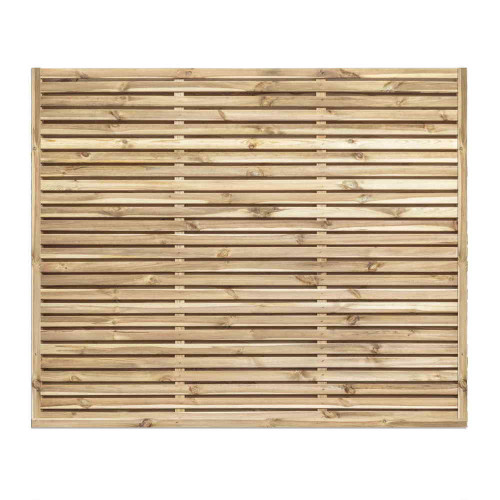
The current East Coast Fencing Double Slatted Fence Panels use pressure-treated natural timber, a 45 x 45mm outer frame and horizontal 8 x 45mm battens arranged on both faces. Understanding how that construction works makes it much easier to distinguish normal timber movement from a genuine problem.
Can Double Slatted Fence Panels Warp?
Like any timber fencing product, components within a Double Slatted Fence Panel can move as moisture conditions change.
Timber is hygroscopic, meaning it takes on and releases moisture in response to its environment.
That can result in small changes such as:
- Slight bowing
- Minor twisting
- Small surface checks
- Changes in slat spacing
- Natural dimensional movement
The important question is not whether timber can move.
It can.
The useful question is whether the movement affects the performance or appearance of the complete framed panel enough to require action.
What Is a Double Slatted Fence Panel Actually Made From?
The current East Coast Fencing panels use:
- A 45 x 45mm semi-planed timber outer frame
- Horizontal battens approximately 8 x 45mm
- Battens positioned on both faces of the panel
- Approximately 40mm gaps between battens
- An overall panel depth of approximately 45mm
- Pressure-treated green/natural timber
The panels are approximately 1.828m wide, corresponding with the traditional nominal UK 6ft panel format.
Current height options include:
- 900mm
- 1200mm
- 1500mm
- 1800mm
The outer frame and repeated two-sided batten arrangement need to work together.
That is why inspecting only one slightly curved slat can give a misleading impression of the condition of the whole panel.
Why Thin Slats Can Show Timber Movement More Clearly
The horizontal battens are approximately 8mm thick.
A relatively slender timber section can visually reveal movement more readily than a much heavier rail.
This is particularly noticeable because the battens are:
- Long
- Horizontal
- Closely repeated
- Viewed alongside neighbouring straight battens
If one batten develops a modest curve while ten surrounding battens remain relatively straight, your eye will often notice it immediately.
That does not automatically mean the structural panel has warped.
Slat Movement and Panel Warping Are Not the Same Thing
This distinction is important.
You can have:
- One slightly distorted batten inside an otherwise square panel
or:
- An entire outer frame that has twisted out of shape
Those are different problems.
A local batten issue mainly affects appearance and potentially the spacing around that batten.
Frame distortion affects the geometry of the complete panel and may also change how it fits between the posts.
How Can You Tell if the Whole Panel Has Warped?
Stand back and look at the outer frame rather than focusing immediately on the horizontal slats.
Check whether:
- The two vertical sides appear parallel
- The bottom frame remains level
- The top frame remains level
- The panel sits flat within the fence line
- One corner appears pushed forwards or backwards
A spirit level and straight reference line can help distinguish actual frame movement from an optical effect created by the surrounding garden.
Why the Outer Frame Should Be Your First Check
The 45 x 45mm outer frame defines the geometry of the panel.
It:
- Supports the horizontal battens
- Maintains the panel width
- Maintains the panel height
- Provides the main structural perimeter
- Allows the complete panel to be handled and installed
If the frame remains square, one unusual batten is usually a much more local issue.
If the frame itself is badly distorted, several apparently crooked slats may simply be following that distortion.
What Does Normal Timber Movement Look Like?
Normal outdoor timber can develop modest changes without becoming unserviceable.
Examples include:
- A slight curve along one batten
- Small differences in the gaps between neighbouring slats
- Fine surface checking
- Minor shade changes as timber dries
- Small dimensional changes between wet and dry weather
Natural timber should not be expected to behave like an aluminium extrusion or moulded plastic profile.
What Movement Should You Investigate?
Look more closely where:
- A slat has pulled away from the frame
- A slat is badly twisted
- The outer frame is no longer square
- Several battens have become loose
- One corner of the panel is being forced out of position
- The panel has become difficult to retain securely between the posts
- Frame joints appear to be separating
These symptoms suggest more than ordinary surface weathering.
What Causes Timber to Move?
Moisture is one of the main factors.
Timber responds as surrounding conditions change.
A fence panel may experience:
- Heavy rain
- Dry sunny periods
- Cold damp winters
- Hot dry weather
- Different moisture exposure on its two faces
The timber therefore experiences repeated wetting and drying during its life outdoors.
Can One Side of the Panel Dry Faster Than the Other?
Yes.
One face may receive considerably more sun or wind than the other.
For example, a panel might have:
- Strong afternoon sun on one side
- Dense planting on the other
The exposed face can dry more quickly while the shaded face remains damp for longer.
Uneven moisture conditions can contribute to timber movement.
Why Dense Planting Can Make Moisture Differences Worse
A panel surrounded by dense shrubs may remain damp on one side after rain.
The opposite face may dry quickly in sunlight.
Planting can also reduce airflow around:
- The lower frame
- Horizontal battens
- Panel corners
This does not mean plants need to be kept away from decorative fencing completely.
Simply allow enough access and airflow to inspect and maintain the timber.
Can Poor Storage Cause a Panel to Distort Before Installation?
Improper storage can contribute to movement in timber products.
A framed decorative panel should be supported appropriately before installation.
Avoid leaving panels:
- Leaning at a severe angle for extended periods
- Balanced only on one corner
- Unsupported across uneven ground
- Partially exposed to standing water
Large framed panels are better kept supported so their own weight is not continually trying to distort the assembly.
Should Panels Be Left Lying in Wet Grass?
No longer than necessary.
Wet grass can keep one section of the frame damp while the rest of the panel dries differently.
It can also soil the lower timber before installation.
Keep panels reasonably clean, supported and protected from unnecessary moisture accumulation before fitting them.
Can Handling Cause What Looks Like Warping?
Yes.
A panel can be distorted or damaged if handled incorrectly.
Avoid:
- Lifting the full panel from one individual slat
- Dragging one corner along the ground
- Twisting the panel while carrying it through a narrow access
- Dropping one end onto a hard surface
Support the main outer frame instead.
Why You Should Never Lift the Panel by One Slat
An 8 x 45mm batten is an internal decorative component.
It is not intended to act as a handle for the complete framed panel.
Using one batten to carry the whole panel can:
- Stress its fixing points
- Bend the batten
- Damage adjacent components
Use the 45 x 45mm frame as the main handling structure.
Can Installation Cause Double Slatted Panels to Bow?
Installation can certainly create the appearance of a warped panel.
Common causes include:
- Posts installed out of vertical
- A bay that is too narrow
- A bay that is excessively wide
- One fixing pulling the frame out of line
- An uneven gravel board
- The panel being forced between posts
Always check the installation before deciding that the panel itself has moved.
Why Forcing a Panel Into a Tight Bay Is a Bad Idea
The current Double Slatted Fence Panels are approximately 1.828m wide.
If the clear opening is smaller than the panel, forcing the frame into position can place compression through the assembly.
That can lead to:
- Frame distortion
- Slat misalignment
- Pressure at the corners
- Difficulty removing the panel later
Measure the bay rather than assuming an existing nominal 6ft opening remains correct.
Why Existing Fence Posts Often Cause Problems
Old posts do not always remain perfectly vertical.
Ground movement, wind and deterioration can alter their positions.
An opening may therefore measure:
- 1835mm near the bottom
- 1825mm through the middle
- 1810mm near the top
Those figures are only an example, but they illustrate the problem.
A rectangular framed panel cannot sit naturally in a bay that narrows significantly towards the top.
Measure the Bay in Three Places
Before installing or diagnosing a panel, measure the clear width:
- Near the bottom
- Through the middle
- Near the top
If the three measurements differ substantially, investigate the posts.
Do not shave, bend or force a good panel simply to accommodate a failed fence line.
How Can You Tell if the Posts Are the Real Problem?
Check each post with a spirit level.
Also look along the entire fence line.
Signs of post movement include:
- Changing gaps beside the panel
- Panels progressively moving out of alignment
- A top line that rises or falls unexpectedly
- Movement when the post is pushed carefully
- Cracks or disturbance around the foundation
If several panels appear crooked in the same direction, the problem is unlikely to be several panels independently warping identically.
Why Horizontal Slats Make Leaning Posts So Obvious
A vertical-board fence can disguise a slight change in panel angle relatively well.
Horizontal slats create long repeated reference lines.
If the posts lean, those lines may no longer align from panel to panel.
This is one reason accurate post installation is particularly important with Double Slatted Fence Panels.
How Should Several Double Slatted Panels Align?
Across a well-installed level run, the horizontal patterns should appear broadly continuous.
You should be looking for:
- Level panel frames
- Consistent top lines
- Similar slat positions across neighbouring bays
- Vertical posts
Natural timber variation means every batten will not be microscopically identical.
The overall visual line is what matters.
Can an Uneven Gravel Board Make the Panel Look Warped?
Yes.
If the panel sits above a gravel board that is not level, the installer may inadvertently follow the incorrect base line.
This can leave the entire panel sitting on an angle.
Before blaming the decorative panel, check:
- The gravel board
- The posts
- The panel frame
separately.
Do Double Slatted Fence Panels Need Gravel Boards?
Not every installation requires one, but they can be useful where the lower frame would otherwise sit close to soil or wet vegetation.
A suitable gravel board helps separate the timber from:
- Wet soil
- Grass
- Mulch
- Rain splash
- Garden debris
It also creates a defined base from which the panel alignment can be established.
Can Ground Moisture Cause the Bottom Frame to Move?
Repeated moisture exposure can affect timber over time.
The lower frame is particularly vulnerable because it sits closest to the ground.
If one area remains persistently wetter than the rest, you may see:
- Greater surface weathering
- Timber movement
- Algae or organic growth
More advanced deterioration should be distinguished from ordinary movement.
Does Pressure Treatment Stop Warping?
No.
Pressure treatment is primarily intended to improve the timber's durability against biological deterioration.
It does not remove the natural ability of wood to gain and lose moisture.
Pressure-treated timber can still:
- Shrink
- Expand
- Check
- Twist
- Weather
Those characteristics should not automatically be confused with rot or treatment failure.
Why Treatment and Dimensional Stability Are Different Issues
Pressure treatment addresses durability.
Dimensional movement is a property of the timber itself.
A board can be properly pressure treated and still move slightly as its moisture content changes.
Conversely, a visually straight piece of untreated timber is not automatically better suited to prolonged outdoor use.
They are separate considerations.
Does Painting Stop Timber Movement?
No coating can make timber completely dimensionally static.
A compatible exterior coating can alter the rate at which moisture reaches the surface and can help maintain appearance, depending on the product used.
It does not turn timber into a material that no longer responds to environmental moisture.
Should You Paint a Slightly Warped Panel?
Not as a repair.
First determine whether there is an actual structural problem.
A coating will not straighten:
- A badly twisted frame
- A leaning post
- A loose slat
- A panel forced into an undersized bay
Correct physical problems before considering decorative finishing.
Can One Slightly Bowed Batten Be Left Alone?
Often, yes, provided it remains securely attached and the movement is minor.
Ask:
- Is the batten still fixed securely?
- Does the panel still provide the expected screening?
- Is the frame still square?
- Is the movement actually noticeable during normal use?
If the answers are satisfactory, intervention may achieve very little.
When Does a Bowed Slat Become a Repair Issue?
Consider action if the batten:
- Has pulled free from its fixing
- Projects enough to present a snagging risk
- Creates a substantially abnormal gap
- Appears split through its fixing point
- Continues moving independently of the rest of the panel
The condition of the fixing and surrounding timber matters as much as the visible curve.
Can a Loose Double Slatted Batten Be Refixed?
Potentially.
If the batten and frame remain sound, an appropriate exterior fixing may be able to secure a local loose component.
Before adding a fixing, inspect why the batten became loose.
Possible causes include:
- Impact
- Timber movement
- Damage around the fixing point
- Frame distortion
If the surrounding timber is badly damaged, another fixing in the same area may not provide a durable repair.
Can One Double Slatted Batten Be Replaced?
Potentially, but matching the original panel matters.
The current design uses semi-planed horizontal battens approximately 8 x 45mm.
A replacement should ideally match:
- Width
- Thickness
- Surface finish
- Position
- Spacing
The horizontal repetition means even a small dimensional mismatch can remain visually obvious.
Why Spacing Matters During a Repair
The current design uses approximately 40mm gaps between battens.
Those openings are integral to the panel's:
- Appearance
- Screening
- Light transmission
- Airflow
A replacement batten installed noticeably higher or lower changes both the pattern and the local sightline through the panel.
Take Measurements Before Removing a Damaged Batten
Before dismantling anything, record:
- The gap above the batten
- The gap below it
- Its relationship with battens on the opposite face
- The fixing positions
Photographs from both sides are also useful.
The double-sided arrangement means the front view alone does not show the complete pattern.
Why the Two-Sided Slat Arrangement Matters
Double Slatted Fence Panels use battens on both faces.
The second layer helps interrupt the direct view through the gaps in the first.
If a batten is removed or repositioned incorrectly, you can affect:
- Screening
- Visual symmetry
- The relationship between the two faces
Any repair should preserve the manufactured arrangement.
Can a Badly Warped Panel Be Straightened?
It depends on what has actually moved.
If the apparent distortion comes from:
- A leaning post
- An uneven base
- A badly positioned fixing
correcting the installation may allow the panel to sit properly again.
If the actual 45 x 45mm outer frame has become seriously twisted, forcing it square can place additional stress on the frame and internal battens.
Replacement may be cleaner where distortion is substantial.
Do Not Use the Posts to Force a Twisted Panel Flat
A common temptation is to pull a distorted panel hard against rigid posts using brackets or screws.
This can simply transfer the stress elsewhere.
Possible consequences include:
- Frame splitting
- Fixings pulling out
- Battens becoming loose
- Posts being loaded sideways
A small amount of natural timber movement is one thing. Using the fence structure as a clamp for major distortion is another.
When Should a Double Slatted Panel Be Replaced?
Replacement becomes more sensible where:
- The outer frame is badly twisted
- A structural frame member is broken
- Numerous battens have become loose
- Impact damage affects a large area
- The panel can no longer sit securely between the posts
- There is widespread deterioration rather than minor weathering
The complete condition should guide the decision rather than one isolated cosmetic imperfection.
Can You Replace One Panel Without Replacing the Whole Run?
Yes, provided the surrounding posts remain suitable.
Measure the existing installation carefully before ordering.
The current panels are:
- Approximately 1.828m wide
- Approximately 45mm deep
and are currently available in nominal 3ft, 4ft, 5ft and 6ft heights.
Match the construction as well as the nominal dimensions.
Why a 1.8m Replacement Is Not the Same as 1.828m
The difference is 28mm.
That can matter when fitting a replacement into an established UK-width bay.
A narrower panel may leave:
- Unexpected gaps
- More movement
- A need for packing
- Different bracket positions
The current Double Slatted range is manufactured at approximately 1.828m specifically to align with the traditional nominal UK 6ft panel format.
Why the 45mm Frame Depth Matters
Replacement compatibility depends on more than width.
The approximately 45mm depth matters when using:
- Slotted concrete posts
- Existing channels
- Close-fitting brackets
A panel can be the correct width and still be unsuitable for an existing post system if the frame thickness differs significantly.
Can Double Slatted Panels Be Used With Concrete Posts?
Potentially, where the actual frame and post-slot dimensions are compatible.
Check:
- Clear bay width
- Post slot width
- Panel depth
- Available height above any gravel board
If an existing concrete post has moved, correct or account for that problem before lowering a framed panel into the slot.
Can Double Slatted Panels Be Used With Wooden Posts?
Yes.
Suitable wooden posts provide straightforward fixing points for the framed panel.
If a panel appears to be moving, inspect:
- The post
- The bracket or fixing
- The panel frame
rather than simply tightening every visible screw.
Can Heavy Climbing Plants Cause Distortion?
They can contribute additional load.
A mature climber may add:
- Considerable weight
- Wind resistance
- Persistent moisture
across the panel.
Double Slatted Fence Panels are decorative screens, not unlimited plant-support structures.
Vigorous climbers may be better given an independent trellis or support.
Why Plant Weight Can Be Easy to Underestimate
A young plant may weigh very little.
Several years later it can contain:
- Woody stems
- Dense foliage
- Wet leaves after rain
It may also fill the gaps in the slatted fence, increasing the effective area presented to wind.
If a panel has started moving behind mature planting, reduce the plant load before deciding what fence repair is required.
Can Strong Wind Warp Double Slatted Panels?
Wind can place considerable loads on a full-height fence.
The gaps in Double Slatted Fence Panels allow some air through, but the panel still contains a large amount of timber surface.
Wind-related movement can affect:
- Posts
- Foundations
- Panel fixings
- The frame
A panel that suddenly appears crooked after a storm should therefore trigger an inspection of the complete fence system.
Why the 6ft Version Needs the Most Structural Attention
The current 1800mm-high version has the greatest exposed face area in the range.
Compared with a 900mm panel, it places greater demands on:
- Post stability
- Foundations
- Accurate bay spacing
This does not mean a 6ft Double Slatted Fence Panel is unsuitable.
It means support becomes increasingly important as fence height increases.
What Should You Check After a Storm?
Inspect:
- Posts for movement
- Frame corners
- Panel-to-post connections
- Loose battens
- Changes in horizontal alignment
- The lower frame and any gravel board
Compare neighbouring panels as well.
If several have moved together, investigate the supporting fence structure.
Can Sun Exposure Cause Slats to Look Uneven?
Strong sun can contribute to drying and natural timber movement.
One side of a fence can experience much more solar exposure than the other.
You may also notice:
- Colour fading
- Dry surface checking
- Greater variation between individual battens
These observations should be assessed separately from structural failure.
Does Weathered Colour Mean the Panel Is Damaged?
No.
The current panels are pressure treated green/natural, but the original colour will change as the timber weathers.
Colour change does not establish whether the frame or battens are structurally sound.
Inspect:
- Firmness
- Fixings
- Frame integrity
- Post stability
instead.
Can Double Slatted Fence Panels Be Painted?
They can be finished with a suitable compatible exterior timber coating once the pressure-treated timber is sufficiently dry and properly prepared.
The slatted construction makes application more time-consuming than coating a flat solid panel because there are:
- Many horizontal faces
- Edges
- Gaps
- Two visible sides
Do not use coating as a substitute for structural repair.
How Can You Reduce the Risk of Future Distortion?
You cannot remove normal timber movement completely, but good handling and installation can avoid unnecessary additional stress.
Useful practices include:
- Store panels supported before installation.
- Lift panels by the outer frame.
- Measure bays accurately.
- Keep posts plumb.
- Do not force panels into undersized openings.
- Keep the lower frame away from wet soil.
- Control heavy climbing plants.
- Check the fence after severe weather.
Why Buying the Correct Width Helps
A framed panel should fit the intended fence system without being used as a structural wedge.
The current 1.828m width is particularly useful for traditional UK 6ft layouts, but existing openings still need to be measured.
Correct fit allows the frame to remain in its intended geometry rather than being compressed between incorrectly positioned posts.
Why Accurate Installation Matters More With Decorative Panels
Decorative fencing is often viewed at close range around:
- Patios
- Garden rooms
- Seating areas
- Landscaped boundaries
Small alignment errors therefore become more noticeable.
A little extra care setting posts and checking each bay can make a substantial difference to the finished appearance.
What Is Normal and What Is a Problem?
| Observation | Likely Response |
|---|---|
| Small surface check | Usually monitor |
| Minor bow in one secure batten | Often cosmetic |
| Weathered colour | Normal outdoor change |
| Loose batten | Inspect and consider local repair |
| Several misaligned panels | Check posts and fence line |
| Badly twisted outer frame | Replacement may be appropriate |
| Frame forced into narrow bay | Correct the installation |
Common Mistakes When Diagnosing a Warped Slatted Fence
- Assuming one curved batten means the entire panel has failed
- Ignoring leaning posts
- Checking only the top of the fence rather than the outer frame
- Forcing a 1.828m panel into a smaller existing opening
- Using screws to pull a badly twisted frame flat
- Assuming pressure treatment prevents all timber movement
- Confusing faded colour with deterioration
- Lifting panels by individual 8 x 45mm battens
- Leaving panels poorly supported before installation
- Allowing heavy plants to overload the slats
- Ignoring wet soil and debris around the lower frame
- Replacing a panel without measuring the existing fence bay
Double Slatted Fence Panel Inspection Checklist
- Stand back and inspect the complete fence line.
- Check whether the outer 45 x 45mm frame remains square.
- Use a level to check posts.
- Measure the bay at the bottom, middle and top.
- Inspect individual 8 x 45mm battens for looseness or major distortion.
- Check the approximately 40mm spacing pattern for obvious local changes.
- Inspect the panel-to-post fixings.
- Look for soil or wet debris around the lower frame.
- Check for excessive plant loading.
- Inspect adjoining panels to see whether the issue is isolated.
- Repair local defects where the main frame remains sound.
- Consider replacement where structural frame distortion is substantial.
FAQs
Do Double Slatted Fence Panels Warp?
They are made from natural timber, so some dimensional movement can occur as moisture conditions change. Minor movement in an individual batten does not necessarily mean the complete panel has structurally warped.
Is a Slightly Bowed Slat a Defect?
Not automatically. If the batten remains securely fixed, the frame is square and the panel still performs correctly, a modest amount of timber movement may be primarily cosmetic.
What Size Slats Are Used in Double Slatted Fence Panels?
The current East Coast Fencing panels use horizontal semi-planed battens approximately 8 x 45mm.
How Large Are the Gaps Between the Slats?
The current design uses gaps of approximately 40mm within the slatted arrangement.
What Size Is the Outer Frame?
The current panels use a 45 x 45mm semi-planed outer timber frame.
How Thick Is a Double Slatted Fence Panel?
The overall current panel depth is approximately 45mm.
How Wide Are Double Slatted Fence Panels?
The current panels are approximately 1.828m wide, corresponding with the traditional nominal UK 6ft panel format.
Why Does My Slatted Fence Look Crooked?
Check the posts, gravel board and panel level before assuming the panel itself has warped. Horizontal lines make small installation errors particularly visible.
Can a Loose Slat Be Repaired?
Potentially. If the slat and surrounding frame remain sound, a suitable exterior fixing may be able to secure a local loose component.
Can One Slat Be Replaced?
Potentially, although the replacement should match the approximately 8 x 45mm section, finish and spacing so it does not disrupt the repeated horizontal pattern.
Does Pressure Treatment Prevent Warping?
No. Pressure treatment improves outdoor durability but does not stop timber from naturally responding to changes in moisture.
Can Painting Stop Double Slatted Panels Warping?
No coating completely prevents natural timber movement. A suitable exterior finish may help manage surface weather exposure and appearance but should not be treated as a structural repair.
Can Heavy Plants Bend Double Slatted Panels?
Dense mature climbers can add significant weight and wind resistance. Vigorous plants may need their own independent support rather than relying entirely on the decorative panel.
Can Double Slatted Panels Be Used With Concrete Posts?
Potentially, provided the actual 1.828m panel width and approximately 45mm frame depth are compatible with the concrete-post slots and clear bay.
Should a Warped Double Slatted Panel Be Replaced?
Not necessarily. First determine whether the issue is one local batten, an installation problem, moving posts or genuine distortion of the main frame. Significant structural frame twisting is more likely to justify replacement.
When Is Timber Movement Normal and When Should You Act?
Do not judge a Double Slatted Fence Panel by whether every piece of timber remains perfectly straight in every season.
Natural timber moves.
The current panels contain numerous relatively slender 8 x 45mm battens, so small differences can sometimes be easier to see than they would be in a heavier solid fence.
Start your assessment with the 45 x 45mm outer frame.
If that frame remains square, the posts are vertical and the panel sits correctly within the bay, one slightly bowed secure batten is usually a very different problem from wholesale panel distortion.
If the entire panel appears crooked, check the fence system before blaming the timber. Measure the bay at several heights, check the posts with a level and inspect any gravel board underneath. A framed 1.828m panel forced between moving or incorrectly positioned posts can appear warped even when installation geometry is the main issue.
Then inspect the individual battens.
Loose slats, serious splits around fixing points or substantial local distortion deserve attention. Minor checking, weathering and modest movement can simply be part of natural timber's response to outdoor conditions.
Finally, consider what the panel has experienced. Poor storage, incorrect lifting, dense climbing plants, persistent ground moisture and storm movement can all place additional demands on the structure.
Double Slatted Fence Panels are designed as framed decorative screens, and the best way to keep them looking right is to let that frame sit naturally in a correctly measured, accurately installed fence system rather than forcing the timber into alignment after problems have developed.