


Quick answer: Timber battens are slim lengths of timber used for trellis construction, contemporary slatted screens, light framing, garden features and repairs. Their relatively small section makes them useful where a full-sized fence rail or board would be unnecessarily substantial. They can be installed horizontally or vertically, with the spacing adjusted to change privacy, airflow and appearance. For structural fence frameworks or heavy loads, a larger rail or post is normally more appropriate.
Timber battens are simple components, but they can be used for a surprisingly wide range of fencing and garden projects.
They are particularly useful when you want to build something lighter and more detailed than a conventional fence panel.
Instead of using a substantial rail or wide fence board, battens provide a slimmer timber section that can be repeated at regular intervals to create trellis, screening, decorative panels and other custom features.
The important part is knowing what battens are suitable for and, just as importantly, when you should use a more substantial piece of timber instead.
This guide covers the main uses for battens, how they differ from rails and pales, horizontal and vertical installation, spacing, privacy, fixing, cutting, treatment, repairs and common mistakes when planning a project.
What Are Timber Battens?
A timber batten is a relatively slim length of timber with a consistent rectangular section.
For fencing and landscaping work, battens are commonly used as smaller components rather than as the main structural posts or heavy supporting rails.
Typical applications include:
- Trellis construction
- Horizontal slatted screens
- Vertical slatted screens
- Light framing
- Fence and trellis repairs
- Decorative garden features
- Custom timber screening
Their small section allows several battens to be arranged together without producing the visual weight of full-sized fence boards or rails.
What Size Timber Battens Does East Coast Fencing Supply?
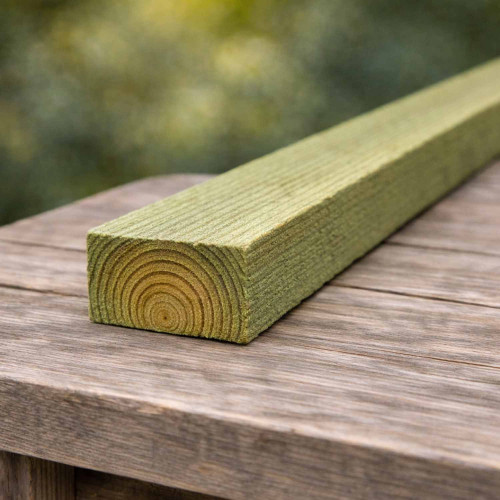
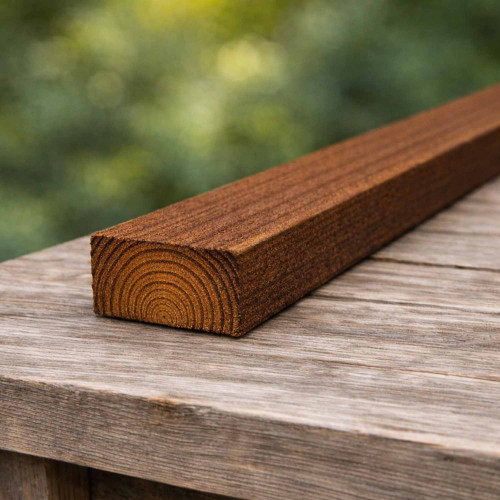
The current East Coast Fencing Timber Battens range includes 1.83m x 38 x 16mm trellis battens.
They are available pressure treated in:
- Green/Natural
- Brown
The 1.83m length makes them particularly convenient for projects based around the common nominal 6ft dimension used throughout garden fencing and trellis construction.
The relatively slim 38 x 16mm section is intended for lighter screening, framing, trellis and repair applications rather than replacing substantially larger structural rails.
What Are Timber Battens Most Commonly Used For?
One of their main advantages is versatility.
You can arrange identical battens in different ways to produce very different results.
Common projects include:
- Building simple trellis panels
- Creating horizontal privacy screens
- Creating vertical garden screens
- Repairing broken trellis components
- Constructing decorative panels
- Adding plant supports
- Making lightweight garden dividers
The final result depends heavily on the orientation and spacing of the battens.
Can Timber Battens Be Used To Build Trellis?
Yes.
Trellis construction is one of their most natural applications.
Battens can be arranged:
- Vertically and horizontally to create a square grid
- Diagonally to create a diamond pattern
- Horizontally to create a contemporary slatted screen
- Vertically for a simple linear screen
The battens need to be fixed to an appropriate frame or supporting structure so that the finished assembly remains stable.
The exact construction depends on the size and purpose of the finished trellis.
Can Timber Battens Be Used For Horizontal Slatted Screens?
Yes.
Horizontal slatted screening is one of the most popular uses for slim timber sections.
Individual battens are installed at regular intervals across a suitable supporting frame.
The finished screen can provide:
- A contemporary appearance
- Partial privacy
- Airflow
- Light transmission
- An attractive backdrop to planting
The spacing between the battens determines how open or private the screen feels.
Can Timber Battens Be Installed Vertically?
Yes.
There is no requirement to use them horizontally.
Vertical battens can create a very different visual effect and work well for:
- Garden screens
- Decorative dividers
- Contemporary landscaping
- Screening around utility areas
A vertical arrangement can make a screen appear taller, while horizontal lines tend to emphasise width.
Horizontal vs Vertical Battens: Which Looks Better?
Neither orientation is universally better.
Horizontal battens tend to create a wider, more contemporary appearance.
Vertical battens can create a cleaner upright rhythm and may visually emphasise height.
| Feature | Horizontal Battens | Vertical Battens |
|---|---|---|
| Visual effect | Emphasises width | Emphasises height |
| Garden style | Strong contemporary look | Contemporary to versatile |
| Privacy control | Adjusted through spacing | Adjusted through spacing |
| Airflow | Good when spaced | Good when spaced |
The orientation should be chosen according to the design of the garden and the supporting structure.
Can Timber Battens Be Used To Make A Privacy Screen?
Yes, although a spaced batten screen should usually be described as screening rather than a completely solid privacy barrier.
Privacy depends on:
- Batten width
- Gap size
- Viewing angle
- Distance from the screen
- Screen height
Smaller gaps generally provide more screening.
Larger gaps allow more:
- Light
- Airflow
- Visibility
This flexibility is one of the main advantages of building a screen from individual battens instead of buying a completely solid panel.
How Much Space Should You Leave Between Battens?
There is no single correct spacing for every project.
The right gap depends on what the screen needs to achieve.
As a general design principle:
- Small gaps create stronger screening
- Medium gaps balance privacy and openness
- Large gaps create a lighter decorative screen
The important thing is consistency.
Even small differences in spacing can become very obvious across a long run of repeated battens.
How Do You Keep Batten Gaps Consistent?
Use a spacer rather than measuring every gap individually.
A small offcut cut to the desired gap can be positioned between each batten during installation.
The process is then:
- Install the first batten carefully.
- Place the spacer against it.
- Position the next batten against the spacer.
- Check the batten is aligned.
- Fix it in place.
- Repeat across the screen.
This is usually faster and more consistent than repeatedly using a tape measure.
Should You Calculate Batten Spacing Before Starting?
Yes.
One of the most common mistakes with a slatted screen is starting from one side with a fixed gap and discovering that the final space is awkwardly narrow or wide.
Before installation, calculate:
- Total available width
- Width of each batten face
- Approximate number of battens required
- Desired gap between them
- Any margins at each end
A small adjustment to every gap can produce a much neater result than leaving one obviously different space at the end.
Should You Start In The Centre Or At One Side?
Either method can work.
Starting at one side is straightforward if the dimensions divide neatly.
Starting from the centre can be useful where visual symmetry matters, particularly on:
- Feature screens
- Garden room surrounds
- Patio screens
Whichever method you choose, calculate the layout before fixing the first batten.
Can Timber Battens Be Used To Build A Fence?
They can form the visible screening component of a custom fence or garden screen, but battens should not automatically be treated as the main structural framework.
A complete fence normally requires more substantial components to carry loads between posts.
Those may include:
- Fence posts
- Square rails
- Other suitable framing timber
The battens can then be fixed to that framework.
What Is The Difference Between Timber Battens And Fence Rails?
Size and structural purpose are the main differences.
Battens are relatively slim components suited to trellis, screening and lighter framing.
Fence rails are more substantial horizontal members used to support fence boards, pales or other components between posts.
| Component | Typical Role |
|---|---|
| Timber batten | Trellis, slats, screens and lighter work |
| Square rail | Supporting fence boards or pales |
| Cant rail | Supporting feather edge in closeboard fencing |
| Fence post | Primary vertical structural support |
Using a batten where a substantial rail is needed can result in an under-supported structure.
What Is The Difference Between Timber Battens And Square Rails?
Square rails are larger structural components intended to support fence boards, picket pales and similar timber between posts.
Battens are much slimmer and are better suited to:
- Slatted screening
- Trellis
- Light decorative framing
- Repairs to similar small-section timber
If the timber needs to span between posts and carry the weight of a substantial fence, a suitable rail is generally the more appropriate component.
What Is The Difference Between Timber Battens And Cant Rails?
Cant rails are specifically associated with traditional closeboard fencing.
Their profile is designed to create a substantial horizontal support for overlapping feather edge boards while helping water shed from the rail.
Battens are not a direct replacement for cant rails.
If you are building conventional closeboard fencing, use the appropriate closeboard framework rather than substituting lighter trellis battens.
What Is The Difference Between Battens And Feather Edge Boards?
Feather edge boards are fence boards rather than small framing or screening battens.
They have a tapered section and are typically overlapped vertically to create closeboard fencing.
Battens have a much smaller rectangular section and are generally spaced apart rather than overlapped to form a solid fence.
What Is The Difference Between Battens And Picket Pales?
Picket pales are intended to form the visible vertical elements of picket fencing.
They may have shaped tops and are generally selected specifically for a picket boundary.
Battens are simpler rectangular timber lengths without the same specialised picket profile.
They are more suited to custom screening, trellis and general garden projects.
Can Timber Battens Replace Broken Trellis?
They can be particularly useful for trellis repairs where the existing components have a compatible size and arrangement.
For example, an individual damaged strip may potentially be replaced without changing the complete panel.
Before repairing, inspect:
- The main frame
- Surrounding battens
- Fixings
- Posts or wall supports
If the whole trellis frame has deteriorated, replacing one strip may not be worthwhile.
Can Timber Battens Repair A Fence Panel?
Sometimes, but only where the batten is genuinely appropriate for the damaged component.
A slim batten may work for:
- Small decorative sections
- Trellis elements
- Light reinforcing or finishing work
It should not automatically be used to replace a substantial structural backrail or main panel frame.
Match the replacement component to the job being performed.
Can Timber Battens Be Used For Fence Panel Backrails?
A 38 x 16mm trellis batten should not be assumed to perform the same structural role as a dedicated fence panel backrail.
Backrails are more substantial components designed to support the boards or construction of a fence panel.
If repairing a backrail, use timber with a section and strength appropriate to that structural role.
Can Timber Battens Be Used As Fence Posts?
No.
A slim trellis batten is not a substitute for a fence post.
Posts are the primary supports that transfer loads from the fence into the ground.
They require considerably more timber section and a suitable foundation.
Can Timber Battens Be Used To Build A Freestanding Screen?
Yes, as the visible slats, provided they are supported by an appropriate freestanding frame and posts.
A typical arrangement might include:
- Structural posts
- Supporting rails or framing
- Individual battens fixed across the frame
The battens create the appearance and screening, while the larger components provide structural support.
Can A Slatted Batten Screen Be Attached To Existing Fence Posts?
Potentially.
Existing posts need to be:
- Sound
- Upright
- Secure
- Suitably positioned
If an old fence has already failed, do not assume its remaining posts are suitable simply because they are still standing.
Check for movement and deterioration before building a new screen onto them.
Can Battens Be Fixed Directly To Fence Posts?
Potentially, depending on the layout.
However, a long run of individual battens may require intermediate supporting members so that each batten is fixed securely and remains straight.
Do not create excessive unsupported spans simply to reduce the amount of framing.
Can Timber Battens Be Fixed To A Wall?
They can form part of a decorative wall-mounted screen or planting feature where installed using an appropriate supporting arrangement.
It is often better to create a small timber frame or stand the battens away from the wall rather than fixing every piece directly against masonry.
This can provide:
- More consistent alignment
- Space for air movement
- A clearer fixing arrangement
- Space for climbing plants
The wall and chosen fixings must be suitable for the intended load.
Can Timber Battens Be Used For Plant Supports?
Yes.
A batten framework can provide an attractive support for suitable climbing plants.
The open spaces give stems opportunities to be trained through or attached to the structure.
The mature weight of the plant still needs to be considered.
Can Heavy Climbers Grow On A Batten Screen?
They can create problems if the screen was designed only as a light decorative feature.
Mature climbing plants can add:
- Weight
- Wind resistance
- Moisture around timber
For vigorous plants, consider a more substantial or independent support system rather than asking light battens to carry the entire mature plant.
Can Battens Be Used Behind Climbing Plants?
Yes.
A slatted timber screen can make an attractive backdrop even when the plants use separate wires or supports.
This arrangement can be useful because it keeps much of the plant load away from the decorative screen while retaining the desired appearance.
Can Timber Battens Be Used Around A Patio?
Yes.
A slatted batten screen can work particularly well around patios where complete solid fencing would feel too heavy.
It can provide:
- Partial privacy
- A contemporary backdrop
- Airflow
- Light
- Support around planting
The screen can also be restricted to one or two sides rather than enclosing the entire patio.
Can Timber Battens Be Used Around Outdoor Dining Areas?
Yes.
A custom screen can help create an outdoor room without completely disconnecting the dining area from the rest of the garden.
Spacing can be adjusted according to whether privacy or openness has greater priority.
Can Timber Battens Be Used To Screen Bins?
Yes.
A slatted structure can be used to soften the view of:
- Wheelie bins
- Recycling containers
- Garden equipment
If you want the contents hidden completely, remember that spaced battens may still allow views from certain angles.
A smaller gap provides stronger screening.
Can Battens Be Used To Screen Air Conditioning Units Or Equipment?
A decorative screen may sometimes be suitable, but equipment that requires ventilation and maintenance clearance should not simply be boxed in.
Follow the requirements for the particular equipment and maintain adequate access and airflow.
Do not design the screen solely around appearance.
Can Timber Battens Be Used Around A Garden Room?
Yes.
Horizontal or vertical batten screens can complement the clean lines of many garden rooms.
They can be used to:
- Define a seating area
- Screen one side
- Hide a utility section
- Create a planted backdrop
Leave suitable access around the building for maintenance.
Can Timber Battens Make A Small Garden Look Bigger?
They can influence how the space feels.
Horizontal battens draw the eye sideways and can emphasise width.
A spaced screen also allows some light and visual depth through, which can feel less enclosing than a completely solid boundary.
This can work particularly well in compact urban gardens.
Are Battens Good For Narrow Gardens?
Yes.
Using a relatively open slatted screen can help avoid the corridor effect created by tall solid boundaries.
You can adjust the gaps to balance:
- Privacy
- Airflow
- Light
- Visual openness
Are Timber Battens Good For Windy Gardens?
A spaced batten screen allows air to pass through the openings, which can reduce the solid barrier effect associated with completely enclosed fencing.
However, the finished structure still needs suitable support.
Pay attention to:
- Posts
- Framing
- Fixings
- Overall height
- Exposure
A screen made from slim battens is not automatically suitable for an exposed site simply because it contains gaps.
Does Reducing The Gap Increase Wind Load?
Generally, making a screen more closed reduces the amount of open area available for airflow.
This is another reason privacy and exposure need to be considered together.
A very closely spaced screen may look more private but behave more like a substantial barrier to the wind.
Does Planting Affect Wind Through A Batten Screen?
Yes.
Dense vegetation can gradually fill the spaces between battens.
The screen may then become:
- More private
- Less permeable to air
- Heavier
Allow for this when planning a screen in an exposed location.
Are Pressure-Treated Battens Better For Outdoor Projects?
For outdoor fencing, screening and trellis, pressure-treated timber is a practical choice because preservative treatment helps protect the timber against decay and fungal attack.
East Coast Fencing's current trellis battens are pressure treated.
Treatment does not remove the need for sensible design and installation.
Timber still performs better when it is not unnecessarily kept in persistent contact with wet soil or trapped moisture.
What Is The Difference Between Green And Brown Treated Battens?
The current range offers green/natural and brown treated finishes.
The main immediate difference for most garden projects is appearance.
Green/natural treatment produces the familiar appearance associated with treated garden timber, while brown treatment gives the timber a darker initial tone.
Neither should be chosen simply because you assume the visible colour indicates a particular level of protection.
Choose according to the product specification and the appearance you want.
Should Brown Battens Be Used With Brown Fencing?
They can be a natural choice when you want the project to coordinate with other brown treated timber.
However, exact colour matching should not be assumed.
Timber varies naturally, and exposure to weather changes the appearance over time.
Should Green Battens Be Used With Green Fencing?
They can create a consistent starting appearance with other green/natural treated timber.
Again, natural variation means different pieces will not always look identical.
Will Pressure-Treated Timber Change Colour Outside?
Yes.
Outdoor timber changes in appearance as it is exposed to sunlight and weather.
The initial green or brown treatment colour should not be expected to remain unchanged indefinitely.
If a particular decorative colour is important, a suitable exterior finish may eventually be used where appropriate.
Can Timber Battens Be Painted?
Pressure-treated timber can generally be given a suitable exterior decorative finish once it is sufficiently dry and properly prepared.
Follow the coating manufacturer's instructions.
A slatted screen contains a large number of:
- Faces
- Edges
- Gaps
so decorative coating can take considerably longer than painting a flat solid panel.
Is It Easier To Paint Battens Before Installation?
Often, yes.
Coating the battens before they are closely spaced together can make side edges easier to reach.
You may still need to touch up:
- Cut ends
- Fixing points
- Handling marks
after installation.
Can Timber Battens Be Stained?
A suitable exterior decorative timber finish may be used where compatible with the treated timber and once the wood is ready to accept it.
Follow the finish manufacturer's preparation and application guidance rather than assuming newly treated timber is immediately ready for coating.
Can You Cut Pressure-Treated Battens?
Yes.
One advantage of buying individual timber components is that they can be cut to suit a custom project.
This is useful for:
- Non-standard screen widths
- Shorter trellis sections
- Sloping gardens
- Repairs
- Custom frames
Plan the cutting layout before starting so that usable offcuts are not wasted unnecessarily.
What Should You Do With Cut Ends?
Cutting treated timber exposes fresh timber that was previously inside the section.
Where appropriate, exposed cut ends should be treated with a suitable product intended for that purpose in accordance with the relevant treatment guidance.
It is also sensible to minimise unnecessary cutting and drilling where practical.
What Is The Best Tool For Cutting Battens?
A suitable hand saw or powered timber saw can be used depending on the scale of the job.
Whichever tool you choose:
- Support the timber properly
- Mark cuts accurately
- Use suitable personal protective equipment
- Follow the tool manufacturer's instructions
Accuracy matters particularly where many battens need to finish at the same length.
Should You Cut All Battens At Once?
For repeated components, using a consistent stop or carefully marked reference can improve accuracy.
However, check the actual project dimensions before cutting the entire batch.
A small measurement mistake repeated across dozens of pieces can waste a significant amount of material.
How Should Timber Battens Be Fixed?
Use suitable exterior-grade fixings appropriate to the batten thickness and supporting timber.
The fixing should:
- Hold the batten securely
- Penetrate adequately into the support
- Resist outdoor corrosion
- Avoid unnecessarily splitting the batten
Because battens are relatively slim, fixing placement requires more care than with a substantial rail.
Should Timber Battens Be Pre-Drilled?
Pre-drilling can be useful, particularly:
- Near the end of a batten
- Near an edge
- When using relatively large fixings
- Where splitting is a concern
The exact requirement depends on the timber and fixing being used.
How Far From The End Should You Fix A Batten?
Avoid placing fixings unnecessarily close to the end or edge of a slim timber section because that increases the risk of splitting.
The appropriate position depends on the fixing and construction.
Where several battens are being installed, use a consistent fixing line to keep the finished screen tidy.
Should Screws Be Over-Tightened?
No.
Driving a fixing excessively deep can crush the timber fibres and weaken the connection rather than improving it.
Secure the batten firmly against the supporting timber without unnecessarily burying the fixing head.
Can Battens Be Nailed Instead Of Screwed?
Suitable exterior nails may be appropriate for some constructions, while screws can make future disassembly and adjustment easier.
The best method depends on:
- Screen construction
- Batten thickness
- Supporting frame
- Exposure
Use fixings designed for exterior timber work.
How Many Fixings Should Each Batten Have?
Enough to secure it properly to each relevant supporting member.
The exact number depends on whether the batten is:
- Horizontal
- Vertical
- Part of a small trellis panel
- Part of a taller freestanding screen
Do not leave long sections unsupported simply to reduce the number of fixings.
How Do You Stop Timber Battens Twisting?
Timber is a natural material and can move as moisture conditions change.
You can reduce problems through:
- Using sound timber
- Providing adequate fixing points
- Keeping spacing consistent
- Storing timber sensibly before installation
Long slender pieces need adequate support if you want them to remain aligned within a repeated screen.
Should Battens Be Installed Immediately After Delivery?
They should be stored sensibly until required.
Keep timber:
- Supported
- Off wet ground
- Stacked so it is not forced into a bend
Avoid leaving long slender sections leaning at an angle for extended periods if you want consistent straight pieces for a decorative screen.
Can Timber Battens Be Used On Sloping Ground?
Yes.
Custom batten construction can actually offer more flexibility on slopes than a complete rigid fence panel.
You can adjust:
- Individual batten length
- Frame position
- Screen steps
according to the required design.
Should Horizontal Battens Follow The Slope?
Usually, genuinely horizontal slats look best when kept level, with the overall screen stepped where necessary.
Running each batten at a slight slope can make the installation look unintentionally crooked.
There are custom designs where angled slats are deliberate, but they should be planned rather than created accidentally by following uneven ground.
Can Vertical Battens Be Cut To Follow The Ground?
They can be individually cut where a custom screen needs to reflect changes in ground level.
However, avoid placing untreated cut ends directly into soil.
A better design generally keeps the timber screen suitably clear of persistent ground moisture.
Should Battens Touch The Ground?
For ordinary above-ground screening, it is sensible to keep the battens clear of soil and persistent wet ground.
Direct contact can:
- Keep the lower ends wet
- Trap dirt
- Make maintenance harder
The supporting structure should be designed so that the battens perform the role for which they were intended rather than acting as ground-contact posts.
Can Timber Battens Be Used For Raised Beds?
They may be useful as decorative or light ancillary components around a raised bed, but a slim trellis batten should not be treated as the main retaining wall for a substantial volume of soil.
Wet soil is heavy.
Use appropriately substantial timber for the structural sides and supports of a raised bed.
Can Battens Be Used To Make Planter Screens?
Yes.
A batten screen can be installed behind or around a planter to provide:
- A decorative backdrop
- Climbing plant support
- Partial screening
Keep the battens separate from soil where possible rather than treating the screen as part of the planter's retaining structure.
Can Timber Battens Be Used For Garden Gates?
They can potentially form decorative elements within a custom gate design, but the structural frame of the gate needs to be substantial enough to resist sagging and movement.
A gate experiences different stresses from a fixed screen because it repeatedly opens and closes.
Do not build the structural gate frame from slim trellis battens unless the design has been properly engineered for that purpose.
Can Timber Battens Be Used For Pergolas?
They may be suitable as light decorative elements on a suitably constructed pergola, but a 38 x 16mm trellis batten should not be confused with the major structural members that support the pergola itself.
Use suitably sized posts, beams and rafters for the main structure.
Can Timber Battens Be Used For Decorative Wall Features?
Yes.
Repeated timber strips can create a strong linear feature on an outdoor wall or garden structure.
Possible applications include:
- Decorative panels
- Planting backgrounds
- Screening around seating
- Garden room details
Make sure the supporting surface and fixing method are appropriate.
Can You Build A Custom Trellis Panel From Battens?
Yes.
Individual components give you greater control over:
- Width
- Height
- Gap size
- Pattern
This can be particularly useful where a standard trellis panel does not match an unusual opening.
Is Building Your Own Trellis Better Than Buying A Finished Panel?
It depends on the project.
A finished panel is convenient when a standard size and pattern already suits the location.
Individual battens offer more flexibility when:
- The opening is non-standard
- You want a specific spacing
- You need to match an existing feature
- You want a custom pattern
The custom approach requires more cutting, measuring and fixing.
Are Timber Battens Good For DIY Projects?
Yes, particularly for straightforward screening and trellis work.
The repetitive nature of a slatted screen means the construction is relatively easy to understand.
The challenge is precision.
Small errors in:
- Level
- Spacing
- Length
- Fixing position
become obvious when repeated many times.
What Tools Are Useful For A Timber Batten Project?
The exact tools depend on the installation, but commonly useful equipment includes:
- Tape measure
- Pencil
- Square
- Spirit level
- Suitable saw
- Drill or driver
- Appropriate bits
- Spacing block
- Suitable protective equipment
If posts or foundations are also being installed, additional groundworking tools will be required.
How Do You Measure For A Batten Screen?
Measure the actual finished opening rather than assuming it matches a nominal fencing dimension.
Check:
- Total width
- Total height
- Whether the sides are parallel
- Whether the top and bottom are level
- Location of the supporting frame
Older garden structures may have moved over time, so measure at several points.
How Do You Calculate How Many Battens You Need?
Start with:
- The total screen width
- The face width of each batten
- The desired gap
Then plan the repeated batten-and-gap pattern across the full opening.
Remember that there is normally one fewer internal gap than the number of battens unless you deliberately leave matching margins at both ends.
Always allow some extra timber for:
- Cuts
- Mistakes
- Defects
- Future minor repairs
Should You Order Exactly The Calculated Number Of Battens?
It is usually sensible to allow some additional material rather than calculating to the last piece.
Extra timber can be useful if:
- A piece is damaged during cutting
- The site measurements change slightly
- You discover an unusable section
- A future repair is required
Plan efficiently, but avoid creating a project that depends on every single cut being perfect.
Can Batten Offcuts Be Reused?
Often.
Usable offcuts may be suitable for:
- Small repairs
- Spacing blocks
- Short framing components
- Other light garden projects
Plan cuts from the longest required pieces downwards to minimise unnecessary waste.
How Do Timber Battens Compare With Ready-Made Trellis?
| Consideration | Individual Battens | Ready-Made Trellis |
|---|---|---|
| Custom sizing | Excellent | Limited to panel sizes or cutting |
| Spacing control | Excellent | Predetermined |
| Installation speed | More individual work | Usually quicker |
| Pattern choice | Highly flexible | Set by panel design |
| Repairs | Individual parts can be replaced | Depends on panel construction |
Are Timber Battens Cheaper Than Buying Trellis?
The answer depends on the complete project.
Do not compare only the timber components.
A custom batten screen may also require:
- Posts
- Structural framing
- Fixings
- Cutting
- Installation time
Ready-made trellis can reduce labour, while individual battens offer greater flexibility.
Choose according to the finished result rather than assuming one method is always cheaper.
Do Timber Battens Need Maintenance?
Like other external timber, they benefit from periodic inspection.
Check for:
- Loose fixings
- Split pieces
- Excessive movement
- Heavy plant growth
- Persistent damp
- Green surface growth
A slatted screen contains many individual pieces, so catching a small problem early can prevent it affecting a larger area.
Can Algae Grow On Timber Battens?
Yes.
Green algae can develop on outdoor timber where conditions remain damp and shaded.
This is particularly common where:
- Plants cover the screen
- Airflow is restricted
- The screen remains shaded
- Water repeatedly splashes onto the timber
Surface algae does not automatically mean the timber has structurally decayed.
How Should Timber Battens Be Cleaned?
Start with a gentle approach.
- Remove loose plant material.
- Brush away dirt and debris.
- Use a suitable timber cleaner where required.
- Treat persistent organic growth with a timber-safe product if appropriate.
- Allow the timber to dry.
Slender batten edges can be damaged by unnecessarily aggressive cleaning.
Can You Pressure Wash Timber Battens?
Use caution.
Excessive pressure can:
- Raise timber fibres
- Damage edges
- Strip decorative finishes
- Force water into joints
Gentle manual cleaning is often a safer starting point for detailed slatted screens.
Can Individual Battens Be Replaced?
Yes, provided the screen has been designed so the damaged component can be accessed.
This is one advantage of constructing a screen from separate pieces.
If one batten:
- Splits
- Breaks
- Becomes badly damaged
you may be able to replace only that component rather than rebuilding the entire screen.
Should Battens Be Screwed Rather Than Glued?
Outdoor garden structures generally benefit from proper mechanical fixings rather than relying on adhesive alone.
Screws can also make future repair easier because individual components can potentially be removed.
The complete fixing method should still suit the particular structure.
Can You Replace One Batten Without Dismantling The Screen?
Often, yes, if the fixings remain accessible.
This is worth considering during the original build.
A design that hides every fixing permanently may look clean, but it can make future maintenance much more difficult.
How Long Do Timber Battens Last Outside?
There is no single lifespan that applies to every outdoor project.
Performance depends on:
- Treatment
- Installation
- Exposure
- Moisture
- Fixings
- Maintenance
- Whether plants are attached
Pressure treatment helps protect outdoor timber, but good design still matters.
Keeping a screen appropriately supported and away from persistent soil contact can make a significant difference to its long-term condition.
Common Mistakes When Using Timber Battens
- Using battens where a substantial structural rail is required
- Using battens as fence posts
- Starting installation without calculating the spacing
- Ending with one obviously different gap
- Failing to use a spacing block
- Allowing long unsupported spans
- Putting fixings too close to timber ends
- Over-tightening screws
- Letting battens sit directly in wet soil
- Ignoring the mature weight of climbing plants
- Assuming a very closely spaced screen has little wind load
- Cutting every piece before confirming site measurements
- Using indoor fixings outdoors
- Building a decorative screen onto failing fence posts
- Expecting pressure-treated timber to require no maintenance or inspection
Timber Battens Buying Checklist
- Decide what the battens are being used to build.
- Confirm that a slim batten is appropriate rather than a structural rail.
- Measure the full project width and height.
- Choose horizontal, vertical or trellis orientation.
- Decide the desired spacing before ordering.
- Calculate the approximate quantity required.
- Allow additional material for cuts and waste.
- Choose the preferred treated finish.
- Plan the structural frame or posts separately.
- Select suitable exterior fixings.
- Consider wind exposure.
- Consider the mature weight of climbing plants.
- Keep timber clear of unnecessary ground contact.
- Plan how individual battens could be repaired later.
FAQs
What Are Timber Battens Used For?
They are commonly used for trellis, horizontal and vertical slatted screens, light framing, garden features and repairs to similar small timber components.
What Size Are East Coast Fencing Timber Battens?
The current range includes 1.83m x 38 x 16mm trellis battens.
Are Timber Battens Pressure Treated?
The current East Coast Fencing trellis batten range is pressure treated.
What Colours Are Timber Battens Available In?
The current range includes green/natural and brown treated finishes.
Can Timber Battens Be Used Outside?
Yes. Pressure-treated battens are intended for outdoor applications such as garden screening, trellis, repairs and custom timber projects.
Can Timber Battens Be Used For Trellis?
Yes. Trellis construction is one of their primary uses.
Can Timber Battens Be Used Horizontally?
Yes. Horizontal battens can create contemporary slatted garden screens.
Can Timber Battens Be Used Vertically?
Yes. Vertical spacing can create an alternative decorative screening style.
Can Timber Battens Be Used For Privacy?
Yes, although spaced battens provide partial screening rather than the complete opacity of a solid fence.
How Much Space Should You Leave Between Timber Battens?
There is no universal gap. Smaller gaps provide more screening, while wider gaps increase light and airflow.
How Do You Keep Batten Spacing Even?
Use a consistent spacer block between each piece rather than measuring every gap separately.
Can Timber Battens Be Used As Fence Rails?
Do not assume a slim trellis batten can replace a structural fence rail. Larger rails are used where substantial support is required.
Can Timber Battens Replace Cant Rails?
No. Cant rails are substantial components intended for the framework of traditional closeboard fencing.
Can Timber Battens Be Used As Fence Posts?
No. Fence posts require a much more substantial section and suitable foundation.
Can Timber Battens Repair Trellis?
Yes, where their size and construction are compatible with the damaged component.
Can Timber Battens Repair Fence Panels?
They may suit light decorative repairs but should not automatically replace structural panel framing.
Can Timber Battens Be Used For Climbing Plants?
Yes, although heavy mature climbers may require additional or independent support.
Can Timber Battens Be Used Around A Patio?
Yes. They can create a contemporary screen providing partial privacy, light and airflow.
Can Timber Battens Be Used To Hide Bins?
Yes. A closely spaced batten screen can provide useful visual screening around bin storage.
Can Timber Battens Be Used Around A Garden Room?
Yes. Horizontal or vertical screens can complement the clean lines of a garden room.
Are Timber Battens Suitable For Windy Gardens?
Spaced battens allow airflow, but the complete structure still needs suitable posts, framing, foundations and fixings.
Can Timber Battens Be Painted?
Pressure-treated timber can generally be given a compatible exterior decorative finish once sufficiently dry and properly prepared.
Can Timber Battens Be Cut?
Yes. Individual battens can be cut to suit custom screens, repairs and non-standard openings.
Should Cut Ends Be Treated?
Where appropriate, exposed cut ends of treated timber should receive a suitable end treatment in accordance with the relevant product guidance.
Should Timber Battens Be Pre-Drilled?
Pre-drilling can help reduce splitting, particularly close to timber ends and edges.
Can Battens Be Screwed?
Yes. Use suitable exterior-grade fixings appropriate to the batten and supporting timber.
Can Battens Be Nailed?
Suitable exterior nails may be appropriate for some constructions, depending on the screen and supporting frame.
Should Timber Battens Touch The Ground?
For ordinary above-ground screening, it is preferable to keep them clear of soil and persistent ground moisture.
Can Timber Battens Be Used For Raised Beds?
They may be useful for decorative elements, but a slim trellis batten should not be relied upon as the main structural retaining component for heavy soil.
Can Timber Battens Be Used For Gates?
They can potentially form decorative elements, but the main gate frame requires suitable structural timber.
Can Timber Battens Be Used For Pergolas?
They may suit light decorative details but should not replace the substantial posts, beams and rafters required for the main structure.
Can You Make Your Own Trellis With Timber Battens?
Yes. Individual battens allow you to choose your own panel dimensions, spacing and pattern.
Are Timber Battens Better Than Ready-Made Trellis?
They offer greater customisation, while ready-made trellis is normally quicker to install. The better choice depends on the project.
Can Individual Timber Battens Be Replaced?
Often, yes. A screen built from accessible individual components can make local repairs relatively straightforward.
Can Timber Battens Develop Green Algae?
Yes. Like other external timber, they can develop surface algae in damp and shaded conditions.
Can Timber Battens Be Pressure Washed?
Use caution because excessive pressure can damage edges and raise timber fibres.
How Long Do Timber Battens Last?
There is no universal lifespan. Treatment, installation, moisture, exposure, maintenance and the supporting structure all affect long-term performance.
When Should You Choose Timber Battens?
Battens are a good choice when you need a slim, repeatable timber component rather than a substantial structural rail or board.
They are particularly suited to:
- Custom trellis
- Contemporary slatted screening
- Planting structures
- Decorative garden divisions
- Light repairs
Their main advantage is flexibility.
You decide how the finished screen looks by changing the direction and spacing of the individual pieces.
Install them closely together and you can create stronger screening. Increase the gaps and the same timber produces a much lighter structure with more airflow and visibility.
The main limitation is structural.
A slim trellis batten is not a substitute for a fence post, substantial rail or other load-bearing component. If the project needs to span between posts or support a heavy fence, choose timber designed for that structural job and use the battens as the visible screening layer.
For a custom garden screen, trellis repair or decorative timber project where full-sized boards would be unnecessarily substantial, pressure-treated battens provide a simple and versatile starting point.