


Quick answer: Panel capping is a narrow timber section fitted along the top edge of suitable fence panels. It gives the fence a cleaner finished line and helps protect the exposed upper edge from direct weathering. It is particularly useful on compatible flat-topped timber panels and custom fencing. It is not essential for every fence, and shaped or already-finished decorative panels may not accept separate capping. Always measure the panel top before ordering.
Panel capping is one of the smallest components in a fencing project, but it can make a surprisingly noticeable difference to the finished boundary.
Without capping, the upper edge of a timber panel remains visible. Add a neatly fitted capping section and the individual panels can appear more like one continuous fence line.
There is a practical reason for using it too. Capping covers the exposed upper edge of a suitable panel and helps shed rainwater away from that area.
That does not mean every fence requires it.
Some panels are already framed or finished at the top, some have curved profiles, and others simply are not compatible with a separate capping section. The key is to check the actual panel construction rather than assuming capping fits every 6ft fence panel.
This guide explains what panel capping does, which fences it suits, how to measure and fit it, how it differs from post caps and rails, and the common mistakes to avoid.
What Is Panel Capping?
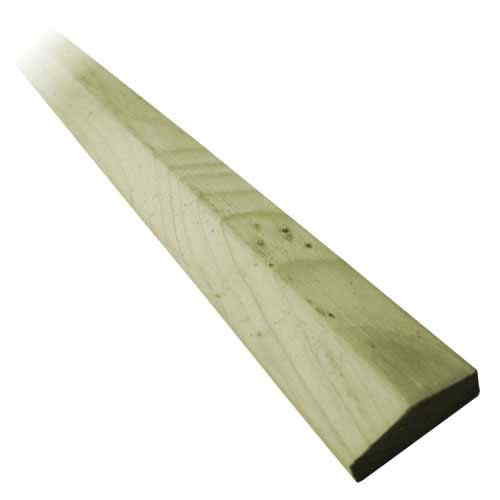
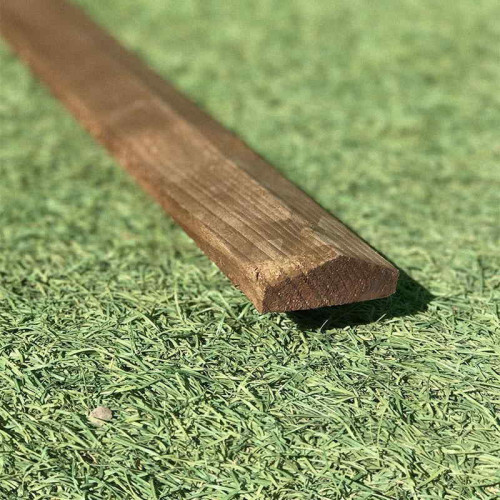
Panel capping is a narrow timber finishing section fitted horizontally along the upper edge of a fence panel.
Its main purposes are to:
- Create a neat finished top line
- Cover the exposed upper edge of compatible panels
- Help shed rainwater from the top of the fence
- Give separate fence panels a more continuous appearance
- Replace damaged or missing capping on suitable fencing
It is a finishing component rather than one of the primary structural elements of the fence.
The posts, rails and panel frame provide the main support. The capping finishes the top.
What Panel Capping Does East Coast Fencing Supply?
The current East Coast Fencing range includes pressure-treated timber fence capping measuring approximately:
- 1.83m long
- 45mm wide
- 16mm deep
It is available in green/natural and brown pressure-treated finishes.
The 1.83m length corresponds conveniently with the common nominal 6ft width used by many garden fence panels.
That does not mean you should order purely from the nominal panel width. Existing bays and individual panels should still be measured before installation.
What Does Panel Capping Actually Do?
Its most immediately visible job is to improve the appearance of the top of the fence.
A long boundary can contain numerous panel frames, board ends and small differences between sections. A consistent capping line helps visually connect those bays.
It can also cover the exposed upper edge of compatible timber fencing.
Because the capping sits above that edge, rain lands on the capping rather than directly on the panel beneath it.
It should therefore be considered both a finishing piece and a useful protective detail.
Does A Fence Need Panel Capping?
Not necessarily.
Many fences perform perfectly well without separately fitted capping.
Whether it is worth adding depends on:
- The type of panel
- How the upper edge is constructed
- Whether capping is already incorporated
- Whether appearance matters
- Whether replacement capping is required
For a compatible plain timber panel, adding capping can be a worthwhile finishing detail.
For a decorative panel with a deliberately shaped upper frame, it may be unnecessary or unsuitable.
Does Panel Capping Make A Fence Last Longer?
It can help protect the exposed upper edge of a suitable fence panel from direct weathering.
However, capping should not be treated as a guarantee of fence lifespan.
The long-term condition of a timber fence also depends on:
- Timber treatment
- Post condition
- Ground clearance
- Gravel boards
- Installation
- Exposure
- Maintenance
A capped panel sitting directly in wet soil can still develop problems at its lower edge.
Likewise, a beautifully capped fence supported by failing posts still has a structural problem.
Does Panel Capping Stop Water Getting Into A Fence?
It helps reduce direct exposure at the upper edge, but a garden fence remains an outdoor structure.
Rain can still reach:
- Panel faces
- Edges
- Joints
- Posts
- Fixings
Capping should therefore be thought of as a sensible weathering detail rather than a waterproof seal.
Does Panel Capping Help Shed Rainwater?
Yes, where the profile and installation are suitable.
A shaped capping section can encourage rainwater to move away from the exposed top edge rather than sitting directly on it.
This is one reason capping is preferable to simply placing an unsuitable flat piece of timber across the top of the panel.
Is Panel Capping Mainly Decorative?
No, although appearance is a major reason people use it.
Its role combines:
- Finishing
- Weather protection
- Visual continuity
On a prominent straight boundary, the difference can be particularly noticeable because the eye naturally follows the top line of the fence.
Does Panel Capping Make A Fence Look Better?
In many cases, yes.
A straight capping run can give a fence a more deliberate finished appearance.
It can help hide small visual differences between individual panel tops and make several bays appear more unified.
This is particularly useful where the fence is highly visible from:
- A patio
- Large windows
- A garden room
- An outdoor dining area
Which Fence Panels Can Use Panel Capping?
Capping is most naturally suited to compatible flat-topped timber panels where the top edge can accept the capping profile properly.
Examples may include certain:
- Closeboard panels
- Waney Lap panels
- Site-built timber fencing
- Repair projects where the original capping is missing
Compatibility should still be checked for the particular panel.
Do not assume every panel within a broad fencing category has the same top frame.
Can You Put Panel Capping On Closeboard Fence Panels?
Often, yes, where the panel construction and capping dimensions are compatible.
Closeboard fencing has a strong traditional appearance, and capping can create a particularly neat finish across a straight run.
This can be useful on both complete new installations and existing fences where suitable capping is missing or damaged.
Can You Put Panel Capping On Waney Lap Fence Panels?
Potentially.
A compatible straight capping section can help finish the upper edge and make a row of panels look more consistent.
Check the actual upper frame first.
Older Waney Lap panels may differ from modern replacement panels, so the existing fence should be measured rather than assuming a standard fit.
Can You Put Panel Capping On Decorative Fence Panels?
Sometimes.
Straight capping may work with certain flat-topped framed decorative panels where the dimensions are compatible.
However, many decorative panels are specifically designed around their upper frame or profile.
Separate straight capping may be unsuitable for:
- Curved panel tops
- Panels with an integral shaped frame
- Designs where the upper edge is already fully finished
Adding an unnecessary strip of capping can make a decorative panel look worse rather than better.
Can Omega Lattice Panels Use Straight Panel Capping?
A curved Omega-style upper profile is not naturally suited to a straight length of capping.
The curve is part of the panel design.
Trying to force a straight capping piece across it would interfere with that shape.
Can Double Slatted Fence Panels Be Capped?
Check the exact panel construction first.
Contemporary framed panels may already have a finished upper frame.
If that frame is already designed as the visible top edge, additional capping may be unnecessary.
Do not assume that a panel needs an extra finishing strip simply because capping is available separately.
Can Hit & Miss Panels Use Panel Capping?
Compatibility depends on the particular framed panel.
If the top frame already provides a finished edge, additional capping may offer little benefit.
Measure the upper frame and assess how the capping would actually sit before ordering.
Can Picket Fencing Use Panel Capping?
Traditional Picket fencing is generally not capped across the tops of the individual pales because the pale tops form part of the design.
Round and pointed tops, for example, are intended to remain visible.
Running ordinary panel capping across those tops would fundamentally change the appearance of the fence.
Can Site-Built Closeboard Fencing Be Capped?
Yes, capping can be particularly useful on site-built timber fencing.
A continuous capping section can finish the upper ends of the boards and give the completed run a more deliberate appearance.
As with panel fencing, the profile and dimensions need to suit the actual construction beneath it.
What Is The Difference Between Panel Capping And A Post Cap?
They are different components.
Panel capping runs horizontally along the top of fencing.
A post cap sits on top of an individual timber post.
| Component | Position | Main Purpose |
|---|---|---|
| Panel capping | Along top of fence panel | Finish and protect panel edge |
| Post cap | On top of individual post | Finish and protect post top |
A fence can use both.
What Is The Difference Between Panel Capping And A Fence Rail?
A fence rail is a structural component.
It supports boards or other fencing components between posts.
Panel capping is primarily a finishing component fitted at the upper edge.
The two should not be treated as interchangeable.
Can Panel Capping Replace A Broken Fence Rail?
No.
A narrow capping section should not be substituted for a structural rail.
If a rail or panel frame has failed, repair it using a component suitable for the structural job.
Capping should only be added once the fence beneath it is sound.
Is Panel Capping Structural?
It may add some local rigidity to the immediate top edge when securely fitted, but it should not be relied upon as the primary structure of the fence.
The strength of the fence should come from:
- Posts
- Rails
- Panel framing
- Correct fixings
If a panel is loose or distorted, fitting capping is not a substitute for repairing the actual problem.
Can Panel Capping Straighten A Warped Fence Panel?
It should not be relied upon to do so.
A mildly uneven top line may look tidier once capped, but significant distortion usually indicates an issue with:
- The panel
- The frame
- The posts
- The installation
Correct the underlying problem first.
Can Panel Capping Hide An Uneven Fence?
Only to a limited extent.
A straight line across the top can actually make badly misaligned panels more obvious.
Before fitting capping, check whether:
- The panels are level
- The posts are upright
- The bays step consistently on sloping ground
How Do You Measure For Panel Capping?
Measure the actual length and width of the upper edge that needs to be covered.
For an existing panel, check:
- Panel width
- Top frame width
- Any existing capping profile
- Posts or other obstructions at each end
If you have several existing bays, measure more than one.
Older fences can move over time, and not every bay necessarily remains identical.
Is Fence Capping The Same Length As A Standard Panel?
East Coast Fencing supplies capping in 1.83m lengths, which corresponds with the common nominal 6ft panel width.
However, actual fitting conditions still need to be checked.
Posts, trimming and differences between fence systems can all affect the required finished length.
Can Panel Capping Be Cut To Length?
Yes.
Timber capping can be cut where a shorter section is required.
This is useful for:
- End bays
- Non-standard panels
- Gateside sections
- Fence runs interrupted by walls
Measure before cutting and avoid shortening multiple pieces until the first fitted section has confirmed the measurements.
What Should You Do With Cut Ends?
Cutting pressure-treated timber exposes fresh timber from inside the section.
A suitable end-grain treatment should be applied to freshly cut surfaces in accordance with the relevant treatment guidance.
This is a good general habit when working with treated external fencing timber.
Should You Cut Panel Capping With A Hand Saw?
A suitable hand saw can be used for small jobs.
For larger runs, an appropriate powered timber saw may make repeated square cuts faster.
Whichever method is used:
- Mark the cut accurately
- Support the timber
- Use suitable protective equipment
- Keep the cut square unless the joint requires another angle
How Should Two Lengths Of Capping Meet?
Joints should be planned around suitable support where practical.
A loose joint floating above an unsupported part of the fence can look untidy and move independently.
Across a long run, consistent joint positioning produces a cleaner result.
Should Panel Capping Joints Meet Above Fence Posts?
That can be a neat way to plan the run where the panel and post arrangement permits it.
It gives each capping length a clear end point and can make individual sections easier to replace.
The exact detail will depend on whether the capping is intended to finish at the post or run visually across the panel line.
Can Panel Capping Run Continuously Across Several Panels?
A visually continuous capping line can look attractive, but standard timber lengths still need joints somewhere.
Plan those joints consistently rather than allowing them to fall randomly along the fence.
The supporting fence also needs to be properly aligned.
How Is Panel Capping Fixed?
The exact fixing arrangement depends on the panel and capping profile.
In general, use suitable exterior fixings that:
- Secure the capping firmly
- Penetrate adequately into suitable timber beneath
- Resist outdoor corrosion
- Do not unnecessarily split the capping
The fixing should hold the capping without crushing the timber or distorting its profile.
Should Panel Capping Be Screwed Or Nailed?
Either suitable exterior screws or appropriate nails may be used in some timber constructions.
Screws can make later removal easier.
That can be useful if:
- A panel needs replacing
- The capping becomes damaged
- Part of the fence needs dismantling
The important point is to use an exterior fixing appropriate to the timber thickness and installation.
Should You Pre-Drill Panel Capping?
Pre-drilling can reduce the risk of splitting, particularly near the ends of narrow timber sections.
It is especially worth considering where:
- Fixings are close to an end
- The capping section is relatively narrow
- A larger screw is being used
How Close To The End Should You Fix Panel Capping?
Avoid placing fixings unnecessarily close to the end grain.
Timber is more likely to split if a large fixing is driven too close to the end.
Position fixings consistently and sufficiently far from vulnerable edges while still securing the capping properly.
Should Capping Be Glued To A Fence Panel?
For outdoor fencing, proper mechanical fixings provide a more practical primary attachment than relying solely on adhesive.
External timber moves as moisture conditions change, so the fixing method needs to tolerate normal outdoor movement.
Can You Fit Panel Capping To An Existing Fence?
Yes, where the existing fence is compatible and structurally sound.
This can be a relatively simple way to improve the appearance of an established boundary.
Before fitting it, check:
- Whether capping is already present
- The condition of the top frame
- Whether the panels are level
- Whether posts are leaning
- Whether the new profile actually fits
Should You Add Capping To An Old Fence?
Only if the underlying fence remains worth maintaining.
If the panels are sound but the old top edge looks unfinished, new capping can be a useful improvement.
If several panels are:
- Rotten
- Loose
- Badly warped
- Structurally damaged
adding new capping is unlikely to be the best use of time or materials.
Can You Replace Damaged Panel Capping?
Yes.
One advantage of keeping capping as a separate component is that a damaged length may potentially be replaced without replacing the complete fence panel.
Remove the old section carefully and inspect the timber beneath it.
If the underlying top frame is damaged, repair that problem before fitting the replacement.
Why Does Panel Capping Split?
Possible reasons include:
- Normal timber movement
- Fixings too close to the ends
- Over-tightened screws
- Impact damage
- Excessive distortion in the panel beneath
Small surface checks do not necessarily mean the component has failed, but significant splitting around fixings may require attention.
Why Does Panel Capping Lift Off?
Loose capping can result from:
- Failed fixings
- Insufficient fixing
- Timber movement
- A distorted panel beneath
- Wind acting on a loose section
Do not simply hammer a loose component back into place without checking why it moved.
Can Wind Damage Panel Capping?
Properly fitted capping presents relatively little area compared with the fence panel itself, but a loose section can still be caught by strong wind.
Inspect any raised or rattling capping promptly.
A small loose section is much easier to repair before it breaks away or damages surrounding timber.
Does Panel Capping Affect Fence Wind Resistance?
Its effect is small compared with major choices such as panel height and whether the fence is solid or open.
Wind performance is far more dependent on:
- Panel design
- Fence height
- Posts
- Foundations
- Exposure
Capping should therefore be treated as a finishing detail rather than a solution for a windy garden.
Can Panel Capping Be Used On Sloping Fences?
Yes.
Where rigid panels are stepped down a slope, each section of capping can follow the individual panel.
Take particular care with alignment because the upper edge is highly visible.
The steps should appear deliberate and consistent.
Should Capping Follow The Ground Slope?
On stepped panel fencing, each panel and capping length generally remains level, with the overall fence changing height at the posts.
Running rigid capping at slightly different unintended angles can create an untidy top line.
How Do You Make Stepped Capping Look Neat?
Plan the full fence before fixing the first section.
Check:
- Panel levels
- Post positions
- Step heights
- Where each capping length begins and ends
On a visible sloping boundary, consistency matters more than trying to hide the fact that the fence is stepped.
Can Panel Capping Be Used Above A Gravel Board?
Yes.
The gravel board and capping perform completely different jobs.
The gravel board sits at the bottom of the fence and helps separate the timber panel from ground-level moisture.
Capping finishes the top.
Using both can provide a more complete approach to protecting and finishing a timber panel.
Panel Capping vs Gravel Boards: What Is The Difference?
| Component | Fence Position | Main Role |
|---|---|---|
| Panel capping | Top | Finishes and protects upper edge |
| Gravel board | Bottom | Separates panel from ground-level moisture |
They complement rather than replace each other.
Does Panel Capping Make A Fence Taller?
Only by the small amount represented by the capping profile itself.
It does not create a substantial increase in screening in the way that adding trellis would.
If the aim is additional privacy or meaningful extra height, capping is not the correct product for that purpose.
Is Panel Capping The Same As Fence Topper Trellis?
No.
A trellis topper is an open screening section that adds noticeable height above the fence.
Capping is a narrow timber finishing piece.
Trellis can:
- Increase screening
- Support climbing plants
- Add substantial visual height
Capping primarily finishes the existing upper edge.
Can You Fit Trellis Above Panel Capping?
It may be possible to design fencing that uses both, but the trellis needs its own suitable structural support.
Do not treat the narrow capping section itself as the main support for a substantial topper.
Trellis should normally transfer its load into appropriate posts or framing.
Can Panel Capping Be Used Around Gates?
Potentially, if the gate design has a compatible flat upper edge and matching capping improves the appearance.
However, many gates have their own finished top profile.
A matching fence does not mean every component needs identical capping.
Consider the whole entrance visually.
Should Gate Capping Line Up With Fence Capping?
Where compatible, a consistent top line can look very neat.
However, gate height, ground clearance and hinge arrangement may mean the top of the gate sits slightly differently from the adjacent panels.
Do not compromise correct gate operation simply to force the capping line to match perfectly.
Does Panel Capping Work With Wooden Fence Posts?
Yes.
Timber posts can create a consistent all-wood appearance with timber panels and capping.
Post caps can also be used where desired to finish the tops of the posts separately.
Does Panel Capping Work With Concrete Fence Posts?
Potentially.
The panel can still be capped even if the posts are concrete, provided the capping suits the panel itself and there is enough clearance within the fence arrangement.
The visual effect will differ from an all-timber fence, but the practical role of the capping remains the same.
Will Panel Capping Fit Between Slotted Concrete Posts?
Measure carefully.
If the capping projects beyond the panel width or thickness, it may interfere with the post slots or prevent the panel fitting correctly.
Do not add capping first and assume the completed panel will still slide freely into every existing concrete post system.
Can Capping Be Fitted After Panels Are In Concrete Posts?
Potentially, where access and clearances allow it.
Fitting the capping after the panel is installed can sometimes make it easier to judge the final alignment.
However, the exact method depends on how the capping and panel fit between the posts.
Should Panel Capping Match The Treatment Colour?
Matching the starting treatment colour normally creates the most consistent appearance.
East Coast Fencing currently supplies capping in:
- Green/natural
- Brown
This allows it to coordinate with many similarly treated fencing products.
Exact shade matching should not be expected because timber is a natural material.
Will Brown Panel Capping Match Every Brown Fence?
Not exactly.
Shade can vary because of:
- Timber variation
- Age
- Weather exposure
- Different treatment batches
New brown capping installed on an older weathered brown fence may initially look noticeably different.
The contrast often changes as the new timber weathers.
Will Green Panel Capping Stay Green?
Pressure-treated timber naturally changes appearance outdoors.
The initial green/natural colouring should not be expected to remain identical indefinitely.
Exposure to sunlight and weather gradually changes the appearance of the timber.
Is Brown Capping Better Than Green Capping?
Not simply because of colour.
The visible treatment colour is primarily an appearance choice and should not be used by itself to judge durability.
Choose the option that suits:
- The existing panels
- The posts
- Other timber in the garden
Is Panel Capping Pressure Treated?
The current East Coast Fencing panel capping range is pressure treated for outdoor use.
This is appropriate for a component that remains exposed to the weather throughout the year.
Can Pressure-Treated Panel Capping Be Painted?
Pressure-treated timber can generally be given a suitable exterior decorative finish once it is sufficiently dry and correctly prepared.
Follow the coating manufacturer's instructions.
Fresh treated timber may contain enough moisture to interfere with some finishes, so avoid applying a coating simply because the timber has just been installed.
Can Panel Capping Be Stained?
A compatible exterior timber finish may be used where appropriate once the timber is ready to accept it.
This can be useful when:
- Matching older fencing
- Changing the overall colour scheme
- Creating a more uniform appearance
Should You Paint Capping Before Installing It?
That can make some surfaces easier to reach.
However, cut ends and fixing points may still need attention after installation.
Make sure the timber is suitably dry and prepared before applying the chosen finish.
Does Capping Need Regular Maintenance?
It is sensible to inspect it whenever you check the rest of the fence.
Look for:
- Loose fixings
- Raised sections
- Splits
- Movement at joints
- Surface algae
Because capping sits at the top of the fence, problems can sometimes be overlooked until a section becomes noticeably loose.
Can Green Algae Grow On Panel Capping?
Yes.
Like other outdoor timber, capping can develop green surface growth where conditions remain damp and shaded.
This may be particularly noticeable on:
- North-facing fences
- Fences beneath trees
- Boundaries beside dense planting
Surface algae does not automatically mean the timber has structurally failed.
How Should Panel Capping Be Cleaned?
Use a gentle approach.
- Remove loose leaves and vegetation.
- Brush away surface debris.
- Use a suitable mild timber cleaner if required.
- Treat persistent organic growth with an appropriate timber-safe product where necessary.
- Allow the timber to dry.
Can You Pressure Wash Panel Capping?
Use caution.
Excessive pressure can:
- Raise timber fibres
- Damage edges
- Strip decorative coatings
Because the capping is a relatively small timber section, aggressive washing is usually unnecessary.
Should Overhanging Plants Be Kept Away From Capping?
Some vegetation near the fence is perfectly normal, but dense growth can keep the upper edge damp and make inspection difficult.
Trim plants where necessary so you can check:
- The capping
- Its fixings
- The top of the panel
Can Ivy Damage Panel Capping?
Dense mature climbing growth can make fence maintenance more difficult regardless of the panel style.
The main issues are:
- Added weight
- Moisture retention
- Hidden damage
- Difficult access to fixings
Keep vigorous climbers controlled rather than allowing them to completely conceal the top of the fence.
Can You Use Panel Capping To Cover A Rough Cut?
It can conceal the upper edge visually where the underlying construction is otherwise suitable.
However, capping should not be used to hide poor structural workmanship.
If boards have been cut unevenly, make sure the resulting top line is still suitable before covering it.
Does Capping Need To Be Perfectly Level?
On an individual level fence panel, the capping should generally follow the panel accurately.
A slightly sloping capping section can be surprisingly obvious because the eye naturally follows the top edge.
Use a spirit level and check the panels themselves before fixing a long run.
What If The Fence Panels Are Different Heights?
Do not use capping to disguise major differences.
First establish why the heights vary.
Possible reasons include:
- Different panel sizes
- Sloping ground
- Post movement
- Incorrect previous installation
Decide whether the variation is deliberate before fitting the final top line.
Can Panel Capping Be Used On A Curved Fence Run?
Straight timber capping is naturally suited to straight fence bays.
A boundary formed from several straight bays can approximate a curve by changing direction at posts.
Trying to force a rigid length to bend around a significant curve can cause splitting or poor alignment.
Can Panel Capping Be Used At Fence Corners?
Yes.
The two capping runs need to meet neatly at the corner.
Depending on the desired appearance, the joint can be planned with:
- Square cuts
- Appropriate angled cuts
Measure the actual corner rather than assuming it is exactly 90 degrees.
Should Capping Be Mitred At Corners?
A mitred joint can create a neat result where the profiles align correctly.
However, a clean square joint can also work depending on the fence design.
The most important points are accurate cutting, good support and a joint that does not leave exposed awkward gaps.
Can Panel Capping Be Used On A Garden Gate?
Potentially, but only when the gate construction suits it.
Some gates already have a finished upper rail or shaped top.
Do not add capping merely to make the gate identical to the adjacent fence if it interferes with the intended design.
Can Capping Help Match A Gate And Fence?
Yes, where compatible.
Repeating the same timber finish or upper detail can help visually connect:
- The gate
- The fence panels
- The posts
Matching proportions usually matter more than forcing every component to be identical.
How Much Panel Capping Do You Need?
Start with the total length of compatible fencing that will be capped.
Then account for:
- Standard capping lengths
- Short end bays
- Corners
- Cutting
- Any sections that do not require capping
Do not simply multiply the number of fence panels without checking whether every bay is the same width.
Should You Buy Extra Panel Capping?
A modest allowance can be useful where cutting is required.
Extra material can cover:
- A cutting mistake
- An unexpected short section
- A damaged piece
- A future minor repair
A large amount of unnecessary surplus is not required, but planning to the exact millimetre can leave no margin for error.
Can Capping Offcuts Be Reused?
Potentially.
Useful offcuts may suit:
- Short fence sections
- Minor repairs
- Small timber projects
Plan cuts from the longest required sections first to minimise waste.
Is Panel Capping Expensive?
Cost varies and should be considered as part of the complete fencing project rather than in isolation.
For a new fence, the larger costs usually relate to major components such as:
- Fence panels
- Posts
- Gravel boards
- Foundations
- Installation
Capping is a comparatively small finishing component, but a long boundary can require many lengths.
Is Panel Capping Worth Adding?
It can be particularly worthwhile when:
- The panel is compatible
- The boundary is highly visible
- You want a neater continuous top line
- The exposed upper edge would benefit from additional protection
It is less worthwhile where the panel already has a finished top or where the fencing itself is approaching replacement.
Should You Add Capping During A New Fence Installation?
If the chosen panel system is compatible, planning capping from the beginning usually produces the neatest result.
You can make sure:
- Panels are aligned consistently
- Capping joints are planned
- Cut sections are positioned neatly
- Treatment colours coordinate
Should You Fit Panel Capping Before Or After Installing Panels?
The best order depends on the fence system.
For some installations, fitting panels first makes it easier to establish a consistent finished line before attaching capping.
For others, access may be easier before the panel is fully positioned.
Always consider whether adding capping changes the overall panel thickness or affects installation between posts.
Can Capping Stop A Panel Fitting Between Posts?
Potentially, if the capping projects beyond the panel dimensions.
This is particularly relevant with slotted concrete posts or tightly spaced timber bays.
Check clearances before fitting the capping permanently.
Can Panel Capping Make Replacing Panels Harder?
It can if several panels have effectively been tied together by a continuous capping arrangement.
If easy future replacement is important, consider how individual sections will be removed.
Using removable mechanical fixings and sensible joint positions can make later maintenance easier.
Should Panel Capping Be Removed Before Replacing A Fence Panel?
Usually, any capping that prevents the panel being removed will need to be released first.
Take care not to damage reusable sections.
Once the replacement panel is fitted and aligned, the capping can be reinstated if it remains suitable.
What If The New Replacement Panel Is A Different Thickness?
Check the capping fit before reinstalling it.
A piece that suited the old panel may not sit correctly on a differently constructed replacement.
Do not force narrow capping over a wider frame.
Can Old Panel Capping Be Reused?
Yes, if it remains:
- Structurally sound
- Correctly sized
- Free from serious splitting
- Suitable for the replacement panel
However, old weathered capping can be brittle, so remove it carefully.
How Do You Know If Panel Capping Needs Replacing?
Replacement may be worth considering when it is:
- Broken
- Badly split around fixings
- Missing in sections
- Repeatedly lifting
- Structurally deteriorated
Surface weathering alone does not necessarily mean replacement is required.
Can You Replace One Length Of Capping?
Yes.
A localised repair is one of the advantages of using separate capping lengths.
The new timber may look different initially because the surrounding sections have weathered.
That colour difference will usually change over time.
Panel Capping vs No Capping
| Consideration | With Capping | Without Capping |
|---|---|---|
| Top line | More finished | Panel edge remains visible |
| Upper-edge weathering | Additional protection | More directly exposed |
| Installation work | Additional cutting and fixing | No additional component |
| Compatibility | Must suit panel top | Not relevant |
| Future maintenance | Capping can be separately inspected | Fewer components |
When Should You Use Panel Capping?
It is worth considering when:
- The fence panel has a compatible flat upper edge
- You want a neater finished appearance
- The upper panel edge is exposed
- You are building custom closeboard fencing
- You are replacing damaged existing capping
- You want a consistent top line across several bays
When Should You Avoid Panel Capping?
Do not add it automatically where:
- The panel has a curved top
- The upper frame is already designed as the finished edge
- The capping profile does not fit
- The fence is structurally failing
- The capping would interfere with concrete post slots
- The addition makes a decorative panel look unnecessarily bulky
Common Panel Capping Mistakes
- Assuming capping fits every fence panel
- Ordering from nominal panel width without measuring
- Trying to cap a curved decorative panel
- Forcing narrow capping over a wider upper frame
- Using capping to disguise a structurally damaged fence
- Installing it before checking concrete post clearance
- Using fixings that are unsuitable outdoors
- Placing fixings too close to the timber ends
- Over-tightening screws
- Ignoring freshly cut treated timber ends
- Leaving joints unsupported or randomly positioned
- Fitting a perfectly straight top line to badly leaning panels
- Confusing panel capping with structural fence rails
- Confusing panel capping with post caps
Panel Capping Buying Checklist
- Confirm that the fence panel is suitable for capping.
- Measure the actual panel width.
- Measure the upper frame thickness.
- Check concrete post clearance where relevant.
- Decide whether green/natural or brown best suits the fence.
- Calculate the total length required.
- Allow sensible material for cutting.
- Plan where joints will fall.
- Choose suitable exterior fixings.
- Prepare a suitable treatment for fresh cut ends.
- Check existing panels and posts are sound before installation.
- Consider future panel replacement when deciding how capping sections will be fixed.
FAQs
What Is Panel Capping?
It is a narrow timber finishing section fitted along the top of compatible fence panels.
What Does Panel Capping Do?
It creates a neater top line and helps protect the exposed upper edge of suitable timber fencing from direct weathering.
Does Every Fence Need Panel Capping?
No. Some panels already have a finished upper frame or a shaped top that does not require separate capping.
Does Panel Capping Protect A Fence?
It provides additional protection to the upper edge, but the overall performance of the fence still depends on treatment, posts, installation, ground clearance and maintenance.
Does Panel Capping Stop Rainwater?
It can help shed rainwater away from the top edge, but it does not make an outdoor timber fence waterproof.
Does Panel Capping Make A Fence Look Better?
It can create a cleaner, more continuous top line, particularly across long straight boundaries.
Can Closeboard Fence Panels Be Capped?
Often, yes, where the panel construction and capping dimensions are compatible.
Can Waney Lap Fence Panels Be Capped?
Potentially. Measure the actual upper frame before choosing capping.
Can Decorative Fence Panels Be Capped?
Some flat-topped decorative panels may be compatible, but curved or already-finished designs may not be suitable.
Can Omega Lattice Panels Be Capped?
A straight capping section is not naturally suited to the curved upper profile of an Omega-style panel.
Can Slatted Fence Panels Be Capped?
Check the exact construction. Many framed slatted panels already have a finished upper edge.
Can Picket Fencing Be Capped?
Traditional Picket fencing is generally left with the individual pale tops visible, so conventional panel capping is not normally part of the design.
What Size Is East Coast Fencing Panel Capping?
The current range includes approximately 1.83m x 45 x 16mm pressure-treated fence capping.
What Colours Is Panel Capping Available In?
The current East Coast Fencing range includes green/natural and brown pressure-treated finishes.
Is Panel Capping Pressure Treated?
The current East Coast Fencing panel capping range is pressure treated for outdoor use.
Can Panel Capping Be Cut?
Yes. It can be shortened to suit end bays, non-standard fence sections and other custom requirements.
Should Cut Ends Be Treated?
Freshly exposed surfaces on pressure-treated timber should receive a suitable end-grain treatment where appropriate.
Can Panel Capping Be Screwed On?
Yes, suitable exterior screws can be used where appropriate for the capping and supporting timber.
Can Panel Capping Be Nailed On?
Suitable exterior nails may also be appropriate for some installations.
Should Panel Capping Be Pre-Drilled?
Pre-drilling can help reduce splitting, particularly near ends and edges.
Can Capping Be Added To An Existing Fence?
Yes, provided the existing panels are compatible and structurally sound.
Can Panel Capping Be Replaced?
Yes. Damaged individual sections can potentially be removed and replaced without replacing the entire fence panel.
Can Old Panel Capping Be Reused?
Potentially, if it remains sound and fits the replacement panel correctly.
Is Panel Capping The Same As A Post Cap?
No. Panel capping runs along the fence, while a post cap sits on top of an individual post.
Is Panel Capping The Same As A Fence Rail?
No. Rails are structural supports. Capping is primarily a finishing component.
Can Panel Capping Replace A Broken Rail?
No. A damaged structural rail should be repaired with a component appropriate to that role.
Does Panel Capping Make A Fence Taller?
Only by the small depth of the capping itself. It is not intended to create meaningful additional privacy or screening height.
Is Panel Capping The Same As Trellis?
No. Trellis is a much larger open screening structure. Capping is a narrow finishing section.
Can Panel Capping Be Used With Gravel Boards?
Yes. Gravel boards protect and finish the lower part of the fence, while capping finishes the upper edge.
Can Panel Capping Be Used With Wooden Posts?
Yes. It can form part of an all-timber fencing system.
Can Panel Capping Be Used With Concrete Posts?
Potentially. Check that the capping does not interfere with the post slots or panel installation.
Can Panel Capping Be Painted?
Pressure-treated timber can generally be given a suitable exterior decorative finish once it is sufficiently dry and correctly prepared.
Can Panel Capping Be Stained?
A compatible exterior timber finish can be used where appropriate once the timber is ready to accept it.
Can Panel Capping Develop Green Algae?
Yes. Like other outdoor timber, it can develop surface growth in damp and shaded conditions.
Can You Pressure Wash Panel Capping?
Use caution because excessive pressure can damage timber fibres and edges.
Can Panel Capping Be Used On A Slope?
Yes. On stepped panel fencing, each capping section can follow the level of its individual panel.
Is Panel Capping Worth It?
It is particularly worthwhile when the fence is compatible and you want a cleaner finished appearance with additional protection for the exposed upper edge.
Should You Add Panel Capping To Your Fence?
If you have a compatible flat-topped timber fence, capping is a relatively simple detail that can noticeably improve the finished result.
Its most obvious benefit is appearance. A consistent top section helps separate fence panels read as one continuous boundary rather than a collection of individual bays.
It also provides useful protection over the exposed upper edge and can help rainwater shed away from that part of the panel.
However, capping should not be added automatically.
Check the fence first.
A shaped decorative panel, curved Omega-style panel or contemporary framed panel may already have exactly the top finish it needs. Adding another timber strip can interfere with the design or simply be unnecessary.
If the fence is older, inspect the panels and posts before spending time improving the top edge. New capping will not solve rotten framing, loose posts or badly distorted panels.
Measure the actual upper frame rather than relying only on the nominal panel size. This is particularly important when working with existing concrete posts or replacement panels, where a slightly wider capping profile could affect clearance.
For suitable fencing, pressure-treated panel capping provides a straightforward finishing touch: a cleaner top line, a more complete appearance and additional protection where the panel is most directly exposed from above.