





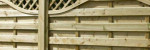

Quick answer: A good-quality garden fence combines well-constructed panels with correctly sized posts, adequate foundations, suitable gravel boards and durable exterior fixings. Look beyond timber colour and panel thickness alone. Check the frame, board support, treatment specification, post dimensions, gate construction and installation quality. A modest panel on strong supports can outperform an expensive decorative panel installed on weak posts or shallow foundations.
Two garden fences can look almost identical when newly installed but perform very differently over time. The difference is rarely explained by one feature alone.
Good fencing depends on the complete system. Panels provide privacy and appearance, but posts transfer wind pressure into the ground. Gravel boards protect the panel base, fixings hold the structure together, and foundations prevent the supports from moving.
Timber treatment also matters, but it should not be confused with structural strength. A pressure-treated panel may have good preservative protection while still being too light for a demanding location. A substantial panel can also fail prematurely if it rests against wet soil or is fitted between unstable posts.
This guide explains how to judge fence-panel construction, posts, gravel boards, gates, fixings, treatment and installation so that you can compare complete fencing systems rather than relying on appearance or price alone.
What Does Good-Quality Fencing Look Like?
A good-quality fence should be:
- Suitable for its intended purpose
- Compatible with the site conditions
- Supported by correctly selected posts
- Installed into adequate foundations
- Protected from prolonged ground contact
- Fixed with suitable exterior components
- Aligned consistently
- Maintainable and repairable
Quality does not necessarily mean choosing the heaviest or most expensive available product.
A low picket fence in a sheltered front garden has different requirements from a full-height closeboard boundary beside an open field. The better-quality result is the one designed correctly for the actual use.
Fence Quality At A Glance
| Component | Quality Indicator | Warning Sign |
|---|---|---|
| Panel frame | Rigid, square and securely joined | Twisted frame or opening joints |
| Boards or slats | Consistently supported and fixed | Loose ends or irregular gaps |
| Timber treatment | Suitable for outdoor use | Unclear or unsuitable specification |
| Posts | Correct section, length and material | Undersized or already moving |
| Foundations | Designed for height, soil and exposure | Shallow or poorly compacted support |
| Gravel boards | Fully supported and above unstable soil | Bowing, cracked or retaining soil |
| Fixings | Exterior grade and correctly positioned | Indoor screws or fixings through thin boards |
| Garden gate | Rigid frame and substantial hinge post | Sagging frame or lightweight support |
| Installation | Straight, upright and consistently spaced | Leaning posts or forced panels |
Start With The Purpose Of The Fence
A fence cannot be judged properly without knowing what it is expected to do.
Its purpose may include:
- Providing privacy
- Defining a front boundary
- Containing pets
- Screening a patio
- Allowing airflow through an exposed garden
- Supporting climbing plants
- Providing security around a rear garden
- Creating a decorative feature
A panel that performs well as a low decorative divider may be unsuitable for a tall exposed boundary.
Quality therefore begins with correct product selection rather than construction alone.
Does A Heavier Fence Panel Always Mean Better Quality?
No. Weight may indicate more timber or a more substantial frame, but it does not prove that the product is better for every situation.
A heavy panel may:
- Require larger posts
- Need more substantial foundations
- Be harder to install safely
- Place greater loads on existing supports
A lighter panel may be entirely appropriate for:
- A low picket boundary
- A sheltered garden division
- A temporary screen
- An existing post system with limited capacity
Compare the construction and intended use rather than judging quality by weight alone.
How Important Is The Panel Frame?
The outer frame supports the boards, slats or lattice and transfers loads into the posts.
A good frame should:
- Hold the panel square
- Support every board or slat
- Provide substantial fixing positions
- Resist twisting during handling
- Remain secure around the corners
Check the frame for:
- Open joints
- Large splits
- Loose fixings
- Severe twisting
- Boards ending without support
- Damage caused during delivery
The panel should be lifted and fixed through its main frame rather than through decorative boards, lattice or thin slats.
Should A Fence Panel Be Perfectly Square?
A framed panel should be reasonably square and capable of fitting within the intended bay without being forced.
Small variations can occur because timber is a natural material. Significant distortion can make installation difficult and may create:
- Uneven gaps beside posts
- A sloping panel top
- Pressure against concrete-post slots
- Loose corners
- Difficulty fitting gravel boards
Do not use post fixings to pull a severely twisted panel into shape. This can transfer unnecessary stress into the frame and supports.
How Should Boards And Slats Be Supported?
Every board or slat should be attached securely to the panel structure.
Look for:
- Consistent fixing positions
- Board ends supported by frames or rails
- No large unsupported sections
- No fixings excessively close to split edges
- No loose boards moving independently
This is particularly important when panels are shortened. Cutting a panel without fitting a new side frame leaves unsupported board ends and reduces the strength of the panel.
Does Board Thickness Determine Quality?
Board thickness is one useful comparison point, but it should not be assessed alone.
Performance also depends on:
- The number of supporting rails
- The distance between supports
- The frame dimensions
- The fixing method
- Timber condition
- Panel height
- Wind exposure
A thicker board with weak framing may perform less effectively than a thinner board supported by a well-designed structure.
What Makes A Good Closeboard Fence Panel?
Closeboard panels use overlapping vertical feather edge boards held within a frame.
A good closeboard panel should have:
- A rigid external frame
- Consistent board overlap
- Boards secured to supporting rails
- A sound lower frame
- Suitable pressure treatment
- No unsupported board ends
Closeboard panels provide solid privacy but catch substantial wind. Their quality cannot be separated from the posts and foundations used to support them.
Standard Or Ultra Heavy Duty Closeboard?
Standard closeboard panels provide a practical solid boundary for many domestic gardens.
Ultra heavy duty closeboard panels use a more substantial framed construction and may be preferred where:
- A heavier panel is wanted
- The fence is highly visible
- The supporting posts are sufficiently substantial
- Handling access is suitable
The heavier-duty panel should not be installed on weak existing posts merely because it appears stronger.
What Makes A Good Waney Lap Panel?
Waney lap panels use overlapping horizontal boards.
Check that:
- The boards overlap consistently
- The horizontal boards remain attached to the frame
- The rear supporting rails are secure
- The lower corners are not damaged
- The frame is not twisting
Waney lap panels can provide good general screening, but lightweight construction requires secure fixing in exposed gardens.
What Makes A Good Picket Panel?
Picket fencing should have evenly spaced pales secured to sound horizontal rails.
Inspect:
- Pale spacing
- Rail dimensions
- Pale-to-rail fixings
- Round-top or point-top consistency
- The lower clearance from soil
- The condition of the end pales
Where the fence is intended to contain a pet, the spacing and ground clearance are part of its practical quality.
An attractive picket panel that allows the intended pet to escape is not suitable for the job.
What Makes A Good Hit And Miss Panel?
Horizontal hit and miss panels position boards alternately on both sides of the frame.
A well-made panel should have:
- Consistent board spacing
- A balanced appearance from both faces
- Secure horizontal boards
- A rigid outer frame
- No loose internal components
The openings are intentional and allow more airflow than a solid fence.
Do not treat visible gaps as a quality defect unless they are irregular or caused by loose boards.
What Makes A Good Double Slatted Panel?
Double slatted panels use horizontal slats across both faces of the frame.
Check:
- Slat spacing
- Fixing consistency
- The condition of narrow slat edges
- Alignment between the two faces
- The rigidity of the outer frame
The design provides filtered screening rather than a completely solid barrier.
Individual slats should not be used as lifting points. The complete panel should be handled through its main frame.
What Makes A Good Omega Lattice Panel?
Omega lattice panels combine a solid lower section with a curved lattice top.
Inspect:
- The lower solid panel frame
- The curved upper frame
- Lattice intersections
- Thin timber strips
- The transition between solid and open sections
Decorative lattice should be secure without being relied upon as the principal structural part of the panel.
Heavy climbing plants may require independent support rather than placing all mature weight onto the lattice.
Does Pressure Treatment Mean High Quality?
Pressure treatment is a valuable preservative feature, but it does not determine the complete quality of a fence.
It improves resistance to biological deterioration by introducing preservative into suitable timber under controlled conditions.
Pressure treatment does not automatically make timber:
- Structurally stronger
- Waterproof
- Maintenance free
- Unable to split or move
- Suitable for every ground-contact application
A pressure-treated panel still needs sound framing, adequate posts and protection from prolonged contact with wet soil.
Brown Or Green Pressure-Treated Timber?
Brown and green describe the initial treatment colour.
Colour alone does not determine:
- Panel strength
- Treatment depth
- Post capacity
- Expected lifespan
- Ground-contact suitability
Choose the colour according to the desired appearance and compatibility with existing fencing.
Both finishes will change as the timber weathers.
Are Knots A Sign Of Poor-Quality Timber?
Knots are natural features of softwood and are not automatically defects.
Concern increases where a knot:
- Falls out and leaves a large opening
- Weakens a narrow structural section
- Causes severe splitting around fixings
- Appears in a critical gate or frame joint
Natural variation should be distinguished from damage that affects structural performance.
Are Surface Cracks A Quality Problem?
Timber expands and contracts as moisture levels change. Surface checks can therefore develop naturally.
They become more concerning where:
- The timber separates completely
- The frame loses rigidity
- Fixings become loose
- Water collects in a deep opening
- The component twists significantly
A small drying check is different from a broken frame rail or split gate post.
How Important Are Fence Posts?
Posts are among the most important parts of the complete fence.
They resist:
- Wind pressure
- Panel weight
- Gate movement
- Ground movement
- Loads from trellis and plants
A good panel installed on inadequate posts is not a good-quality fence.
What Makes A Good Timber Fence Post?
A timber post should have a section and length appropriate to the fence.
Available square sections commonly include:
- 75 x 75mm
- 100 x 100mm
A 75 x 75mm post may be suitable for selected low or lightweight fencing.
A 100 x 100mm post provides a more substantial starting point for:
- Full-height panels
- Solid closeboard fencing
- Heavy decorative panels
- Exposed boundaries
- Trellis carrying plants
Inspect timber posts for:
- Severe twist
- Deep structural splits
- Damage at the base
- Large defects around fixing positions
- Unprotected fresh cuts
What Makes A Good Concrete Fence Post?
Concrete posts should be straight, correctly configured and free from significant structural damage.
The principal configurations include:
- Intermediate posts
- End posts
- Corner posts
- Three-way posts
Check for:
- Long cracks
- Broken slots
- Loose surface concrete
- Exposed reinforcement
- Damage caused during delivery
Minor surface marks may not affect performance. Significant cracking or exposed steel requires closer assessment.
Are Concrete Posts Better Than Timber Posts?
Each material has advantages.
Timber Posts
- Natural appearance
- Easier handling
- Straightforward drilling and fixing
- Flexible for custom construction
Concrete Posts
- Do not rot
- Require limited routine maintenance
- Work well with removable framed panels
- Pair naturally with concrete gravel boards
Quality depends on choosing the appropriate system and installing it correctly rather than selecting one material as universally superior.
Why Does Post Length Matter?
The post must provide enough visible height and enough below-ground support.
Calculate the required length from:
- Panel height
- Gravel-board height
- Trellis height
- Foundation depth
- Ground slope
- Any post projection above the panel
A post with a total length equal to the visible fence height will not provide adequate material below ground.
How Deep Should Good-Quality Fence Posts Be?
There is no universal depth suitable for every fence.
The required support depends on:
- Fence height
- Panel solidity
- Post section
- Foundation width
- Soil strength
- Wind exposure
- Gate loads
A good installer should be able to explain how the proposed foundation relates to the actual site rather than relying on one depth for every project.
What Makes A Good Fence-Post Foundation?
The foundation should keep the post upright and resist movement from wind and ground pressure.
A suitable installation includes:
- A correctly positioned hole
- Adequate depth and width
- Stable surrounding ground
- Accurate post alignment
- Temporary bracing
- Foundation material used according to instructions
Rapid-set post mix can provide an effective foundation for suitable projects. It cannot compensate for an undersized excavation or unstable soil.
Why Are Gravel Boards Important?
Gravel boards separate the timber panel from the ground.
They help protect against:
- Wet soil
- Mud splash
- Grass contact
- Fallen leaves
- Strimmer damage
A good-quality panel resting directly on damp soil may deteriorate earlier than a more modest panel installed above a suitable gravel board.
What Makes A Good Wooden Gravel Board?
A wooden gravel board should be:
- Pressure treated
- Supported at both ends
- Correctly fixed
- Free from severe bowing
- Protected at fresh cuts
- Kept clear of unnecessary soil build-up
Wooden gravel boards provide a consistent all-timber appearance and can be cut for shortened bays.
What Makes A Good Concrete Gravel Board?
A concrete gravel board should:
- Fit the post slots correctly
- Remain fully supported
- Sit level or follow a planned step
- Remain free from significant structural cracks
- Have no exposed reinforcement
Concrete boards do not rot, but they should not be expected to retain a significant bank of soil unless the complete structure has been designed for that purpose.
Are Lightweight Concrete Gravel Boards Low Quality?
Not automatically. Lightweight rebated concrete gravel boards are designed to reduce handling weight while performing a particular fencing role.
Quality should be judged by:
- Compatibility with the post system
- Condition
- Support
- Installation
- Suitability for the site
The word lightweight should not be confused with disposable or temporary.
How Important Are Fence Fixings?
Fixings connect the panel, posts and gate components.
Good fixings should be:
- Suitable for exterior use
- Compatible with treated timber
- Long enough for the connection
- Positioned through substantial framing
- Installed without splitting the timber
Possible fencing components include:
- Fence-panel clips
- Exterior screws
- Panel security brackets
- Structural screws
- Exterior nails
- Bolts and washers
Indoor screws are not a suitable substitute simply because they are readily available.
How Many Fixings Should A Fence Panel Have?
The required number depends on:
- Panel height
- Panel weight
- Frame construction
- Post material
- Wind exposure
- Fixing type
Tall panels normally require secure restraint at more than one height.
Fixing only through the middle of a full-height panel can allow the top and bottom to move excessively.
What Makes A Good Garden Gate?
A good garden gate should combine rigid framing with suitable bracing, secure ironmongery and substantial gate posts.
Check:
- The outer frame
- The diagonal or structural bracing
- The hinge positions
- The latch alignment
- The ground clearance
- The gate-post section
A gate should open freely without dragging, twisting or forcing the hinge post to move.
Why Do Gate Posts Need To Be Larger?
A gate applies leverage to one post every time it opens, closes or catches the wind.
Dedicated gate posts are available in a substantial 150 x 150mm section and 3.0m length.
The correct size still depends on:
- Gate weight
- Gate width
- Gate height
- Wind exposure
- Ground conditions
A heavy gate should not be hung from an ordinary lightweight fence post merely because the colour and material match.
What Makes Good Gate Ironmongery?
Gate fittings should suit the size, weight and framing of the gate.
Common components include:
- Tee hinges
- Ring latches
- Pad bolts
- Gate stops
- Exterior screws or bolts
Hinges should fix through substantial horizontal framing rather than thin feather edge boards or decorative slats.
A large hinge fitted with unsuitable short screws does not create a strong connection.
What Makes A Good Traditional Feather Edge Fence?
Traditional closeboard fencing is assembled on site using individual feather edge boards fixed to rails between posts.
Quality indicators include:
- Correctly selected posts
- Secure cant rails
- Consistent board overlap
- Boards fixed through their thicker edges
- A suitable gravel board
- Protected fresh cuts
- A consistent top line
Traditional construction can work particularly well on slopes and non-standard boundaries because the boards are positioned individually.
How Much Should Feather Edge Boards Overlap?
The boards need a consistent overlap sufficient to create a solid screen and allow for natural timber movement.
Quantity calculations should be based on effective coverage after overlap rather than the full board width.
An inconsistent overlap can create:
- Visible gaps
- Uneven appearance
- Wasteful timber use
- Weak fixing positions
A simple spacing gauge helps maintain a consistent installation.
Should Feather Edge Boards Be Nailed Or Screwed?
Both suitable exterior nails and screws can be used.
Nails provide quick installation and allow natural timber movement.
Screws provide controlled fixing and make individual board replacement easier.
Whichever method is used:
- Fix through the thicker edge
- Avoid splitting the board
- Use exterior fixings
- Do not restrict overlapping boards unnecessarily
Does A Straight Fence Mean It Is Well Built?
A straight fence is a positive sign, but alignment alone does not prove the quality of the hidden foundations or materials.
A properly installed fence should be checked for:
- A consistent fence line
- Posts upright in two directions
- Regular bay spacing
- Level or deliberately stepped gravel boards
- Panels free from forced distortion
- Secure gates
Freshly installed shallow posts may look straight before wind and wet ground test the foundations.
How Should Fence Panels Fit Between Posts?
Panels should fit securely without being forced into a bay that is too narrow.
In timber-post systems, the panel should provide appropriate space for the selected clips or fixing method.
In concrete-post systems, the panel frame should:
- Fit within the slots
- Have enough engagement on both sides
- Lower without excessive force
- Rest fully on the gravel board
A panel that is too narrow can rattle or escape from one slot. A frame that is too thick can damage the panel or concrete post.
What Makes A Good Fence On A Slope?
A good sloping fence should follow a planned approach rather than being adjusted randomly from bay to bay.
Stepped Panels
Rigid framed panels normally remain level while each bay steps up or down the slope.
The installation should use:
- Appropriate post lengths
- Consistent step heights
- Supported gravel boards
- Managed gaps beneath panels
Raked Traditional Fencing
Individual feather edge boards can follow the ground more closely.
The posts remain upright while rails and board lengths are arranged for the slope.
What Makes A Good Fence In A Windy Garden?
Quality in an exposed garden depends heavily on the complete structural system.
Consider:
- An open panel where suitable
- Substantial posts
- Adequate below-ground support
- Secure panel fixings
- Reduced overall height where appropriate
- Ground stability
Horizontal hit and miss, double slatted, picket and trellis designs allow more airflow than solid closeboard or waney lap panels.
They are not automatically wind-proof. Posts and foundations still need to be suitable.
What Makes A Good Fence In Wet Ground?
Persistent moisture places additional demands on timber components and foundations.
A suitable system may include:
- Concrete posts
- Concrete gravel boards
- Pressure-treated panels
- Improved drainage
- Panels held clear of soil
Timber posts can still be used where their treatment and installation suit the conditions.
Waterlogged ground may also require a more carefully considered foundation rather than simply adding more post mix.
Does A Quality Fence Need Maintenance?
Yes. Good materials and installation reduce avoidable problems but do not eliminate maintenance.
Inspect the fence for:
- Post movement
- Loose fixings
- Rot near ground level
- Broken boards
- Gate sag
- Cracked concrete
- Heavy plant growth
- Soil and leaves around the base
Prompt maintenance helps prevent one loose component from damaging neighbouring bays.
Can Good-Quality Fencing Be Painted?
Pressure-treated timber can be painted or stained once it is sufficiently dry and the chosen coating is compatible.
Before coating:
- Remove algae and dirt
- Allow the timber to dry
- Repair loose boards
- Remove flaking paint
- Protect exposed cuts
Paint improves appearance and can provide additional surface protection. It cannot repair rotten framing or unstable posts.
How Can You Judge Fence Quality Before Buying?
When inspecting panels and components before installation:
- Confirm the dimensions
- Check the frame is rigid
- Look for severe twist
- Inspect board and slat fixings
- Check treatment information
- Inspect fresh damage
- Check concrete for structural cracks
- Confirm posts and gravel boards are compatible
Natural timber colour variation and minor surface checking should not automatically be treated as defects.
How Can You Judge Installation Quality?
After installation, check:
- The complete run is straight
- Posts are upright
- Panel tops follow the intended line
- Gravel boards are supported
- Panels are not distorted
- Fixings pass through substantial frames
- Fresh cuts are protected
- Gates open freely
- Latches align
- Waste and sharp fixings have been removed
Ask the installer to explain any deliberate variation, such as stepped panels on sloping ground.
Does Price Indicate Fence Quality?
Price can reflect material quantity, construction, treatment, delivery and manufacturing complexity, but it should not be used as the only quality measure.
Compare:
- Panel construction
- Post size
- Post length
- Gravel-board material
- Foundation work
- Fixing specification
- Waste removal
- Installation labour
A quotation using stronger posts and including old-foundation removal will naturally differ from one covering panels and lightweight supports only.
Common Fence Quality Myths
The Thickest Panel Is Always Best
False. Panel construction, support and site suitability also matter.
Pressure-Treated Timber Cannot Rot
False. Treatment reduces risk but does not make timber immune to unsuitable moisture exposure.
Concrete Posts Cannot Fail
False. They can crack, move, chip or expose reinforcement.
A Heavy Panel Is Wind-Proof
False. Heavy solid panels can place greater loads on posts and foundations.
More Post Mix Solves Weak Ground
False. Foundation design and surrounding soil remain important.
Brown Treatment Is Stronger Than Green
False. The colours do not determine structural strength.
A Straight New Fence Must Be Well Built
False. Weak foundations may not become visible until the fence has experienced wind and wet conditions.
Common Signs Of Poor-Quality Fencing
- Panels with loose outer frames
- Unsupported cut board ends
- Severe twisting before installation
- Posts too small for the panel height
- Posts with inadequate below-ground length
- Panels resting directly on soil
- Indoor fixings used outside
- Fixings placed only through thin boards
- Concrete posts with exposed reinforcement
- Gravel boards used as retaining walls
- Heavy gates hung from lightweight posts
- Fresh timber cuts left unprotected
- Panels forced into narrow bays
- Trellis fixed only to panel boards
- No allowance for wind or ground conditions
Good-Quality Fence Buying Checklist
Before ordering, confirm:
- The purpose of the fence
- The required privacy and airflow
- The panel design
- The actual panel dimensions
- The frame construction
- The treatment specification
- The post material
- The post section and length
- The foundation method
- The gravel-board material and height
- The exterior fixing type
- The gate-post size
- The gate ironmongery
- The ground conditions
- The wind exposure
- The slope and changes in level
- Delivery and handling access
- Future maintenance requirements
FAQs
What Makes A Fence Panel Good Quality?
A rigid frame, properly supported boards, suitable pressure treatment and compatibility with the intended posts and site conditions.
What Is The Strongest Type Of Fence Panel?
Strength depends on the complete construction. Ultra heavy duty closeboard provides a substantial solid-panel option, but it still requires suitable posts and foundations.
Are Closeboard Panels Good Quality?
Well-constructed closeboard panels provide strong privacy and a traditional appearance. Their performance depends on the supporting system.
Are Waney Lap Panels Lower Quality?
Not automatically. They provide straightforward traditional screening. Construction, treatment and installation should be assessed rather than the style alone.
Are Decorative Panels Strong?
They can be well constructed, but lattice and narrow slats require careful handling and secure framing.
Does Pressure Treatment Mean Better Quality?
It improves preservative protection but does not determine panel strength, framing or installation quality.
Is Green Pressure-Treated Timber Better Than Brown?
No. The colour does not establish that one product is structurally stronger.
Are Knots A Defect?
Knots are natural. They become a concern where they seriously weaken a frame, fixing position or narrow component.
Are Cracks In New Timber Normal?
Minor surface checking can occur naturally. Deep splits that affect fixings or structural integrity require closer assessment.
Should A 6ft Fence Use 100 x 100mm Posts?
A 100 x 100mm post provides a substantial starting point for many full-height fences, but the panel, ground, exposure and foundation must also be considered.
Are Concrete Posts Better Quality?
They resist rot and require limited maintenance, but quality still depends on their condition, configuration and installation.
Do Concrete Posts Last Forever?
No. They can crack, move, suffer impact damage or expose reinforcement.
Do Good Fence Panels Need Gravel Boards?
Gravel boards are strongly recommended where timber panels would otherwise sit close to wet soil or garden debris.
Are Concrete Gravel Boards Better?
They resist rot. Wooden boards are lighter, easier to cut and provide an all-timber appearance.
Are Lightweight Concrete Gravel Boards Poor Quality?
No. They are designed for a particular purpose. Compatibility, condition and installation determine performance.
Should Fence Panels Be Screwed Or Clipped?
Either method may be suitable where the fixings are exterior grade and connect securely through the main panel frame.
How Many Fixings Does A Fence Panel Need?
The number depends on panel height, weight, frame and exposure. Tall panels normally require secure fixing at several heights.
What Makes A Good Garden Gate?
Rigid framing, suitable bracing, substantial gate posts and exterior ironmongery matched to the gate weight.
Can A Heavy Gate Use A Normal Fence Post?
A tall or heavy gate usually requires a dedicated substantial gate post rather than an ordinary lightweight panel post.
Does A Good Fence Need Maintenance?
Yes. Inspect posts, fixings, panel bases, gates, concrete components and nearby planting regularly.
Can A Quality Fence Be Painted?
Yes. Treated timber can be coated once sufficiently dry using a compatible exterior product.
Is The Most Expensive Fence Always Best?
No. The best fence is the one correctly specified for the purpose, ground, exposure and supporting system.
Can A Cheap Panel Last Well?
A modest panel can perform well when it is suitable for the site and supported by sound posts, gravel boards and fixings.
Can An Expensive Panel Fail Early?
Yes. Poor foundations, weak posts, wet soil and unsuitable fixings can cause premature failure.
How Can I Check Installation Quality?
Check alignment, post stability, panel support, gravel-board position, fixings, cut-end treatment and gate operation.
Should Fence Panels Touch The Ground?
Timber panels should normally be separated from damp soil using suitable gravel boards.
Can A Fence Retain Soil?
Ordinary panels and gravel boards should not be relied upon as retaining structures.
What Is The Best Fence For A Windy Garden?
Open designs such as hit and miss or slatted panels can allow more airflow. Strong posts and foundations remain essential.
What Is The Best Fence For Wet Ground?
Concrete posts and gravel boards can reduce timber exposure at ground level. Drainage and foundation design must still be addressed.
Judge The Complete Fence, Not One Component
A good-quality garden fence is created by combining appropriate materials with sound installation. The panel frame, boards and treatment matter, but so do the posts, foundations, gravel boards, fixings and gate supports.
Do not judge quality by colour, weight or price alone. Pressure treatment does not prove structural strength, and a heavy panel is not automatically suitable for an exposed boundary.
Choose the panel according to the required privacy, airflow and appearance. Match it with posts of a suitable section and length, then protect the panel base using correctly supported gravel boards.
Inspect the details that are easy to overlook. Fixings should be suitable for outdoor use, shortened panels should be reframed, fresh timber cuts should be protected and gates should use substantial dedicated posts.
The best fence is not necessarily the largest or most expensive. It is the complete system that suits the garden, is installed accurately and can be maintained or repaired throughout its service life.