





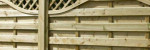

Quick answer: Choose traditional square trellis for general climbing plants and decorative screening, privacy square trellis when smaller openings and greater screening are required, horizontal slatted trellis for a contemporary appearance, fan trellis for narrow walls and individual plants, and diamond trellis for a decorative lattice finish. Check the panel dimensions, orientation, timber treatment, opening size, fixing surface, post strength and total finished height before ordering.
Trellis panels can support climbing plants, screen overlooked areas, divide a garden and add height above existing fencing. They can also soften plain walls, create decorative boundaries and provide a framework for planting without forming a completely solid barrier.
The correct trellis depends on how it will be used. A low fence topper needs a different product and support arrangement from a full-height privacy screen. A panel intended for a climbing rose may require wider openings than a screen designed to obscure a seating area.
This trellis panels buying guide explains the differences between traditional square, privacy square, horizontal slatted, fan and diamond trellis. It also covers panel sizes, treatment colours, fence-top installation, freestanding screens, plant support, measuring, cutting, posts, battens, maintenance and common buying mistakes.
What Should You Consider Before Buying Trellis?
Start by deciding exactly what the trellis needs to do.
Consider:
- Whether it will support climbing plants
- Whether screening or decoration is the main purpose
- How much light and airflow should pass through
- Whether the trellis will sit above a fence panel
- Whether it will be fixed to a wall
- Whether it will form a freestanding garden screen
- The required width and height
- The size and weight of the plants
- The available posts or fixing surface
- The garden's wind exposure
- The preferred treatment colour
- The total finished fence or screen height
Do not choose trellis solely by its pattern. Opening size, frame construction and support method determine whether it will suit the intended job.
Trellis Types At A Glance
| Trellis Type | Screening Level | Typical Use | Main Consideration |
|---|---|---|---|
| Traditional Square | Light | General plant support and decoration | Wide openings provide limited privacy |
| Privacy Square | Moderate | Denser screening and smaller plants | Catches more wind than open trellis |
| Horizontal Slatted | Moderate | Contemporary screening and boundaries | Plant attachment may need additional ties |
| Fan Trellis | Light | Individual plants and narrow wall areas | Not intended as a continuous fence panel |
| Diamond Trellis | Light to moderate | Decorative screens and fence toppers | Diagonal pattern affects trimming |
What Is Traditional Square Trellis?
Traditional square trellis uses horizontal and vertical battens to create an open square grid. It is a versatile option for climbing plants, decorative screening and garden divisions.
It is suitable for:
- Climbing roses
- Clematis
- Honeysuckle
- Annual climbers
- Decorating walls
- Creating low fence toppers
- Dividing patios and planting areas
- Adding an open screen around bins or utilities
The larger openings allow plenty of light and air to pass through. This makes traditional square trellis useful where plant support is more important than immediate privacy.
What Traditional Square Trellis Sizes Are Available?
The traditional square trellis range uses a nominal width of approximately 1.83m and is available in several heights.
Available nominal sizes include:
- 1.83m x 0.3m
- 1.83m x 0.45m
- 1.83m x 0.6m
- 1.83m x 0.9m
- 1.83m x 1.2m
- 1.83m x 1.5m
- 1.83m x 1.83m
Pressure-treated brown and pressure-treated green options are available.
Lower panels can be used as fence toppers, while taller panels can form freestanding screens or cover larger wall areas.
What Is Privacy Square Trellis?
Privacy square trellis uses a denser square pattern with smaller openings than traditional trellis. It provides more screening while still allowing light and air to pass through.
It is useful for:
- Screening seating areas
- Reducing views into a garden
- Supporting smaller-leaved climbers
- Creating decorative side screens
- Covering unattractive walls
- Adding denser screening above a fence
- Separating neighbouring patios
Privacy trellis is not completely solid. Views may still be possible through the openings, particularly at close range or from an angle.
What Privacy Square Trellis Sizes Are Available?
The privacy square trellis range includes nominal panels approximately 1.83m wide in several heights.
Available nominal sizes include:
- 1.83m x 0.3m
- 1.83m x 0.45m
- 1.83m x 0.6m
- 1.83m x 0.9m
- 1.83m x 1.2m
- 1.83m x 1.5m
- 1.83m x 1.83m
Pressure-treated brown and green versions are available.
Always confirm the actual dimensions before setting new posts or ordering replacement panels for an existing opening.
Traditional Square Or Privacy Square Trellis?
Choose traditional square trellis where an open appearance and easy plant training are the priorities. Choose privacy square trellis where closer spacing and greater screening are required.
| Feature | Traditional Square | Privacy Square |
|---|---|---|
| Opening size | Larger | Smaller |
| Privacy | Limited | Greater |
| Airflow | High | Moderate |
| Plant training | Easy for larger stems | Useful for finer growth |
| Wind loading | Lower before planting | Higher due to denser construction |
What Is Horizontal Slatted Trellis?
Horizontal slatted trellis uses evenly spaced horizontal timber slats to create a contemporary linear appearance.
It can provide partial screening while allowing light and air through the gaps. Its horizontal lines work particularly well with modern paving, rendered walls, garden rooms and structured planting.
Horizontal slatted trellis is suitable for:
- Contemporary garden screens
- Patio divisions
- Bin and utility screening
- Wall-mounted plant support
- Fence toppers
- Freestanding decorative boundaries
- Screening beside garden buildings
The slats can support plants, although some climbers may need wires or soft ties to guide their stems.
What Horizontal Slatted Trellis Sizes Are Available?
The horizontal slatted trellis range includes nominal panels approximately 1.83m wide in several heights.
Available nominal sizes include:
- 1.83m x 0.3m
- 1.83m x 0.45m
- 1.83m x 0.6m
- 1.83m x 0.75m
- 1.83m x 0.9m
- 1.83m x 1.2m
- 1.83m x 1.5m
- 1.83m x 1.83m
Pressure-treated brown and green options are available.
The 0.75m height provides an intermediate choice where a 0.6m panel is too low and a 0.9m panel is higher than required.
Is Slatted Trellis Private?
Slatted trellis provides partial screening rather than complete privacy. The result depends on:
- The gap between the slats
- The viewing angle
- The distance from the screen
- Whether plants cover the panel
- The position of nearby windows
- The difference in ground level
It can obscure direct views through a garden while retaining a lighter appearance than solid fence panels.
Where complete immediate screening is essential, a solid fence panel may be more appropriate.
What Is Fan Trellis?
Fan trellis has a narrow lower section that spreads into a wider fan-shaped top. It is designed primarily to support individual climbing or wall-trained plants.
It works well:
- Above narrow planting beds
- Between windows
- Beside doors
- Against shed walls
- On brick or rendered walls
- Behind individual climbing plants
- In spaces too narrow for a full rectangular panel
Fan trellis is not normally used as a continuous boundary panel because its tapered shape leaves open spaces between adjoining units.
What Fan Trellis Sizes Are Available?
The available fan trellis products include nominal sizes of:
- 1.83m x 0.9m
- 1.83m x 1.2m
Pressure-treated brown and pressure-treated green or natural-looking options are available.
Check the stated orientation before ordering, particularly where the trellis must fit a narrow wall space.
What Is Diamond Trellis?
Diamond trellis uses diagonal battens to create a decorative lattice pattern. It can be used for climbing plants, open screening and decorative fence toppers.
It provides a softer, more ornamental appearance than square or horizontal trellis and works well in traditional gardens.
Diamond trellis is suitable for:
- Decorative boundaries
- Climbing roses and clematis
- Wall-mounted plant support
- Garden divisions
- Fence toppers
- Screening around patios
- Adding detail above solid fence panels
What Diamond Trellis Sizes Are Available?
The decorative diamond lattice range includes nominal panels approximately 6ft wide in several heights.
Available nominal sizes include:
- 6ft x 1ft
- 6ft x 2ft
- 6ft x 3ft
- 6ft x 4ft
- 6ft x 5ft
- 6ft x 6ft
The listed range is pressure-treated green.
Lower sizes are useful above fencing, while taller panels can form decorative screens or support large climbing plants.
Which Trellis Provides The Most Privacy?
Privacy square trellis generally provides the greatest screening among open lattice products because the openings are smaller.
Horizontal slatted trellis also provides useful screening, particularly when viewed straight on. Traditional square, fan and diamond trellis are more open.
| Trellis Type | Immediate Screening | Screening After Plant Growth |
|---|---|---|
| Privacy Square | Moderate | High with dense planting |
| Horizontal Slatted | Moderate | High with suitable plants |
| Traditional Square | Low | Depends on plant density |
| Diamond | Low | Depends on plant density |
| Fan | Very low | Localised around one plant |
No open trellis will provide the same immediate privacy as a solid closeboard, waney lap or decorative fence panel.
Which Trellis Is Best For Climbing Plants?
The best design depends on how the plant climbs.
Twining Climbers
Plants that wrap their stems around supports can use traditional square, privacy square or diamond trellis. Younger stems may need guidance until they find the battens.
Scrambling Plants
Climbing roses and other scrambling plants usually need to be tied to the trellis. A traditional square or diamond grid provides several useful fixing points.
Plants With Tendrils
Plants with tendrils often grip narrower battens and smaller openings more easily. Privacy square trellis can provide plenty of attachment points.
Self-Clinging Plants
Self-clinging plants may attach directly to walls as well as the trellis. Consider whether their roots or adhesive pads could affect the surface behind.
Always match the support strength to the plant's mature size, not its size at purchase.
Which Trellis Is Best For Climbing Roses?
Traditional square or diamond trellis provides a practical structure for training climbing roses.
Rose stems should normally be tied with suitable soft plant ties rather than forced tightly through small openings.
Allow space behind wall-mounted trellis for:
- Air circulation
- Plant ties
- Pruning
- Painting or maintaining the wall
- Removing dead growth
A mature climbing rose can become heavy, particularly when wet or in full leaf. The trellis and wall fixings must be strong enough to carry it.
Which Trellis Is Best For Clematis?
Clematis uses leaf stalks to wrap around suitable supports. Privacy square trellis can provide frequent attachment points, while traditional square and diamond designs may need additional wires or fine supports for young plants.
Do not make plant ties so tight that they restrict growth.
Which Trellis Is Best For Jasmine And Honeysuckle?
Traditional square, privacy square and diamond trellis can all support twining climbers such as jasmine and honeysuckle.
These plants can become substantial over time. Use a firmly framed panel and secure it to sound posts or masonry.
Can Trellis Support Wisteria?
Wisteria becomes extremely heavy and develops thick woody stems. Lightweight garden trellis may not provide adequate long-term support by itself.
A substantial independent framework, strong wires or another purpose-designed support may be required.
Do not rely on a light fence topper or decorative fan trellis for mature wisteria.
Should Trellis Be Fixed Directly To A Wall?
It is usually better to hold the trellis slightly away from the wall using timber battens, spacers or suitable brackets.
A gap provides:
- Room for stems to grow behind the panel
- Better air circulation
- Space for plant ties
- Easier maintenance
- Reduced moisture trapping
The fixing method must suit the wall material. Brick, block, concrete and timber buildings require different fixings.
Do not rely on render alone to carry the weight of a trellis and mature plant.
What Are Trellis Battens?
Trellis battens can be fixed to a wall or other surface to create a mounting frame and stand the trellis away from the background.
The available range includes nominal 1.83m x 38 x 16mm pressure-treated trellis battens in brown and green finishes.
Battens can help:
- Create an airflow gap
- Provide a straight fixing surface
- Keep the trellis clear of uneven masonry
- Match the panel treatment colour
- Make future removal easier
The battens must be securely fixed to sound material. A batten attached to loose render or damaged brickwork will not provide reliable support.
Can Trellis Be Fitted On Top Of A Fence?
Yes, provided the posts, fixings and existing fence are capable of supporting it.
Before adding trellis, check:
- The condition of the fence posts
- The amount of post extending above the panels
- The condition of the fence-panel frame
- The combined finished height
- The wind exposure
- The weight of future plant growth
- Whether permission or approval may be required
Fixing trellis only to thin panel boards is generally less secure than attaching it to substantial posts or a properly framed support.
What Trellis Height Is Best For A Fence Topper?
Lower trellis panels are normally the most practical fence toppers.
Common nominal heights include:
- 0.3m
- 0.45m
- 0.6m
A 0.3m topper adds decoration and modest height. A 0.45m or 0.6m panel provides more screening but also increases wind loading and total fence height.
Include the fence panel, gravel board and trellis when calculating the final height.
Can Trellis Be Fitted To Concrete Fence Posts?
Trellis can sometimes be installed above or between concrete posts, but the method needs careful planning.
Concrete posts should not be drilled casually because reinforcement may be present. Possible arrangements include:
- Using suitable timber extensions
- Installing a separate timber frame
- Using purpose-designed brackets
- Replacing posts with longer compatible supports
The arrangement must resist wind and the weight of plants without damaging the posts.
Can Trellis Be Fitted To Wooden Fence Posts?
Yes. Wooden posts are relatively straightforward to drill and accept exterior screws or brackets.
The posts must extend far enough above the fence panel or be replaced with longer posts.
Do not attach a tall topper to:
- Rotten posts
- Loose posts
- Badly split timber
- Posts with inadequate foundations
- Thin decorative battens not designed as structural supports
Can Trellis Form A Freestanding Screen?
Full-height trellis can form a freestanding garden screen when supported by suitable fence posts.
A freestanding installation needs:
- Posts of suitable section and length
- Correctly formed foundations
- Accurate spacing
- Exterior-grade fixings
- Clearance from wet soil
- Allowances for wind exposure
Privacy square and slatted trellis catch more wind than very open traditional trellis. Plant growth will increase the effective surface area further.
Which Posts Are Best For Trellis?
Pressure-treated wooden fence posts provide a natural match and make fixing straightforward.
The post section depends on:
- The trellis height
- The panel width
- The panel density
- The weight of plants
- The site's wind exposure
- The foundation method
Lower decorative trellis may suit 75 x 75mm posts in sheltered conditions. Full-height screens or heavily planted panels may require more substantial 100 x 100mm posts.
A larger post still needs a suitable foundation.
Can Trellis Be Used To Screen Bins?
Yes. Privacy square or horizontal slatted trellis can create a visually lighter bin store than a solid fence panel.
Allow enough space for:
- Opening bin lids
- Moving bins in and out
- Air circulation
- Cleaning the area
- Trimming plants
Do not place the trellis so close that bins repeatedly strike and damage it.
Can Trellis Screen A Patio Or Seating Area?
Privacy square and horizontal slatted trellis are useful for partial patio screening.
Before ordering, consider the viewing direction. A screen positioned close to the seating area may provide more useful privacy than a taller screen placed farther away.
Trellis can also support planting that increases screening gradually.
Can Trellis Be Used Around A Pergola?
Yes. Trellis can close selected sides of a pergola, provide plant support and create shelter without forming a completely solid wall.
Fix the panels to substantial pergola posts or framing rather than relying on decorative roof components.
Check that added panels and mature plants do not place excessive wind load on the structure.
Can Trellis Be Used As A Garden Boundary?
Full-height trellis can define a boundary, but it provides less security and immediate privacy than solid fencing.
It is most suitable where:
- An open appearance is preferred
- Plants will eventually provide screening
- Light and airflow are important
- The boundary is not expected to contain small pets
- Neighbouring views are not a major concern
For secure pet containment or strong privacy, combine trellis with suitable solid fencing or another appropriate barrier.
Can Trellis Be Used For Pets?
Trellis should not automatically be relied on as a secure pet barrier.
Check:
- The opening size
- The panel strength
- The gap beneath the trellis
- Whether the animal can climb it
- Whether fixings are accessible
- Whether plants create an escape route
Square and diamond openings may provide climbing points for some animals.
Which Trellis Is Best For A Windy Garden?
Open traditional square or diamond trellis initially allows more air to pass through than dense privacy trellis.
However, any trellis can catch substantial wind once covered with foliage.
For exposed gardens:
- Use substantial posts
- Form suitable foundations
- Keep the screen no higher than necessary
- Use secure exterior fixings
- Prune dense plant growth
- Inspect the screen after storms
Do not assume an open panel will remain low resistance after evergreen plants cover it.
Brown Or Green Trellis?
Brown and green refer to the initial colour of the pressure treatment.
Pressure-treated brown trellis has a warmer appearance and can be matched with brown fence panels, posts, gravel boards and gates.
Pressure-treated green trellis has a lighter, more natural treatment colour and works with green-treated fencing components.
Both finishes will weather outdoors. Natural variations in grain and colour should be expected.
What Does Pressure-Treated Trellis Mean?
Pressure treatment introduces preservative into the timber to improve resistance to fungal decay and insect attack.
It does not make the trellis waterproof or prevent all timber movement.
Pressure-treated trellis still benefits from:
- Correct installation
- Protection of fresh cuts
- Clearance from wet soil
- Good airflow
- Routine inspection
- Suitable exterior coatings where desired
Can Trellis Be Painted Or Stained?
Yes. Pressure-treated trellis can be painted or stained once the timber is sufficiently dry.
Use a coating intended for exterior timber and apply it carefully around the intersections and inside the openings.
Do not coat:
- Wet timber
- Dirty surfaces
- Algae
- Rotten battens
- Loose or damaged timber
Painting trellis after dense plants have established is difficult, so consider the preferred finish before planting.
Will Trellis Shrink, Twist Or Split?
Timber naturally changes as its moisture content rises and falls. Trellis battens may develop small splits, slight movement or minor changes in colour.
The risk of distortion increases if panels are:
- Stored unevenly
- Left unsupported
- Repeatedly saturated
- Fixed under tension
- Forced into an opening that is too small
A securely framed panel supported at suitable points is less likely to distort than loose individual latticework.
How Do You Measure For Trellis Panels?
Measure the clear opening where the panel will sit. Take measurements at several points because walls and posts may not be perfectly parallel.
Record:
- The clear width
- The clear height
- The panel orientation
- The depth available for battens or brackets
- The position of posts
- The finished height above the ground
- Any obstacles such as pipes or window ledges
For fence toppers, measure each individual fence bay rather than assuming every panel is identical.
How Many Trellis Panels Do You Need?
For a straight fence or wall, divide the total length into the actual panel widths while allowing for posts, gaps and shortened end sections.
Prepare a simple plan showing:
- Every full panel
- Every post
- Corner positions
- Gate openings
- Shortened panels
- Changes in height
- Wall obstacles
Do not calculate quantities from the total length alone if posts or structural frames occupy part of the space.
Can Trellis Panels Be Cut To Size?
Many framed timber trellis panels can be reduced in width or height, but the frame must be rebuilt or repositioned so the remaining lattice stays secure.
A typical method involves:
- Marking the finished size.
- Adding or moving a frame batten.
- Securing every lattice strip to the new frame.
- Cutting away the excess.
- Smoothing rough edges.
- Treating exposed timber.
Cutting without adding a new frame can leave loose strips and a weak edge.
Which Trellis Is Easiest To Cut?
Traditional square and privacy square trellis can often be reduced while retaining a balanced pattern, provided a new frame edge is created.
Horizontal slatted trellis may also be cut, but each slat must remain securely fixed.
Diamond trellis is more difficult to trim neatly because the diagonal pattern creates angled ends and may lose its visual symmetry.
Fan trellis should not normally be cut because its tapered form depends on the complete pattern.
How Do You Fix Trellis To Wooden Posts?
Trellis can be attached to wooden posts using suitable exterior screws, brackets or battens.
The fixing method should:
- Support the frame rather than only thin lattice strips
- Allow for timber movement
- Use corrosion-resistant fixings
- Hold the panel clear of wet ground
- Resist wind from both directions
Pre-drilling near the end of thin timber can reduce splitting.
How Do You Fix Trellis To A Wall?
A typical wall-mounted arrangement uses vertical or horizontal battens fixed to sound masonry, with the trellis attached to the battens.
Before drilling:
- Check for pipes and cables
- Identify sound brick or block
- Avoid relying on loose mortar or render
- Choose suitable plugs and screws
- Check the final panel alignment
- Plan enough clearance for plant growth
The fixings must carry both the panel and the mature plant.
Should Trellis Touch The Ground?
No. Timber trellis should normally be held above soil, grass and standing water.
Direct ground contact can cause:
- Moisture absorption
- Decay in the lower frame
- Algae growth
- Damage from strimmers
- Difficulty maintaining the bottom edge
Use posts, brackets or another suitable support to keep the timber clear.
How Far Should Trellis Sit From A Wall?
The exact gap depends on the plants and fixing method, but there should be enough room for stems, ties and air circulation.
A narrow gap may be suitable for small annual climbers. More vigorous plants need additional space for mature stems and pruning access.
Do not create such a large unsupported gap that the fixings become weak or heavily leveraged.
Can Plants Damage Trellis?
Yes. Plants can become heavy, pull lattice strips apart and trap moisture against the timber.
Reduce damage by:
- Selecting trellis suitable for the mature plant
- Training stems evenly
- Using soft ties
- Pruning excessive growth
- Removing dead woody stems
- Checking fixings each year
- Keeping the lower frame clear of soil
Do not allow one large stem to force itself through a small opening where it may split the lattice.
Can Ivy Be Grown On Trellis?
Ivy can grow through and around trellis, but it becomes dense and heavy. It may also attach to the wall behind.
Consider:
- The condition of the wall
- The weight of mature growth
- Regular pruning
- Access for maintenance
- Whether evergreen coverage will increase wind load
A weak decorative panel may not support mature ivy indefinitely.
How Do You Maintain Trellis Panels?
Inspect trellis at least a few times each year and after severe weather.
Maintenance includes:
- Checking frame joints
- Tightening loose fixings
- Replacing broken lattice strips
- Pruning heavy plants
- Removing dead growth
- Clearing soil and leaves from the bottom
- Cleaning algae carefully
- Treating fresh cuts
- Maintaining paint or stain where used
Plant growth can hide damage, so inspect the frame rather than judging the panel only from the front.
How Long Do Trellis Panels Last?
There is no fixed lifespan for every timber trellis panel.
Durability depends on:
- Pressure treatment
- Panel construction
- Exposure to wet soil
- Wall or post fixings
- Wind exposure
- Plant weight
- Maintenance
- Damage during pruning
A pressure-treated panel fixed securely above the ground and kept free from excessive plant weight should perform better than one resting on damp soil.
How Should Trellis Be Stored?
Store trellis panels flat on a level, supported base or upright with full support.
Avoid:
- Leaning panels at a shallow angle
- Resting them on wet soil
- Placing heavy materials on the lattice
- Leaving them exposed to strong wind
- Wrapping wet panels tightly in plastic
Thin lattice strips can be damaged more easily than substantial fence boards, so handle the panels carefully.
What Should You Check When Trellis Arrives?
Inspect the delivery before installation.
Check:
- The correct trellis style
- The correct nominal size
- The correct treatment colour
- The panel orientation
- Broken lattice strips
- Loose frame joints
- Damaged corners
- Severe twisting
- Correct quantities
Natural variations in timber colour, grain and knots are expected.
Common Trellis Buying Mistakes
- Choosing an open design when immediate privacy is required
- Assuming trellis dimensions can be rotated without affecting the frame
- Ordering by nominal size without measuring the opening
- Forgetting to include posts and battens
- Fixing trellis directly to loose render
- Attaching a fence topper only to thin panel boards
- Ignoring the total finished fence height
- Underestimating mature plant weight
- Using light fan trellis for a very heavy climber
- Allowing timber trellis to touch soil
- Cutting a panel without rebuilding its frame
- Using indoor screws or untreated fixings
- Choosing small posts for a full-height privacy screen
- Ignoring wind exposure
- Forgetting that evergreen plants increase winter wind loading
Trellis Buying Checklist
Before ordering, confirm:
- The intended use
- The trellis pattern
- The opening size
- The nominal and actual width
- The nominal and actual height
- The panel orientation
- The treatment colour
- The number of panels
- Any shortened sections
- The post size and length
- Wall battens or spacers
- Exterior screws and brackets
- The mature plant size
- The site's wind exposure
- The total fence or screen height
- Delivery access
- Safe storage
FAQs
What Is The Best All-Round Trellis?
Traditional square trellis is a versatile choice for general plant support, decoration and open garden screening.
Which Trellis Is Best For Privacy?
Privacy square trellis provides denser screening than traditional square or diamond trellis. Horizontal slatted trellis is another useful option for partial privacy.
Which Trellis Is Best For A Modern Garden?
Horizontal slatted trellis provides a clean contemporary appearance that works well with modern paving, garden rooms and structured planting.
Which Trellis Is Best For A Traditional Garden?
Traditional square and diamond trellis suit cottage-style and traditional garden designs.
What Is The Difference Between Trellis And Lattice?
The terms are often used interchangeably. Lattice commonly describes the crossed pattern itself, while trellis can describe the complete plant-support panel.
Can Trellis Be Used As A Fence?
Yes, when supported by suitable posts. It provides less immediate privacy and security than a solid fence panel.
Can Trellis Be Put On Top Of An Existing Fence?
Yes, if the posts and supports can carry the additional height, wind load and plant weight.
What Height Trellis Should Be Used Above A Fence?
Nominal heights of 0.3m, 0.45m and 0.6m are practical topper options. The correct choice depends on the posts, required screening and total finished height.
Can Trellis Be Attached Directly To Fence Panels?
Light trellis may sometimes be attached to a substantial panel frame, but fixing to sound posts or a separate support frame is generally more secure.
Can Trellis Be Attached To Concrete Posts?
Yes, with a carefully planned bracket or extension system. Avoid drilling into reinforced concrete posts without confirming a suitable method.
Does Trellis Need A Gap Behind It?
Wall-mounted trellis normally benefits from a gap for plant growth, air circulation and maintenance.
Can Trellis Be Cut To Size?
Many rectangular panels can be cut if a new frame edge is added and every lattice strip remains securely fixed.
Can Fan Trellis Be Cut?
It is not normally recommended because cutting can destroy the tapered pattern and weaken the panel.
Can Diamond Trellis Be Cut?
It can be altered, but the diagonal pattern is harder to trim neatly than square trellis.
Should Trellis Touch The Ground?
No. Keep timber trellis above soil and standing water to reduce the risk of decay.
Can Trellis Be Painted?
Yes. Use a suitable exterior timber coating once the pressure-treated wood is sufficiently dry.
Do Climbing Plants Need To Be Tied To Trellis?
Many plants need guidance or soft ties, particularly while young. Scrambling plants such as climbing roses generally require tying.
Can Trellis Support Wisteria?
Lightweight trellis is unlikely to be sufficient for mature wisteria. A substantial purpose-designed support is normally required.
Can Trellis Provide Complete Privacy?
No open trellis provides the same immediate privacy as a solid fence panel. Dense trellis combined with mature planting can provide substantial screening over time.
Does Trellis Catch The Wind?
Yes. Denser panels catch more wind, and all trellis becomes less open once covered by foliage.
Are Brown And Green Trellis Treated Differently?
Both are pressure-treated options. The main visible difference is their initial colour, which changes as the timber weathers.
What Are Trellis Battens Used For?
They create a mounting frame and hold wall-mounted trellis away from the background, improving airflow and leaving room for plant growth.
Can Trellis Be Used Around Bins?
Yes. Privacy square or slatted trellis can create an open, ventilated screen around bins and utilities.
Choose Trellis For Its Purpose And Support
The best trellis panel depends on the balance between plant support, privacy, airflow and appearance.
Traditional square trellis is a versatile open option, privacy square trellis provides denser screening, horizontal slatted trellis gives a contemporary finish, fan trellis supports individual plants and diamond trellis creates a decorative lattice effect.
Measure the opening carefully, confirm the panel orientation and include posts, battens, brackets and exterior fixings in the plan. For fence toppers, calculate the combined height of the gravel board, fence panel and trellis before ordering.
Choose supports for the mature weight of the plants and the site's wind exposure. A correctly installed pressure-treated trellis panel can provide practical plant support and decorative screening while retaining light and airflow throughout the garden.