





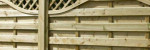

Quick answer: To stop a dog digging under a fence, first close any existing gaps and remove loose soil from the fence line. Fit a durable barrier such as concrete gravel boards, timber gravel boards or galvanised wire mesh extending below or inward from the boundary. Check that gates close tightly, supervise the dog while the changes are new and provide a permitted digging area if digging is part of its normal behaviour.
A dog that repeatedly digs beneath a fence can damage the garden, loosen fence components and create a serious escape risk. Filling the hole with loose soil is rarely enough because many dogs simply return to the same place.
The best solution depends on the fence type, the size and strength of the dog, the ground conditions and why the digging has started. A secure physical barrier is normally the first priority, but exercise, supervision and garden layout can also make a difference.
This guide explains how to block the bottom of a fence, how deep a barrier may need to go and which fencing products are most useful for dog-proofing a garden.
How Do You Stop Dogs Digging Under A Fence?
Start by inspecting the entire boundary rather than repairing only the latest hole. Dogs often test several weak points, particularly beneath gates, beside fence posts and where the ground is soft.
Close visible gaps and add a barrier that the dog cannot easily push through or dig beneath. Common options include:
- Concrete gravel boards beneath fence panels
- Pressure-treated timber gravel boards
- Galvanised wire mesh fixed to the fence and buried below ground
- An inward-facing mesh apron laid beneath the soil
- Paving slabs or solid edging along vulnerable sections
- Railway sleepers used as a substantial low barrier
The barrier must be securely connected to the fence or posts. Leaving a narrow gap between the fence panel and the new material may simply create another weak point.
Dog-Proof Fence Options At A Glance
| Solution | Best For | Main Consideration |
|---|---|---|
| Concrete gravel boards | Permanent low-level protection | Heavy and must match the post system |
| Timber gravel boards | Timber fences and lighter repairs | Should not remain deeply buried in wet soil |
| Buried wire mesh | Persistent diggers | Edges must be secured and safely covered |
| Mesh apron | Shallow digging along the fence line | Needs enough inward width to block tunnels |
| Paving or edging | Gates and short problem areas | Check drainage and trip hazards |
| Railway sleepers | Large dogs and substantial boundaries | Require secure support and careful handling |
Why Do Dogs Dig Under Fences?
Dogs dig for several reasons. Identifying the likely cause helps you choose a solution that lasts rather than repeatedly repairing the same hole.
Common reasons include:
- Trying to reach another dog, person or animal
- Boredom or excess energy
- Seeking cooler soil during warm weather
- Following a scent
- Anxiety when left alone
- Natural digging behaviour
- Attempting to escape noise or activity in the garden
A physical barrier is still necessary where escape is possible. However, the dog may move to another part of the fence if the underlying reason is not addressed.
Check The Entire Fence Line First
Walk around the boundary and inspect it from the dog's side. Look closely at places where the fence changes direction, ground levels drop or vegetation hides the base.
Pay particular attention to:
- The bottom of garden gates
- Spaces beneath gravel boards
- Loose soil around fence posts
- Rotten timber at ground level
- Broken or lifted fence panels
- Areas hidden behind shrubs
- Sloping ground beneath stepped panels
- Gaps created by tree roots
Measure the largest gap and note whether the fence itself moves when pushed. A loose post or damaged gravel board should be repaired before an anti-dig barrier is installed.
Can Gravel Boards Stop Dogs Digging Under A Fence?
Gravel boards are one of the most practical ways to close the space beneath fence panels. They form a continuous low barrier and also protect timber panels from wet ground.
Concrete gravel boards are particularly useful where the soil is damp or a strong dog pushes against the base of the fence. They are durable and difficult for a dog to chew or scratch through.
Timber gravel boards provide a matching finish with wooden fence posts and panels. They are lighter and easier to cut, but prolonged contact with wet soil can shorten their lifespan.
A gravel board should sit close enough to the ground to prevent the dog getting its nose or paws underneath. Small changes in ground level may need to be filled carefully so there are no remaining weak points.
Are Concrete Gravel Boards Best For Dogs?
Concrete gravel boards are often the strongest standard option for dog-proofing the bottom of a panel fence. They work particularly well with slotted concrete fence posts.
The board should be level, properly seated in the slots and free from serious cracks. A damaged board may move or leave a gap at one end.
Concrete gravel boards are heavy. Two people may be needed to lift and position full-size boards safely. Do not force them between concrete posts that have moved out of alignment.
They can close the ordinary space beneath the panel, but a determined dog may still dig underneath the board. In that situation, combine the gravel board with buried mesh or an inward-facing apron.
Can Timber Gravel Boards Be Used?
Yes. Pressure-treated timber gravel boards can provide a neat and practical barrier below wooden fence panels.
They should be fixed securely to the fence posts with exterior-grade ironmongery. Loose boards can be pushed outward or pulled away from the posts.
Avoid burying most of the timber board in damp soil. Where a deeper barrier is needed, use mesh below the board rather than relying on buried timber alone.
Treat fresh cuts where required and keep leaves, soil and garden waste from building up against the board.
How Do You Use Wire Mesh To Stop Digging?
Galvanised wire mesh can create a hidden barrier below the fence. It should be strong enough for the size of the dog and have openings too small for the dog to push its head or paws through.
One method is to fix the top edge to the bottom of the fence or gravel board and bury the mesh vertically into the ground.
Another method is to form an apron. The mesh is attached to the fence and then laid horizontally beneath the soil on the garden side. When the dog digs beside the fence, it reaches the mesh before it can create a tunnel.
The mesh must be securely fixed and fully covered. Cut edges can be sharp, so fold, trim or protect them and make sure no points remain exposed where pets or people could be injured.
Is A Vertical Barrier Or Mesh Apron Better?
A vertical barrier blocks deeper tunnelling directly below the fence. It can be effective but requires more digging during installation.
An inward-facing apron often needs less excavation. It works because dogs usually begin digging close to the fence rather than starting far back and tunnelling towards it.
For persistent diggers, combining a short vertical section with an inward-facing apron can provide broader protection.
The most suitable arrangement depends on the dog's digging behaviour, the soil and the presence of roots, paving or underground services.
How Deep Should An Anti-Dig Barrier Be?
There is no single depth that suits every dog. Small dogs and occasional diggers may be stopped by a shallow, well-secured barrier, while larger or persistent dogs may require a deeper installation.
The barrier should extend beyond the depth the dog usually reaches. Inspect existing holes before installation to understand how the dog is digging.
Do not excavate blindly. Check for pipes, cables, drainage and tree roots before digging along a boundary.
Where deep excavation is difficult, a wide inward-facing mesh apron may be a more practical alternative.
Can You Use Paving Slabs Along The Fence?
Paving slabs can stop digging along short problem areas, particularly beneath gates and beside paths. They create a hard surface that the dog cannot easily excavate.
Lay the slabs on a stable, prepared base so they do not rock or settle. Make sure the top surface does not create a trip hazard.
Check drainage before forming a continuous paved strip. Water should not be trapped against timber fence posts or directed towards neighbouring land or buildings.
A dog may simply move to the end of the paved area, so extend the barrier far enough beyond the usual digging point.
Can Railway Sleepers Stop Dogs Digging?
Railway sleepers can form a strong low barrier where standard gravel boards are not substantial enough. They may suit large gardens, heavy dogs or boundaries that need a raised edge.
Sleepers are heavy and must be supported so they cannot roll, tilt or be pushed out of position. Secure them with suitable posts, stakes or fixings designed for the layout.
Do not use ordinary sleepers as an unsupported retaining wall where there is a significant difference in soil level. Soil pressure and drainage need to be considered separately.
Choose timber intended for garden use and position it so sharp corners and projecting fixings do not create a hazard.
How Do You Dog-Proof The Bottom Of A Garden Gate?
Gates are a common escape point because they need clearance to open. The gap may become larger if the gate drops on its hinges or the ground slopes beneath it.
Start by checking the hinges, gate posts and latch. A sagging gate should be adjusted or repaired rather than simply extending the bottom edge.
Ways to close the lower gap include:
- Adding a securely fixed timber bottom rail
- Installing a suitable kickboard
- Using mesh beneath the gate line
- Adding paving or a solid threshold
- Rehanging the gate at the correct level
Make sure the gate still opens freely and does not drag across the ground. The latch should close reliably and should not be easy for the dog to operate.
Can A Dog Push Through A Fence Panel?
Yes. A dog may escape without digging if the lower part of the fence is loose, rotten or lightly fixed.
Check that every fence panel is properly supported by the posts and gravel boards. Timber panels fixed to wooden posts should have suitable exterior screws, clips or brackets.
Panels between concrete posts should sit securely within both slots. Large side gaps or damaged post edges may allow movement.
Replace rotten boards, loose battens and damaged panel frames. An anti-dig barrier will not make a weak fence panel secure.
Which Fence Panels Are Best For Dogs?
Solid, well-framed fence panels usually provide better containment than lightweight decorative panels. The right choice depends on the dog's size, whether it jumps and how much outside activity causes excitement.
Closeboard fence panels provide a robust, solid boundary with no large openings. Traditional lap panels may also be suitable when they are well made, firmly supported and inspected regularly.
Open trellis panels are not normally suitable as the main low-level barrier for an active dog. They may provide footholds or spaces that encourage climbing and chewing.
Whichever panel style you choose, the posts, gravel boards and ironmongery must be suitable for the complete fence.
How High Should A Fence Be For A Dog?
Fence height should be based on the dog's size, jumping ability and behaviour. A barrier that stops digging may not prevent a determined dog from jumping or climbing.
Check whether nearby bins, planters, sleepers or garden furniture provide a launching point. Keep moveable items away from the fence line.
Any increase in fence height must comply with the planning rules that apply to the location. The permitted height can differ where the boundary is next to a highway.
Trellis toppers may discourage some dogs from climbing, but they must be securely supported and included in the total fence height.
Should You Add A Dedicated Digging Area?
Some dogs have a strong natural urge to dig. Providing an approved digging area can help redirect the behaviour away from the boundary.
A simple digging area can be made using a shallow timber-edged bed filled with suitable loose material. Place toys or treats beneath the surface to encourage the dog to use it.
Supervise the dog and reward use of the permitted area. This does not replace a secure fence, but it may reduce repeated digging at the boundary.
Can Exercise And Supervision Help?
Dogs may dig more when they are bored, under-stimulated or left in the garden for long periods. Regular exercise, play and interaction can reduce this behaviour in some cases.
Supervise the dog while a new barrier is being tested. Interrupt attempts to dig and redirect the dog towards another activity.
If digging appears suddenly, becomes obsessive or is linked to distress when left alone, seek advice from a vet or qualified animal behaviour professional. A fence repair alone may not address the cause.
Can You Use Plants To Block The Fence Line?
Shrubs and planted borders can make the boundary less accessible, but they should not be treated as the main security barrier.
A determined dog may dig through loose planting soil or damage young plants. Dense planting can also hide new holes and make fence inspections more difficult.
Choose non-toxic plants that are suitable for homes with dogs. Leave enough access to inspect and maintain the fence, gravel boards and posts.
What Should You Avoid Using?
Avoid improvised materials that can cut, trap or injure the dog. Broken glass, exposed nails, sharp wire and harmful chemicals should never be used around the fence line.
Do not block gaps with loose rubble that can shift or expose sharp edges. Lightweight plastic mesh may also be unsuitable for a strong dog if it can tear or become tangled.
Avoid attaching materials to a neighbour's fence without permission. If the boundary fence is not yours, install a separate barrier inside your own garden.
How To Install An Anti-Dig Mesh Apron
- Inspect the fence: Repair loose posts, panels and gravel boards before adding the mesh.
- Check the boundary: Confirm ownership and make sure the work remains on your side.
- Check for services: Identify possible cables, pipes and drainage before disturbing the soil.
- Clear the fence line: Remove weeds, stones and loose soil from the working area.
- Choose suitable mesh: Use a durable galvanised product with openings appropriate for the dog.
- Secure the top edge: Fix the mesh firmly to the lower fence structure using suitable exterior fixings.
- Lay the apron inward: Extend the mesh across the ground on the garden side of the fence.
- Secure the mesh: Use suitable ground fixings so the dog cannot lift or fold it back.
- Cover the surface: Replace soil, turf or another suitable finish so no sharp edges remain exposed.
- Inspect regularly: Check for lifting, corrosion, new digging points and movement after heavy rain.
How To Stop Dogs Digging On Sloping Ground
Sloping gardens often have triangular gaps beneath stepped fence panels. These can provide an easy starting point for digging.
Use shaped infill, suitable gravel boards or securely fixed mesh to close each gap. Do not rely on loose piles of soil because they can wash away or be removed quickly by the dog.
Where the ground falls steeply, a stepped sleeper edge or properly supported retaining solution may be required. Do not expect an ordinary fence panel to hold back a large depth of soil.
How To Stop Dogs Digging Around Fence Posts
Soil is often looser around fence posts because it was disturbed during installation. Dogs may also be attracted to scents left by other animals.
Check that the post itself is firm. If it moves, the foundation may need repairing before the surrounding ground is closed.
Compact the soil carefully and extend the chosen mesh or solid barrier around the post. Avoid leaving a narrow opening between the gravel board and post.
Do not pile wet soil around timber post bases. This can trap moisture and encourage decay at ground level.
Common Mistakes To Avoid
- Filling holes with loose soil and making no further change
- Repairing one gap without inspecting the whole boundary
- Leaving sharp mesh edges exposed
- Using lightweight materials for a large or strong dog
- Ignoring gaps beneath garden gates
- Attaching materials to a neighbour's fence without permission
- Installing mesh without checking for underground services
- Allowing soil to collect against timber fence posts
- Using gravel boards to retain a large depth of soil
- Assuming a taller fence will solve digging at ground level
- Failing to address loose posts or damaged panels
- Using harmful chemicals or sharp deterrents
Choosing The Right Fencing Products
For a standard panel fence, concrete gravel boards provide a strong and durable low-level barrier. They are particularly useful with slotted concrete fence posts.
Timber gravel boards suit traditional wooden fence posts and fence panels. They are easier to cut and handle, but they need suitable treatment and good drainage.
Closeboard fence panels provide a solid boundary for dogs that become excited by activity outside the garden. Strong posts and exterior-grade ironmongery are essential because solid panels catch more wind.
Garden gates should use suitable gate posts, hinges and latches. A secure fence can still fail if the gate sags or leaves a large opening at the bottom.
Plan the fence panels, gravel boards, fence posts, gates and fixings as one complete system. This produces a more reliable boundary than adding separate temporary repairs each time the dog finds a new weak point.
FAQs
Will Chicken Wire Stop A Dog Digging Under A Fence?
Light chicken wire may stop a small or occasional digger, but it may not be strong enough for a large or determined dog. A more robust galvanised mesh is usually a better long-term option.
Can You Bury Wire Mesh Under A Fence?
Yes. Mesh can be installed vertically below the fence or laid inward as a buried apron. It must be securely fixed and covered so no sharp edges remain exposed.
How Far Should Mesh Extend From The Fence?
It should extend far enough to prevent the dog starting beside the fence and tunnelling beneath it. The required width depends on the dog's size and digging behaviour.
Will Gravel Boards Stop A Dog Escaping?
Gravel boards close ordinary gaps beneath fence panels and may be enough for many dogs. Persistent diggers may still require mesh below or behind the board.
Can A Dog Dig Under A Concrete Gravel Board?
Yes. Concrete prevents the dog digging through the board, but the dog may excavate beneath it if the soil is loose. A buried barrier can provide additional protection.
Can You Put Sleepers Along The Bottom Of A Fence?
Yes, provided they are stable, safely fixed and do not place unsuitable pressure on the fence. They can provide a substantial barrier for larger dogs.
How Do You Stop A Dog Digging Under A Gate?
Repair any sagging hinges, then close the lower gap using a solid threshold, paving, mesh or a securely fitted bottom rail. Make sure the gate can still open and latch properly.
What Is The Cheapest Way To Block The Bottom Of A Fence?
The cheapest suitable option depends on the length of the boundary and the strength of the dog. Secure galvanised mesh may be economical for long runs, while a gravel board can be practical where only one panel bay is affected.
Should You Punish A Dog For Digging?
Punishment does not repair the escape risk and may not address why the behaviour is happening. Secure the boundary, supervise the dog and redirect the digging. Seek professional advice where the behaviour is persistent or linked to distress.
Can A Dog-Proof Fence Have Gaps?
Small drainage gaps may be acceptable if the dog cannot reach through, widen them or get its nose underneath. Inspect the finished fence from the dog's side and test every section carefully.
Build A Continuous Barrier Along The Fence Line
The most reliable way to stop a dog digging under a fence is to remove weak points and create a continuous barrier at ground level. Concrete gravel boards, timber gravel boards, galvanised mesh, paving and railway sleepers can all be useful when chosen for the dog and the site.
Check the fence panels, posts and garden gate at the same time. A strong anti-dig barrier will not help if a panel is loose or the gate does not close properly.
Combine a secure physical boundary with supervision, exercise and an approved digging area where appropriate. This protects the fence and reduces the chance of the dog simply moving to another section of the garden.