





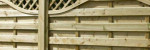

Quick answer: A successful garden fence starts with the right panel, post and gravel-board combination. Closeboard panels suit strong privacy fencing, waney lap panels offer a practical traditional option, picket panels create open boundaries, and hit and miss, omega lattice or double slatted panels provide more decorative alternatives. Measure every fence bay, include gravel boards in the finished height, choose posts for the ground and exposure, and settle any boundary or planning questions before installation.
Garden fencing can provide privacy, security, pet containment, shelter and a clear division between different outdoor spaces. It can also create expensive problems when the wrong panels, posts, fixings or measurements are used.
The original version of this guide covered many materials and products that are not central to the East Coast Fencing range. This replacement focuses on the timber and concrete fencing systems homeowners can actually plan using fence panels, fence posts, gravel boards, garden gates, trellis panels, fencing timber, railway sleepers, post mix and ironmongery.
The legal examples concerning fence height and planning relate mainly to England. Different planning systems operate in Wales, Scotland and Northern Ireland, and local conditions, listed status, leases and estate rules may introduce additional restrictions.
Garden Fencing Questions At A Glance
| Question | Practical Answer |
|---|---|
| Best panel for privacy? | Closeboard or waney lap |
| Best panel for airflow? | Picket, hit and miss or slatted |
| Wooden or concrete posts? | Choose by appearance, handling, ground and maintenance |
| Are gravel boards worthwhile? | Yes, especially beneath timber panels |
| Can fence panels be cut? | Many timber panels can, if the frame is rebuilt securely |
| Can fencing follow a slope? | Rigid panels are normally stepped |
| Do pressure-treated panels need painting? | Not immediately, although they can be coated when dry |
| Can neighbours be forced to pay half? | Not normally without an agreement or legal obligation |
| Does the post side prove ownership? | No |
| Does fence height include trellis and gravel boards? | Yes, assess the complete installed height |
What Types Of Fence Panels Are Available?
The main timber fence-panel styles differ in privacy, strength, airflow and appearance.
Closeboard Fence Panels
Closeboard panels use overlapping vertical feather edge boards within a framed panel. They provide high privacy and a substantial traditional appearance.
They are well suited to:
- Rear garden boundaries
- Side passages
- Private patios
- Dog-friendly gardens
- Replacing existing solid panels
Ultra heavy duty closeboard panels provide a more substantial framed option where additional rigidity is preferred. The post and foundation must still be appropriate for the panel height, weight and wind exposure.
Waney Lap Fence Panels
Waney lap panels use overlapping horizontal timber boards. They provide solid screening with a familiar traditional appearance and are often selected for economical garden-boundary replacement.
They are normally lighter than substantial closeboard panels, making sound posts and sufficient fixings particularly important in exposed gardens.
Picket Fence Panels
Picket panels use spaced vertical pales and are intended for open boundaries rather than full privacy.
They suit:
- Front gardens
- Path entrances
- Internal garden divisions
- Cottage-style gardens
- Matching picket gates
Round-top pales create a softer outline, while point-top pales provide a sharper traditional finish.
Horizontal Hit And Miss Panels
Hit and miss panels arrange boards on alternating sides of the frame. This provides partial screening while allowing more air to pass through than a solid closeboard or lap panel.
They are useful where both sides of the fence will remain visible or where a solid fence would feel too enclosed.
Omega Lattice Panels
Omega lattice panels combine a solid lower section with a curved decorative lattice top. They provide privacy through the lower panel while allowing more light and planting opportunities near the top.
The top of the curve determines the maximum installed height.
Double Slatted Fence Panels
Double slatted panels use horizontal slats to create a contemporary screened boundary. The arrangement provides more balanced views from both sides than many conventional framed panels.
The gaps are part of the design, so the panel may not block every view when seen from a sharp angle.
Which Fence Panel Is Best For Your Garden?
| Main Priority | Suitable Panel | Points To Check |
|---|---|---|
| Strong privacy | Closeboard | Post strength and wind exposure |
| Practical traditional screening | Waney lap | Frame condition and support |
| Open front boundary | Picket | Pale spacing and gate match |
| Airflow and partial screening | Hit and miss | Views through angled gaps |
| Decorative traditional boundary | Omega lattice | Maximum curved height |
| Contemporary appearance | Double slatted | Slat sight lines and matching gate |
Which Fence Panels Provide The Most Privacy?
Closeboard and waney lap panels provide the strongest immediate visual screening because their boards overlap to create a solid face.
Privacy also depends on:
- The installed fence height
- Ground levels on both sides
- Gaps beneath the gravel board
- The gate design
- Views from upper windows
- Whether the boundary slopes
A tall panel will not provide complete privacy where the neighbouring garden is significantly higher. In that situation, a carefully positioned privacy trellis or slatted screen near the seating area may be more effective than increasing the whole fence.
Which Panels Are Best For Windy Gardens?
Open and semi-open panels allow more air through than fully solid panels. Picket, hit and miss and slatted designs can therefore reduce some wind pressure.
However, there is no panel that is automatically storm-proof. Fence performance depends on the complete system:
- Panel height and solidity
- Post material and section
- Post length
- Foundation size
- Ground strength
- Panel fixings
- Nearby buildings, trees and open land
There is also no reliable wind-speed figure at which every garden fence will fail. An old fence with loose posts may be damaged in conditions that a properly installed system withstands.
What Fence Panel Height Should You Choose?
Fence panels are commonly available in nominal heights such as 3ft, 4ft, 5ft, 5ft 6in and 6ft, with selected ranges also available in lower sizes.
Choose the height according to the location and intended use:
- Low picket or decorative panels: front gardens and internal divisions
- 3ft to 4ft panels: open boundaries and moderate screening
- 5ft panels: useful privacy without maximum height
- 5ft 6in panels: often combined with a 6in gravel board
- 6ft panels: high privacy where the complete installed height is suitable
The panel height is not always the total fence height. Gravel boards and trellis must be included.
How Wide Are Standard Fence Panels?
Many framed garden fence panels are described as 6ft wide, approximately 1.83m.
Nominal dimensions should not replace actual measurements. Check the stated panel width when:
- Replacing panels between existing concrete posts
- Working between brick pillars
- Using decorative framed panels
- Mixing products from different sources
- Replacing very old fencing
Measure every existing bay at the top, middle and bottom. Leaning posts can make the opening narrower at one point.
How Many Fence Panels Do You Need?
For an existing fence, count the individual post bays and measure each one.
For a new fence:
- Measure the total boundary length.
- Choose the actual panel width.
- Include the width of every post.
- Mark corners and changes in direction.
- Allow for gates.
- Decide where any shortened panel will sit.
- Check changes in ground level.
Dividing the boundary length by 1.83m alone will not give an accurate final quantity because posts also occupy space.
Can Fence Panels Be Cut To Width?
Many framed timber panels can be shortened, but the frame must remain structurally complete.
A typical alteration involves:
- Marking the required width.
- Positioning a new vertical side batten.
- Securing every board or slat to the new batten.
- Cutting away the excess.
- Smoothing and treating the exposed timber.
Decorative lattice, omega and double slatted panels can be difficult to alter neatly. Where possible, place a shortened panel at the least prominent end of the fence line.
What Is The Difference Between Closeboard And Feather Edge Fencing?
Feather edge describes the tapered boards used to form closeboard fencing.
Closeboard fencing can be supplied in two ways:
- As a complete framed closeboard fence panel
- As individual feather edge boards fixed to cant rails between posts
Individual-board construction is useful for custom-width bays and sloping gardens. Framed panels are quicker to replace and provide a consistent ready-made section.
Feather edge boards should overlap. They are not normally installed edge-to-edge without overlap.
Should Feather Edge Boards Be Screwed Or Nailed?
Both suitable exterior nails and exterior screws can be used, depending on the installation method.
Nails allow quick installation and some natural timber movement. Screws make individual-board removal easier during later repairs.
Whichever fixing is used:
- Choose a product suitable for outdoor treated timber
- Fix through the thicker part of the feather edge board
- Avoid fastening through both overlapping boards together
- Keep fixings away from vulnerable board edges
- Pre-drill where splitting is likely
Plan the board quantity using the effective cover after overlap, not the full board width.
Should You Choose Wooden Or Concrete Fence Posts?
Wooden Fence Posts
Pressure-treated wooden posts provide a consistent timber appearance and are straightforward to drill, cut and fit with panel clips or brackets.
Wooden posts suit:
- Timber fence panels
- Traditional closeboard fencing
- Picket fencing
- Trellis screens
- Custom timber construction
The area around ground level is the most vulnerable to prolonged moisture and decay.
Concrete Fence Posts
Concrete posts do not rot and are commonly used with compatible fence panels and concrete gravel boards.
Slotted posts allow panels and boards to be lowered into position. Different post formats are used for:
- Straight intermediate positions
- Ends of fence runs
- Corners
- Three-way junctions
Concrete products are heavy and need careful lifting and substantial foundations.
What Size Wooden Fence Post Do You Need?
Available wooden post sections include 75 x 75mm and 100 x 100mm in selected lengths.
A 75 x 75mm post may suit lower or lighter fencing in sheltered conditions. A 100 x 100mm post provides a more substantial option for taller panels and solid privacy fencing.
The correct post depends on:
- Fence height
- Panel weight
- Panel solidity
- Wind exposure
- Ground conditions
- Post spacing
- Foundation dimensions
A larger post cannot compensate for a shallow hole or weak surrounding soil.
How Deep Should Fence Posts Be?
There is no single depth suitable for every fence.
Depth and foundation size depend on:
- The visible fence height
- The amount of wind the panels catch
- The post material and section
- The strength of the soil
- Whether gravel boards or trellis are included
- Whether the post supports a moving gate
A substantial part of the post normally needs to be supported below ground. Do not reduce the underground length simply because excavation is difficult.
Before digging, plan the work, locate possible buried services and excavate carefully.
Are Fence Post Spikes And Bolt-Down Supports Suitable?
Drive-in post spikes can support matching wooden posts in suitable firm ground. Available sizes include supports for 75 x 75mm and 100 x 100mm posts.
They may suit:
- Lower picket fencing
- Light garden divisions
- Some trellis installations
- Firm, consistent soil
They may be unsuitable for tall solid panels, soft ground, waterlogged soil or rubble-filled sites.
Bolt-down post supports require sound structural concrete or masonry. Ordinary paving slabs should not be assumed to provide an adequate base for a tall fence.
What Are Gravel Boards And Do You Need Them?
Gravel boards sit below fence panels and separate timber from damp soil, grass and garden debris.
They can:
- Protect the lower panel frame
- Reduce damage from lawnmowers and strimmers
- Close gaps beneath the fence
- Create a level base
- Help step fencing across sloping ground
- Make future panel replacement easier
They are strongly recommended where timber panels would otherwise sit close to the ground.
Should You Choose Wooden Or Concrete Gravel Boards?
Wooden Gravel Boards
Pressure-treated wooden gravel boards match timber posts and panels. They are lighter than concrete and can be cut for shortened bays.
They require more attention in persistently wet ground.
Concrete Gravel Boards
Concrete boards do not rot and work naturally with slotted concrete posts. Smooth, recessed and lightweight rebated options provide different appearances and profiles.
Concrete gravel boards are heavy and should not normally be cut as a routine adjustment.
A gravel board with a hedgehog opening can preserve a route through an otherwise solid fence base.
Should You Choose A 6-Inch Or 12-Inch Gravel Board?
A 6in gravel board provides practical separation between the panel and ground without adding excessive height.
A 12in board provides greater clearance and may help with uneven ground or a deeper lower barrier.
Always calculate the total fence height. Examples include:
- A 5ft 6in panel above a 6in board creates a section close to 6ft
- A 5ft panel above a 12in board creates a section close to 6ft
- A 6ft panel above a 6in board creates a section close to 6ft 6in
Do not use ordinary gravel boards as retaining walls for substantial raised ground.
Which Garden Gate Should You Choose?
Feather Edge Garden Gates
A framed feather edge gate provides strong privacy and works naturally with closeboard fencing.
It is a practical choice for rear gardens and side passages.
Picket Garden Gates
Round-top and point-top picket gates suit open front boundaries and internal garden divisions. Match the gate top and treatment colour to the surrounding picket panels or pales.
Double Slatted Garden Gates
A double slatted gate provides a contemporary match for double slatted fence panels while retaining some airflow.
The gate may not block every view from sharp angles.
How Do You Measure For A Garden Gate?
Measure the clear opening between the finished supporting surfaces at the top, middle and bottom.
The gate itself must normally be narrower than the opening to allow for:
- Hinges
- Latch clearance
- Timber movement
- Ground clearance
- Any slope beneath the opening arc
Confirm the actual gate dimensions before permanently setting both gate posts.
Do Garden Gates Need Special Posts?
A gate places moving and leveraged loads on its hinge post. Substantial dedicated gate posts are generally more appropriate than ordinary lightweight fence posts for tall or heavy gates.
The closing post also needs to remain upright so the latch continues to align.
Use gate furniture suited to the gate frame and weight, such as:
- Tee hinges
- A ring latch
- A pad bolt where additional restraint is needed
- Exterior screws or bolts
- A gate stop
What Is Trellis Used For?
Trellis panels can support climbing plants, add partial privacy, divide a garden or extend the visual height of a fence.
Available styles include:
- Traditional square trellis
- Privacy square trellis
- Horizontal slatted trellis
- Diamond trellis
- Fan trellis
- Fence topper trellis
Traditional square trellis provides an open plant-support grid. Privacy square trellis uses smaller openings for greater screening. Horizontal slatted trellis creates a contemporary look, while fan trellis supports individual plants against narrow walls.
Can Trellis Be Added To An Existing Fence?
Yes, where the fence belongs to you and the posts and foundations can support the extra height and wind load.
Check:
- The condition of the existing posts
- The available post height
- The total finished boundary height
- The weight of future plant growth
- The site's exposure
- How the trellis will be attached
Do not rely only on thin panel boards. Fix the trellis to substantial posts or a suitable independent frame.
You should not attach trellis to a neighbour’s fence without permission.
Does Trellis Count Towards Fence Height?
Yes. Assess the complete installed boundary, including:
- Gravel boards
- Fence panels
- Trellis
- Other permanent screening
A 1.8m panel with additional topper trellis can exceed a 2m total height.
Do You Need Planning Permission For A Fence?
In England, a new or altered fence, wall or gate will commonly fall within permitted development where:
- It does not exceed 1m when next to a highway used by vehicles or the footpath of that highway
- It does not exceed 2m elsewhere
- An existing structure already above those limits is not made higher
- The site is not a listed building or within its curtilage
- The boundary does not involve the curtilage of a neighbouring listed building
- The relevant right has not been removed by a planning condition or Article 4 direction
These are general English planning rules rather than a decision for every property. Check the local position before installing a high front fence, adding trellis or changing a protected boundary.
Can You Put A 6ft Fence In A Front Garden?
A 6ft fence is approximately 1.83m high.
Where the fence is next to a highway used by vehicles or the footpath of that highway, it normally exceeds the 1m permitted-development height in England and is likely to require planning permission.
Visibility near driveways, junctions and paths may also affect whether a tall front fence is acceptable.
A lower picket panel and matching picket gate can provide boundary definition while retaining an open front-garden appearance.
Who Owns The Boundary Fence?
Fence ownership is not determined by a universal left-side or right-side rule.
Do not assume ownership because:
- The posts face one garden
- The finished face points towards the other garden
- One owner painted the fence
- One owner paid for the latest repair
- The fence is physically accessible from one side
Title plans normally show general boundaries rather than the ownership of every fence or the exact legal line.
Check the title register, filed deeds, older conveyances and any written boundary agreement. Where ownership or maintenance responsibility cannot be established, alterations and replacement should be agreed between the adjoining owners.
Does Your Neighbour Have To Pay Half For A Fence?
Not automatically.
A neighbour may have to contribute where a deed, covenant, contract or previous agreement creates that obligation. Otherwise, a homeowner who chooses to install or upgrade a fence should not assume the neighbour must pay half.
The Party Wall Act does not create a general rule requiring neighbours to split the cost of a wooden garden fence.
If both properties benefit and the neighbour wishes to contribute, record the agreed:
- Fence style
- Total cost
- Payment split
- Ownership
- Maintenance responsibility
- Position of the fence
Do You Need Permission To Replace Your Fence?
If the fence belongs to you, sits on your land and the replacement does not breach planning or property restrictions, the neighbour’s permission may not be legally required.
Discussion is still sensible where:
- The fence marks a shared or uncertain boundary
- Access through the neighbour’s garden is needed
- Plants are attached to the fence
- The style or height will change
- The new posts or foundations may affect their land
- The old fence provides temporary pet containment
Do not remove or alter a fence that may belong to the neighbour without establishing the position first.
Do You Have To Give Your Neighbour The Good Side?
There is no general rule requiring the more finished face of an ordinary timber fence to face the neighbour.
However, a deed, planning condition, lease, estate rule or local requirement may affect appearance.
Hit and miss and double slatted panels provide a more balanced appearance from both sides and can reduce disagreement about which face is preferable.
Can You Install A Fence In Front Of A Neighbour’s Fence?
You may be able to install an independent fence entirely inside your own boundary, subject to planning and other restrictions.
Before doing so:
- Confirm the boundary position
- Keep all posts and foundations on your land
- Leave enough room for installation and maintenance
- Avoid creating a narrow gap that traps leaves and moisture
- Check the total fence height
- Do not damage the existing fence
Two fences close together can make later repairs difficult, so resolve whether the original fence can be shared, repaired or replaced first.
Can You Enter A Neighbour’s Garden To Paint Your Fence?
Do not enter a neighbour’s property without permission.
Ask in advance and agree:
- The date and time
- How long access is needed
- How plants and paving will be protected
- Whether ladders or equipment will be used
- How any mess will be cleared
If essential preservation work cannot be completed without access and permission is refused, obtain appropriate legal advice rather than entering the property yourself.
Can You Install Fencing On A Slope?
Rigid framed fence panels are normally stepped between vertical posts.
This means each panel stays level while the next bay is installed higher or lower.
Plan:
- The level of each gravel board
- The step at every post
- The required post lengths
- Gaps beneath panels
- The maximum height on the lower side
- Any shortened end section
Traditional closeboard fencing built with individual feather edge boards can follow a slope more closely because each board can be cut or positioned separately.
Can Fence Panels Retain Soil?
No ordinary fence panel should be treated as a retaining wall.
Wet soil creates substantial sideways pressure and traps moisture against the boards.
Where the garden level needs to be raised, use a separately designed retaining feature. Landscaping sleepers can form raised beds and low retaining structures when appropriately supported, fixed and drained.
Do not pile soil against:
- Fence panels
- Wooden posts
- Ordinary gravel boards
- Garden gates
Are Railway Sleepers Part Of A Fencing Project?
Pressure-treated landscaping sleepers can complement fencing by creating:
- Raised flower beds
- Path edging
- Low garden divisions
- Seating
- Steps
- Independent retaining features
Available landscaping sleepers measure 100 x 200mm x 2.4m in brown and green pressure-treated finishes.
A sleeper structure beside a fence should remain independent. Leave access and avoid transferring retained-soil pressure into the fence posts or gravel boards.
Can You Install Fencing Yourself?
DIY installation is possible for homeowners with suitable tools, physical ability and construction experience.
A typical project involves:
- Confirming the boundary
- Measuring the layout
- Checking for underground services
- Removing the old fence safely
- Excavating post holes
- Setting and bracing posts
- Installing gravel boards
- Lifting and fixing panels
- Hanging the garden gate
- Checking the completed alignment
Concrete posts, concrete gravel boards and large framed panels are heavy. Use enough people or suitable handling equipment.
Professional installation may be more appropriate where the site is exposed, sloping, restricted, close to services or affected by a boundary dispute.
How Long Does Fence Installation Take?
There is no reliable fixed duration for a garden fence installation.
The programme depends on:
- The number of bays
- The condition of the old fence
- Ground hardness
- Concrete obstructions
- Tree roots
- Access
- Changes in level
- The number of gates
- Weather
- Whether foundations need time before loading
A short clear run may be straightforward, while a similar length through roots, rubble and sloping ground can require considerably more work.
How Much Does Garden Fencing Cost?
The total cost depends on the complete system rather than the panels alone.
Include:
- Fence panels or feather edge boards
- Fence posts
- Gravel boards
- Post mix or cement products
- Panel clips and brackets
- Screws, nails or bolts
- Garden gates
- Gate posts and gate furniture
- Trellis and capping
- Removal of the old fence
- Waste disposal
- Labour
- Restricted access or difficult ground
Generic per-metre figures quickly become inaccurate when material prices, labour rates and site conditions change. Prepare a measured materials list and obtain installation quotations based on the actual site.
How Can You Reduce Fencing Costs Without Reducing Quality?
- Measure accurately before ordering
- Use full panels efficiently
- Place shortened panels at one planned end
- Reuse only genuinely sound posts and gravel boards
- Choose waney lap where a practical solid panel is sufficient
- Repair localised damage rather than replacing a complete run unnecessarily
- Prepare access and clear the work area before installation
- Choose compatible components to avoid site alterations
- Maintain the fence before minor damage becomes structural
The lowest panel price does not necessarily produce the lowest completed project cost. Posts, handling, foundations and expected service conditions also matter.
How Long Does Garden Fencing Last?
There is no fixed lifespan for every timber fence.
Durability depends on:
- Pressure treatment
- Panel and frame construction
- Post foundations
- Ground drainage
- Use of gravel boards
- Wind exposure
- Plant growth
- Maintenance
- Damage from tools and impacts
A pressure-treated panel held above the soil by a sound gravel board should normally perform better than a similar panel resting directly on wet ground.
What Does Pressure-Treated Timber Mean?
Pressure treatment introduces preservative into the timber to improve its resistance to fungal decay and insect attack.
It does not make timber:
- Waterproof
- Unable to split
- Unable to move as it dries
- Permanent in wet soil
- Completely maintenance free
Brown and green pressure treatment mainly affect the timber’s initial appearance. Both colours change as the timber weathers.
Do Pressure-Treated Panels Need Painting?
No immediate decorative coating is normally required solely because the timber is pressure treated.
The fence can be left to weather naturally or coated later with a suitable exterior timber product.
Before painting or staining:
- Allow the timber to dry sufficiently
- Clean dirt and algae
- Repair loose boards
- Treat exposed cuts where needed
- Follow the coating instructions
Do not use masonry paint on timber fencing. It is intended for mineral surfaces and may not move or bond correctly with wood.
Can You Pressure Wash A Timber Fence?
Pressure washing can damage softwood boards, remove surface fibres and force water into joints.
A brush, gentle cleaner and controlled rinsing are often safer.
If a pressure washer is used:
- Start with low pressure
- Use a broad spray
- Keep the nozzle moving
- Test an inconspicuous area
- Avoid damaged or rotten timber
- Allow the fence to dry before coating
How Should Garden Fencing Be Maintained?
Inspect the complete fence several times a year and after severe weather.
Check:
- Leaning posts
- Loose panel clips
- Broken boards
- Rot around ground level
- Damaged gravel boards
- Gate sag
- Loose hinges and latches
- Heavy climbing plants
- Leaves and soil around the panel base
- Cracks or exposed reinforcement in concrete products
Promptly correcting a loose fixing or blocked drainage route can prevent wider damage.
Can Garden Fencing Improve Security?
A well-planned fence can make access more difficult and define which routes visitors should use.
Security is improved by combining:
- Substantial solid panels
- Stable posts
- Secure garden gates
- Appropriate hinges and latches
- A pad bolt where lockable closure is required
- Fence-panel security brackets where compatible
- Good visibility around important entrances
No ordinary garden fence is completely resistant to determined forced entry. Avoid creating easy climbing routes with stored bins, furniture or raised planters.
Can Garden Fencing Reduce Noise?
A solid fence can block direct sight lines and may change how some garden noise is perceived, but ordinary timber fencing is not a soundproof barrier.
For the best practical result:
- Use a continuous solid panel
- Reduce gaps beneath and between sections
- Position screening close to the affected seating area
- Add suitable planting without overloading the fence
Open picket, trellis and hit and miss panels provide airflow but offer less interruption to sound paths.
Which Fencing Is Best For Dogs?
Solid closeboard or waney lap panels provide visual screening and contain fewer openings than picket or open trellis.
Check:
- The gap beneath gravel boards
- Spaces beside posts
- The gate clearance
- Latch height and security
- Whether the dog can jump or climb
- Whether loose soil allows digging
A purpose-made ground-level barrier may be required for persistent diggers.
Which Fencing Is Best For Children?
A family boundary should be stable, free from dangerous projections and fitted with a gate appropriate to the child’s age.
Inspect for:
- Loose boards
- Exposed nails or screws
- Splintered timber
- Climbable rails
- Finger traps around gates
- Large picket gaps
- Unstable posts
An ordinary garden fence should not automatically be treated as a specialist safety barrier around a pool or other serious hazard.
How Can Fencing Support Garden Wildlife?
A continuous solid boundary can restrict wildlife movement.
Wildlife-friendly options include:
- A concrete gravel board with a hedgehog opening
- Selected gaps in an otherwise secure garden boundary
- Trellis supporting suitable climbing plants
- Planting near the fence without trapping moisture against timber
- Repairing rather than unnecessarily replacing sound fencing
Keep any wildlife opening clear of wire, sharp fixings and stored items.
Can Old Garden Fencing Be Reused Or Recycled?
Sound timber may sometimes be reused for non-critical garden projects, but inspect it for rot, old fixings, treatment and contamination first.
Do not reuse damaged fencing where failure could injure someone or allow a pet to escape.
Disposal and recycling arrangements vary between local facilities. Pressure-treated or coated timber should not be burned in a garden fire or domestic stove.
Separate reusable ironmongery, sound concrete components and timber where the local facility requires different waste streams.
How Close Can A Shed Be To A Fence?
Fence position does not by itself set one universal shed gap.
In England, an outbuilding within 2m of a property boundary generally needs an overall height no greater than 2.5m to remain within the relevant permitted-development height condition. Other limits and exceptions also apply.
A practical maintenance gap is still advisable so that:
- The fence can be repaired
- The shed wall can be treated
- Leaves can be removed
- Air can circulate
- Rainwater can drain
Building-regulation considerations can also depend on the building’s floor area, use, distance from the boundary and construction materials.
When Is The Best Time To Replace A Fence?
Fencing can be replaced at any time when the ground, access and weather allow safe installation.
Dry, stable conditions make excavation, alignment and handling easier, but there is no single best month.
Avoid unnecessary delay where:
- The fence is at risk of collapse
- Pets can escape
- Loose panels could cause injury
- Gate security has failed
- A damaged post is placing load on neighbouring sections
Garden Fencing Project Checklist
- Confirm the boundary and fence ownership
- Check planning, lease and estate restrictions
- Measure the complete run
- Choose the panel style and height
- Choose wooden or concrete posts
- Select the correct intermediate, end and corner posts
- Choose wooden or concrete gravel boards
- Include any trellis in the final height
- Plan the garden gate and gate posts
- Choose compatible gate furniture
- Calculate post mix and fixings
- Check for underground services
- Plan shortened bays and slopes
- Arrange safe delivery access
- Provide level storage before installation
- Use enough people for heavy panels and concrete products
Frequently Asked Questions
What Is The Best All-Round Garden Fence Panel?
Closeboard panels are a practical all-round choice where strength and privacy are important. Waney lap panels suit more economical traditional fencing, while other styles are preferable where airflow or decoration matters more.
What Is The Strongest Fence Panel?
Ultra heavy duty closeboard panels provide a substantial framed option. The strength of the complete fence still depends on the posts, foundations and installation.
What Is The Most Economical Solid Fence Panel?
Waney lap panels are commonly chosen where a practical solid timber boundary is required at a more economical level.
Are 6ft Fence Panels Exactly 6ft?
They are nominally described as 6ft high. Check the stated product dimensions rather than assuming every panel is identical.
Why Are 5ft 6in Panels Available?
They can be combined with an approximately 6in gravel board to create a total section close to 6ft.
Can A 6ft Panel Sit On A Gravel Board?
Yes, where the posts and installation suit it, but the gravel board increases the total boundary height.
Should Fence Panels Touch The Ground?
No. Timber panels should normally be held above soil and wet debris using a suitable gravel board.
Can Wooden Panels Fit Concrete Posts?
Yes, where the width and frame thickness match the post slots. Measure every existing opening first.
Can Wooden Gravel Boards Fit Concrete Posts?
Yes, if their length and thickness suit the slots.
Can Concrete Gravel Boards Be Used With Wooden Posts?
Yes, with supports designed to carry their weight. Do not rely on ordinary panel clips.
Can Two Gravel Boards Be Stacked?
Compatible concrete boards may sometimes be stacked, but the post length, weight and total fence height must be considered.
Can Concrete Gravel Boards Be Cut?
They should not normally be cut as a routine adjustment because they may contain reinforcement and cutting can weaken them.
Can Wooden Gravel Boards Be Cut?
Yes. Treat the exposed end where required and support the shortened board securely.
Can You Put Trellis On A 6ft Fence?
It may be structurally possible, but the trellis increases the total height and wind load. Planning permission may be required.
Can Trellis Provide Complete Privacy?
No open trellis provides the same immediate privacy as a solid fence panel. Privacy square and slatted trellis provide more screening than open traditional lattice.
Can Trellis Support Wisteria?
Mature wisteria becomes very heavy. A substantial purpose-designed support is normally more appropriate than lightweight decorative trellis.
Are Wooden Or Concrete Posts Better?
Concrete posts resist rot and simplify compatible panel replacement. Wooden posts provide a natural appearance and easier fixing. The best choice depends on the site and preferred system.
Can A Rotten Wooden Post Be Repaired?
A concrete repair spur may reinforce some posts that have failed near ground level, provided the remaining timber is sound enough to hold the connection.
How Many Posts Are Needed For Six Panels?
A straight run of six panels normally needs seven posts. Gates, corners and junctions can alter the quantity and post types.
Can Fence Posts Be Reused?
Sound, upright posts may be reused if their dimensions and spacing suit the new fence. Inspect the foundation and ground-level condition carefully.
Can A Garden Gate Be The Same Width As The Opening?
No. Clearance is normally needed for hinges, the latch and timber movement.
Can A Gate Be Hung From An Ordinary Fence Post?
A small lightweight gate may suit an appropriately selected post, but tall or heavy gates normally need substantial gate posts.
Can A Gate Open Over Gravel?
Yes, but gravel can migrate into the swing path. Provide sufficient clearance and a controlled threshold where practical.
Can Pressure-Treated Timber Be Painted Immediately?
It should be allowed to dry sufficiently before coating. Freshly treated timber can contain enough moisture to affect adhesion.
Why Has New Timber Split?
Substantial timber can develop surface checks as it dries. Deep splits that affect fixings or structural stability need closer inspection.
Why Has A Fence Panel Turned Grey?
Untreated exposed surfaces gradually weather and lose their original treatment colour. A compatible exterior coating can be used where a particular appearance is preferred.
Can Climbing Plants Damage A Fence?
Yes. Dense growth can trap moisture, pull on boards and increase wind loading. Use separate trellis where possible and prune regularly.
Does Home Insurance Cover Fence Damage?
Coverage varies significantly between policies and causes of damage. Do not assume storm, wear or maintenance-related damage is covered. Check the policy wording and speak to the insurer.
Can A Neighbour Attach Items To Your Fence?
They should obtain your permission before drilling, painting, hanging planters or attaching trellis and screening.
Can You Attach Items To A Neighbour’s Fence?
Not without permission. The face visible from your garden remains part of their fence.
Does The Seven-Year Boundary Rule Apply To Fences?
There is no general seven-year rule that automatically makes a fence the legal boundary in England and Wales.
Can A Fence Increase Property Value?
A secure and well-maintained boundary may improve the appearance and usability of a garden, but no particular fence can guarantee an increase in sale value.
Plan The Complete Fence Rather Than One Product
A garden fence is a system. Panels provide the visible boundary, but the posts, gravel boards, foundations, fixings and gates determine whether it remains secure and usable.
Choose closeboard or waney lap for solid screening, picket fencing for open front boundaries, hit and miss for airflow, omega lattice for traditional decoration and double slatted panels for a contemporary appearance. Add trellis only where the posts and total height allow it.
Use pressure-treated timber, protect exposed cuts, keep panels away from wet soil and inspect the fence after severe weather. Concrete products can reduce ground-level rot, but they still depend on stable foundations and careful handling.
Before ordering, settle the boundary position, measure every bay and plan the complete material list. Correctly matched fence panels, posts, gravel boards, gates, timber and ironmongery will produce a more reliable result than choosing individual components in isolation.