





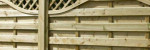

Quick answer: The best garden fence combines the level of privacy you need with a design that suits the size and style of the garden. Closeboard and waney lap panels work well for solid screening, slatted and hit and miss designs give a more contemporary feel, while picket fencing and trellis suit lighter boundaries. For the best result, plan the panels, posts, gravel boards, gate, planting and finished height as one complete design.
A fence does much more than mark the edge of a garden. It can create privacy around a patio, make a small garden feel more finished, provide a secure boundary for children and pets, hide an unattractive view or become part of the overall garden design.
The difficulty is deciding what type of fence will work best. A tall solid boundary may provide excellent privacy but feel overpowering in a compact garden. A decorative slatted panel may look more contemporary, while a traditional closeboard fence can suit both modern and older properties when it is finished carefully.
You can also combine different materials and styles. Trellis can soften a solid fence, planting can break up a long run of panels, gravel boards can create a cleaner base, and a well-positioned gate can make the complete boundary look intentional rather than purely functional.
These 25 garden fence ideas cover privacy, small gardens, modern designs, front gardens, planting, colour and practical upgrades.
Which Garden Fence Style Is Right For You?
| Main Priority | Fence Idea To Consider | Why It Works |
|---|---|---|
| Maximum privacy | Closeboard panels | Solid overlapping boards |
| Affordable privacy | Waney lap panels | Simple traditional screening |
| Modern appearance | Double slatted panels | Clean horizontal lines |
| Privacy with airflow | Hit and miss panels | More open construction |
| Front garden | Picket panels | Defines without enclosing completely |
| Plants and greenery | Trellis | Supports climbers and lighter screening |
| Decorative finish | Omega lattice panels | Combines screening with an ornamental top |
1. Use Closeboard Panels For Classic Garden Privacy
Closeboard fencing is one of the most versatile choices for a private back garden.
The overlapping vertical boards provide a solid visual barrier, making the design useful around:
- Patios
- Outdoor dining areas
- Family gardens
- Hot tubs
- Sheds and workshops
- Neighbouring windows
A standard closeboard panel can suit traditional or modern gardens depending on how the surrounding area is finished.
For a traditional look, combine it with natural timber posts and wooden gravel boards. For a more structured boundary, use concrete posts and gravel boards.
Closeboard also works well as a backdrop for planting because the simple vertical board pattern does not compete heavily with flowers or foliage.
2. Choose Waney Lap For An Affordable Traditional Fence
Waney lap panels are a practical choice when you need to fence a long boundary without making the design overly complicated.
The overlapping horizontal boards create privacy while maintaining a familiar traditional garden appearance.
Waney lap works particularly well for:
- Long suburban boundaries
- Rental properties
- Sheltered gardens
- Areas that will eventually be softened with planting
- Utility areas behind sheds
Because the panel itself is visually simple, you can improve the overall appearance by concentrating on straight post alignment, consistent gravel boards and tidy capping.
A well-installed straightforward fence generally looks better than an elaborate fence with uneven posts and inconsistent heights.
3. Create A Contemporary Garden With Double Slatted Panels
Horizontal slats are one of the easiest ways to give a garden a more contemporary appearance.
Double slatted panels use repeated horizontal lines to create a lighter-looking boundary than traditional closeboard fencing.
They work particularly well with:
- Modern extensions
- Porcelain patios
- Rendered walls
- Simple raised beds
- Architectural planting
- Garden offices
The horizontal pattern can also make a narrow garden feel visually wider because the eye follows the lines along the boundary.
Keep the rest of the design relatively simple. Too many decorative materials can compete with the repeated slat pattern.
4. Use Hit And Miss Fencing For Privacy With Airflow
Not every private garden needs a completely solid fence.
Horizontal hit and miss panels position boards on alternate faces, allowing more air movement through the boundary while still interrupting direct views.
This can be useful in:
- Windier gardens
- Exposed plots
- Contemporary landscapes
- Gardens containing dense planting
The design provides filtered privacy rather than the completely closed appearance of closeboard.
It can also look attractive from both sides, which is useful where a prominent boundary is visible from neighbouring gardens.
5. Add Trellis Above A Solid Fence
A solid lower fence with trellis above it provides a useful balance between privacy and openness.
The solid section blocks direct views at seating level while the trellis allows:
- More light
- Air movement
- Climbing plants
- A less imposing upper edge
This is particularly effective around patios where a full-height solid fence might feel enclosed.
Traditional square trellis suits classic gardens, while horizontal slatted trellis can create a more contemporary finish.
Remember that the trellis contributes to the total fence height. Plan the complete enclosure before choosing post lengths.
6. Use Trellis To Make A Small Garden Feel Lighter
Tall solid panels on every side can make a compact garden feel boxed in.
One alternative is to use a solid lower section where privacy is needed and a more open trellis section above.
The eye can travel through the upper part of the boundary, creating less visual weight while still maintaining separation from neighbouring gardens.
Trellis becomes especially effective when planted with:
- Clematis
- Climbing roses
- Jasmine
- Other garden climbers suitable for the site
Use the trellis as a proper support structure rather than allowing mature plants to rely on thin fence boards.
7. Match The Fence To The Architecture Of The House
A fence often looks best when it relates to the property rather than being selected independently.
For a traditional house, consider:
- Closeboard
- Waney lap
- Picket fencing
- Square trellis
For a more contemporary property, consider:
- Double slatted panels
- Horizontal hit and miss
- Horizontal slatted trellis
- Simple dark or natural finishes
The fence does not need to copy the house exactly. Repeating one visual characteristic, such as horizontal lines or a restrained colour palette, can be enough to make the garden feel coordinated.
8. Paint A Fence Dark To Make Planting Stand Out
Dark fence colours can provide an effective background for green foliage and brightly coloured flowers.
Deep greys, dark browns and near-black shades tend to visually recede, particularly once planting develops in front.
This can help:
- Make foliage appear more vivid
- Reduce the visual dominance of a long fence
- Create a contemporary backdrop
- Unify older panels with newer garden features
Dark colours are particularly effective behind ornamental grasses, pale flowers and silver foliage.
Use a coating suitable for exterior timber and prepare the surface according to the product instructions.
9. Keep Timber Natural For A Softer Garden
Not every fence needs to be painted.
Pressure-treated timber can work well with gardens designed around natural materials such as:
- Railway sleepers
- Gravel
- Stone
- Timber furniture
- Informal planting
Natural timber provides warmth without introducing another strong colour to the garden.
It can be particularly effective where the fence will eventually be partly hidden by plants.
Expect the appearance of timber to change as it is exposed to weather. Natural weathering is normal and does not necessarily indicate structural deterioration.
10. Use A Feature Fence Behind The Patio
You do not have to use the same fence design on every boundary.
A decorative or contemporary panel can be concentrated around the main seating area while simpler fencing is used elsewhere.
For example:
- Use double slatted panels behind a dining area.
- Use closeboard along less visible side boundaries.
- Add trellis where planting is concentrated.
This allows the garden to have a visual focal point without increasing the complexity of the entire boundary.
Keep panel heights and post positions coordinated so the change in design looks deliberate.
11. Combine Solid Panels With Decorative Lattice
Omega lattice panels offer a more decorative alternative to a completely square fence top.
The curved upper section can soften the hard line created by a long run of fencing.
This style suits:
- Traditional gardens
- Cottage-style planting
- Patio boundaries
- Areas where complete top-to-bottom screening is unnecessary
The lattice can also provide support for selected climbing plants.
When using a decorative top across several panels, careful post alignment becomes particularly important because inconsistent heights become easy to see.
12. Use Picket Fencing In A Front Garden
A front garden often benefits from a boundary that defines the property without creating a tall visual barrier.
Picket fencing provides:
- Clear boundary definition
- An open appearance
- Visibility towards the street
- A traditional garden character
Common picket panel heights include lower options around 2ft, 3ft and 4ft.
Round-top pales create a softer appearance, while pointed pales provide a sharper traditional look.
Match the fence with a corresponding picket gate for a more coherent entrance.
13. Combine Picket Fencing With Low Planting
Picket fencing works especially well when the planting can be seen through and above it.
Try combining it with:
- Low hedging
- Lavender-style borders
- Ornamental grasses
- Flowering perennials
- Small shrubs
The fence supplies the structure while the planting prevents the frontage looking too hard.
This can work better than either a dense hedge or tall solid fencing where an open front garden is preferred.
14. Create A Hidden Bin Area With Fencing
Bins are practical but rarely improve a garden view.
A short independent fence or screen can hide them from patios, windows and entrances.
Suitable options include:
- Closeboard panels
- Slatted panels
- Hit and miss panels
- Trellis combined with planting
Allow enough space to move the bins comfortably and avoid creating a narrow opening that makes them awkward to pull out.
Airflow is also useful, particularly where the area is enclosed on several sides.
15. Screen A Shed Or Utility Area
A carefully positioned fence can divide the practical part of a garden from the main entertaining area.
It can hide:
- A shed
- Compost bins
- Water butts
- Tool storage
- Washing areas
A partial screen is often enough. You do not necessarily need to create another fully enclosed section of garden.
Use the same style as the main boundary where possible so that the screen feels integrated.
16. Divide A Long Garden Into Separate Zones
Long rectangular gardens can sometimes feel like corridors.
A low or partially open fence can divide the garden into:
- Dining space
- Lawn
- Children's play area
- Vegetable garden
- Utility area
Picket panels and trellis are particularly useful because they create separation without completely blocking views through the garden.
Leaving an opening slightly off-centre can make the next section feel less immediately visible and create a stronger sense of progression through the space.
17. Use Fencing To Make A Narrow Garden Feel Wider
The direction of the fence boards can affect how the eye reads the garden.
Horizontal slats draw the eye sideways, which can make a narrow space feel visually broader.
Other useful techniques include:
- Keeping the fence colour consistent
- Avoiding too many panel styles
- Using planting at intervals rather than creating one dense strip
- Keeping the top line relatively simple
In very narrow gardens, avoid bulky hedging immediately in front of the fence because it can reduce the usable width further.
18. Break Up A Long Fence With Climbing Plants
A long uninterrupted fence can dominate the garden even when the panels themselves are attractive.
Planting at intervals breaks the run visually.
Use:
- Trellis panels
- Trellis battens
- Independent wires
- Freestanding supports
to give climbers a controlled structure.
Rather than covering every panel, leave areas of visible timber between plants. The contrast often looks more intentional and makes fence maintenance easier.
19. Create A Living Fence With Trellis And Climbers
If you like the appearance of a hedge but do not want to sacrifice as much garden width, trellis with climbing plants can provide a useful alternative.
The structure gives the plants somewhere to grow vertically while maintaining a relatively narrow footprint.
This approach works well:
- Beside patios
- In small gardens
- Around seating areas
- Along internal garden divisions
Remember that mature climbers can become surprisingly heavy.
Use adequately supported trellis and keep growth trimmed rather than allowing the plant to pull against a lightweight panel indefinitely.
20. Use Gravel Boards As Part Of The Design
Gravel boards are usually discussed as a practical component, but they also influence the appearance of a fence.
Wooden gravel boards create a continuous timber finish from the ground upwards.
Concrete gravel boards introduce a more defined base and can create a strong visual line beneath the panels.
They are particularly useful beside:
- Lawns
- Flower beds
- Mulched borders
- Gravel paths
- Areas affected by soil splash
A consistent gravel-board height can make a long fence look considerably neater.
21. Use Concrete Posts For A Stronger Visual Rhythm
Concrete posts are often selected for practical reasons, but they also affect the appearance of the finished boundary.
The regular vertical posts create a strong rhythm between timber panels.
This can work particularly well with:
- Closeboard panels
- Waney lap panels
- Long straight boundaries
Concrete posts are available in configurations for intermediate positions, ends, corners and three-way junctions.
Plan these correctly from the start rather than treating every post as interchangeable.
22. Create An All-Timber Fence For A Natural Look
If visible concrete feels too formal, use timber posts with wooden gravel boards for an all-timber appearance.
This works particularly well with:
- Closeboard panels
- Waney lap
- Picket fencing
- Trellis
- Railway sleeper landscaping
Common timber post sections include 75 x 75mm and 100 x 100mm.
The appropriate size depends on the panel height, construction, wind exposure and site conditions.
Do not choose smaller posts purely because they are less visible.
23. Match The Garden Gate To The Fence
A mismatched gate can make an otherwise attractive boundary feel unfinished.
Where possible, repeat the character of the main fence.
Examples include:
- Feather edge gate with closeboard fencing
- Double slatted gate with contemporary slatted panels
- Round-top picket gate with round-top picket fencing
- Point-top picket gate with point-top picket fencing
Also match the finished height where appropriate.
A gate needs its own substantial posts, hinges and latch arrangement. Do not treat it simply as a narrow fence panel.
24. Hide An Old Fence With An Independent Screen
If a neighbouring fence is structurally sound but unattractive and you do not own it, an independent screen inside your garden may be preferable to altering their property.
Possible solutions include:
- Freestanding trellis
- Independent slatted screening
- Planting supported on your own posts
- A separate fence inside your boundary
Do not attach panels, paint, trellis or planters to a neighbour's fence without permission.
Where two fences are installed close together, leave enough room for maintenance and prevent leaves and debris collecting in the gap where practical.
25. Combine Fencing And A Hedge For The Best Of Both
A fence and hedge do not have to be alternatives.
Combining them can provide:
- Immediate privacy from the fence
- Greenery from the planting
- A secure physical boundary
- Wildlife habitat
- A softer overall appearance
Install the fence first where possible, then position planting far enough away to allow growth and future maintenance.
This approach is useful where homeowners want the natural appearance of a hedge without waiting several years for it to become an effective screen.
What Is The Best Fence For Privacy?
Solid fencing is generally the strongest choice where visual screening is the main objective.
Good options include:
- Standard closeboard
- Ultra heavy duty closeboard
- Waney lap
For privacy with a lighter appearance, consider:
- Hit and miss panels
- Double slatted panels
- Solid panels with trellis above
Think about where privacy is actually needed.
A seating area may need screening at one end while other boundaries can remain more open.
What Is The Best Fence For A Small Garden?
For small gardens, avoid making every boundary visually heavy.
Useful options include:
- Horizontal slatted panels
- Hit and miss panels
- Closeboard painted in a recessive colour
- Solid fencing with trellis above
- Climbing plants on narrow supports
Keep the design consistent. Several different fence types squeezed into a small space can make the garden feel fragmented.
A limited material palette generally creates a calmer appearance.
What Is The Best Fence For A Modern Garden?
Modern gardens commonly work well with strong horizontal lines and restrained detailing.
Consider:
- Double slatted panels
- Horizontal hit and miss panels
- Horizontal slatted trellis
- Simple capping
- Dark or natural timber finishes
Pair the fence with simple planting rather than trying to make every individual element a feature.
Grasses, clipped shrubs and large areas of green foliage can provide contrast against the structured timber.
What Is The Best Fence For A Traditional Garden?
Traditional garden designs work well with:
- Closeboard fencing
- Waney lap panels
- Picket fencing
- Square trellis
- Omega lattice panels
Natural timber colours and softer planting can help the fence sit comfortably beside older brickwork and established gardens.
What Is The Best Fence For A Windy Garden?
Wind exposure should influence both the panel and support system.
A tall solid panel catches more wind than an open design.
Where airflow is desirable, consider:
- Horizontal hit and miss
- Double slatted fencing
- Picket fencing for lower boundaries
- Trellis in suitable positions
Panel choice alone is not enough.
Posts, post dimensions, foundation size and fixings must all suit the fence and exposure.
What Is The Best Fence For Dogs?
For most dogs, a solid or closely boarded fence provides the most predictable containment.
Check:
- Fence height
- Gaps beneath panels
- Gate clearance
- Gate latch position
- Loose boards
- Potential climbing points
Gravel boards can help control the lower edge of a panel fence.
The appropriate height and design depend on the size, behaviour and jumping ability of the dog.
What Is The Best Fence For Children?
A family garden benefits from secure panels and a controlled gate opening.
Look for:
- Stable posts
- Secure panels
- No protruding fixings
- A reliable gate latch
- No large unexpected gaps
Picket fencing can work well around internal garden areas, while taller solid fencing can secure the external boundary.
How Can You Make A Fence Look Better Without Replacing It?
If the existing structure is still sound, there are several ways to refresh it.
Consider:
- Cleaning the panels
- Replacing damaged boards
- Adding capping
- Using a suitable exterior coating
- Installing independent trellis
- Adding planting
- Replacing an unattractive gate
- Renewing damaged gravel boards
Do not hide structural problems with paint or plants.
Repair loose posts and failing panels first.
How Can You Make A Fence Look More Expensive?
Good detailing often matters more than choosing the most elaborate panel.
Concentrate on:
- Straight post alignment
- Consistent panel heights
- Level gravel boards
- Neat capping
- A matching gate
- Controlled planting
- A consistent colour palette
A simple closeboard fence installed accurately can look more considered than expensive decorative panels installed unevenly.
Should Every Boundary Use The Same Fence?
No, but there should usually be a reason for changing style.
For example:
- Use solid privacy panels beside neighbours.
- Use picket fencing across an internal garden division.
- Use decorative slatted panels around the patio.
- Use trellis where planting needs support.
Keep one or two characteristics consistent, such as post material, timber colour or panel height, to tie the designs together.
Should The Fence Match On Both Sides Of The Garden?
It does not have to, particularly if the boundaries belong to different owners.
If you control both sides and want a more coordinated garden, matching panel styles can create a cleaner appearance.
Alternatively, use the same colour or planting scheme to visually connect different fence types.
Should Fence Panels Be Vertical Or Horizontal?
Vertical boards create a traditional appearance and emphasise height.
Horizontal boards create a broader visual line and often look more contemporary.
Neither direction is inherently better.
Choose according to:
- House style
- Garden proportions
- Privacy requirements
- Wind exposure
- Preferred maintenance
Should You Use Wooden Or Concrete Fence Posts?
Wooden posts provide an all-timber appearance and are easy to cut and fix into.
Concrete posts do not rot and allow compatible framed panels to be removed and replaced independently.
| Feature | Timber Posts | Concrete Posts |
|---|---|---|
| Appearance | Natural and discreet | More structural |
| Handling | Easier | Heavy |
| Cutting and fixing | Straightforward | Limited |
| Ground-level rot | Requires suitable treatment | Does not rot |
| Panel replacement | Depends on fixing system | Simple with compatible slotted panels |
Should You Add Gravel Boards?
Gravel boards are useful where the bottom of the fence would otherwise sit close to:
- Soil
- Grass
- Mulch
- Wet planting beds
- Regular strimmer use
They protect the lower panel frame and create a cleaner finished base.
Concrete gravel boards suit durability-focused installations, while wooden boards maintain an all-timber appearance.
How Can You Use A Fence To Create More Privacy?
Start by identifying the actual sightline rather than automatically increasing the height everywhere.
Privacy may be needed:
- Around the patio
- Beside a hot tub
- Near a neighbouring window
- Around an outdoor kitchen
A targeted screen, trellis section or carefully positioned planting may solve the issue without enclosing the complete garden.
Can Trellis Be Used For Privacy?
Yes, but trellis provides filtered screening rather than the instant solid privacy of closeboard.
Its effectiveness increases when combined with planting.
Trellis is particularly useful where you want:
- Height without a completely solid appearance
- Support for climbers
- More light
- A decorative boundary
How High Can A Garden Fence Be?
Planning rules depend on which part of the UK the property is in and on the circumstances of the site.
In England and Wales, planning permission is generally not required where a new fence, wall or gate:
- Does not exceed 1m beside a highway used by vehicles or the footpath of such a highway
- Does not exceed 2m elsewhere
Exceptions can apply to listed buildings, planning conditions, Article 4 directions and other restricted properties.
Rules differ elsewhere in the UK, so check the relevant national and local guidance before increasing fence height.
The completed height should include permanent additions such as gravel boards and trellis.
What Should You Check Before Changing A Boundary Fence?
Before removing or replacing an existing fence, establish:
- Who owns it
- Where the legal boundary is
- Whether responsibility is shared
- Whether neighbour access is required
- Whether planning restrictions apply
- Whether a covenant affects the boundary
Do not rely on the idea that you automatically own the fence on the left or right.
Where ownership is unclear, check the property documents and discuss the work with the adjoining owner before removing anything.
How Should You Plan A Complete Fence Makeover?
Work in this order:
- Confirm the boundary and ownership.
- Measure every straight run.
- Choose the main panel style.
- Select timber or concrete posts.
- Choose the gravel boards.
- Position the garden gate.
- Plan any trellis.
- Choose the colour or finish.
- Plan planting after the structural fence.
This avoids choosing decorative details before the underlying fence system has been resolved.
Garden Fence Design Mistakes To Avoid
- Choosing a fence only from photographs without considering the site
- Using tall solid panels everywhere in a very small garden
- Choosing lightweight supports for heavy panels
- Ignoring wind exposure
- Forgetting gravel boards beside wet soil
- Adding trellis without considering total height
- Mixing too many panel styles
- Using several unrelated fence colours
- Buying panels before planning the gate
- Planting dense shrubs directly against timber
- Allowing climbing plants to overload weak panels
- Blocking future access to a shed or fence
- Ignoring a failing post because the panel still looks good
- Replacing a boundary without checking ownership
Garden Fence Ideas Checklist
Before deciding on a design, ask:
- How much privacy do I need?
- Is the garden sheltered or exposed?
- How much space is available?
- Do children or pets use the garden?
- Is the boundary visible from the house?
- Would solid or filtered screening work better?
- Does the design suit the property?
- Do I want climbing plants?
- Will trellis be added?
- Do I prefer timber or concrete posts?
- Are gravel boards needed?
- Where should the gate go?
- Can the fence be maintained easily?
- Does the proposed height comply with relevant restrictions?
FAQs
What Type Of Garden Fence Looks Best?
It depends on the property and garden. Closeboard suits many traditional gardens, while double slatted and hit and miss panels work well in contemporary spaces. Picket fencing and trellis are useful where a lighter boundary is preferred.
What Is The Best Fence For Privacy?
Solid closeboard and waney lap panels provide strong visual screening. Closeboard has the more substantial construction of the two.
What Is The Best Fence For A Small Garden?
Slatted fencing, trellis and carefully coloured solid panels can work well because they reduce the visual weight of the boundary.
What Is The Most Modern Fence Style?
Horizontal double slatted and hit and miss panels are particularly suited to contemporary garden design.
What Is The Cheapest Way To Improve An Existing Fence?
If the structure is sound, cleaning, repairing isolated damage, adding planting, fitting capping or applying a suitable exterior coating may improve it without complete replacement.
How Can I Make A Fence More Private?
Use solid panels, add suitable trellis where permitted or create additional independent screening around the area that needs privacy.
How Can I Make My Fence Look Better?
Keep the fence straight and consistent, repair damaged components, add capping, use a coordinated colour and introduce controlled planting.
Can I Paint Pressure-Treated Fencing?
Yes, once the timber is suitably dry and prepared. Follow the coating manufacturer's instructions.
What Colour Makes A Garden Look Bigger?
Darker or visually recessive fence colours can make the boundary feel less prominent, particularly when planting is placed in front. Overall garden layout and planting also have a major effect.
Are Dark Fences A Good Idea?
They can provide an effective contemporary backdrop and make foliage stand out. Use an exterior product suitable for timber.
Can I Use Different Fence Panels In The Same Garden?
Yes. Use the changes deliberately, such as decorative panels around a patio and simpler panels elsewhere. Repeating post material or colour can help connect the designs.
Are Horizontal Fence Panels Better?
They are not inherently better, but their horizontal lines suit contemporary gardens and can help visually widen a narrow space.
Are Vertical Fence Panels More Traditional?
Generally, yes. Closeboard and feather edge fencing use strong vertical lines and suit a wide variety of British garden styles.
Can Trellis Go On Top Of A Fence?
Yes, where the fence and posts can support it and the completed height complies with relevant planning restrictions.
Can I Grow Climbers On A Fence?
Yes, but trellis or independent supports can control the growth and prevent heavy plants relying solely on the fence boards.
What Fence Is Best In A Windy Garden?
More open designs such as hit and miss, slatted or suitable picket fencing allow more airflow than completely solid panels. The posts and foundations must still suit the exposure.
What Fence Is Best For Dogs?
A sufficiently high, secure panel fence with controlled gaps and a reliable gate is generally the most predictable option.
What Fence Is Best For A Front Garden?
Picket fencing is a popular choice because it defines the boundary without completely obscuring the property.
Should Fence Posts Be Wood Or Concrete?
Wood provides a natural appearance and easy fixing. Concrete provides a rot-resistant support and works well with removable framed panels.
Are Gravel Boards Necessary?
They are not required for every fence, but they are particularly useful where timber panels would otherwise sit close to wet soil, grass or planting.
Can I Put A Fence In Front Of A Hedge?
Yes, provided the fence is on the correct land and there is enough room for hedge and fence maintenance.
Can I Plant A Hedge In Front Of A Fence?
Yes. This provides immediate privacy from the fence with a softer green appearance as the hedge develops.
Can I Hide My Neighbour's Fence?
If the fence belongs to your neighbour, use independent screening, planting or your own fence rather than attaching anything without permission.
Does Trellis Count Towards Fence Height?
Yes. Permanent trellis should be considered as part of the completed enclosure height.
Should A Garden Gate Match The Fence?
It does not have to, but repeating the fence material, board direction or top profile usually creates a more coherent result.
What Makes A Fence Look High Quality?
Consistent post spacing, straight alignment, level gravel boards, suitable fixings, a neat top line and a coordinated gate generally matter as much as the panel design itself.
Choose A Fence That Works With The Whole Garden
The best garden fence idea is not necessarily the most decorative one. It is the design that solves the practical requirements of the garden while complementing the property and landscaping.
For immediate privacy, closeboard and waney lap panels provide solid screening. For a more contemporary appearance, double slatted and hit and miss panels introduce horizontal lines and a lighter feel. Picket fencing works particularly well for front gardens and internal divisions, while trellis adds planting opportunities and filtered screening.
Small gardens often benefit from keeping the boundary visually simple. Use consistent colours, avoid unnecessary changes of panel style and consider trellis or horizontal designs where a tall solid fence feels too dominant.
For larger gardens, use different fencing strategically. A decorative panel can create a feature around the patio, while practical closeboard fencing can handle less prominent boundaries.
Whatever design you choose, plan it as a complete compatible system. Match the panels with suitable timber or concrete posts, add gravel boards where ground-level protection is useful, choose an appropriate gate and allow for any trellis, capping and planting before installation begins.
A well-designed fence should provide the privacy, security and structure the garden needs while giving everything inside the boundary a better backdrop.