





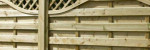

Quick answer: The main parts of a typical garden fence are the posts, fence panels or individual boards, gravel boards and fixings. Traditional closeboard fencing also uses horizontal rails and overlapping feather edge boards. Other common terms include fence bays, concrete repair spurs, panel clips, trellis, capping, gate posts and ironmongery. Knowing these names makes measuring, ordering, repairing and installing fencing considerably easier.
Fencing terminology can become confusing surprisingly quickly.
A homeowner might ask for feather edge fencing when they mean a closeboard panel, refer to a gravel board as a kickboard or assume that every concrete fence post performs the same job.
These distinctions matter when you start measuring a boundary or ordering replacement components. A fence is a system, and the panels, posts, gravel boards, rails, gates and fixings all need to work together.
This glossary explains the fencing terms most useful for UK garden projects, including what each component does, where it is used and the terms that are commonly confused.
The Main Parts Of A Garden Fence
A typical panel fence can be broken into four main components:
- Fence posts: the vertical supports.
- Fence panels: the main screening sections between the posts.
- Gravel boards: the lower boards between the panels and ground.
- Fixings: clips, brackets, screws and other components holding everything together.
A traditional closeboard fence built from individual components normally includes:
- Fence posts
- Cant rails
- Feather edge boards
- Gravel boards
- Capping where required
- Suitable exterior fixings
Garden gates introduce additional components such as gate posts, hinges, latches and bolts.
Fence Terminology At A Glance
| Term | Meaning |
|---|---|
| Fence post | Vertical structural support |
| Fence panel | Ready-made fencing section installed between posts |
| Fence bay | One section of fence between two posts |
| Gravel board | Board beneath the panel separating it from ground level |
| Feather edge board | Tapered vertical timber board used in closeboard fencing |
| Cant rail | Horizontal rail supporting feather edge boards |
| Capping | Finishing timber fitted along the top of fencing |
| Trellis | Open timber screening or climbing-plant support |
| Fence panel clip | Metal fixing used to secure a panel to timber posts |
| Repair spur | Concrete support used beside a suitable damaged timber post |
| Post mix | Rapid-setting material used around posts in the ground |
| Ironmongery | Metal gate and fencing hardware |
What Is A Fence Post?
A fence post is the vertical support holding the fence upright.
Posts carry the loads created by:
- Fence panels
- Wind
- Rails and individual boards
- Trellis where fitted
- Gates where suitable gate posts are used
A fence can have perfectly serviceable panels and still fail because its posts are weak, rotten, cracked or badly installed.
What Is A Wooden Fence Post?
A wooden fence post is a pressure-treated timber post used to support fencing.
Common timber post sections include:
- 75 x 75mm
- 100 x 100mm
Timber posts are popular because they are relatively light and can easily be:
- Drilled
- Screwed into
- Cut where appropriate
- Used with panel clips
- Used with traditional closeboard fencing
The timber must be appropriately treated for its intended exterior application, particularly where the post will be installed in the ground.
What Is A Concrete Fence Post?
A concrete fence post is a reinforced concrete support used instead of timber.
Concrete posts do not suffer from timber rot and are commonly combined with framed fence panels and concrete gravel boards.
They are much heavier than wooden posts, which makes handling and installation more demanding.
What Is A Slotted Concrete Post?
A slotted concrete post has vertical channels designed to accept compatible fence panels and gravel boards.
This creates a modular fencing system.
Rather than screwing the panel to the face of a post, the panel sits within the slots.
This can make future panel replacement easier because a damaged panel may be lifted out while the posts remain in place.
What Is An Intermediate Concrete Post?
An intermediate post is used between ordinary fence bays along a straight run.
It has slots positioned to accept panels approaching from opposite sides.
If a straight fence consists of several repeated bays, most of the posts along that run will normally be intermediate posts.
What Is A Concrete End Post?
An end post is designed for the end of a fence run.
Unlike an intermediate post, it does not need to accept another panel continuing in the opposite direction.
Using the appropriate post type helps create a cleaner and more practical finish at the end of the boundary.
What Is A Concrete Corner Post?
A corner post is used where the fence changes direction.
Its slot arrangement allows fence panels to meet at the required corner rather than continuing in a straight line.
Corner positions need to be identified during measuring because they affect the number and types of posts required.
What Is A Three-Way Concrete Post?
A three-way post allows fencing to approach from three directions.
It can be useful where one fence run meets another boundary or internal division.
This is a more specialised component than a normal intermediate post.
What Is A Gate Post?
A gate post is a heavier post intended to support a gate.
A gate creates different forces from an ordinary fence panel because it repeatedly swings from its hinges.
The hinge-side post therefore needs to resist:
- Gate weight
- Repeated opening
- Closing forces
- Wind acting on the gate
A 150 x 150mm timber gate post is considerably more substantial than an ordinary garden fence post.
What Is A Concrete Repair Spur?
A concrete repair spur is installed beside a suitable damaged timber fence post to provide additional support.
The spur is normally concreted into the ground and the surviving timber post is fixed to it.
Repair spurs can be useful when a timber post has failed near ground level but the remainder of the fence is still worth retaining.
They are not suitable for every damaged fence. If numerous posts and panels are deteriorating, complete replacement can be more sensible.
What Is A Drive-In Post Spike?
A drive-in post spike is a metal support driven into suitable ground to hold a timber post above the soil.
Common sizes correspond with timber posts such as:
- 75 x 75mm
- 100 x 100mm
Post spikes can be useful for appropriate lighter installations, but they should not automatically be treated as equivalent to a substantial concreted foundation for every tall privacy fence.
What Is A Bolt-Down Post Support?
A bolt-down support is a metal post holder fixed to a suitable solid surface rather than driven into the soil.
It may be used where a timber post needs to stand on an appropriate concrete or masonry base.
The strength of the finished installation depends on:
- The post support
- The fixings
- The underlying surface
- The height and wind loading of the fence
What Is A Fence Panel?
A fence panel is a ready-made rectangular section installed between posts.
Panel fencing is common in UK gardens because most of the timber construction is completed before installation.
A typical panel fence therefore requires fewer individual timber pieces to be assembled on site than traditional closeboard fencing.
What Is A Closeboard Fence Panel?
A closeboard panel uses overlapping vertical timber boards to create a solid traditional fence.
The panel is supplied as one framed unit rather than being assembled board by board along the boundary.
Closeboard panels are particularly useful where you want:
- Privacy
- A substantial timber appearance
- A traditional vertical board pattern
- A ready-made panel installation
What Is An Ultra Heavy Duty Closeboard Panel?
An ultra heavy duty closeboard panel is a more substantial closeboard panel construction intended for customers wanting a heavier fencing panel.
It retains the familiar overlapping vertical board appearance of closeboard fencing.
As with any heavier panel, the quality of the posts and foundations remains essential.
What Is A Waney Lap Panel?
Waney lap is a traditional fence panel constructed from horizontally overlapping timber boards.
The pattern runs horizontally rather than vertically.
This provides an easy visual distinction:
- Closeboard: predominantly vertical boards.
- Waney lap: predominantly horizontal overlapping boards.
Is Waney Lap The Same As Overlap Fencing?
The terms are commonly used for closely related traditional panel styles based on overlapping horizontal boards.
When replacing an existing panel, measure the actual width and height rather than relying entirely on the name used by the previous owner.
What Is A Picket Fence Panel?
A picket panel is an open timber fence made from vertical pales with gaps between them.
It is commonly used for:
- Front gardens
- Low boundaries
- Internal garden divisions
- Decorative fencing
Picket fencing defines a boundary without creating the same level of solid privacy as closeboard or waney lap fencing.
What Is A Picket Pale?
A picket pale is one individual vertical board used to construct a picket fence.
Pales can be supplied with different top profiles, including:
- Pointed tops
- Rounded tops
This should not be confused with a complete picket fence panel, which contains multiple pales already assembled onto rails.
What Is Hit And Miss Fencing?
Hit and miss fencing uses boards arranged to provide screening while allowing more airflow through the panel than a completely solid fence.
Horizontal hit and miss panels can be useful where homeowners want:
- Privacy
- A contemporary appearance
- More airflow
- A less solid boundary
The name comes from the alternating board arrangement.
What Is Double Slatted Fencing?
Double slatted fencing uses closely arranged horizontal slats to create a contemporary screen.
It produces strong horizontal lines and is visually different from:
- Vertical closeboard
- Horizontal waney lap
- Open picket fencing
Although both double slatted and hit and miss fencing can have a contemporary appearance, their construction and visual effect are different.
What Is An Omega Lattice Fence Panel?
An omega lattice panel is a decorative fence panel with a curved upper profile and lattice detail.
It combines more substantial lower screening with a decorative open section towards the top.
This can help soften the appearance of a full garden boundary.
What Is Decorative Fencing?
Decorative fencing is a broad description for panels where design is a particularly important part of the product.
Decorative features can include:
- Lattice
- Curved tops
- Slatted patterns
- More detailed framing
The term does not refer to one particular construction method.
What Is A Fence Bay?
A fence bay is one complete section between two posts.
For standard panel fencing, one bay normally consists of:
- One fence panel
- One gravel board where used
- The two posts defining that section
Thinking in bays makes measuring and ordering much easier.
How Many Posts Does A Fence Need?
On a simple straight fence run, there is normally one more post than there are bays.
For example:
| Fence Bays | Typical Straight-Run Posts |
|---|---|
| 1 | 2 |
| 2 | 3 |
| 5 | 6 |
| 10 | 11 |
Corners, gates and junctions can change the calculation because different post types may be needed.
What Is A Gravel Board?
A gravel board is installed underneath a fence panel or run of boards.
Its main purpose is to separate the principal timber fence from difficult conditions close to ground level.
It helps protect the panel from:
- Wet soil
- Mud splash
- Grass
- Leaves and debris
- Minor garden maintenance damage
What Is A Wooden Gravel Board?
A wooden gravel board is a pressure-treated timber board used along the bottom of the fence.
Wooden boards provide a natural appearance and are easy to:
- Cut
- Carry
- Drill
- Use with timber-post fencing
They remain timber, so correct treatment and sensible installation are important where they experience ground contact.
What Is A Concrete Gravel Board?
A concrete gravel board performs the same basic job using reinforced concrete.
It is considerably heavier than timber but does not suffer from timber rot.
Concrete gravel boards are particularly common with slotted concrete posts.
What Is A Smooth Concrete Gravel Board?
A smooth gravel board has a relatively plain concrete face.
It creates a simple, functional lower section beneath the fence panel.
Different depths can be used depending on the fencing design and required finished height.
What Is A Recessed Concrete Gravel Board?
A recessed gravel board has a moulded face rather than a completely plain surface.
This gives the visible concrete a more detailed appearance.
The choice between smooth and recessed boards is partly visual, provided the board is otherwise compatible with the fence system.
What Is A Rebated Gravel Board?
A rebated gravel board has a shaped section designed as part of its construction.
Lightweight rebated concrete gravel boards can reduce handling weight compared with more conventional solid sections while retaining the role of a concrete lower board.
What Is A Hedgehog Gravel Board?
A hedgehog gravel board includes a purpose-designed opening at ground level.
This creates a passage through an otherwise continuous concrete lower boundary.
It allows wildlife access without requiring an improvised hole to be cut into the fencing later.
What Is Feather Edge?
Feather edge describes a tapered timber board.
One edge is thicker and the opposite edge thinner.
Individual boards overlap to create a continuous vertical timber surface.
Feather edge boards are a principal component of traditional closeboard fencing.
Is Feather Edge The Same As Closeboard?
The terms are closely related but technically describe different things.
Feather edge is the individual tapered board.
Closeboard describes the fencing system constructed using overlapping boards.
In everyday conversation, "feather edge fencing" is commonly used to mean traditional closeboard fencing.
What Is A Cant Rail?
A cant rail is a horizontal timber rail used behind feather edge boards.
The boards are fixed to the rails to create traditional closeboard fencing.
The angled profile helps create a suitable support and avoids the broad horizontal top surface of an ordinary rectangular rail.
What Is A Fence Panel Backrail?
A backrail is one of the horizontal structural timbers on the rear of a fence panel.
The visible boards of the panel are fixed to this supporting framework.
Backrails should not be confused with the separate cant rails used to build traditional closeboard fencing directly along the boundary.
What Is MOT Rail?
MOT rail is a treated timber fencing rail used in appropriate fencing construction.
When replacing an existing rail, check its actual dimensions and function rather than assuming every horizontal fencing rail is interchangeable.
What Is A Wallplate?
A wallplate is a treated timber section that can provide a fixing surface against a suitable wall or structure in certain fencing arrangements.
It can be useful where a fencing run needs to terminate at an existing masonry feature rather than another freestanding post.
The wall and chosen fixing method still need to be suitable for the loads involved.
What Is Fence Capping?
Fence capping is a narrow timber finishing piece fitted along the top of suitable fencing.
It creates a cleaner top line and provides a more finished appearance.
Capping can be particularly noticeable on long straight boundaries.
Is Capping The Same As A Post Cap?
No.
Capping normally runs horizontally along the top of fencing.
A post cap is a separate item positioned on top of an individual post.
The two terms should not be used interchangeably.
What Is Trellis?
Trellis is an open timber screen commonly used for:
- Climbing plants
- Decorative screening
- Garden divisions
- Fence toppers
It allows considerably more light and air through than a solid fence panel.
What Is Square Trellis?
Square trellis uses intersecting timber battens to create approximately square openings.
It is a traditional choice for climbing plants and decorative screening.
Different spacing can create either a more open or more private design.
What Is Privacy Trellis?
Privacy trellis uses a closer arrangement than very open traditional lattice.
It still allows light through but provides a greater degree of visual screening.
This can make it useful around patios and other areas where a fully solid panel is not wanted.
What Is Horizontal Slatted Trellis?
Horizontal slatted trellis uses repeated horizontal timber sections rather than the crossed pattern associated with traditional square lattice.
It creates a more contemporary appearance and can be used:
- As a fence topper
- As a garden screen
- For climbing plants
What Is Diamond Trellis?
Diamond trellis arranges the battens diagonally to create a repeated diamond pattern.
It is usually chosen where decorative appearance is important.
What Is Fan Trellis?
Fan trellis widens from a narrower lower section towards the top, creating the characteristic fan shape.
It is commonly used as a decorative climbing-plant support rather than as a continuous conventional fence panel.
What Is A Trellis Batten?
A trellis batten is an individual narrow timber section used to support or construct trellis arrangements.
It can also be used as part of a planned framing detail where appropriate.
What Is Fence Topper Trellis?
Fence topper trellis is a shallow trellis section intended to sit above a main fence.
It can:
- Add decorative height
- Support climbers
- Increase filtered screening
- Reduce the visual weight of a solid upper boundary
Additional trellis contributes to the completed fence height and creates extra wind loading on the posts.
What Is A Garden Gate?
A garden gate provides an opening through a fence.
It normally requires:
- Suitable gate posts
- Hinges
- A latch or bolt
- Correct ground clearance
- Accurate alignment
Gate installation deserves separate planning because a gate is a moving component rather than a static fence panel.
What Is A Fully Framed Feather Edge Gate?
A fully framed feather edge gate uses a supporting timber frame with traditional feather edge boarding.
This makes it visually compatible with closeboard-style garden fencing.
What Is A Double Slatted Gate?
A double slatted gate uses horizontal slatted construction designed to coordinate with contemporary double slatted fencing.
Using a gate that matches the fence can create a more coherent boundary.
What Is A Picket Gate?
A picket gate uses spaced vertical pales to match picket fencing.
It is particularly suitable for lower decorative garden boundaries where visibility through the gate is desirable.
What Is Gate Ironmongery?
Ironmongery is the collective term for metal hardware used on a gate or fence.
Typical gate ironmongery includes:
- Tee hinges
- Ring latches
- Pad bolts
- Screws and fixings
Choosing suitable exterior hardware is essential because a gate is used repeatedly and its fittings remain exposed to weather.
What Is A Tee Hinge?
A tee hinge is a long metal hinge commonly used for timber garden gates.
The extended horizontal section spreads the load across the face of the gate.
The hinge size should suit the gate being installed.
What Is A Ring Latch?
A ring latch is a gate-closing mechanism operated using a ring handle.
It provides a traditional appearance and can normally be operated from both sides depending on the installation.
What Is A Pad Bolt?
A pad bolt is a sliding metal bolt used to secure a gate.
Depending on its design and installation, it can also provide a point for a padlock.
What Is A Fence Panel Clip?
A fence panel clip is a metal bracket used to secure a framed fence panel to a timber post.
It holds the panel in position without relying solely on driving fixings directly through the panel frame into the post.
Panel clips can also make future panel removal more straightforward.
What Is A Fence Panel Security Bracket?
A security bracket helps resist unwanted lifting or removal of a panel.
This can be useful in situations where a panel sits between posts in a way that could otherwise allow it to be lifted relatively easily.
Security should always be considered alongside gate hardware and the condition of the complete boundary.
What Is Post Mix?
Post mix is rapid-setting material used around fence or gate posts installed into the ground.
It provides the foundation holding the post in position.
Correct post installation also depends on:
- Hole depth
- Hole dimensions
- Post position
- Alignment
- Ground conditions
Post mix cannot compensate for a poorly positioned or inadequately prepared post hole.
What Does Plumb Mean?
Plumb means perfectly vertical.
A fence post should normally be checked for plumb in more than one direction before its foundation is allowed to set.
A row of leaning posts will make panels and gates increasingly difficult to align.
What Does Level Mean?
Level means horizontal.
On flat ground, gravel boards and panels are commonly installed level.
On slopes, individual panels may remain level while being stepped up or down from one bay to the next.
What Does Square Mean?
Square means that two elements meet at a correct 90-degree angle.
The term is commonly used when checking:
- Gate frames
- Panel framing
- Corner layouts
A gate frame that is badly out of square may not hang or close properly.
What Is A String Line?
A string line is a taut line used during setting out to keep posts aligned.
It provides a visual reference along the fence run.
Without a consistent reference, small errors at individual posts can create a noticeably wandering fence line.
What Is Stepped Fencing?
Stepped fencing is a common way to install rectangular fence panels on a slope.
Each panel remains level, but each successive bay starts higher or lower than the previous one.
The result is a stepped top line.
What Is Raked Fencing?
Raked fencing follows the slope more closely rather than keeping every section level.
This is usually easier with fencing constructed from individual components such as feather edge boards.
Raked fencing can provide a smoother appearance on sloping boundaries but requires more custom fitting.
What Is Panel Fencing?
Panel fencing is simply a system using ready-made panels between posts.
Typical components are:
- Fence panels
- Posts
- Gravel boards
- Fixings
It differs from traditional site-built fencing because the visible timber section is already assembled.
What Is Traditional Closeboard Fencing?
Traditional closeboard is built directly along the boundary from individual components.
A typical construction includes:
- Posts
- Cant rails
- Feather edge boards
- Gravel boards
- Capping
This should not be confused with a ready-made closeboard panel, even though the finished appearance can be similar.
What Is The Difference Between A Board, Pale And Panel?
These terms describe components at different levels.
- Board: an individual length of timber, such as feather edge.
- Pale: an individual vertical piece commonly used in picket fencing.
- Panel: a complete ready-made fencing section containing multiple pieces.
This distinction is particularly important when comparing prices or calculating quantities.
What Does Nominal Size Mean?
Nominal size is the standard name used to describe a product or timber section.
It does not always mean that the finished item measures exactly that figure in every dimension.
For example, fence panels are frequently described as nominal 6ft wide.
When replacing fencing between existing posts, measure the actual available opening instead of relying entirely on the nominal description.
What Does 6ft Mean In Fencing?
6ft is approximately 1.83m.
This measurement appears frequently in British fencing because many traditional fence panels are based around a nominal 6ft width.
Fence heights are also often discussed in feet even though product dimensions may also be supplied in metres or millimetres.
Why Are Imperial And Metric Measurements Both Used?
UK fencing commonly combines traditional imperial terminology with metric product dimensions.
You may therefore encounter descriptions such as:
- 6ft fence panel
- 1.83m panel
- 4in timber post
- 100 x 100mm post
These may refer to broadly equivalent nominal sizes.
For accurate installation, work from the actual product dimensions and site measurements.
What Does Pressure Treated Mean?
Pressure-treated timber has received industrial preservative treatment intended to improve resistance to biological deterioration.
Treatment should be appropriate to the product's intended use.
A fence panel above ground and a timber post buried in the soil experience very different levels of exposure.
Do not use the treatment colour alone to decide whether timber is suitable for a particular application.
What Does Green Pressure Treated Mean?
Green pressure-treated timber has a greenish or olive starting appearance associated with the treatment.
The colour is not itself a durability grade.
The timber will change appearance as it weathers outdoors.
What Does Brown Pressure Treated Mean?
Brown pressure-treated timber has a warmer initial treatment colour.
Like green treatment, the brown shade should not be confused with a technical treatment class.
Choose the timber first for its intended application, then choose the treatment colour where suitable options are available.
What Does Weathering Mean?
Weathering is the natural change in timber appearance caused by exterior exposure.
Sunlight and rain can gradually alter:
- Colour
- Surface texture
- Minor surface checking
Weathering does not automatically mean timber is rotten.
What Is Timber Checking?
Checking refers to cracks that can develop as timber dries and its moisture content changes.
Surface checking is common in exterior timber, particularly in larger sections such as posts.
Not every visible crack means that the post has structurally failed.
Serious splitting, movement or deterioration should still be investigated.
What Does Warping Mean?
Warping describes timber moving out of its original straight shape.
It can include:
- Twisting
- Bowing
- Cupping
Timber is a natural material, so some movement as moisture conditions change is normal.
What Does Rot Mean?
Rot is timber deterioration caused by fungi under suitable moisture conditions.
Areas around ground level deserve particular attention because they can experience persistent moisture.
Pressure treatment improves timber durability but does not make wood permanently immune to deterioration.
What Is A Cut-End Treatment?
Cut-end treatment is preservative applied to exposed areas of pressure-treated timber after necessary cross-cutting, drilling or notching.
It helps protect surfaces exposed after the original industrial treatment.
It should not be confused with the factory pressure-treatment process itself.
What Is A Fence Repair?
Fence repair is work carried out to retain a usable existing fence rather than replace the complete boundary.
Common repairs include:
- Replacing one damaged panel
- Replacing individual feather edge boards
- Replacing loose fixings
- Installing a concrete repair spur where appropriate
- Replacing damaged gate ironmongery
What Is A Failed Fence Post?
A failed post is no longer providing reliable structural support.
Signs can include:
- Leaning
- Movement at ground level
- Severe rot
- Snapping
- Cracking in a concrete post
Replacing panels alone will not solve a fence whose main supports have failed.
What Is A Loose Fence Bay?
A loose bay is one section of fencing that moves excessively.
The cause may be:
- A failing post
- Loose panel clips
- Damaged rails
- A broken panel frame
- Movement in the post foundation
Identify the cause before simply adding more screws.
What Is A Replacement Panel?
A replacement panel is a new fence panel installed into an existing bay.
Before ordering one, check:
- Existing post condition
- Actual bay width
- Panel height
- Gravel-board height
- Post slot or fixing arrangement
Older fencing should not be assumed to use current standard dimensions perfectly.
What Is A Fence Run?
A fence run is a continuous length of fencing.
A garden may contain several separate runs, for example:
- Left boundary
- Right boundary
- Rear boundary
- Short return beside a gate
Measure each run separately before combining quantities.
What Is A Fence Line?
Fence line describes the route along which the fencing is installed.
A fence line can be:
- Straight
- Angled
- Stepped
- Interrupted by gates
Setting out the line accurately is essential before post holes are dug.
What Is A Fence Return?
A return is a short section of fencing changing direction away from the main run.
Returns commonly appear:
- Beside houses
- Around gates
- At patios
- Where one boundary joins another
They often require corner or end details that should be included when counting posts.
What Is A Fence Topper?
Fence topper is a general term for an additional decorative section positioned above the main fence.
Trellis is one of the most common forms.
A topper can change:
- Finished height
- Wind loading
- Privacy
- Appearance
The existing posts need to be suitable for the additional structure.
What Is Privacy Fencing?
Privacy fencing describes fencing intended to reduce visibility into or through a garden.
Common privacy-oriented options include:
- Closeboard
- Waney lap
- Double slatted designs
- Privacy trellis used in suitable positions
Privacy is influenced by both construction and fence height.
What Is Decorative Screening?
Decorative screening provides visual separation without necessarily functioning as the primary boundary fence.
It can be installed around:
- Patios
- Bins
- Seating areas
- Utility areas
Trellis and slatted timber are common materials for this purpose.
What Is The Difference Between Fencing And Screening?
A fence normally forms a physical boundary or enclosure.
Screening is primarily intended to interrupt views or disguise an area.
A timber structure can sometimes perform both jobs, but thinking about the intended function helps determine the appropriate materials and support system.
Common Fencing Terms That Are Often Confused
| Term 1 | Term 2 | Difference |
|---|---|---|
| Feather edge | Closeboard | Board type vs complete fencing system |
| Panel | Board | Complete section vs individual timber component |
| Picket panel | Picket pale | Complete panel vs one vertical pale |
| Capping | Post cap | Runs along fence vs sits on one post |
| Fence panel | Trellis panel | Usually solid screening vs open screening |
| Intermediate post | End post | Continues a run vs terminates it |
| Post spike | Bolt-down support | Driven into ground vs fixed to solid surface |
What Should You Know Before Ordering Fence Panels?
Record:
- Required style
- Actual panel width
- Required panel height
- Post type
- Gravel-board type
- Ground slope
- Number of bays
If replacing existing panels, measure every bay rather than assuming all posts are perfectly spaced.
What Should You Know Before Ordering Fence Posts?
Determine:
- Timber or concrete
- Post section or concrete post type
- Post length
- Fence height
- Required installation depth
- Whether the post is intermediate, end, corner or gate support
A gate post should not automatically be substituted with an ordinary lightweight fence post.
What Should You Know Before Ordering Gravel Boards?
Check:
- Timber or concrete
- Required length
- Concrete depth where relevant
- Compatibility with posts
- Effect on finished fence height
A gravel board raises the main panel, so it must be included when calculating the complete boundary height.
What Should You Know Before Ordering Trellis?
Check:
- Width
- Height
- Pattern
- Support method
- Whether it is freestanding or fence-mounted
- Finished overall boundary height
Do not assume that every trellis panel is intended to sit directly on top of every fence panel.
What Should You Know Before Ordering A Gate?
Record:
- Gate width
- Gate height
- Required opening
- Swing direction
- Ground clearance
- Gate-post requirements
- Hinge type
- Latch or bolt requirement
Measure the intended opening carefully rather than ordering a gate solely from the approximate width of the gap.
Typical Components For A Panel Fence
A straightforward panel fence may require:
- Fence panels
- Timber or concrete posts
- Wooden or concrete gravel boards
- Panel clips or appropriate brackets where required
- Exterior screws and fixings
- Rapid-set post mix
- Garden gate components where access is needed
Typical Components For Traditional Closeboard Fencing
A site-built closeboard fence may require:
- Timber posts
- Cant rails
- Feather edge boards
- Gravel boards
- Fence capping
- Suitable exterior fixings
- Post mix
Typical Components For A Garden Gate
A timber garden gate installation can involve:
- Gate
- Suitable gate posts
- Tee hinges
- Ring latch
- Pad bolt where required
- Exterior screws and fixings
- Post mix for ground-installed posts
Common Fencing Terminology Mistakes
- Calling an individual feather edge board a complete fence panel
- Assuming feather edge and closeboard are technically identical terms
- Confusing capping with a post cap
- Calling every concrete post an intermediate post
- Forgetting that corner and end posts have different functions
- Using ordinary fence posts where substantial gate posts are needed
- Calling waney lap fencing closeboard
- Assuming all panels are exactly the same width
- Forgetting gravel boards when calculating finished height
- Buying trellis before deciding how it will be supported
- Assuming every post support is suitable for tall privacy fencing
Fencing Measurement Checklist
- Measure every continuous fence run.
- Record every change in direction.
- Mark gate openings.
- Count proposed bays.
- Identify end and corner positions.
- Measure existing bays individually when repairing fencing.
- Record ground-level changes.
- Include gravel boards in finished-height calculations.
- Include trellis in finished-height calculations.
- Check whether existing posts are actually reusable.
Fencing Buying Checklist
- Choose the fencing style.
- Choose panels or site-built fencing.
- Select compatible posts.
- Select appropriate gravel boards.
- Plan gates separately.
- Choose appropriate exterior fixings.
- Add capping where wanted.
- Plan trellis before choosing final post lengths.
- Allow for corners and end posts.
- Check access before choosing very heavy concrete components.
FAQs
What Are The Main Parts Of A Fence Called?
The principal components are normally fence posts, panels or individual boards, rails where required, gravel boards and fixings. Gates, trellis and capping can also form part of the complete system.
What Is The Horizontal Board At The Bottom Of A Fence Called?
It is normally called a gravel board.
What Are The Vertical Supports Called?
They are fence posts.
What Is The Section Between Two Posts Called?
It is commonly called a fence bay.
What Are The Horizontal Supports Behind Closeboard Fencing Called?
Cant rails are commonly used to support the vertical feather edge boards.
What Are The Vertical Boards On Closeboard Fencing Called?
They are feather edge boards.
Is Feather Edge The Same As Closeboard?
Feather edge describes the tapered boards. Closeboard describes the fencing system constructed using overlapping boards.
Is Closeboard The Same As Waney Lap?
No. Closeboard normally uses overlapping vertical feather edge boards, while waney lap panels use overlapping horizontal boards.
What Is A Fence Panel?
A fence panel is a ready-made fencing section fitted between posts.
What Is A Gravel Board?
A gravel board sits below the main fence panel and helps separate it from wet ground and garden debris.
What Is A Concrete Gravel Board?
It is a reinforced concrete lower board commonly used with concrete fence posts.
What Is A Repair Spur?
A repair spur is a concrete support that can reinforce a suitable damaged timber fence post.
What Is A Post Spike?
A post spike is a metal support driven into suitable ground to hold a timber post.
What Is A Bolt-Down Post Support?
It is a metal support fixed to a suitable solid base rather than installed directly into soil.
What Is A Fence Panel Clip?
It is a metal bracket used to secure a framed fence panel to a timber post.
What Is Trellis?
Trellis is an open timber screen used for climbing plants, decoration and filtered screening.
What Is Privacy Trellis?
Privacy trellis has closer spacing than very open lattice and provides greater visual screening while remaining more open than a solid fence panel.
What Is Fence Capping?
Capping is finishing timber installed along the top of suitable fencing.
What Is A Picket Pale?
It is an individual vertical board used to construct picket fencing.
What Is A Gate Post?
A gate post is a substantial post designed to support the additional loads created by a moving garden gate.
What Is A Tee Hinge?
A tee hinge is a long exterior hinge commonly used to hang timber gates.
What Is A Ring Latch?
A ring latch is a traditional gate-closing mechanism operated using a ring handle.
What Is A Pad Bolt?
A pad bolt is a sliding metal gate bolt used to hold a gate closed.
What Does Plumb Mean?
Plumb means vertically straight.
What Does Level Mean?
Level means horizontally straight.
What Is Stepped Fencing?
Stepped fencing keeps rectangular panels level while changing the height of successive bays to accommodate a slope.
What Is Raked Fencing?
Raked fencing follows the gradient more closely and is commonly achieved using fencing built from individual components.
What Is A Nominal 6ft Fence Panel?
It is a panel described using the traditional nominal 6ft dimension, approximately 1.83m. Actual product and installed dimensions should still be checked.
What Does Pressure Treated Mean?
It means preservative has been introduced into the timber using an industrial treatment process to improve durability for the intended application.
What Is A Closeboard Panel Backrail?
It is a horizontal timber forming part of the structural framework on the rear of a panel.
What Is The Difference Between A Panel And A Pale?
A panel is a complete ready-made fencing section. A pale is one individual vertical timber component, commonly used in picket fencing.
What Do I Need For A Basic Panel Fence?
You will normally need compatible fence panels, posts, gravel boards where used, appropriate fixings and post-setting material. Gates require additional posts and ironmongery.
Think Of A Fence As A Complete System
Fencing terminology becomes much easier once you stop thinking of a fence as one product.
The posts support the structure. Panels or individual boards create the visible boundary. Gravel boards protect the lower section. Rails support site-built fencing. Fixings connect the components, while gates and trellis introduce their own additional requirements.
The terminology also tells you how products fit together.
A feather edge board is not the same thing as a closeboard panel. An intermediate concrete post is not the same as an end post. A garden gate should not automatically hang from the same post you would use for an ordinary panel bay.
Understanding those distinctions makes it much easier to measure accurately, identify replacement components and avoid buying materials that cannot be used together.
For a new boundary, plan the fencing as one compatible system from the beginning. Choose the panel or board style first, then select suitable posts, gravel boards, rails, gate components, trellis and fixings around that design.