





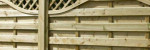

Quick answer: Choose fence panels by deciding how much privacy, strength, airflow and decoration you need. Closeboard panels suit strong privacy fencing, waney lap panels provide an economical traditional option, picket panels suit open boundaries, while hit and miss, omega lattice and double slatted panels provide more decorative finishes. Check the exact panel width and height, post system, gravel board, ground conditions and total finished fence height before ordering.
Fence panels affect privacy, security, wind resistance and the overall appearance of a garden. The right choice depends on more than the panel design. Height, construction, treatment, post type, gravel boards, exposure and existing fence dimensions all need to work together.
A panel that suits a sheltered back garden may not be the best choice for an exposed boundary. A strong privacy panel may be unnecessary in a front garden where visibility and an open appearance are more important.
This fence panels buying guide explains the main panel types, available sizes, treatment colours, construction differences and supporting materials. It also covers measuring, existing-post compatibility, slopes, wind exposure, maintenance and the common ordering mistakes that can delay a fencing project.
What Should You Consider Before Buying Fence Panels?
Start with the purpose of the fence. This will narrow the choice before you compare individual panel designs.
Consider:
- How much privacy is required
- Whether the boundary is sheltered or exposed
- The required fence height
- Whether the fence is in a front or rear garden
- The appearance of nearby fencing and buildings
- Whether children or pets use the garden
- Whether plants will grow against the fence
- The condition and spacing of existing posts
- Whether gravel boards will be fitted
- The available installation budget
- How much maintenance is acceptable
Do not choose a panel solely because it looks suitable in a photograph. Check the construction, dimensions and complete support system as well.
Fence Panel Types At A Glance
| Panel Type | Privacy | Airflow | Typical Use |
|---|---|---|---|
| Closeboard | High | Low | Rear gardens and private boundaries |
| Ultra Heavy Duty Closeboard | High | Low | Stronger privacy fencing |
| Waney Lap | High | Low | Economical traditional fencing |
| Picket | Low | High | Front gardens and open boundaries |
| Horizontal Hit And Miss | Moderate | Moderate | Decorative and exposed gardens |
| Omega Lattice | Moderate to high | Through lattice section | Decorative garden boundaries |
| Double Slatted | Moderate to high | Moderate | Contemporary gardens |
What Are Closeboard Fence Panels?
Closeboard fence panels are made with overlapping vertical feather edge boards fixed to a supporting frame. They provide a solid boundary with a traditional appearance and a high level of privacy.
They are suitable for:
- Rear garden boundaries
- Side passages
- Screening patios and seating areas
- Separating neighbouring gardens
- Replacing older solid timber panels
- Gardens where privacy is the main priority
Closeboard panels are available in several heights, including approximately 2ft, 3ft, 4ft, 5ft, 5ft 6in and 6ft. The available range includes pressure-treated brown and pressure-treated green options.
A standard closeboard panel is a practical general-purpose choice. Its solid construction restricts views through the boundary, although it also catches more wind than an open panel.
What Are Ultra Heavy Duty Closeboard Panels?
Ultra heavy duty closeboard panels are intended for projects where a more substantial framed panel is preferred. They retain the traditional feather edge appearance but use a heavier construction than a standard panel.
They are worth considering where:
- The fence is expected to receive regular wear
- A stronger framed panel is preferred
- The garden is relatively exposed
- The panel will be fitted between substantial posts
- A long-term replacement project justifies a heavier option
Available heights include approximately 3ft, 4ft, 5ft, 5ft 6in and 6ft, with pressure-treated brown and green finishes.
A heavier panel still relies on correctly installed posts and foundations. Increasing panel strength without upgrading weak or shallow posts will not produce a strong fence.
What Are Waney Lap Fence Panels?
Waney lap panels use overlapping horizontal timber boards fixed within a framed panel. They are sometimes called lap panels or overlap panels.
They provide a familiar garden-fence appearance and are often selected for straightforward boundary replacement where cost is an important consideration.
Waney lap panels suit:
- General rear garden fencing
- Rental-property maintenance
- Replacing matching lap panels
- Sheltered or moderately exposed gardens
- Projects requiring several panels at a practical cost
Available heights include approximately 3ft, 4ft, 5ft, 5ft 6in and 6ft. Pressure-treated brown and pressure-treated green versions are available.
The horizontal boards provide privacy, but the construction is generally lighter than a substantial closeboard panel. The supporting frame, number of battens and overall build quality should therefore be considered when comparing products.
Closeboard Or Waney Lap: Which Is Better?
Closeboard is normally the better choice where strength and a substantial appearance are priorities. Waney lap is suitable where an economical solid panel is required.
| Feature | Closeboard | Waney Lap |
|---|---|---|
| Board direction | Vertical | Horizontal |
| Privacy | High | High |
| General construction | More substantial | Usually lighter |
| Appearance | Traditional feather edge | Traditional overlap |
| Typical priority | Strength and privacy | Value and privacy |
The better choice depends on the complete installation. A well-supported lap panel may perform better than a heavy panel fitted to loose posts.
What Are Picket Fence Panels?
Picket fence panels use spaced vertical pales rather than solid boards. The open design creates a defined boundary without blocking the view or making the garden feel enclosed.
They are commonly used for:
- Front gardens
- Paths and entrances
- Separating lawns from planting areas
- Decorative internal boundaries
- Matching a picket garden gate
- Areas where visibility is useful
Picket panels are available with round-top or point-top pales. Heights include approximately 2ft, 3ft and 4ft, with pressure-treated brown and green finishes.
Round-Top Picket Panels
Round-top picket panels provide a softer traditional appearance. They are often selected for family gardens, cottage-style boundaries and areas where a less angular finish is preferred.
Point-Top Picket Panels
Point-top picket panels provide a sharper, more defined outline. The choice between point and round tops is mainly visual rather than structural.
Picket fencing should not be assumed to contain every pet. Check the spacing between pales, the clearance beneath the panel and the animal's size before buying.
What Are Horizontal Hit And Miss Panels?
Horizontal hit and miss panels use boards arranged alternately on opposite sides of the frame. This creates partial screening while allowing some air to pass through the panel.
The design is useful where a solid panel may feel too enclosed or catch too much wind. It also presents a more balanced appearance from both sides than many traditional panels.
Horizontal hit and miss panels suit:
- Contemporary and traditional gardens
- Moderately exposed boundaries
- Seating areas requiring partial screening
- Shared boundaries where both faces will be visible
- Gardens needing some airflow
Available heights include approximately 3ft, 4ft, 5ft and 6ft. The listed range includes pressure-treated green panels.
Hit and miss fencing is not fully private when viewed from every angle. Check the board spacing and sight lines if screening is the main objective.
What Are Omega Lattice Fence Panels?
Omega lattice panels combine a solid lower section with a curved decorative lattice top. They provide more screening than a full trellis panel while creating a softer outline than a square solid panel.
They are suitable for:
- Decorative rear garden boundaries
- Patios and seating areas
- Gardens with climbing plants
- Boundaries where light is still wanted
- Matching decorative garden gates
Available heights include approximately 3ft, 4ft, 5ft and 6ft. The listed range is pressure-treated green.
The highest point of a curved panel determines the maximum finished height. Measure to the top of the arch when planning posts and checking any restrictions.
What Are Double Slatted Fence Panels?
Contemporary double slatted panels use horizontal slats arranged to provide screening from both sides while retaining gaps for air and filtered light.
They provide a modern alternative to closeboard and waney lap fencing. Their clean horizontal lines work well with rendered walls, modern paving, garden rooms and structured planting.
They suit:
- Contemporary garden designs
- Patio screening
- Modern rear boundaries
- Gardens where both faces of the panel are visible
- Areas needing privacy without a fully solid appearance
Available heights include approximately 3ft, 4ft, 5ft and 6ft.
Check the sight lines before buying. Slatted panels can provide effective screening from normal viewing positions, but they may not block every view at a sharp angle.
Are Trellis Panels The Same As Fence Panels?
Trellis panels can form a boundary, support plants or sit above solid fencing, but they are more open than most fence panels.
Full-height trellis may be suitable where the purpose is:
- Supporting climbing plants
- Dividing areas within a garden
- Adding decorative screening
- Allowing maximum light and airflow
Fence topper trellis is used above a solid panel or gravel board to add height and decoration. The posts must be long enough to support the complete arrangement.
Do not assume that lightweight decorative trellis can perform the same structural role as a framed fence panel.
Which Fence Panels Provide The Most Privacy?
Solid closeboard and waney lap panels provide the highest immediate privacy. Ultra heavy duty closeboard panels are suitable where both privacy and substantial construction are priorities.
Double slatted and hit and miss panels provide partial to high screening, but small gaps are part of their design. Omega lattice panels have an open decorative top, so they do not provide complete screening at full height.
For maximum privacy, also consider:
- The finished height
- Differences in ground level
- Upper-storey windows
- Gaps beneath the panels
- Views through garden gates
- Sloping boundaries
A tall panel will not create complete privacy where neighbouring ground is significantly higher.
Which Fence Panels Are Best For Windy Gardens?
Open or semi-open panels allow more air to pass through than solid closeboard or lap panels. Picket, hit and miss and slatted designs may therefore reduce wind pressure on the fence.
However, wind performance depends on the whole system, including:
- Post material and section
- Post depth
- Foundation size
- Ground conditions
- Fence height
- Panel weight
- Distance from buildings and trees
- Whether the site faces open land
A solid privacy panel may still be suitable in an exposed garden when installed with substantial posts and suitable foundations. Do not choose a panel in isolation from its supports.
Which Fence Panels Are Best For Front Gardens?
Lower picket panels are a common choice because they define the boundary without fully screening the property.
They can be matched with a round-top or point-top picket gate for a consistent entrance.
Lower closeboard, waney lap or decorative panels may also be used where more screening is required. Before ordering, check whether restrictions apply to the location and height of the proposed fence.
Which Fence Panels Are Best For Children?
A family garden usually benefits from a strong panel with secure fixings, no large openings and a gravel board beneath it.
Check for:
- Loose boards
- Protruding nails or screws
- Splintered timber
- Climbable horizontal features
- Gaps leading to roads or neighbouring land
- Unstable posts
Picket fencing may be suitable for internal garden divisions, but the gaps between pales should be considered carefully around very young children.
Which Fence Panels Are Best For Dogs?
Solid closeboard or waney lap panels provide visual screening and reduce gaps through the main body of the fence.
The bottom of the fence is just as important as the panel type. Dogs may escape through gaps caused by:
- Uneven ground
- Missing gravel boards
- Soil erosion
- Damaged panels
- Spaces beside gates
- Loose panels inside concrete posts
For small dogs, check picket spacing and gaps beneath decorative panels. For dogs that dig, a separate secure ground-level barrier may be needed.
What Fence Panel Height Should You Choose?
The correct height depends on privacy, location, existing posts, gravel boards and the overall appearance of the garden.
| Nominal Panel Height | Typical Use |
|---|---|
| 2ft | Low decorative boundaries and front gardens |
| 3ft | Front gardens, internal divisions and low screening |
| 4ft | Moderate screening with a more open feel |
| 5ft | Rear gardens requiring privacy without maximum height |
| 5ft 6in | Used with a 6in gravel board for an approximately 6ft system |
| 6ft | High privacy boundaries |
Remember that the panel is not always the full fence height. Gravel boards and trellis can increase the total.
For example, a 5ft 6in panel placed above a 6in gravel board creates an overall section of approximately 6ft before allowing for installation tolerances.
How Wide Are Fence Panels?
Many standard fence panels are described as 6ft wide, approximately 1.83m. Actual measurements can vary slightly between panel types and manufacturers.
Always check the stated dimensions rather than relying on the nominal name. This is particularly important when:
- Replacing panels between existing concrete posts
- Fitting panels between brick pillars
- Working with old imperial spacing
- Mixing products from different manufacturers
- Installing framed decorative panels
Measure the opening at the top, middle and bottom. A gap may narrow where posts lean or twist.
How Do You Measure For New Fence Panels?
For an existing fence, measure the clear distance between each pair of posts. Do not assume every bay is identical.
For a completely new fence line:
- Measure the full boundary length.
- Choose the panel width.
- Allow for the width of each post.
- Identify corners, ends and gate openings.
- Plan any shorter cut section.
- Check changes in ground level.
Dividing the total boundary length by the panel width alone gives only an approximate quantity because posts also occupy space.
How Many Fence Panels Do You Need?
For an existing post system, count the individual bays and confirm the width of each one.
For a new fence, prepare a simple layout showing:
- Every full panel
- Every post
- Corner positions
- End posts
- Garden gates
- Short infill sections
- Changes in direction
Do not automatically order an additional panel without considering storage and delivery. A spare can be useful where matching replacements may be difficult later, but timber panels need dry, supported storage.
Can Fence Panels Be Cut To Width?
Many timber panels can be reduced in width, but the method depends on their construction.
Cutting normally involves:
- Marking the required finished width
- Adding or repositioning a vertical side batten
- Securing the boards to the new batten
- Cutting through the panel
- Treating exposed timber
Decorative, lattice and double slatted panels may be harder to alter neatly. Cutting can weaken the frame or disturb the symmetry of the design.
Where possible, place a shortened panel at the least prominent end of the fence line rather than in the middle.
What Does Pressure-Treated Timber Mean?
Pressure treatment forces preservative into the timber to improve its resistance to fungal decay and insect attack.
It does not make the timber waterproof or maintenance free. Pressure-treated panels still benefit from correct installation, gravel boards, good drainage and routine inspection.
Freshly treated timber may contain surface moisture and can change slightly as it dries.
What Is The Difference Between Green And Brown Treatment?
Green and brown pressure treatment refer mainly to the initial appearance of the treated timber. Both colours will change as the wood weathers outdoors.
Pressure-treated green timber usually has a lighter, more natural appearance. Brown-treated timber provides a warmer colour that can suit traditional garden fencing.
Consider:
- Existing fencing
- Garden gates
- Wooden posts and gravel boards
- Nearby sheds or garden buildings
- Whether the fence will later be painted
Timber is a natural material, so colour will not be perfectly uniform across every board and panel.
Do Pressure-Treated Panels Need Painting?
No immediate decorative coating is normally required solely because the timber is pressure treated. Some owners leave the fence to weather naturally.
Paint, stain or exterior treatment can be applied later for appearance or additional surface protection. Check that the timber is sufficiently dry and follow the coating instructions.
Do not paint over:
- Wet timber
- Loose dirt
- Algae
- Rotten sections
- Fresh treatment that has not dried
Will New Fence Panels Shrink Or Move?
Timber naturally responds to changes in moisture. Boards may expand, contract, twist or develop small splits as they dry and weather.
Minor movement is not always a defect. However, severe distortion, loose boards or a frame that will not sit properly between the posts should be investigated.
Reduce avoidable movement by:
- Supporting panels correctly during storage
- Installing them promptly
- Using suitable posts and fixings
- Keeping the panel off the soil
- Maintaining both accessible faces
How Can You Judge Fence Panel Quality?
Compare more than the visible front face. Inspect the frame and supporting rails.
Look for:
- A square, rigid frame
- Securely fixed boards
- Consistent board overlap
- Sufficient supporting battens or rails
- Pressure-treated timber
- No major transport damage
- Sound corners
- Exterior-grade fixings
- A panel thickness compatible with the posts
A very light panel may be easier to handle, but it may not provide the strength required for an exposed boundary.
Should You Choose Timber Or Concrete Fence Posts?
Wooden Fence Posts
Wooden posts provide a consistent timber appearance and make it easy to attach panel clips, brackets and rails.
Pressure-treated wooden posts are lighter than concrete posts and can be cut where necessary. They require careful protection around ground level, where prolonged moisture can lead to decay.
Concrete Fence Posts
Slotted concrete posts allow compatible fence panels and gravel boards to slide into position. They do not rot and can make future panel replacement straightforward.
Concrete posts are heavy and require suitable handling. They can still lean or crack if their foundations are inadequate.
| Feature | Wooden Posts | Concrete Posts |
|---|---|---|
| Appearance | Natural timber | Practical concrete finish |
| Handling | Relatively light | Heavy |
| Fixing panels | Clips, brackets or screws | Panels slide into slots |
| Ground-level decay | Possible over time | Does not rot |
| Replacement panels | Fixings must be removed | Usually lifted from slots |
Will New Panels Fit Existing Concrete Posts?
They may fit, but measure first. Check:
- The clear width between post slots
- The slot width
- The panel thickness
- The available height
- The gravel-board height
- Whether either post is leaning
- Whether old concrete or debris obstructs the slot
Measure every bay at several heights. Old concrete posts can move over time, making one opening narrower than another.
Do not force a panel into a tight slot. This may damage the panel frame or concrete post.
What Are Gravel Boards?
Gravel boards sit below fence panels and separate the timber from damp soil, grass and garden debris.
They can also help:
- Close small gaps beneath the fence
- Protect panels from strimmers and lawnmowers
- Provide a level base for the panels
- Increase the total fence height
- Make future panel replacement easier
Concrete Gravel Boards
Concrete gravel boards do not rot and work naturally with slotted concrete posts. Smooth and recessed styles are available in different heights.
They are heavy, so safe handling and suitable support are important.
Wooden Gravel Boards
Pressure-treated wooden gravel boards match timber posts and panels. They are easier to cut and handle than concrete.
They will require more attention in persistently damp ground and should not be buried more deeply than necessary.
Do You Need Fence Capping?
Panel capping provides a finished line along the top of compatible timber panels. It may also reduce direct water exposure to the upper edge.
Check whether the selected panel already includes a finished top and whether separate capping is compatible with its thickness and shape.
Curved decorative panels and picket fencing do not normally use straight panel capping in the same way as square solid panels.
What Fixings Are Needed For Fence Panels?
The fixing method depends on the post system.
Panels fitted to wooden posts may use:
- Fence panel clips
- Exterior screws
- Suitable brackets
- Security brackets
Panels installed between slotted concrete posts are normally retained by the post slots and the weight of the panel above the gravel board.
Security brackets may help prevent panels being lifted from accessible concrete-post systems. Choose fixings suitable for outdoor use and compatible with the post and panel.
How Do You Plan A Fence With A Garden Gate?
Plan the gate before setting the surrounding posts. The gate opening, posts and ironmongery affect the remaining panel layout.
Consider:
- Gate width and height
- Which direction it will open
- Clearance above paths or paving
- Hinge position
- Latch access
- Whether the gate design matches the panels
- The strength of the gate posts
A gate creates repeated sideways loads, so ordinary panel posts may not always be suitable as gate supports.
How Do You Buy Panels For A Sloping Garden?
Rigid fence panels remain rectangular, so a sloping boundary usually needs to be stepped.
Each panel stays level while the next bay moves higher or lower. This creates triangular gaps beneath some sections unless gravel boards, infill or ground levels are adjusted.
Before ordering:
- Measure the change in level along the boundary.
- Decide the step at each post.
- Check the available post length.
- Choose gravel-board heights.
- Identify where smaller panels may be required.
- Check the maximum height at the lower side of each step.
Traditional closeboard fencing built from individual rails and feather edge boards may follow a slope more closely than rigid panels, but it is a different construction method.
Can Fence Panels Hold Back Soil?
Standard fence panels are not retaining walls. Soil piled against timber boards can trap moisture and apply substantial sideways pressure.
Gravel boards may accommodate small differences in surface level, but a significant bank of soil requires a suitable retaining solution independent of the fence.
Do not use decorative panels, lap panels or ordinary closeboard panels to support raised ground.
What Should You Check Before Delivery?
Fence panels are bulky and need suitable access and storage.
Before ordering, check:
- Vehicle access
- Road restrictions
- Distance from the unloading point to the garden
- Steps, narrow passages and tight corners
- Whether two people are available to move heavy panels
- Where panels will be stored
- Whether the ground is ready for installation
Concrete posts and gravel boards are particularly heavy. Plan safe handling rather than attempting to move them alone.
How Should Fence Panels Be Stored?
Store panels upright with suitable support or flat on a firm, level base. Keep them off wet soil and protect them from strong wind.
Avoid:
- Leaning unsupported panels at a shallow angle
- Leaving them on uneven ground
- Covering wet timber tightly with plastic
- Stacking them where water collects
- Leaving decorative panels exposed to accidental damage
Install the panels promptly where possible. Long-term storage increases the opportunity for movement and damage.
What Should You Inspect When Panels Arrive?
Check the delivery before installation.
Look for:
- Correct panel type
- Correct height
- Correct treatment colour
- Broken rails or battens
- Loose boards
- Damaged corners
- Severe twisting
- Incorrect quantities
- Damage to decorative lattice
Natural variations in grain, knots and colour are expected in timber. Structural damage should be distinguished from ordinary natural features.
How Are Fence Panels Installed?
The installation method depends on the chosen post system, but the basic process is:
- Mark the exact fence line.
- Locate underground services.
- Set the first post.
- Position the gravel board.
- Use the actual panel to establish the next post position.
- Check the post is upright.
- Secure the foundation.
- Repeat along the fence line.
- Install and secure the panels.
- Fit capping or security brackets where required.
Do not set every post using nominal dimensions without checking the actual products. Small differences can accumulate across a long fence line.
How Long Do Fence Panels Last?
There is no single lifespan for every timber panel. Durability depends on:
- Pressure treatment
- Panel construction
- Ground contact
- Drainage
- Wind exposure
- Quality of the posts
- Fixings
- Maintenance
- Plants and debris against the timber
- Damage from garden tools
A pressure-treated panel installed above a gravel board on stable posts should normally perform better than an untreated or poorly supported panel resting on wet soil.
How Do You Maintain Timber Fence Panels?
Inspect the fence several times a year and after severe weather.
Routine maintenance includes:
- Clearing leaves and soil from the bottom edge
- Trimming plants to maintain airflow
- Checking posts for movement
- Tightening loose fixings
- Replacing broken gravel boards
- Cleaning algae carefully
- Treating fresh cuts
- Applying exterior coatings where desired
- Repairing loose boards promptly
Do not allow compost heaps, stored timber or dense planting to remain pressed against the panels.
Common Fence Panel Buying Mistakes
- Ordering by nominal size without checking actual dimensions
- Assuming every existing post bay is the same width
- Forgetting that gravel boards add to the total height
- Buying panels before inspecting the existing posts
- Choosing solid panels for very exposed ground without upgrading supports
- Ignoring differences in panel thickness
- Mixing incompatible posts, gravel boards and panels
- Forgetting to include gate openings
- Using ordinary fence posts for a heavy gate
- Failing to plan shortened end panels
- Buying solely on appearance
- Leaving delivered panels unsupported
- Allowing timber panels to touch soil
- Assuming pressure treatment removes all maintenance
- Using standard panels to retain raised ground
Fence Panel Buying Checklist
Before placing an order, confirm:
- The panel style
- The nominal and actual width
- The panel height
- The treatment colour
- The required privacy level
- The site's wind exposure
- The number of full panels
- The number of shortened sections
- The post material and length
- The gravel-board material and height
- Corner, end and gate-post requirements
- Panel clips, brackets and screws
- Capping where required
- The finished fence height
- Delivery access
- Safe storage and handling
FAQs
What Is The Best All-Round Fence Panel?
Closeboard is a strong all-round choice for traditional rear garden fencing. It provides good privacy and a substantial appearance. The best choice still depends on exposure, budget and the supporting posts.
What Is The Cheapest Type Of Fence Panel?
Waney lap panels are generally selected where an economical solid boundary is required. Compare construction and pressure treatment rather than choosing on price alone.
What Is The Strongest Fence Panel?
Ultra heavy duty closeboard panels provide a more substantial framed option within the available range. Overall fence strength still depends on posts, foundations and installation.
Which Panel Gives The Most Privacy?
Solid closeboard and waney lap panels provide high immediate privacy. Slatted and hit and miss panels contain intentional gaps.
Which Panel Is Best For A Windy Garden?
Hit and miss, slatted or picket panels allow more airflow. Solid panels may still be used when supported by suitably substantial posts and foundations.
Are Fence Panels Exactly 6ft Wide?
Many are nominally 6ft wide, approximately 1.83m, but actual dimensions can vary. Check the product measurement and the opening before ordering.
Can A 6ft Panel Sit On A Gravel Board?
It can, but the gravel board increases the total fence height. Confirm the finished height and make sure the posts are long enough.
Why Are 5ft 6in Fence Panels Available?
They can be combined with an approximately 6in gravel board to create a total section close to 6ft.
Can You Fit Wooden Panels Into Concrete Posts?
Yes, where the panel width and thickness are compatible with the post slots. Measure every bay before buying.
Can You Use Concrete Gravel Boards With Wooden Posts?
This is possible with suitable brackets or support arrangements, but compatibility and safe fixing need to be checked. Concrete boards are heavy.
Can You Use Wooden Gravel Boards With Concrete Posts?
Yes, where the board fits the slots and has suitable support. Check its thickness, length and treatment.
Should You Buy Brown Or Green Fence Panels?
Choose the colour that best suits the garden and existing timber. Both are pressure-treated finishes and both will change as they weather.
Can Fence Panels Be Painted?
Yes. Use a suitable exterior product after the timber has dried sufficiently. Clean the surface and follow the coating instructions.
Do Fence Panels Need Gravel Boards?
They are strongly recommended where timber would otherwise sit close to soil. Gravel boards protect the lower edge and make replacement easier.
Can You Put Trellis Above Fence Panels?
Yes, where the posts and fixings support the combined arrangement. Include the trellis when calculating the total height.
Are Picket Panels Suitable For Dogs?
They may suit larger dogs that cannot pass through the gaps, but check pale spacing, ground clearance and gate gaps carefully.
Which Way Should A Fence Panel Face?
Some framed panels have a more finished face and a visible rail face. Hit and miss and double slatted panels can provide a more balanced appearance from both sides. Boundary agreements and local expectations should be considered before installation.
Can You Replace One Fence Panel?
Yes, if a compatible size and style is available and the existing posts remain sound. Colour differences may be visible until the new timber weathers.
Can Fence Panels Be Installed On Uneven Ground?
Yes. Rigid panels are normally stepped between posts. Plan the height changes and gaps beneath the panels before buying.
Should Fence Panels Touch The Ground?
No. Timber panels should normally sit above the soil on a suitable gravel board to reduce prolonged moisture exposure.
Choose The Complete Fence System
The best fence panel is the one that suits the purpose, location and support system. Closeboard and waney lap panels provide solid privacy, picket panels create open boundaries, while hit and miss, omega lattice and double slatted panels provide more decorative alternatives.
Confirm the actual dimensions, finished height, treatment colour and construction before ordering. Measure every existing post bay separately and include gravel boards, posts, gates, capping and fixings in the plan.
A good panel cannot compensate for unstable posts, poor drainage or unsuitable foundations. Treat the panels, posts, gravel boards and ironmongery as one complete fencing system to achieve a secure and long-lasting boundary.