

Adding trellis to the top of a garden fence can improve privacy, support climbing plants and make a plain boundary look more attractive. It is a common upgrade for rear gardens, patios and seating areas where a little extra screening would make the space feel more comfortable.
However, adding trellis to a 2 metre fence is not always straightforward. In many UK garden situations, 2 metres is already the usual maximum height for a fence, wall or gate without planning permission, unless the boundary is next to a highway used by vehicles, where the usual limit is lower. If you add trellis to a fence that is already 2 metres high, the total height will usually exceed that limit.
Before adding trellis, you need to consider planning rules, fence ownership, neighbour impact, post strength, wind exposure and the condition of the existing fence. A trellis may look lightweight, but it can add height, weight and wind load, especially once climbing plants grow through it.
Can I add trellis to a 2 metre fence?
You may be able to add trellis to a 2 metre fence, but you should not assume it is automatically allowed. The main issue is the finished height. Trellis normally counts as part of the fence height, so a 2 metre fence with a trellis topper becomes higher than 2 metres overall.
If the fence is already at the usual 2 metre limit, adding trellis may require planning permission. This is especially important if the fence is beside a road, footpath, front garden, public highway, conservation area or listed property.
The safest approach is to check with your local planning authority before increasing the height of a 2 metre fence.
Does trellis count towards fence height?
Yes, trellis added to the top of a fence should generally be counted as part of the overall fence height. It may be open, decorative and less solid than a fence panel, but it still increases the height of the boundary structure.
For example:
- A 1.8m fence panel with a 300mm trellis topper has an overall height of around 2.1m
- A 1.8m fence panel on a 150mm gravel board with 300mm trellis has an overall height of around 2.25m
- A 2m fence with any trellis added on top will exceed 2m overall
This is why measuring the full finished height matters. Do not measure only the fence panel.
What are the usual UK fence height rules?
In many domestic situations, a fence, wall or gate may not need planning permission if it does not exceed 2 metres in height. If it is next to a highway used by vehicles, including the footpath of that highway, the usual limit is 1 metre.
There are important exceptions. Planning permission or additional consent may be needed if:
- The fence would exceed the usual height limits
- The fence is next to a highway used by vehicles
- The property is listed
- The fence is within the curtilage of a listed building
- The property is in a conservation area
- An Article 4 direction applies
- Previous planning conditions restrict fencing
- The fence is being built on or near a boundary with special restrictions
Rules can vary by location and property type, so check before adding height, particularly if the fence is already close to the limit.
What if the fence is already over 2 metres?
Some existing fences, walls or boundaries are already above the usual height limits. This does not automatically mean you can make them higher. Increasing the height further may require permission.
If you have inherited a tall fence from a previous owner, do not assume it can be extended. Check the planning position before adding trellis, capping or screening.
It is also worth checking whether the existing structure was approved previously or whether it simply went unnoticed. If in doubt, seek advice before making changes.
Does a gravel board affect the height?
Yes. Gravel boards contribute to the finished fence height. A standard fence panel sitting on a concrete gravel board or wooden gravel board will be taller overall than the panel height alone.
This matters when adding trellis. If your fence is made up of a 1.8m panel plus a 150mm gravel board, it may already be close to 2 metres before any trellis is added.
Always measure from ground level to the top of the full structure, including gravel boards, panels, capping and trellis.
Check whether the fence is yours
Before attaching trellis to any fence, make sure you own it. If the fence belongs to your neighbour, you should not attach trellis, screws, brackets, plant wires or climbing plants without permission.
Fence ownership is not always obvious. Do not rely only on which way the posts face or which side of the garden the fence is on. Check property documents if available, and speak to your neighbour if there is uncertainty.
If the fence is not yours, a free-standing trellis on your side of the boundary may be a better option.
Speak to your neighbour first
Even if the fence is yours and the work is allowed, it is sensible to speak to your neighbour before increasing the height. A trellis topper may affect light, views and the appearance of the boundary from their garden.
A short conversation can prevent disputes later. Explain:
- Why you want to add trellis
- How high the finished fence will be
- What type of trellis you plan to use
- Whether climbing plants will be grown
- How you will maintain it
- Whether it will affect their side
Neighbour agreement does not replace planning permission where permission is required, but good communication still matters.
Can a neighbour object to trellis on top of a fence?
A neighbour can raise concerns if the trellis affects them, especially if the finished height exceeds usual limits, reduces light, looks overbearing or is attached to their fence.
If planning permission is needed, neighbours may have an opportunity to comment through the planning process. If the trellis is attached to their fence without permission, that can create a separate property issue.
It is better to deal with concerns before installation than after the trellis is fitted.
Check the condition of the existing fence
A 2 metre fence is already a tall structure. Before adding anything to it, check whether the posts, panels and fixings are strong enough.
Inspect:
- Fence posts for movement or rot
- Panels for loose boards or cracks
- Concrete posts for cracks or leaning
- Timber posts at ground level
- Gravel boards for damage
- Panel clips, brackets and screws
- Any signs of wind movement
- Whether the fence leans or rattles
If the fence is weak, leaning or damaged, do not add trellis until it has been repaired or replaced.
Wind load is a major consideration
Trellis looks light, but it still catches wind. Once climbing plants grow across it, the wind load increases. A fence that copes well at 2 metres may struggle if extra height and planting are added.
Wind load is especially important if the garden is:
- Exposed
- Near open fields
- In a coastal area
- At the end of a row of houses
- On a hill
- Using solid privacy fence panels
- Already affected by storm damage
In exposed locations, adding height may not be the best solution. A free-standing screen, planting or a more wind-permeable design may be safer.
Can the posts support extra trellis?
The posts are the most important part of the fence. If the posts are not strong enough, extra trellis can make the whole fence unstable.
Timber posts may be easier to adapt, but they can rot at ground level. Concrete posts are durable, but adding trellis may require suitable brackets or extension systems. Do not drill, cut or alter concrete posts without understanding the risks.
For a 2 metre fence, posts are already doing significant work. If in doubt, ask a fencing professional to assess the fence before adding extra height.
Choosing the right trellis
If you are adding trellis where it is suitable and permitted, choose a design that matches the fence and the purpose.
Common options include:
- Fence topper trellis
- Square trellis panels
- Diamond trellis panels
- Privacy trellis panels
- Slatted trellis panels
- Decorative lattice panels
Open trellis is lighter and allows more wind through. Privacy trellis gives more screening but can catch more wind. Slatted trellis gives a modern look and can suit contemporary fence panels.
Open trellis or privacy trellis?
Open trellis is often better where you want climbing plant support without blocking too much light. It is also usually less visually heavy.
Privacy trellis has smaller gaps and gives more screening, but it adds more visual mass and may increase wind pressure.
Choose based on the garden’s conditions. If the fence is exposed to wind, a very dense trellis may not be sensible on top of an already tall fence.
Wooden trellis on a wooden fence
Wooden trellis is a natural match for timber fence panels. It can be painted or stained to match the fence and works well with climbing plants.
Use treated timber trellis suitable for outdoor use. If cutting trellis to size, treat any exposed cut ends where required. Maintain it along with the rest of the fence.
Wooden trellis can weather, fade and absorb moisture over time, so it needs periodic inspection.
Slatted trellis for modern gardens
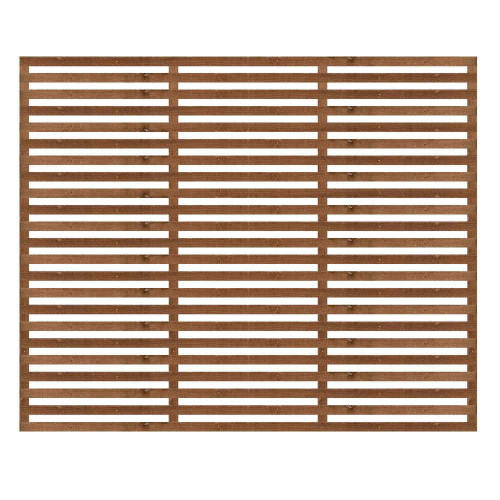
Slatted trellis can give a more contemporary look than traditional diamond or square trellis. It works well with modern fence panels, rendered walls, patios and minimalist planting schemes.
Horizontal slatted trellis can provide partial screening without fully enclosing the garden. However, it still adds height and wind load, so the same planning and structural checks apply.
Trellis for climbing plants
One of the main reasons to add trellis is to support climbing plants. Climbers can soften the fence, add colour and increase privacy over time.
Suitable climbers may include:
- Clematis
- Honeysuckle
- Jasmine
- Climbing roses
- Passion flower in sheltered gardens
- Star jasmine in mild, sheltered positions
Choose plants carefully. Vigorous climbers can become heavy and may overwhelm trellis if they are not pruned regularly.
Climbing plants add weight
Plants may look light when first planted, but mature climbers can become heavy. They also hold moisture and catch wind.
Before adding climbers to trellis on top of a 2 metre fence, consider:
- The final size of the plant
- How often it will need pruning
- Whether the trellis can support it
- Whether the fence can support the trellis
- Whether growth will spread into a neighbour’s garden
- Whether maintenance access is possible
A lightly trained clematis is very different from a large, mature climbing rose or vigorous honeysuckle.
Will trellis block light?
Trellis usually blocks less light than a solid fence extension, but it can still affect light, especially once plants grow through it.
Dense trellis, evergreen climbers and tall screening can shade patios, lawns and planting beds. They may also affect neighbouring gardens.
Before adding height, look at how the sun moves through the garden. If the boundary already casts shade, extra trellis may make the area darker.
Privacy without adding height to a 2 metre fence
If your fence is already 2 metres high, it may be better to improve privacy without adding to the boundary height.
Alternatives include:
- Free-standing trellis screens inside the garden
- Planting near seating areas
- Pergola side screens
- Large planters with climbers
- Slatted screening panels around a patio
- Small trees or shrubs in suitable positions
- Garden screening placed away from the boundary
Targeted screening often works better than raising the entire fence. It can give privacy where you need it most without creating planning or neighbour issues.
Free-standing trellis as an alternative
A free-standing trellis can be installed on your side of the garden without attaching it to the fence. It can be supported by its own posts and positioned where privacy or planting support is needed.
This is useful when:
- The existing fence belongs to a neighbour
- The fence is already at the height limit
- The fence is not strong enough
- You only need privacy around a seating area
- You want to avoid altering the boundary
- You need easier access for maintenance
The posts still need to be secure, and the structure must be safe in wind.
Using planting instead of trellis
Planting can sometimes solve privacy problems more effectively than adding height to a fence. Well-placed shrubs or small trees can screen specific views, especially from upper windows.
Options include:
- Evergreen shrubs
- Climbers on free-standing supports
- Pleached trees where suitable
- Bamboo in controlled containers
- Tall grasses
- Mixed boundary planting
Choose plants based on mature size, maintenance needs and root behaviour. Avoid planting something that will outgrow the space or cause neighbour problems.
Using a pergola for privacy
A pergola with side screening can create privacy around a patio or seating area without raising the whole boundary. It can also support climbing plants and create a more designed garden feature.
Planning considerations may still apply to garden structures, especially near boundaries or in restricted properties, so check if the structure is large, high or close to a boundary.
A pergola can be more effective than a taller fence if the privacy issue is limited to one seating area.
How to install trellis on top of a fence
If the trellis is permitted, the fence is yours and the structure is strong enough, installation needs to be secure and neat.
General steps include:
- Measure the fence and calculate the finished height
- Check the fence posts and panels
- Choose suitable trellis panels
- Use fixings designed for outdoor use
- Support the trellis from strong posts or battens
- Keep the trellis level along the fence line
- Avoid overloading weak panel boards
- Check the structure for movement
- Paint or stain exposed timber where needed
Do not simply screw heavy trellis into a weak panel and expect it to last. The support should come from strong posts or a proper frame.
Use the right fixings
Outdoor fixings should be suitable for weather exposure. Poor-quality screws and brackets may rust, stain timber or fail over time.
Use fixings that match the trellis material and fence type. Stainless steel or galvanised fixings are often preferable outdoors, especially in exposed or coastal gardens.
Fixings should hold the trellis securely without splitting the timber. Pre-drilling may help in some cases.
Leave access for maintenance
Trellis and climbing plants make fence maintenance harder. Before adding them, think about how you will paint, stain, prune and repair the boundary later.
Maintenance access is important for:
- Painting or staining timber
- Pruning climbers
- Replacing damaged trellis
- Checking fence posts
- Cleaning algae and debris
- Repairing panels after storms
If a mature climber covers the fence, future repairs may require heavy pruning.
Do not overload an old fence
If the fence is old, leaning or patched together, adding trellis is usually a poor idea. Extra height may make existing problems worse.
Signs the fence may be unsuitable include:
- Posts moving in the ground
- Rot at the base of timber posts
- Loose panels
- Cracked concrete posts
- Panels rattling in wind
- Previous storm damage
- Badly rusted fixings
- Leaning fence line
Repair or replace the fence first. Trellis should be fitted to a sound structure.
Common mistakes when adding trellis to a 2 metre fence
Many trellis problems happen because the height and structure are not checked properly before installation.
Common mistakes include:
- Assuming trellis does not count towards fence height
- Adding trellis to a fence already at 2 metres without checking planning rules
- Forgetting that gravel boards add height
- Attaching trellis to a neighbour’s fence without permission
- Using weak fence panels as the main support
- Ignoring wind load
- Adding heavy climbers to lightweight trellis
- Using poor-quality fixings
- Blocking too much light
- Failing to speak to neighbours
- Making future fence maintenance difficult
A trellis should improve the garden, not create a planning, structural or neighbour dispute.
Checklist before adding trellis to a 2 metre fence
Use this checklist before starting:
- Measure the existing fence height from ground level
- Include gravel boards and capping in the height
- Calculate the proposed finished height with trellis
- Check whether planning permission may be needed
- Check whether the property is listed or restricted
- Confirm who owns the fence
- Speak to your neighbour
- Inspect posts, panels and fixings
- Consider wind exposure
- Choose a suitable trellis style
- Decide whether climbing plants will be added
- Use suitable outdoor fixings
- Plan future maintenance access
- Consider free-standing screening as an alternative
Frequently asked questions
Can I put trellis on top of a 2 metre fence?
You may be able to, but a 2 metre fence is often already at the usual permitted height limit for many rear garden boundaries. Adding trellis increases the overall height and may require planning permission. Check with your local planning authority before proceeding.
Does trellis count as part of fence height?
Yes. Trellis added to the top of a fence should be included in the overall height, even if it is open or decorative.
Can I add trellis to my neighbour’s fence?
Not without permission. If the fence belongs to your neighbour, you should not attach trellis, fixings, wires or plants to it unless they agree.
Can I add trellis to a 1.8m fence?
Possibly, but you still need to calculate the finished height. A 1.8m panel with a gravel board and trellis may exceed 2 metres overall.
Do gravel boards count towards the height?
Yes. Gravel boards are part of the fence structure and add to the total height.
What is the best trellis for privacy?
Privacy trellis, slatted trellis and trellis with climbing plants can all improve screening. Dense trellis gives more privacy but may catch more wind.
Can trellis make a fence unstable?
Yes. Trellis adds height and wind load. Once plants grow on it, the load increases. The fence posts and fixings must be strong enough.
Can I use free-standing trellis instead?
Yes. Free-standing trellis supported by its own posts can be a good alternative, especially if the boundary fence is already at 2 metres or belongs to a neighbour.
Will climbing plants make trellis heavier?
Yes. Mature climbers can become heavy and can increase wind resistance. Keep plants pruned and choose varieties suitable for the structure.
Should I speak to my neighbour before adding trellis?
Yes. Even where the fence is yours, adding height can affect light, views and appearance from the neighbouring garden. A conversation can help prevent disputes.
Final thoughts
Adding trellis to the top of a fence can be an attractive way to improve privacy and support climbing plants, but a 2 metre fence needs careful handling. In many UK situations, 2 metres is already the usual maximum height for a rear or side boundary without planning permission. Trellis normally counts towards the finished height, so adding it may take the fence above the permitted limit.
Before installing trellis, check the planning position, confirm fence ownership, speak to your neighbour and inspect the fence structure. A tall fence must be strong enough to handle extra height, fixings, wind pressure and any climbing plants.
If adding trellis to the boundary is not suitable, consider free-standing trellis, targeted garden screening, planting or a pergola screen instead. These options can often provide the privacy you want without overloading an existing fence or creating avoidable planning and neighbour issues.