






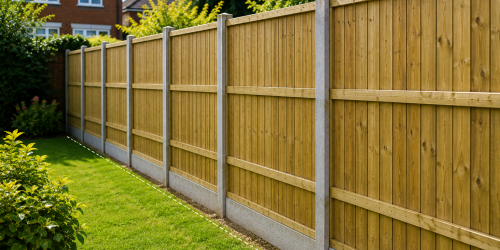
If your neighbour wants to put up a fence on or near the boundary, the main question is where the fence will sit. If it is fully on their land, they can usually install it without your permission, as long as it follows planning rules and any local restrictions.
If they want to put the fence on the boundary line, attach anything to your fence or wall, or come onto your land to carry out the work, they should ask for your agreement first.
Quick answer: Your neighbour should not put a fence on your land without permission. If the fence is fully on their side of the boundary, they may be able to install or replace it, provided it follows height rules and does not damage your property. If the boundary is unclear, check your title documents before agreeing to any work.
Can My Neighbour Put Up A Fence On The Boundary?
Your neighbour can usually put up a fence fully on their own land. That means the posts, panels, concrete and footings all need to stay on their side of the boundary.
If they want the fence to sit directly on the boundary line, both neighbours should agree first. This is because a fence on the line can affect ownership, access, maintenance and future repairs.
If the fence, posts or footings cross onto your land without permission, that may be an encroachment. In most cases, it is best to raise the issue calmly as soon as you notice it.
Boundary Fence Rules At A Glance
| Situation | Usually Allowed? | What To Check |
|---|---|---|
| Fence fully on neighbour’s land | Usually yes | Height rules, covenants and local restrictions |
| Fence on the boundary line | Only with agreement | Position, ownership and future maintenance |
| Posts or concrete crossing onto your land | No, not without permission | Take photos and discuss the boundary calmly |
| Attaching trellis or panels to your fence | No, not without permission | Whether you own the fence or wall |
| Accessing your land to build or maintain it | Only with permission | Agree dates, access and clean-up in writing |
What Does Fully On Their Land Mean?
A fence is fully on your neighbour’s land if every part of it sits inside their boundary. That includes the panels, posts, gravel boards, footings and any concrete around the posts.
If they leave a small gap from the boundary and build on their side, the fence is normally theirs to maintain. They can choose the style and materials, provided the fence follows planning rules and any restrictions that apply to the property.
If the fence sits astride the boundary line, the position is less clear. That is why it is sensible to agree the line and the responsibility in writing before work starts.
How Do You Know Who Owns The Boundary?
There is no reliable rule that says the left or right fence belongs to a particular property. Ownership depends on the deeds, title documents, old agreements and how the boundary has been treated over time.
Title plans often show general boundaries rather than exact measurements. Some deeds include T marks to show responsibility, while H marks can suggest shared responsibility. Not every property has clear markings.
If the boundary is unclear, speak to your neighbour before anyone starts digging. For a serious disagreement, a boundary surveyor or legal adviser may be needed, but most issues are easier to solve with a practical written agreement.
When Your Neighbour Needs Your Permission
Your neighbour should ask for permission if the work affects your land, your fence or your access.
This includes:
- Putting posts or concrete on your side of the boundary
- Building directly on the boundary line
- Attaching trellis, rails, panels or screens to your fence or wall
- Coming into your garden to dig holes, carry materials or maintain the fence
- Removing or altering a fence that belongs to you
A quick conversation is useful, but written confirmation is better. A short email or message confirming the position, height, access and maintenance can prevent problems later.
When Your Neighbour May Not Need Your Permission
Your neighbour may not need your agreement if they are building a fence fully on their own land and do not need to access your garden.
They still need to follow normal fence height rules, planning restrictions, estate covenants and any conservation area controls that apply.
If the fence affects visibility next to a road, driveway or junction, extra restrictions may apply. Front and roadside boundaries are often treated differently to rear garden fences.
Fence Height Rules
In many rear and side gardens, the usual maximum fence height without planning permission is 2 metres overall. If the fence is next to a road used by vehicles, the usual limit is 1 metre overall.
The overall height includes the full structure. That means panels, posts, gravel boards, capping and trellis all count.
| Location | Usual Maximum Without Planning | Key Point |
|---|---|---|
| Rear or side garden | Up to 2.0m overall | Trellis, capping and gravel boards count |
| Front garden or next to a road | Up to 1.0m overall | Visibility and road safety matter |
| Listed building, conservation area or covenant-controlled property | Varies | Check restrictions before work starts |
Does Trellis Count Towards The Fence Height?
Yes, trellis counts towards the total height of the fence. If a fence is already 2 metres high, adding trellis on top may take it above the usual permitted height.
A more practical option is often to use a lower solid panel with a modest trellis topper. This can improve privacy without making the boundary feel too heavy.
If you want planting support without changing the boundary fence, freestanding trellis panels inside your own garden can be a good solution.
Can Your Neighbour Attach Anything To Your Fence?
No, not without your permission. If the fence or wall belongs to you, your neighbour should not screw, nail, tie or lean anything against it without asking first.
This includes trellis, screening, planters, lights, rails and decorative panels. Even light items can mark timber or add strain over time. Heavy planters and screens can put pressure on panels and posts.
If your neighbour wants extra privacy, they should use their own posts, a freestanding screen or a separate fence on their side of the boundary.
What If They Build On Your Land By Mistake?
If posts, concrete or panels cross onto your land, speak to your neighbour as soon as possible. It may be a genuine mistake, especially where the boundary line is unclear.
Take clear photos and make a note of dates, measurements and where the fence sits. Then ask your neighbour to discuss the position before any more work is done.
If you cannot agree, mediation or advice from a boundary surveyor may help. Formal legal routes should usually be a last resort because boundary disputes can become expensive and stressful.
Common Boundary Fence Scenarios
| Scenario | What Usually Applies | Best Next Step |
|---|---|---|
| Neighbour builds a new fence fully on their land | Usually allowed if rules are followed | Check height and any access needs |
| Neighbour wants posts on the boundary line | Agreement should be reached first | Confirm the position in writing |
| Neighbour attaches trellis to your fence | They need your permission | Ask them to remove it or agree terms |
| Neighbour needs access to your garden | They should ask first | Agree time, method and clean-up |
| Fence is higher than expected | Planning rules may apply | Measure the total height and check locally |
What If Your Neighbour Removes Your Fence?
If the fence belongs to you, your neighbour should not remove or alter it without your consent. If this happens, keep calm, take photos and ask them to explain what has happened.
If it was a misunderstanding, you may be able to agree a replacement or repair. If they refuse to put things right, mediation or legal advice may be needed.
If the old fence was unsafe, rotten or causing a risk, that still does not usually mean someone else can remove it without speaking to you first.
Do You Have To Maintain A Boundary Fence?
In many cases, there is no general duty to maintain a fence unless the deeds, tenancy agreement, covenants or other specific rules say otherwise.
If you own the fence, you are usually responsible for maintaining it. If your neighbour owns it, they are usually responsible. If it is shared, maintenance should be agreed between you.
Where a damaged fence is dangerous or causing a problem, it is best to raise it politely and keep a written record of the conversation.
Choosing A Neighbour-Friendly Fence Style
A boundary fence needs to work for both gardens. Solid panels are useful where privacy matters, but lighter designs can feel less imposing and may suit shared boundaries better.
For strong privacy, closeboard fence panels are a common choice. For airflow and a more modern look, double slatted fence panels or hit and miss fence panels may be more suitable.
For front boundaries or areas where a lower fence is needed, picket fence panels or decorative fence panels can give a smarter, softer finish.
Adding Privacy Without Causing A Dispute
Privacy is one of the most common reasons for changing a boundary fence. If the issue is being overlooked near a patio or seating area, you may not need a taller fence along the whole boundary.
A lower solid panel with fence topper trellis can help screen views while still letting light through. Privacy square trellis, diamond trellis and horizontal slatted trellis can all suit different garden styles.
If the fence belongs to your neighbour, use freestanding trellis or your own posts inside your boundary rather than attaching anything to their fence.
Replacing A Boundary Fence Properly
If a boundary fence needs replacing, it is worth looking at the full fence run rather than just the visible panels. A neat, secure boundary usually depends on using suitable fence panels, strong fence posts and the right gravel boards for the ground conditions.
For privacy, many homeowners choose 6ft fence panels. If the old fence has failed because the posts have moved or rotted at ground level, it may also be worth considering concrete fence posts and gravel boards as part of the replacement.
Building A Fence That Lasts
Good materials and proper installation help prevent future disagreements about repairs. A fence that stays straight, drains well and keeps timber away from constant moisture will usually cause fewer problems over time.
Concrete fence posts are a durable choice for long runs and exposed gardens. Wooden fence posts give a more traditional timber look and can be easier to work with on site.
Gravel boards help protect panels from ground moisture and splashback. Concrete gravel boards are useful where durability is the main concern, while wooden gravel boards can give a warmer finish.
For the top edge, panel capping can help shed water and give the fence a cleaner line.
Access For Fence Work
If your neighbour needs access to your garden to build, paint or maintain their fence, they should ask first. You can agree access if you are happy with the timing and method.
It is sensible to agree the basics in writing. Include the date, how long the work will take, what areas they can access and how they will protect your plants, paving or lawn.
If you need access to their side for your own fence, the same applies. Ask first, keep the work tidy and leave the garden as you found it.
If A Dispute Starts
If there is a disagreement, try to keep the conversation practical. Ask what they are planning, where the fence will sit and how high it will be. If needed, walk the boundary together and mark the proposed line.
Keep a written record of any agreement. Photos, measurements and emails can help if memories differ later.
If you cannot resolve the issue between yourselves, mediation is often a better first step than formal legal action. Boundary disputes can quickly become costly, so a practical agreement is usually the best outcome.
Practical Steps If Your Neighbour Announces A New Fence
- Ask where the fence will sit: Check whether it is fully on their land or on the boundary line.
- Talk about height: Make sure the total height includes panels, posts, gravel boards, capping and trellis.
- Confirm access: If they need to come into your garden, agree when and how.
- Check for attachments: They should not fix anything to your fence or wall without permission.
- Put it in writing: A short message confirming the agreement is usually enough.
Boundary Fence Checklist
| Check | Why It Matters | What To Do |
|---|---|---|
| Fence position | Shows whether permission is needed | Confirm if it is on their land or on the boundary |
| Ownership | Affects who can alter or maintain it | Check deeds, agreements or previous records |
| Height | Planning rules may apply | Measure the total height, including trellis and capping |
| Access | Avoids trespass or damage concerns | Agree any access before work starts |
| Attachments | Your fence or wall should not be used without consent | Ask for anything attached to your property to be removed |
| Covenants or local restrictions | May affect height, style or materials | Check property documents or local guidance |
FAQs
Can my neighbour put a fence on my land?
No, not without your permission. If posts, panels or footings cross onto your land, raise it with them as soon as possible.
Can my neighbour put a fence on their side of the boundary?
Usually yes, provided it stays fully on their land and follows planning rules, covenants and any local restrictions.
Can my neighbour attach trellis to my fence?
Not without your permission. If they want extra height or planting support, they should use their own posts or a freestanding structure.
Can I insist on the good side facing me?
Not usually. The “good side” is more about custom than a fixed rule. If you are contributing to the cost, you can agree the style and orientation before work starts.
What if the boundary line is unclear?
Check your title documents and speak to your neighbour before any work starts. If there is still disagreement, consider a boundary survey or mediation.
Does a neighbour need planning permission for a boundary fence?
It depends on height, location and local restrictions. Rear and side garden fences are often allowed up to 2m overall, while fences next to roads are often limited to 1m overall without planning permission.
Final Thoughts
Your neighbour can usually put up a fence fully on their own land, provided it follows the usual height rules and local restrictions. They should not build on your land, attach anything to your fence or wall, or enter your garden without permission.
The easiest way to avoid problems is to talk before work starts. Agree the line, height, access and maintenance in writing. If you are replacing your own boundary fence, choose a proper system of panels, posts, gravel boards and capping so the finished run is tidy, durable and easier to maintain.